10 Exterior Renovation Mistakes That Make a House Look Cheaper
Expensive products can still create an awkward exterior. Learn how material placement, proportions and contrast affect the finished house.
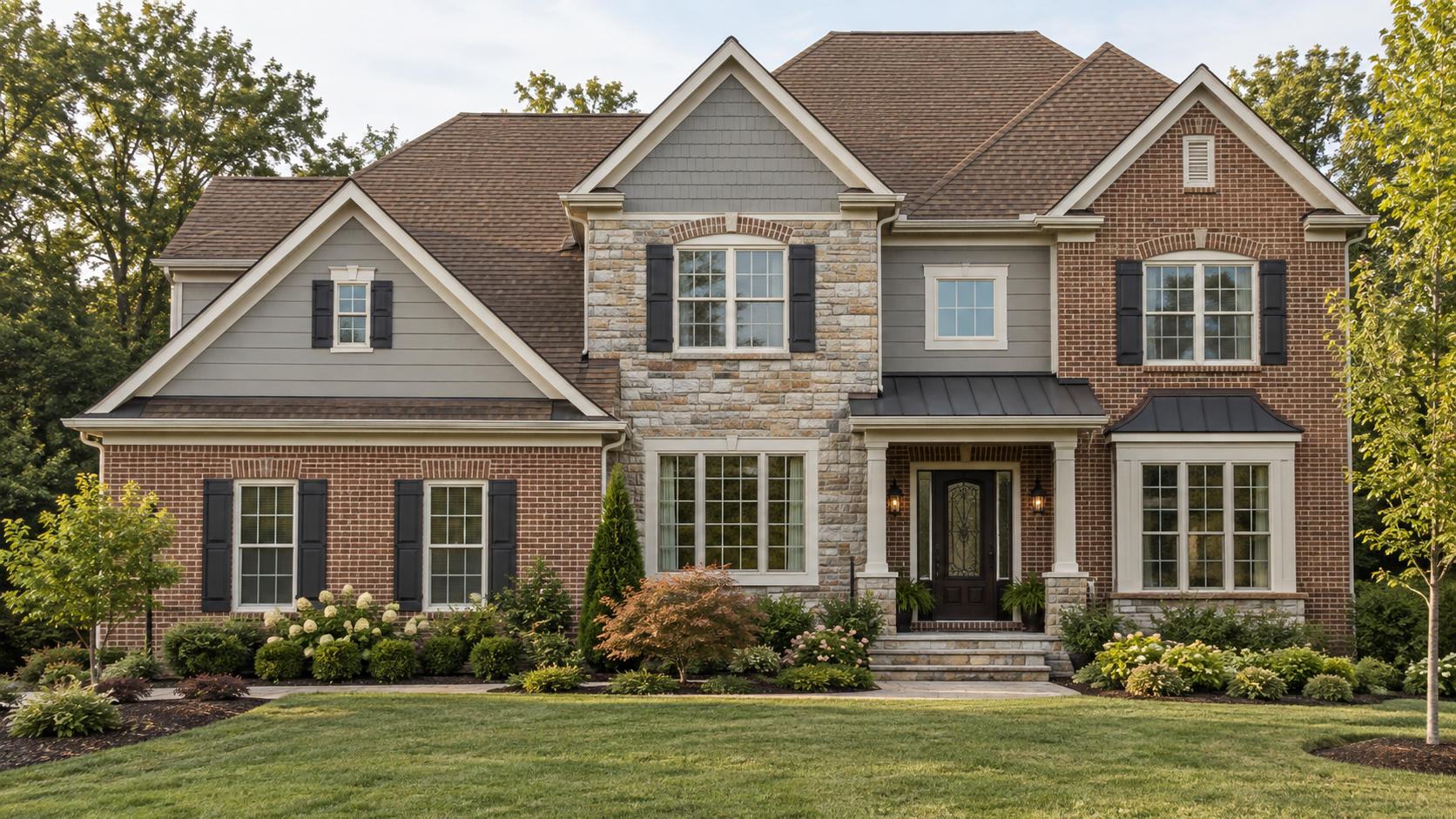
An expensive renovation can still look unresolved
The impression of quality comes from how the parts work together, not simply from their price. A modest house with carefully placed materials can look more considered than a exterior covered in expensive but unrelated finishes. These ten issues are worth checking before ordering products.
1. Too many competing materials
Brick, stone, siding and timber each have a different visual weight. Using all of them across small, unrelated patches can make the house feel fragmented. Keep a clear main material and use secondary finishes where the architecture gives them a convincing role.
2. Stone that ends without a reason
A thin strip of veneer that stops halfway across a wall can look applied rather than integrated. Decide where the material turns a corner, meets an opening or finishes at a defined building element. The installer must also confirm the appropriate assembly and edge treatment.
3. Lighting that is too small
A tiny lantern beside a tall entrance can disappear even when it is expensive. Compare the fixture’s real dimensions with the door and wall area, not only the product photograph. Use an appropriately sized fixture and have its position and installation checked locally.
4. White trim chosen without checking the masonry
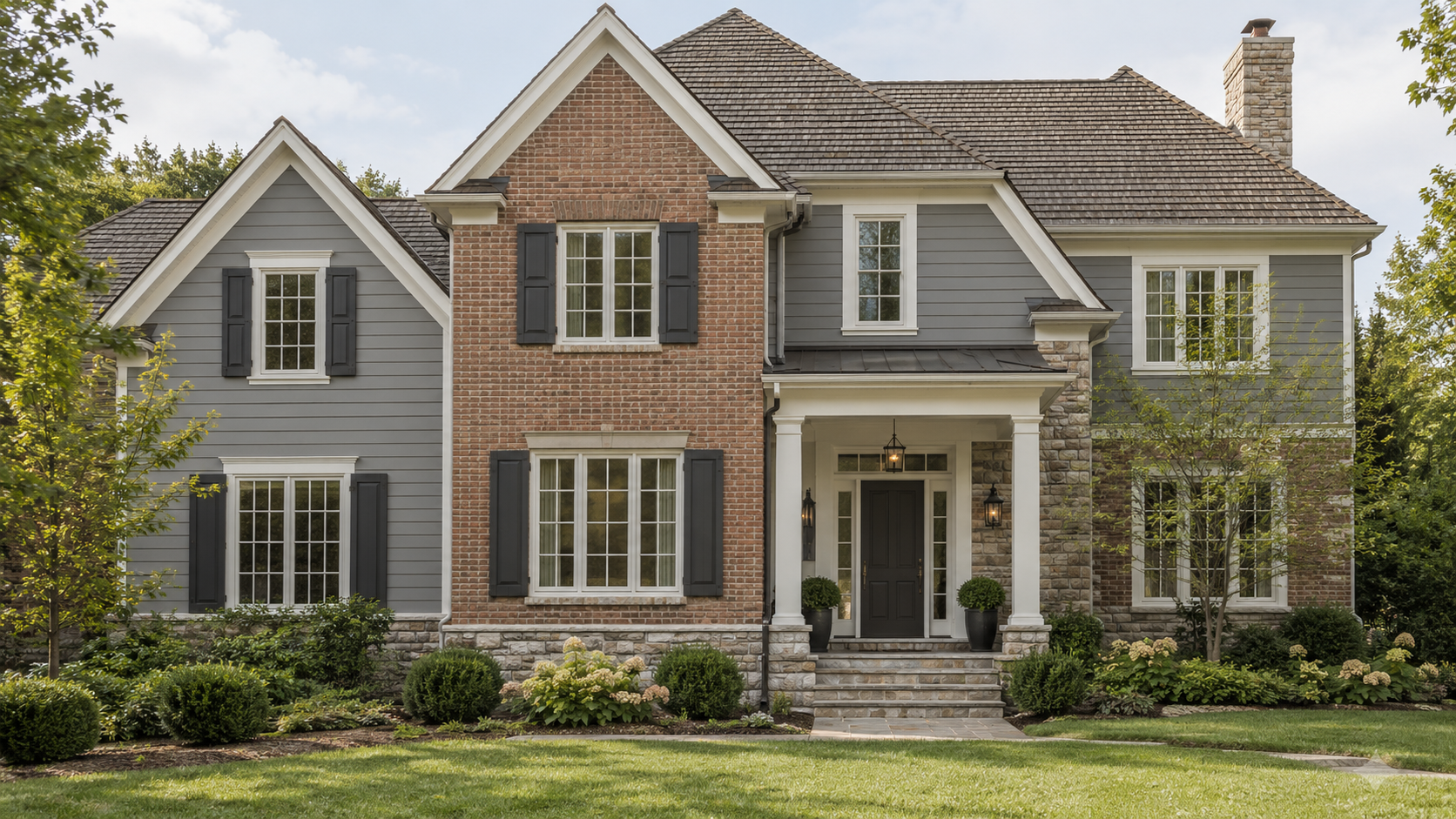
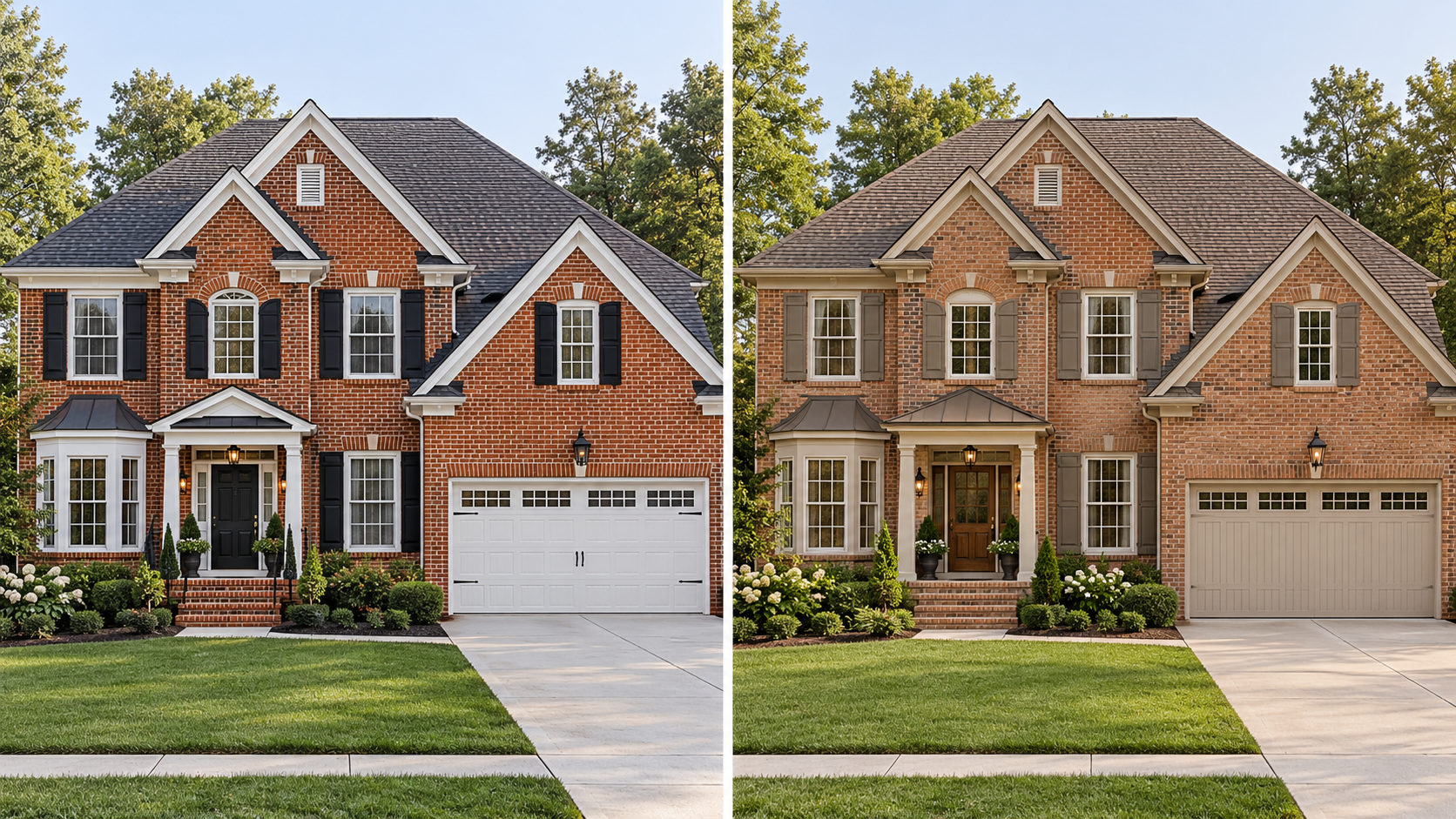
A brilliant white can make warm brick seem more orange or draw attention to every edge. Test softer whites alongside the permanent finishes and existing window frames. High contrast can work, but it should support the architecture rather than outline it indiscriminately.
5. Roof and wall undertones that pull apart
A warm brown roof and a cold gray wall may create a contrast you did not intend. Compare actual samples in daylight before approving the palette. Neither finish is inherently wrong; the problem is selecting one without considering the other.
6. A front door from a different architectural story
An ornate door is not automatically an upgrade for a simple contemporary exterior. Consider its panel pattern, glass, finish and surround together. The entrance can be memorable without becoming disconnected from the rest of the property.
7. Giving every element its own accent color
A bright garage, contrasting gutters, colored shutters and another door accent can compete for attention. Decide what deserves emphasis. Often the garage and service elements can be quieter, leaving the entrance as the main focal point.
8. Shutters that do not suit the windows
Very narrow shutters beside broad windows can look decorative in an unconvincing way. Consider the window arrangement and the architectural style before adding them. Where shutters belong, their proportions and mounting details should look plausible; some windows are better without them.
9. Decorative details added without a hierarchy
Extra brackets, mixed house numbers, planters, trim bands and contrasting hardware can obscure good proportions. Remove or simplify details before deciding to add more. Repeat a small number of finishes so the entrance feels deliberate rather than assembled from separate purchases.
10. Treating the landscape as an afterthought
Planting that hides the door, blocks low windows or overwhelms the foundation can make the exterior feel crowded. Allow space around the entry and choose a clear planting structure. A local nursery or landscape professional can recommend suitable species and mature sizes for your conditions.
How to correct the overall impression
Begin with the fixed roof and masonry, simplify the palette and give the entrance a clear role. Check lighting and detail sizes using real dimensions. Then review the exterior as a whole before committing to separate products.
You do not need to make every house look the same. The goal is to preserve its character while resolving the relationships that make the renovation feel unfinished. A visualization is useful for seeing those changes together before they become purchases.