Should Garage Doors Match the Siding? Start With the Focal Point
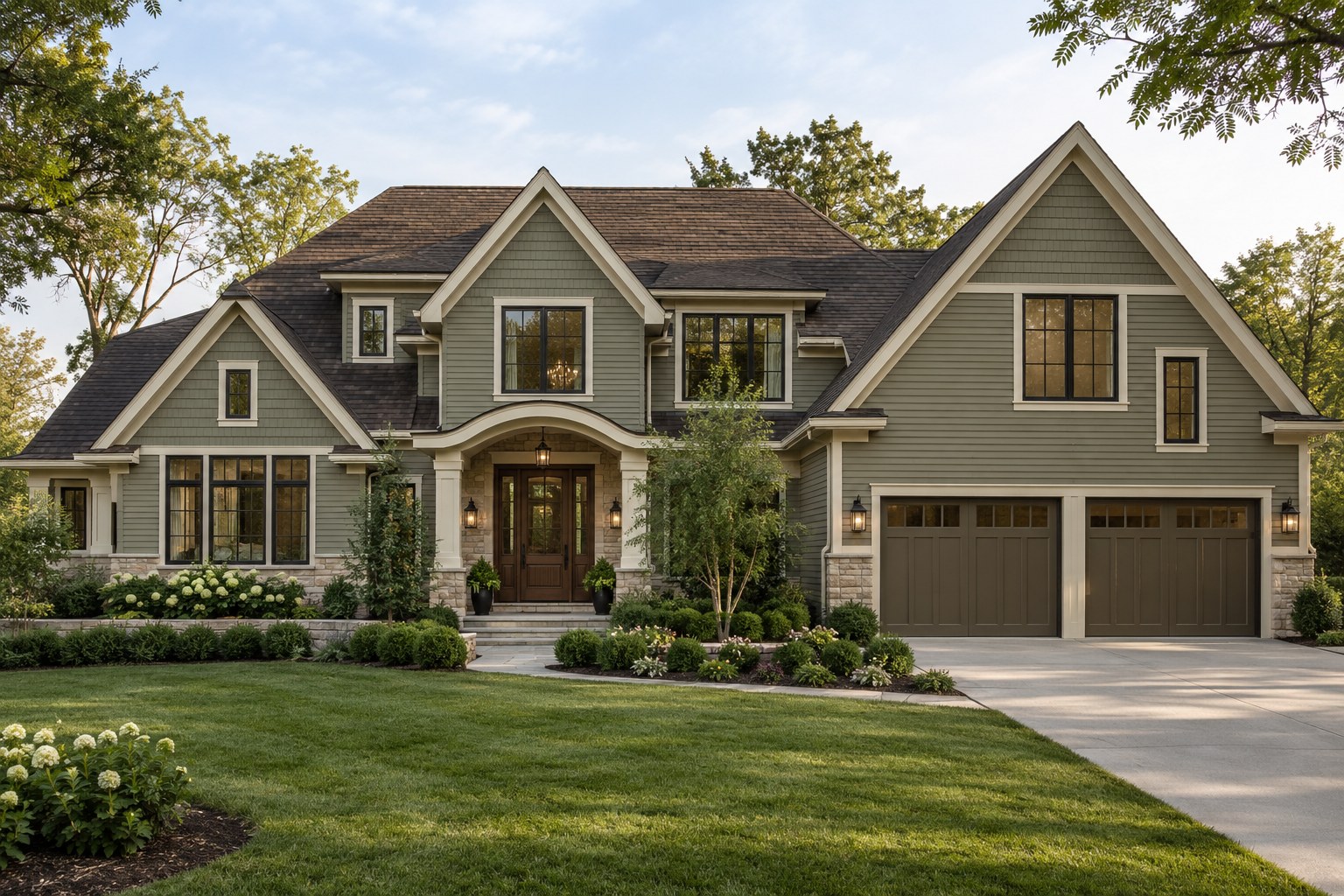
Garage color changes where you look first. Use contrast to organize the exterior rather than emphasize its largest opening by accident.
Look at the house from the approach
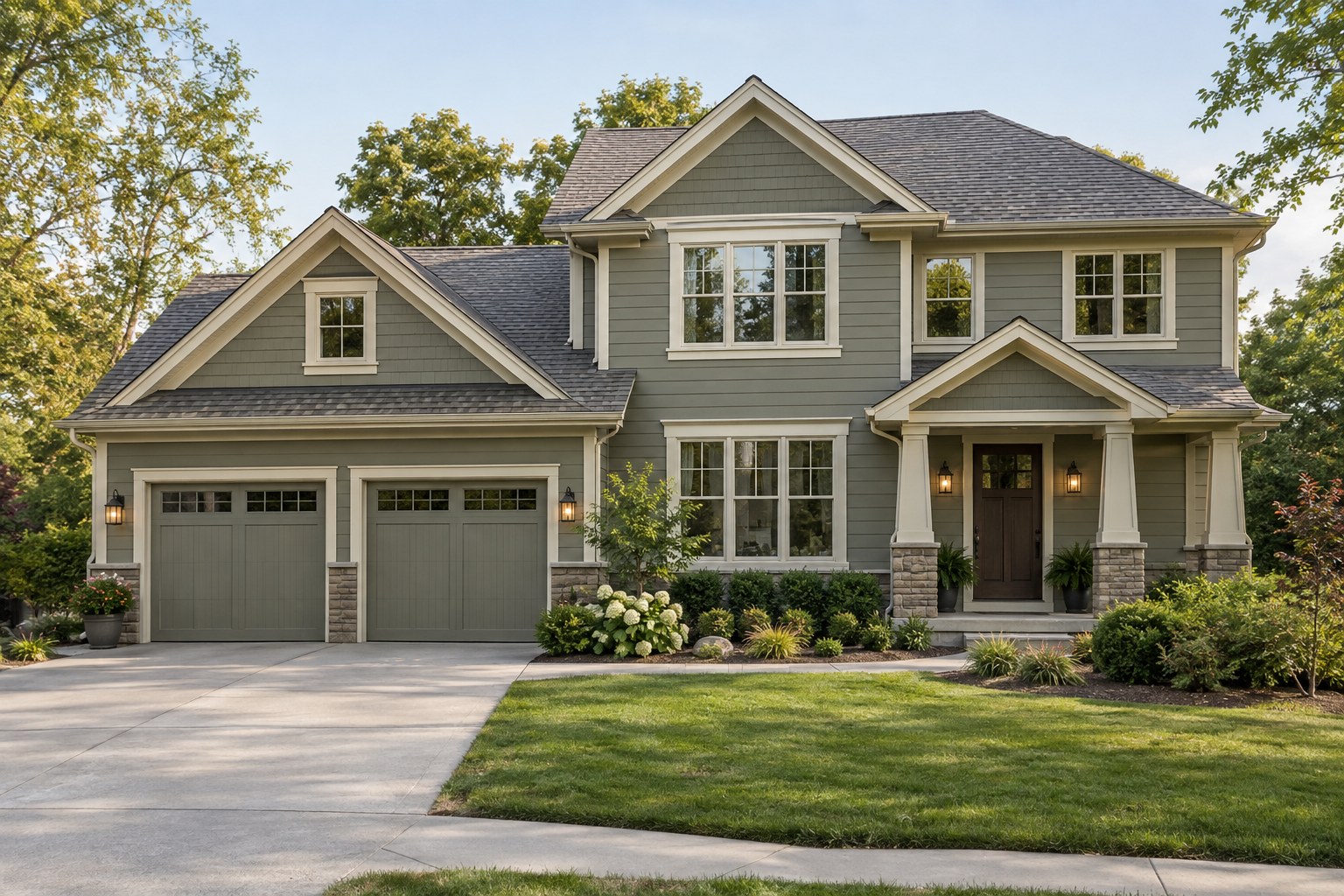
Before selecting a garage color, stand where someone first sees the house. Is the garage the largest surface on the front elevation? Does the entry sit back in shade? Does the driveway already lead the eye toward the garage? A small white paint sample does not answer those questions. The whole composition does.
Visual hierarchy means that some elements read first and others support them. On a home, I usually want the entrance to be legible even when the garage is physically larger. That does not require an unusually bright front door. It requires a deliberate relationship between the door, its surround, the walls, and the garage.
Why bright white garage doors can take over
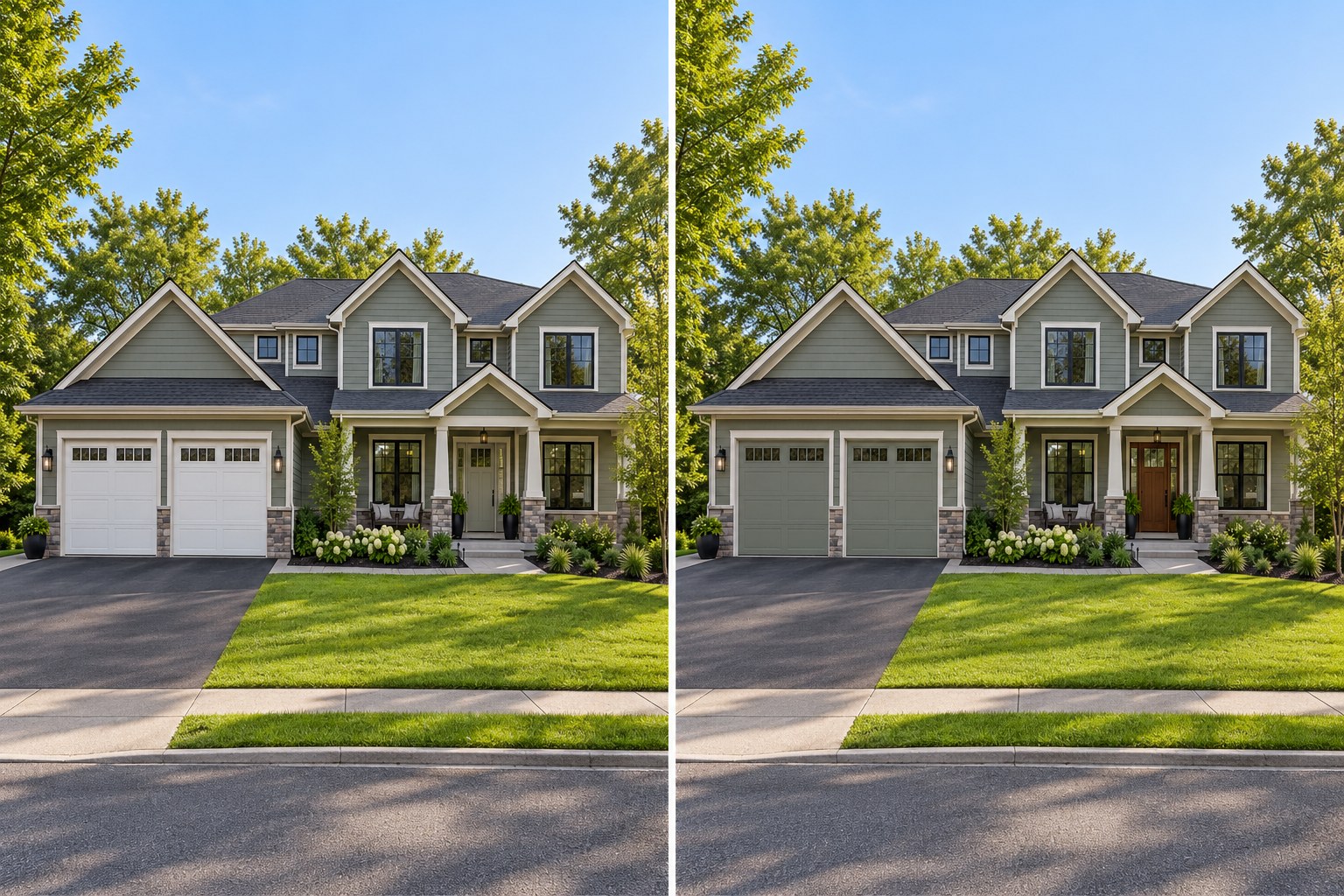
A pair of large white doors against medium-tone siding creates a wide patch of high contrast. Recessed panels and window inserts add their own shadows and lines. Even if every trim piece is also white, the garage may become the first thing you notice simply because it occupies more area.
In the comparison, the architecture, roof, and planting remain the same. The bright garage treatment on the left competes with the smaller entrance. On the right, a siding-related door color reduces that contrast. The walnut entry and its surround can now carry more attention without adding an extra accent color.
Matching does not have to mean disappearing completely
A garage door painted close to the main wall color still has texture, panel depth, handles, and sometimes glass. It will not become an invisible wall. The goal is to reduce visual competition, not deny that the door is there.
A slightly darker related tone can also work. On sage-gray siding, a deeper gray-green garage keeps the same color family while giving the opening definition. I would compare both options at the scale of the full exterior. Too large a step in darkness may restore the emphasis you were trying to reduce.
When a contrasting garage is the right choice
Some houses have beautifully proportioned wood garage doors that contribute to the architecture. A modest detached garage may also benefit from a distinct finish. In those cases, contrast can be appropriate because the door itself has a useful role in the composition.
Repeat the wood or metal tone thoughtfully so it belongs to the house. A warm wood garage beside a cool gray roof and unrelated orange stone may need more coordination than a matching painted door. The front entrance still needs a clear identity; otherwise the most expensive feature can also become the most distracting.
Give the entrance a reason to be noticed
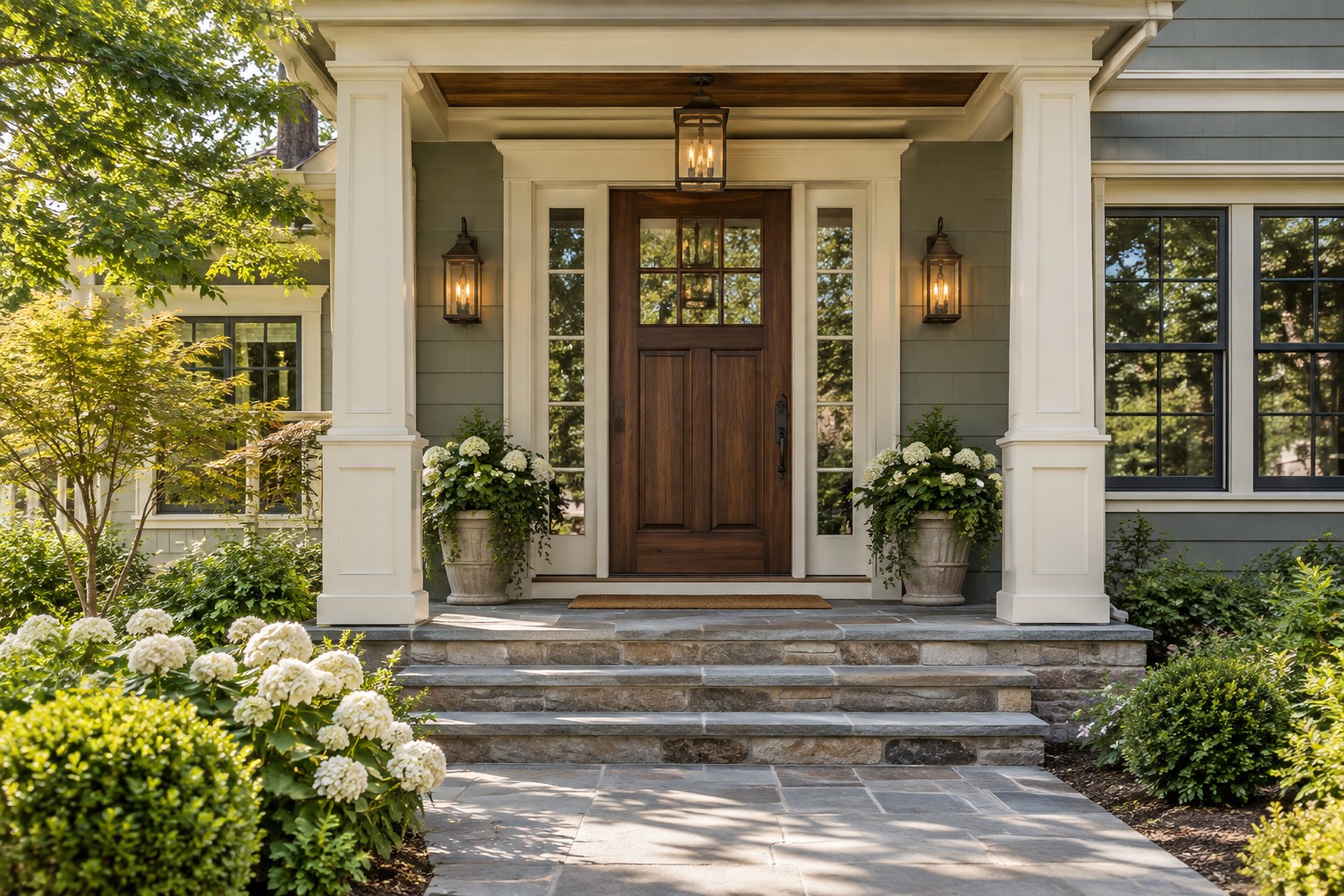
Once the garage is quieter, strengthen the entrance through a coherent group of choices. A rich door finish, a readable surround, a pair of appropriately scaled lights, and a clear path can work together. Keep their materials related instead of making each item a separate statement.
A recessed door may need a lighter ceiling or surround so it does not remain a dark hole in daylight. An exposed doorway can often carry a deeper finish. Landscaping should help mark the approach without hiding the door or creating an equally strong focal point beside the garage.
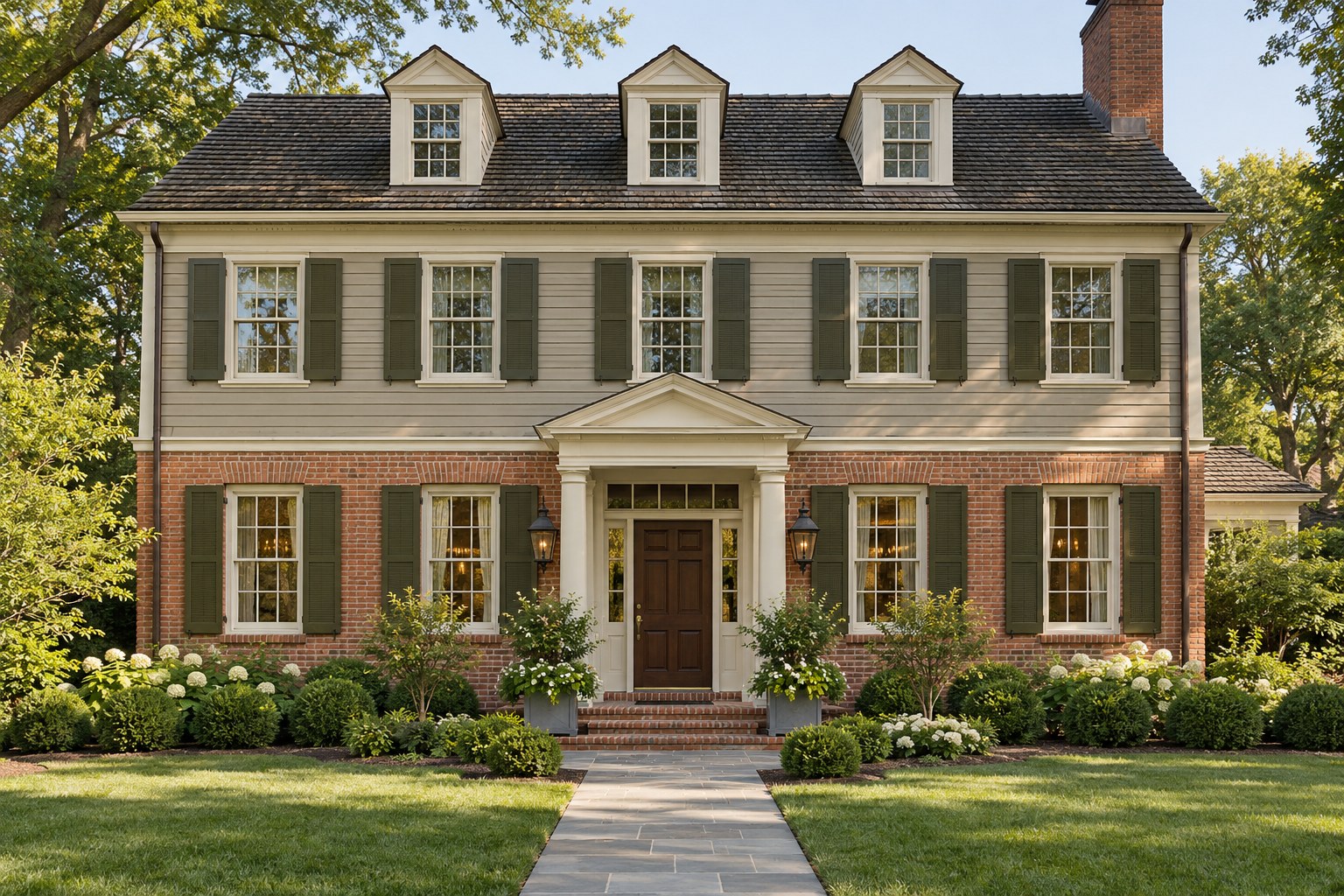
See how a traditional entrance can retain its character
Confirm the coating before committing
The design decision and the coating decision are separate. Check the garage door manufacturer’s guidance and the suitability of the coating for its material. Some finishes and darker colors may have restrictions related to heat, construction, or warranty. The painter or supplier should verify those requirements before work begins.
Then evaluate real samples with the siding, trim, roof, and front door. If the exterior feels calmer and the entrance is easier to locate, the color is doing useful work. If the garage still dominates, adding another accent elsewhere may simply make the house busier.