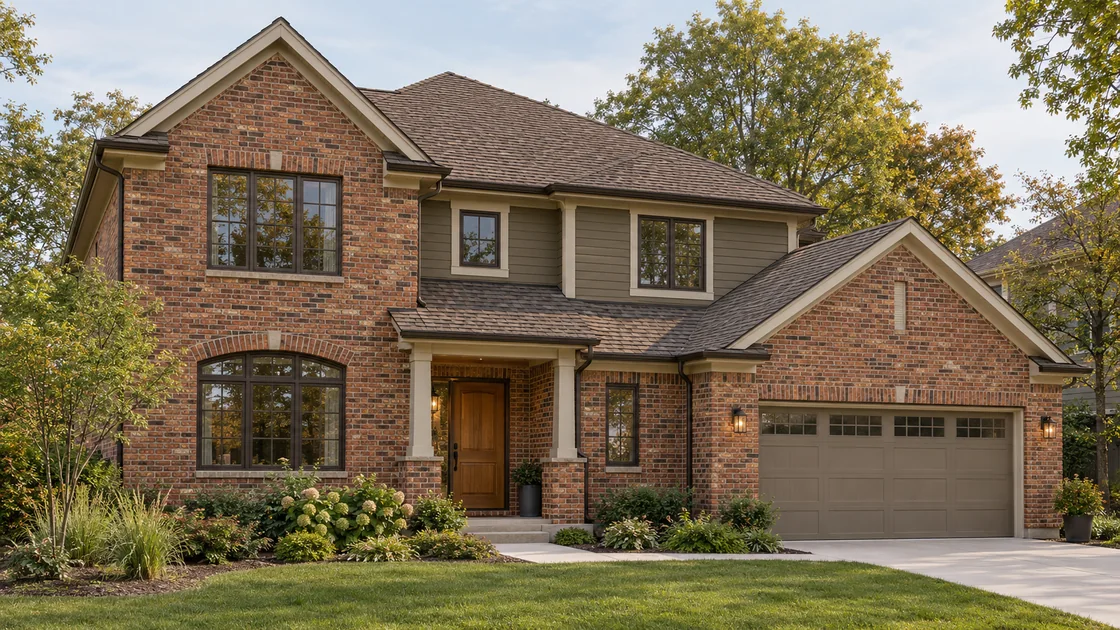
How to Update a Traditional House Without Losing Its Character
Keep the proportions that give the house its identity, then refine the colors, entrance, shutters, and lighting around them.
Read the house before choosing a style
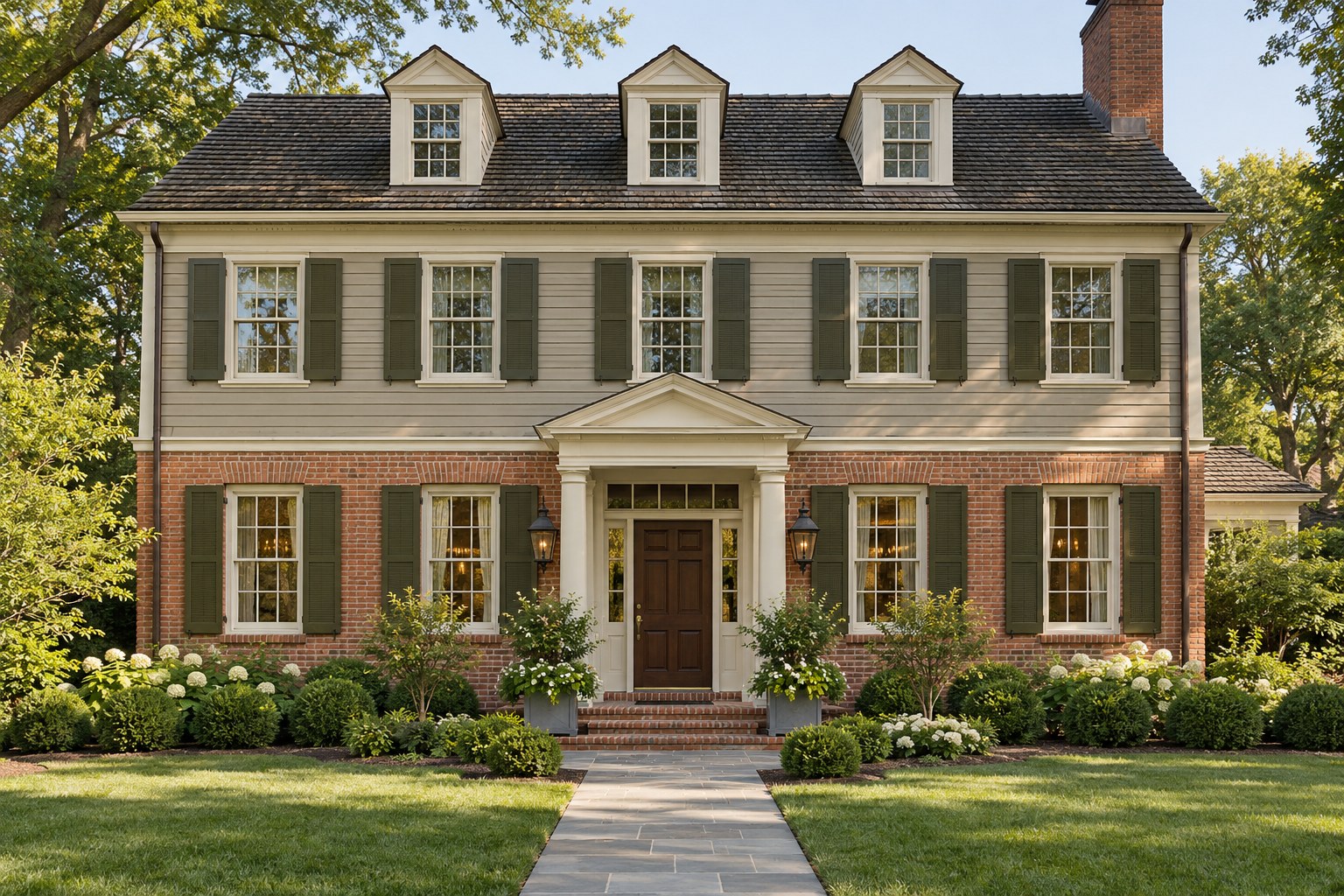
Traditional is a broad description. A Colonial-inspired house, a Tudor-influenced suburban home, and a Craftsman bungalow do not need the same changes. Look first at the roof form, the rhythm of the windows, the porch, and the relationship between solid walls and openings. Those features tell you what kind of order the house already has.
The concept in this article is Colonial-inspired rather than a claim of a historic restoration. Its balanced windows, defined central entrance, and restrained cornice are the features worth preserving. A collection of sharp black accents and horizontal wood panels would pull attention away from that order. The update should make the existing structure easier to read.
Keep the brick when it already contributes warmth and texture
Red brick is often blamed for a dated appearance when the surrounding colors are the real problem. Stark white trim, unrelated tan siding, and faded black shutters can make a perfectly useful brick look harsher than it is. I would test new companions before deciding that the masonry needs to be covered.
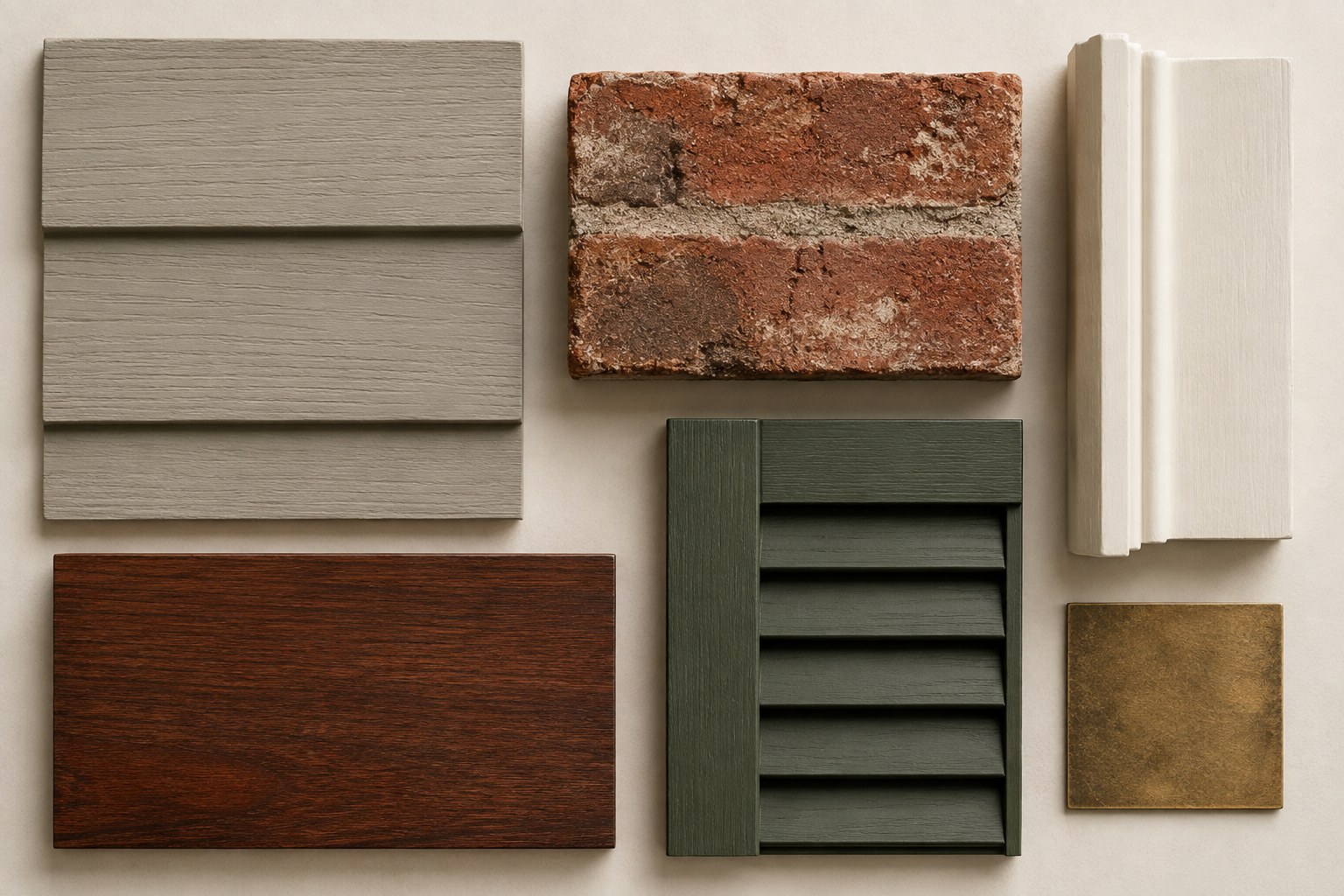
Here, putty siding picks up the quieter brown-gray notes in the brick and mortar. Warm ivory trim reduces the sharpness of the old white outline. Deep olive shutters create a darker accent with an earthy relationship to the masonry. The brick still supplies variation, so the rest of the exterior can be relatively quiet.
Give the entrance enough weight
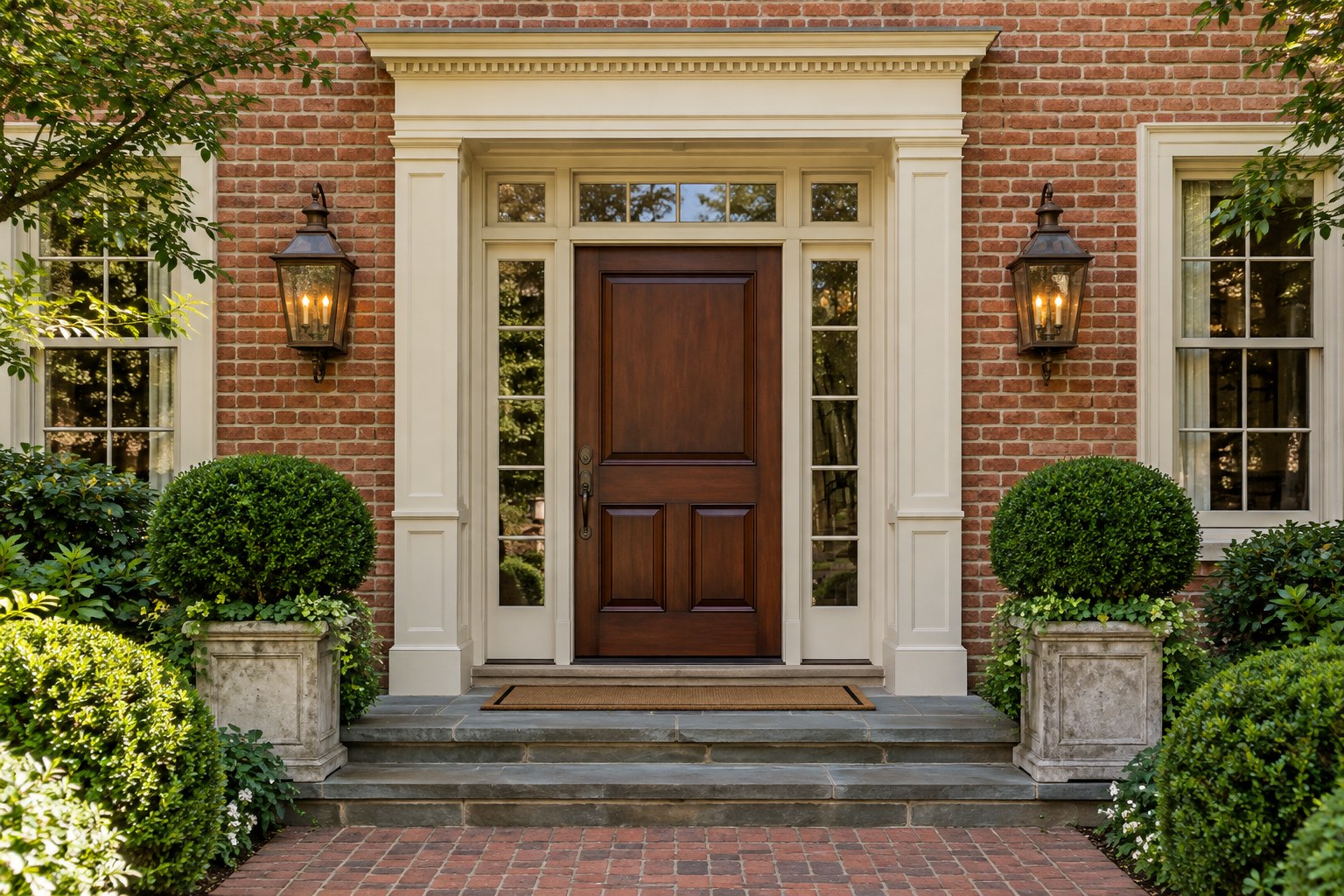
A small front door can feel lost when the exterior has a large roof, repeated windows, and a prominent garage. More decoration is not always the answer. A door surround with clear proportions, a rich wood finish, and appropriately scaled lanterns can establish the entrance without changing the openings.
Mahogany introduces a warmer, deeper note than the siding. A cream surround gives the door definition, while aged bronze lighting repeats the darker values in the shutters. I would keep the surround simple enough to belong to the house rather than borrow an elaborate historic detail from a different architectural vocabulary.
Treat shutters as architectural elements
Shutters look most convincing when their dimensions and placement suggest that they could cover the window. Narrow decorative strips beside a wide opening often make the proportions less convincing. Before replacing every shutter, decide which windows genuinely suit them and whether the wall has room for a believable pair.
A large picture window or a grouped set of windows may look better without shutters. Consistency does not require forcing the same detail onto every opening. It means that each opening follows a clear logic. Keep hardware, clearances, and installation details coordinated with the actual window and wall conditions.
Choose materials by their role
On this exterior, brick supplies texture, clapboard supplies a calmer field, and wood gives the entrance warmth. Adding stone around the garage and a separate wood accent in every gable would introduce extra transitions without solving a clear problem. The eye would have more surfaces to sort through, but no stronger focal point.
Lighting, railings, and house numbers should support the same level of formality. Traditional lanterns can be simpler than the originals without becoming severe modern bars. A tidy landscape edge and layered green planting often do more for the overall impression than a row of unrelated decorative objects.
Modernize the decisions, preserve the language
A traditional house can feel current through better color relationships, more deliberate scale, and fewer competing details. It does not need to pretend to be a contemporary house. In this concept, the windows and roof retain their role; the update makes the entrance and material palette feel more resolved.
Use physical paint and material samples to confirm the proposed combinations. For work on an older house, check the condition and detailing with the appropriate local professionals before replacing or covering original elements. The visual proposal should help you decide what to preserve as well as what to change.