How to Modernize a Dated House Exterior Without a Major Renovation
Use color, lighting, doors, and carefully chosen details to improve the composition before considering structural work.
Start with visual hierarchy
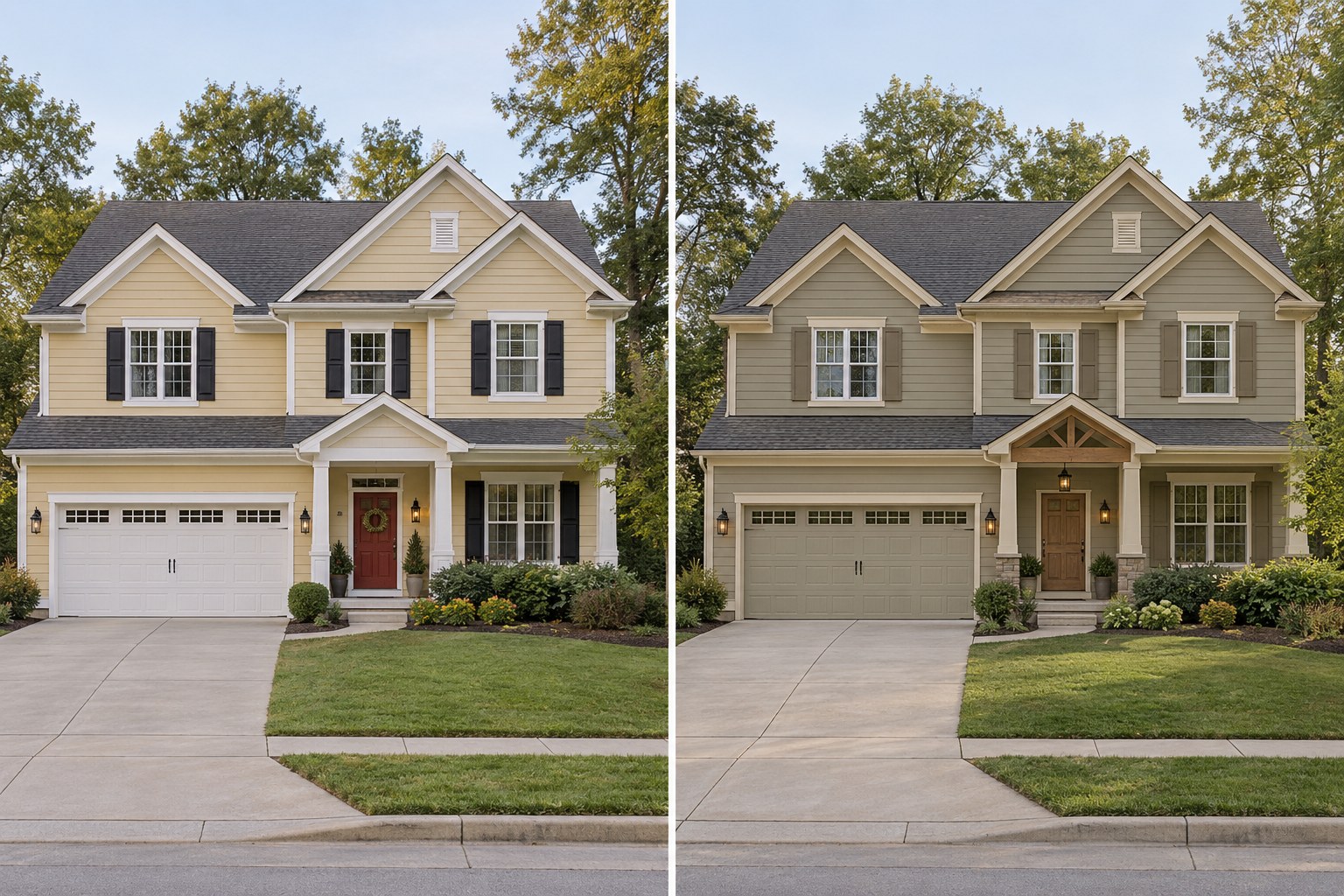
A dated exterior may have sound architecture but no clear focal point. Bright garage doors, competing shutters, small fixtures, and unrelated materials can make the exterior feel busier than it needs to. Before removing anything, decide what should attract attention and what should recede.
Take a street-level photograph and study it at a small size. If the garage is the first thing you notice while the entry disappears, the improvement may come from contrast and emphasis rather than an addition.
Update the palette and let the garage recede
Choose a wall and trim relationship that works with the roof and masonry. Reducing unnecessary contrast can make several existing finishes feel like a coordinated design. A garage door painted close to the wall color can shift attention toward the entrance.
Check the door manufacturer’s finish requirements before changing its color. A visual recommendation is not a specification for every substrate, and the correct paint system depends on the actual product.
Upgrade lighting and simplify shutters
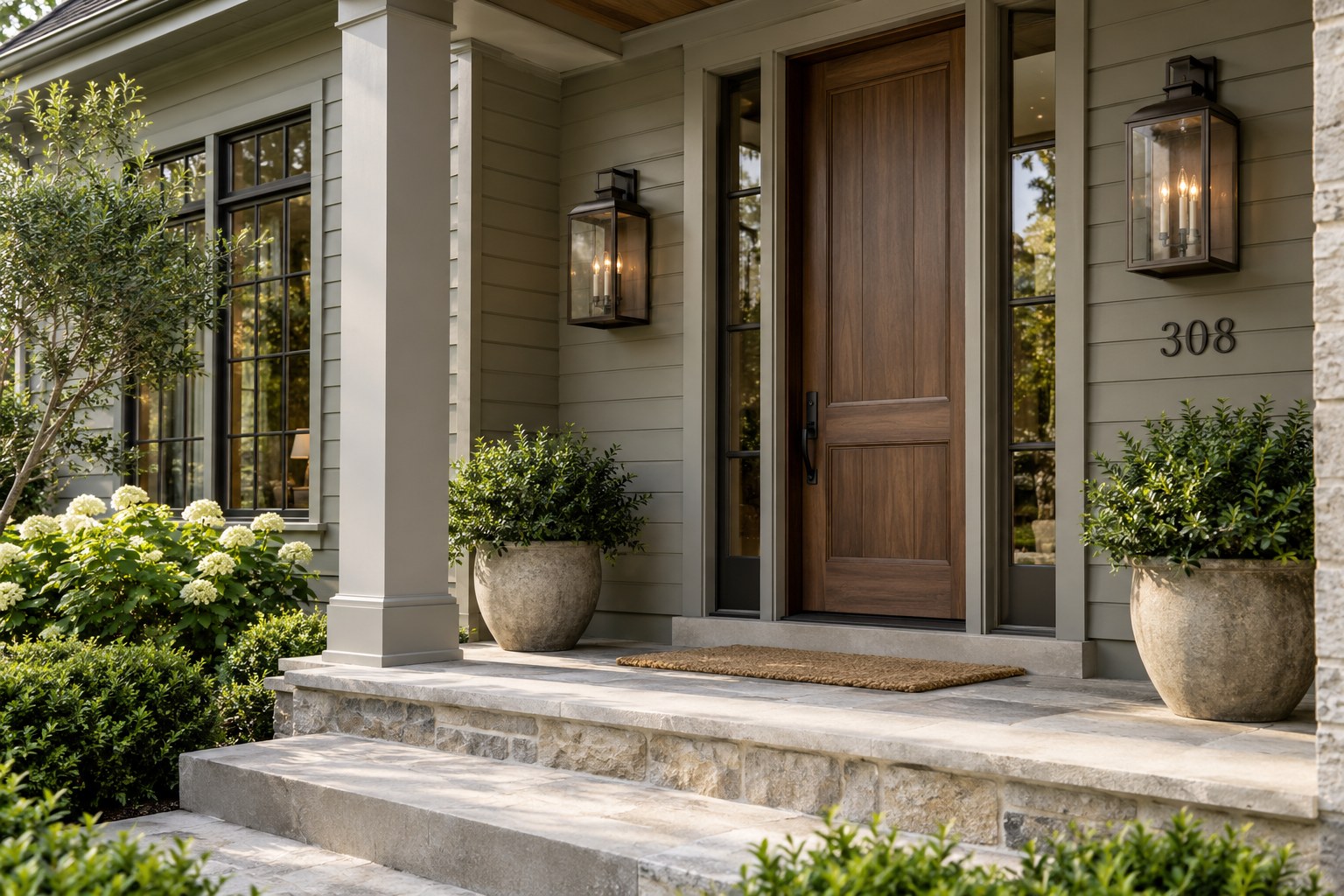
Lighting should suit the entry’s height, available wall space, and architectural character. A well-proportioned lantern can improve the composition even in daylight. Compare its dimensions with the door and surround rather than ordering from a close-up product photograph.
Shutters help when their placement and proportions make sense. Removing mismatched or visually crowded shutters can clarify the windows. Retaining them may be better on a traditional house where they reinforce rhythm. Avoid treating removal as a universal modernization rule.
Give the entrance one strong material
A wood door, a refined painted door, or a small wood soffit can create a focal point without covering the exterior in accents. Repeat materials only where there is an architectural reason. Too many isolated wood patches can look applied rather than integrated.
Replacing a door within its existing opening differs from enlarging the opening. Check dimensions, swing, weather exposure, and installation requirements with the supplier and installer.
Reconsider porch details carefully
Cleaner column wraps, simpler railing, or quieter trim can improve an entry, but an existing column may be load-bearing. Removing or changing it is not simply a styling decision. Have the proposed work checked before treating it as a cosmetic update.
House numbers and hardware are smaller decisions that still affect clarity. Choose a readable size, a sensible location, and a finish related to the lighting. One consistent metal direction is often enough.
Simplify planting and recognize structural limits
Landscape can frame the approach and reveal the entrance. Edit overgrown planting before adding more; keep the useful mature structure and introduce fewer, clearer shapes. Select species locally for climate, mature size, and maintenance needs.
Cosmetic changes alter finishes and selected details. Changes to rooflines, openings, foundations, and load-bearing elements require a different scope and qualified local assessment. If the real problem is a failing porch or water intrusion, a color update will not resolve it.
See the proposed changes together
A rendering makes it easier to compare colors, material placement, lighting scale, and entrance emphasis before ordering products. Use it as design direction, then verify measurements and technical details with the people responsible for construction.
The most effective update is not necessarily the one with the longest shopping list. It is the set of changes that gives the existing house a more coherent composition while respecting the budget and what is worth keeping.
Separate the work into design decisions and construction questions. Paint placement, finish coordination and visual priorities can be explored in a redesign; structural changes, permits and installation details should be confirmed with the appropriate local professional before work starts.
Build your budget by separating exterior design fees and renovation costs before comparing options.
For a plan based on your house photos or drawings, explore custom exterior redesign and visualization.