Warm White Exterior Paint Colors for Houses With Stone, Stucco or Siding
Compare cream, ivory and putty-white exteriors, then choose samples that work with your stone, roof, windows and trim.
If your house has cream stone, a brown roof or warm wood, start with a softened off-white and compare it with a deeper putty-white. If the roof and windows are dark and cool, test a quieter white that looks balanced beside both. The best warm white is the one that still feels related to the parts of your exterior you are keeping.
The exterior design studies in this guide illustrate color relationships. The named paint colors are separate swatches to sample at your house.
Start with the undertone of the stone and mortar
Read the stone from the driveway, then go close enough to see its mortar. At a distance, a mix of buff and cool gray stones may read as a calm beige wall. Up close, the mortar may be the lightest continuous color. Compare your white against a representative area with both stone and joints in view.
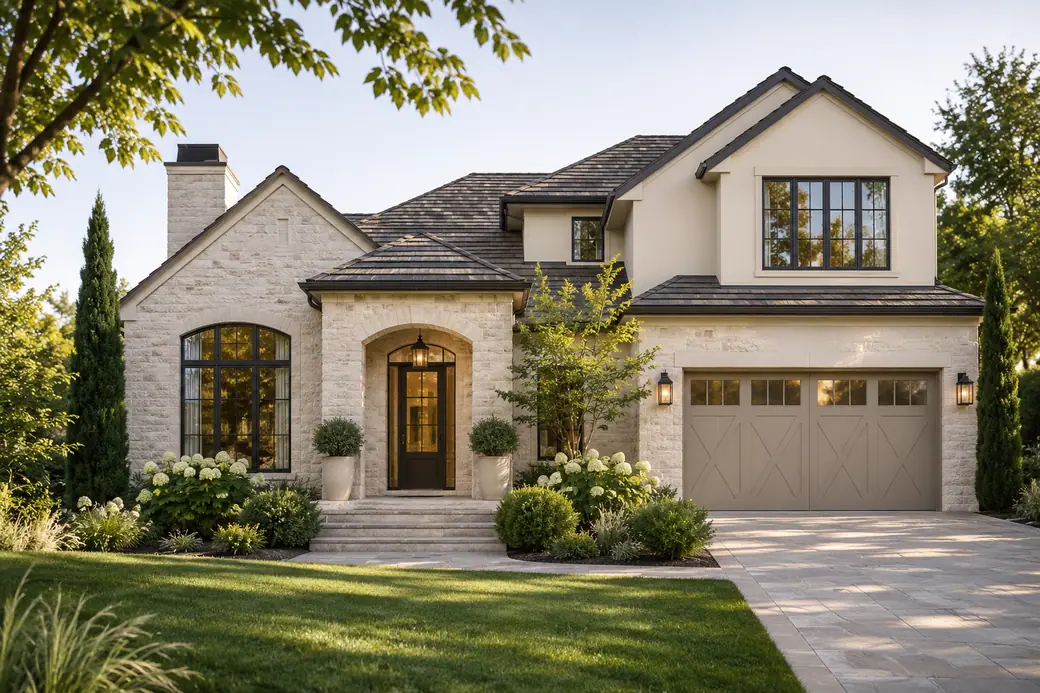
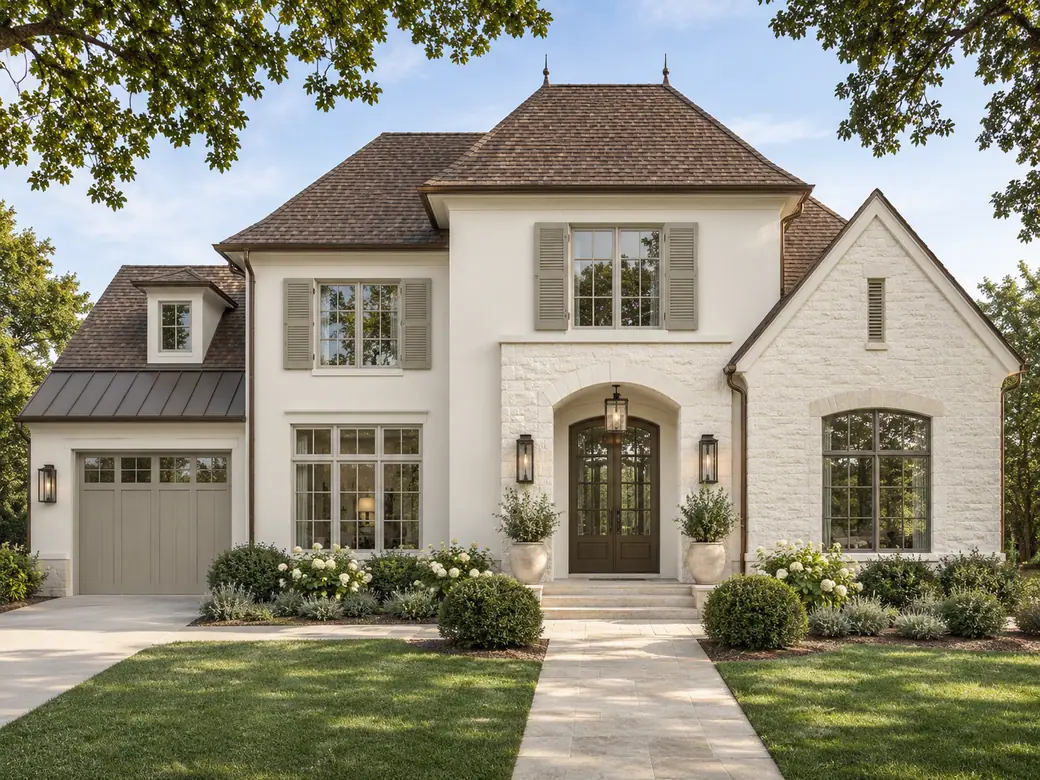
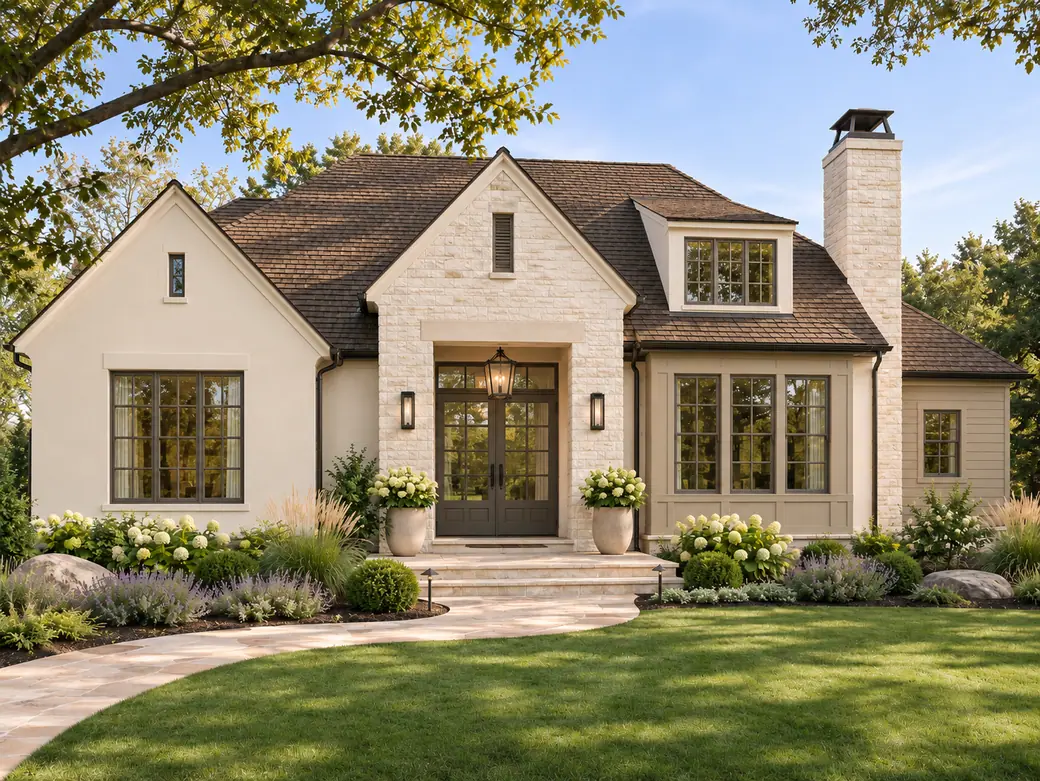
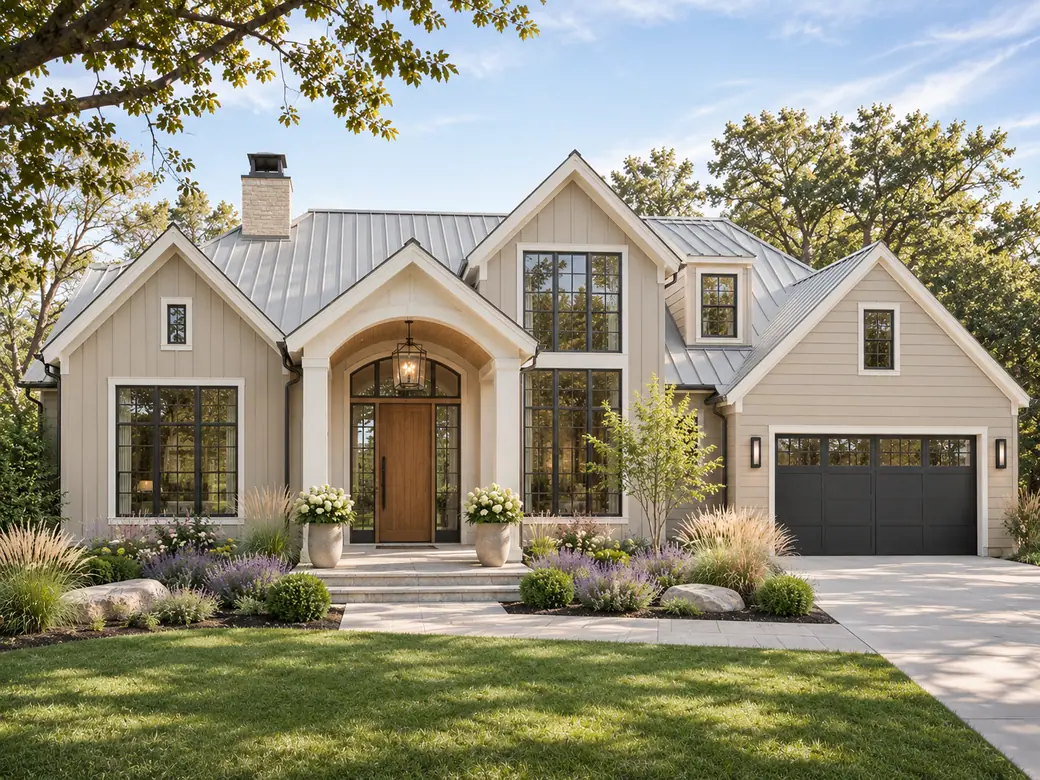
When a stone return and painted wall meet on the same plane, start with similar lightness and let their textures do the work. At an arch or a projecting entry, a slightly lighter surround can make the geometry easier to see. The pale stone and stucco studies below show both approaches.
See how to place stone and siding on the same exterior
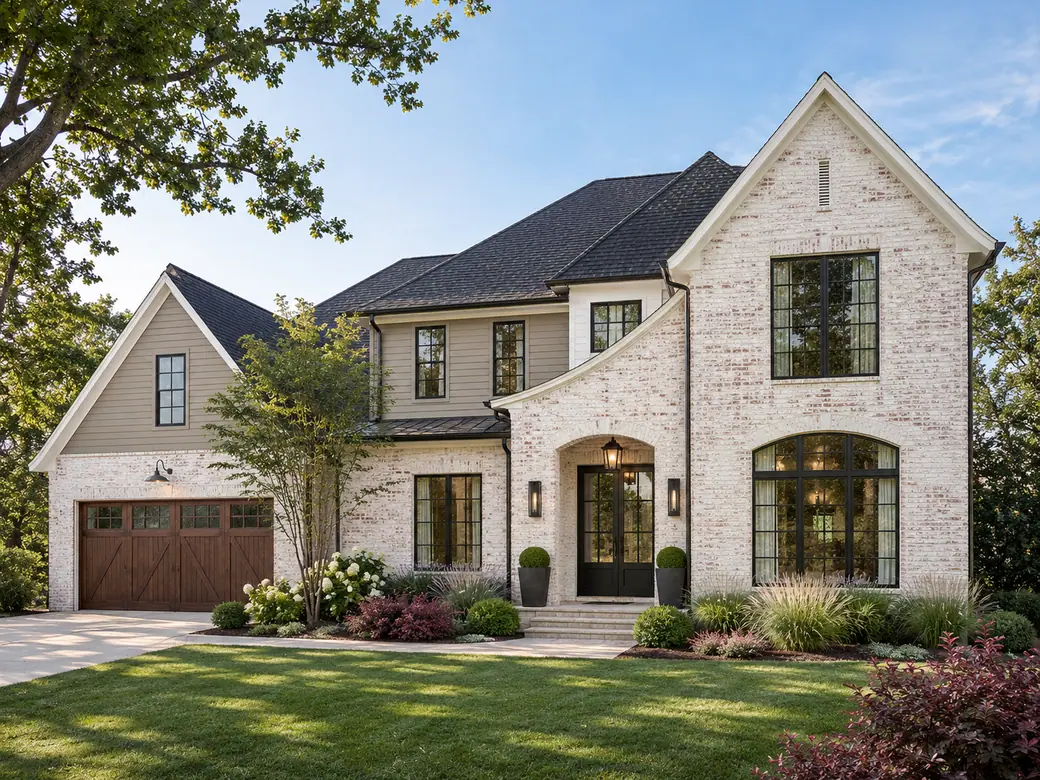
Try subdued cream or ivory with a brown roof
Set a sample near the eave and another beside the stone or stucco, then take one step back for every level of the house. A brown roof seen across a broad hip will have more visual weight than the same shingle on a roof barely visible from the street.
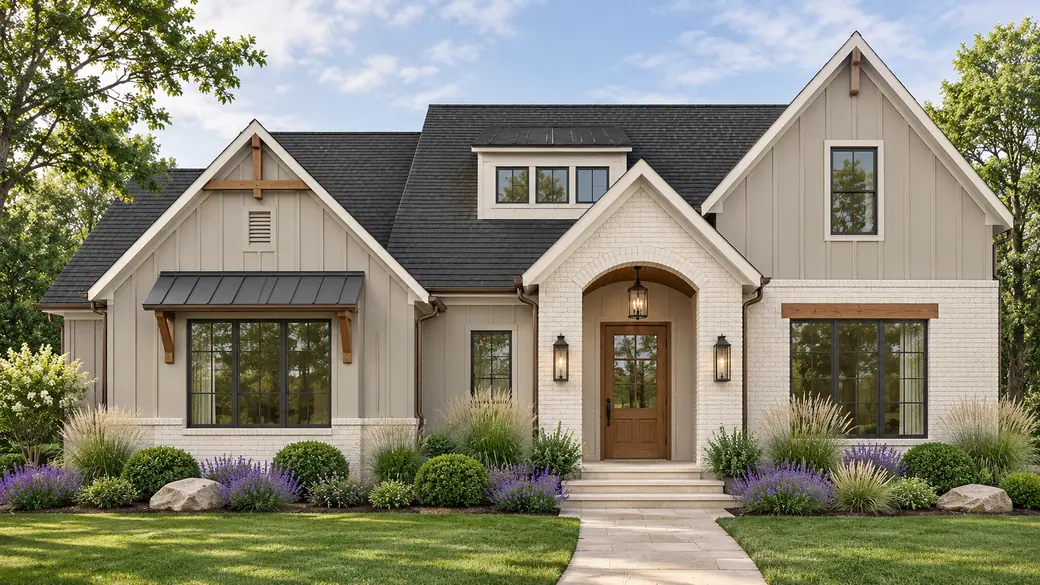
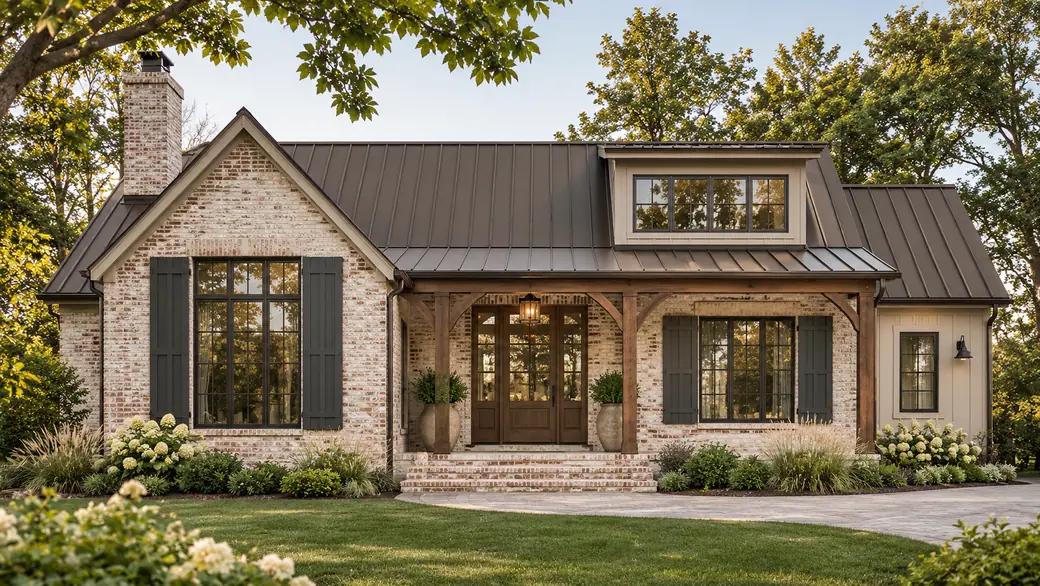
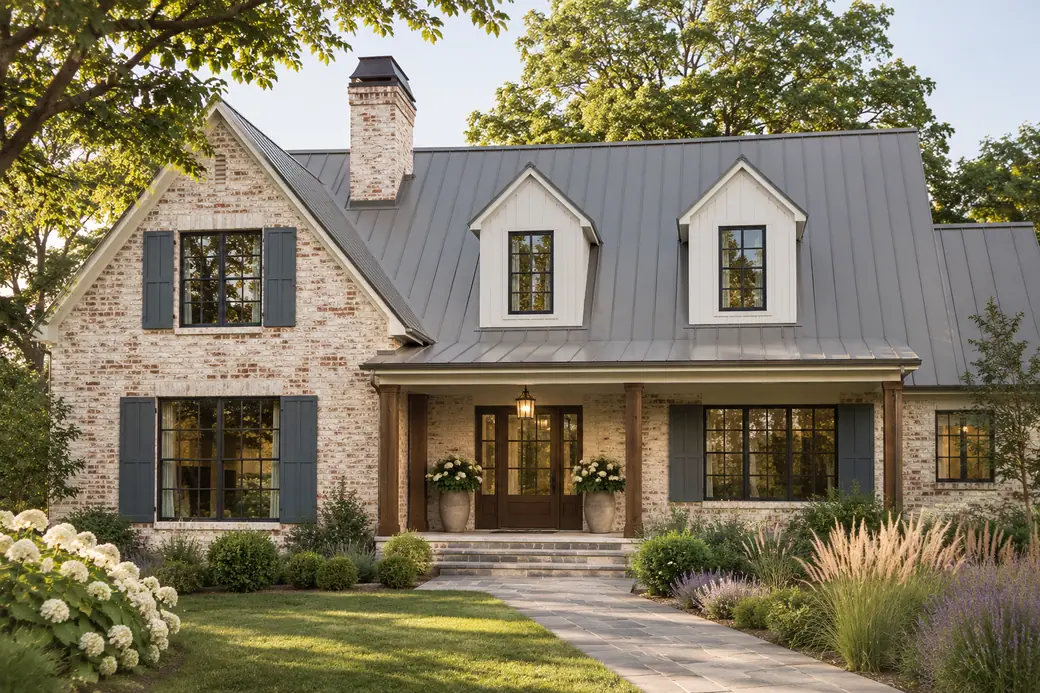
Use a less yellow white if the stone is dusty taupe or the roof has a gray cast. A slightly warmer ivory is worth testing beside buff masonry, warm timber and brown roofing. The Tudor-inspired and cottage studies show how wall texture can distinguish similarly colored surfaces.
Compare additional exterior color families for a brown roof
Pair dark windows and roofs with a soft, quieter white
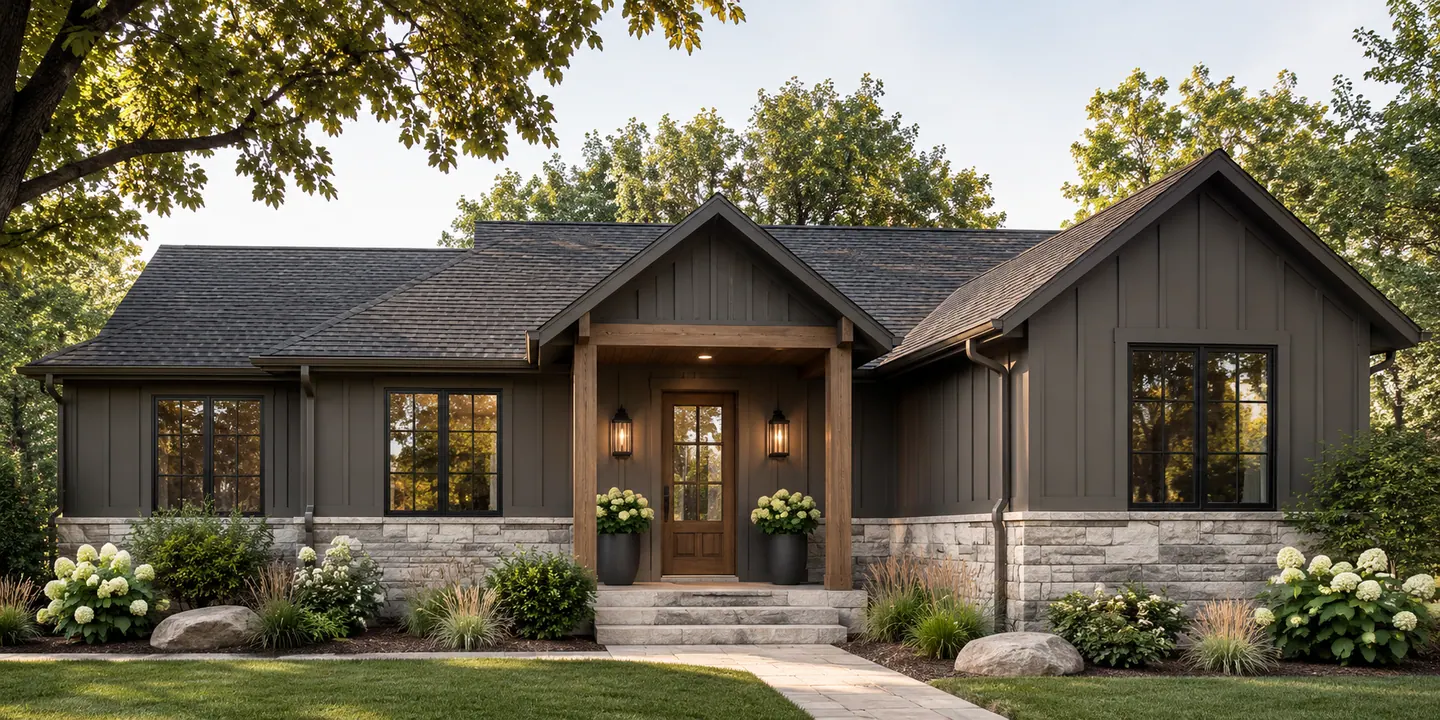
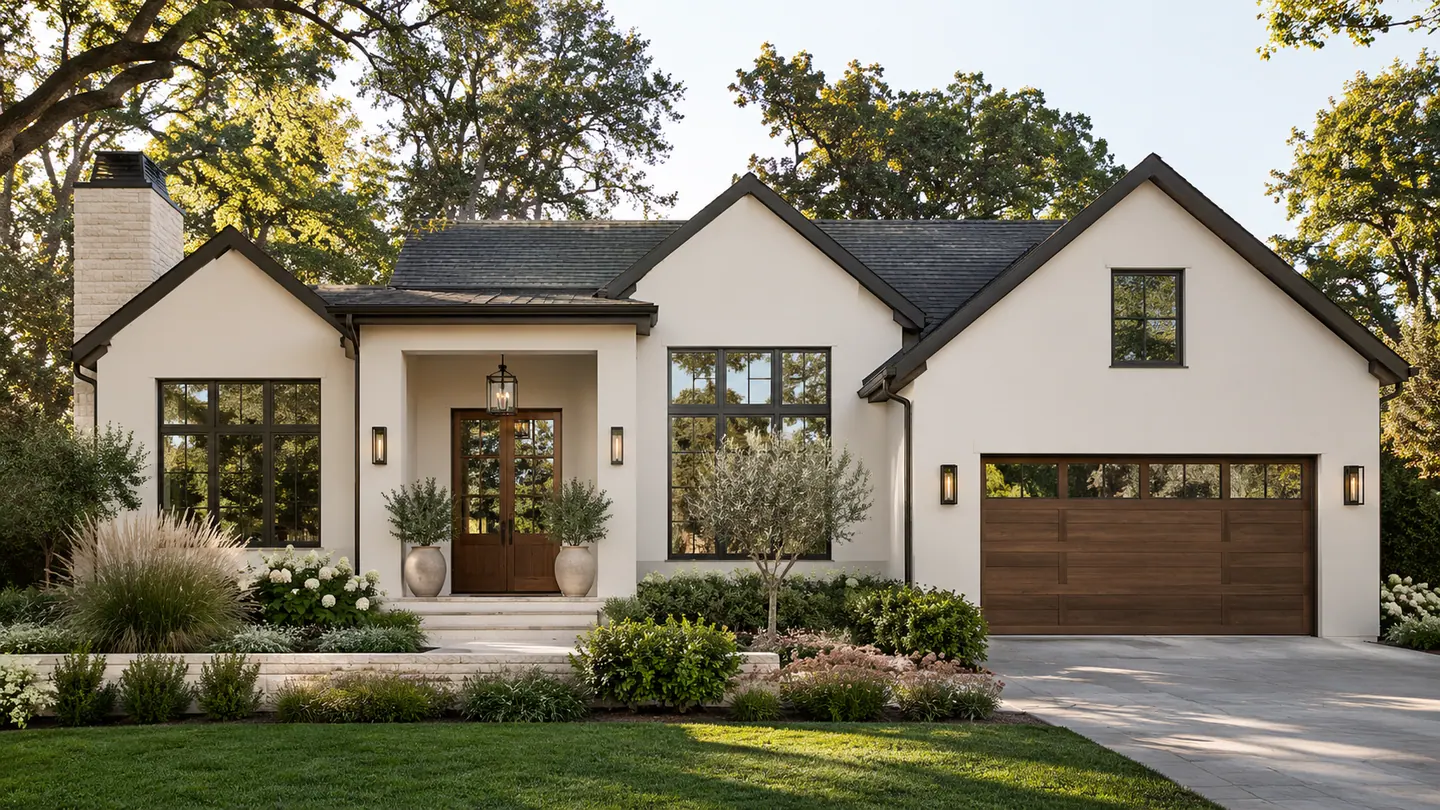
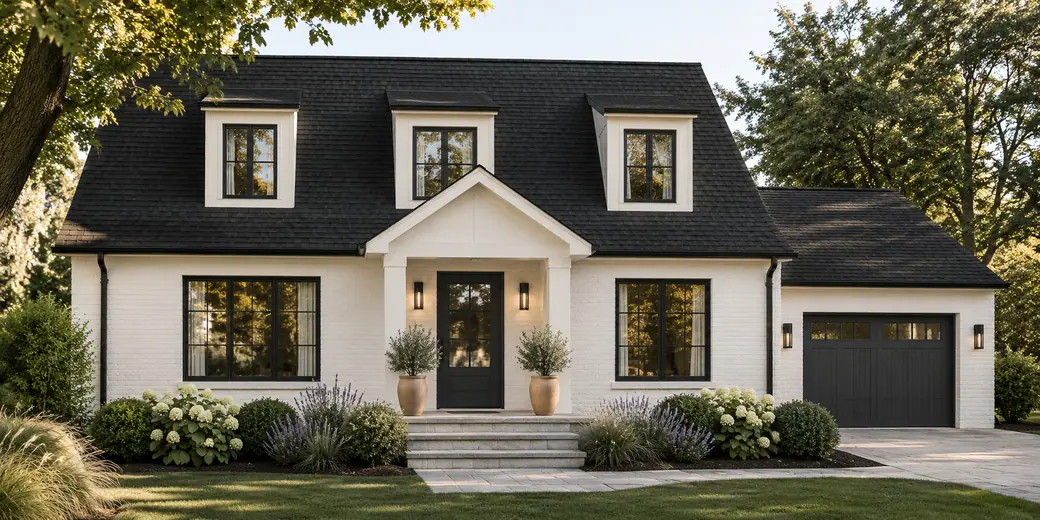
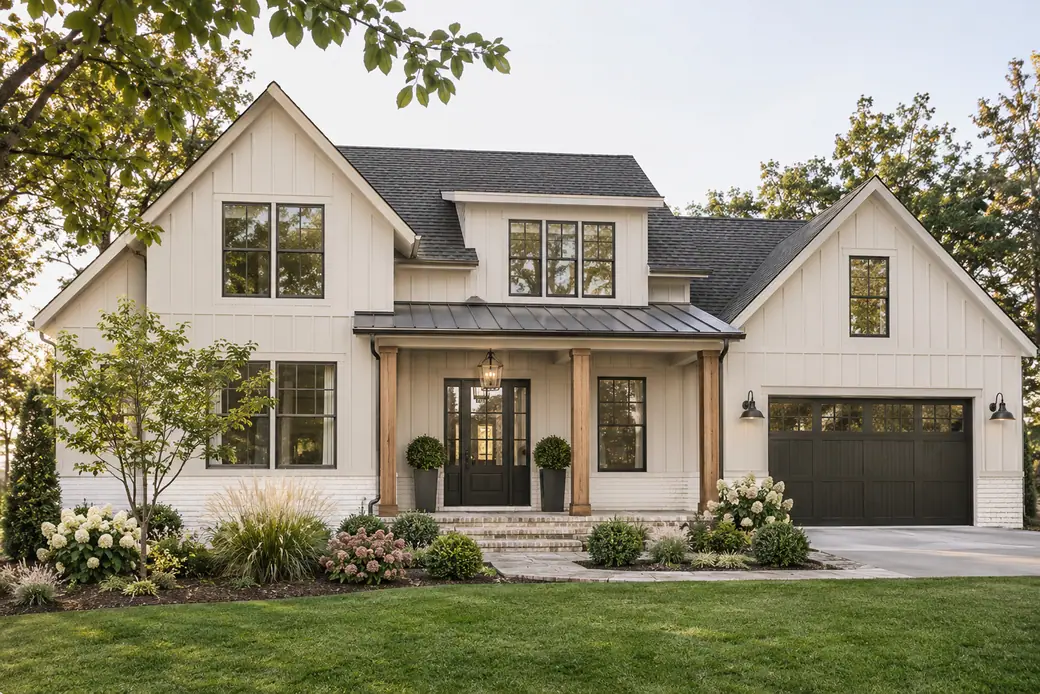
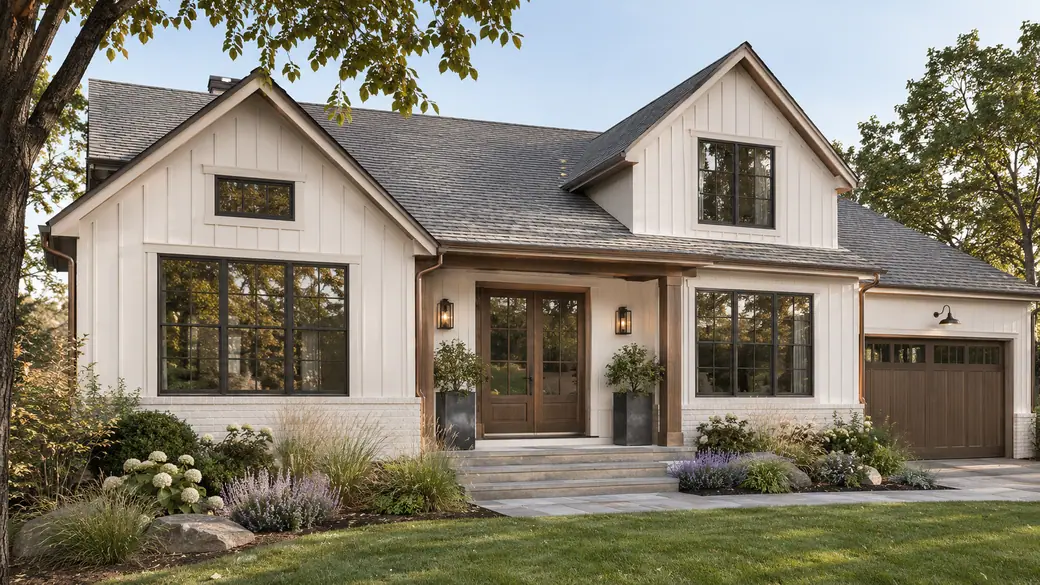
Dark frames and a charcoal roof already supply strong contrast. On the dormered house below, the warm ivory body softens that large dark roof. On the gabled house with timber posts, the wood establishes warmth at eye level, allowing the white to stay relatively restrained.
A mid-gray or blue-gray roof gives you room for a softer transition. With cool slate-colored metal and cream stone, tape a warm white and a more muted off-white directly beside each other below the eave. Eliminate the sample that throws an obvious yellow cast next to the roof or makes the masonry look gray and dull.
See which exterior palettes suit warmer and cooler gray roofs
Decide how much contrast your white trim needs
If the trim follows a roof edge or frames a porch, a small step lighter can explain the shape. If the house already has complex gables, window divisions and mixed materials, a tonal body-and-trim treatment can help those lines read together.
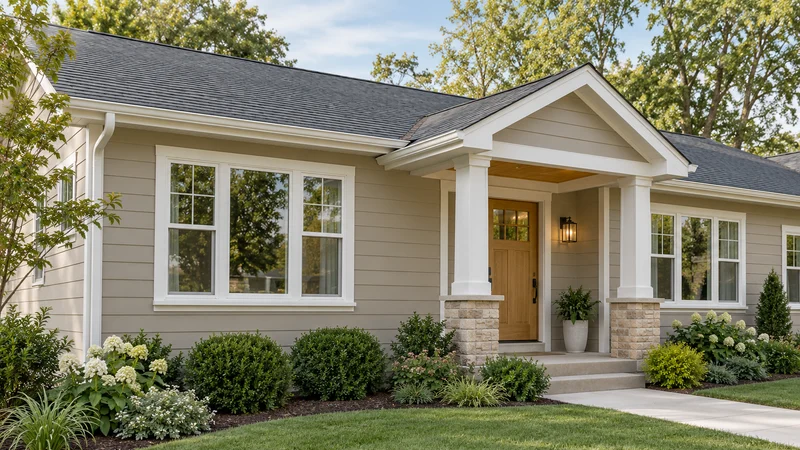
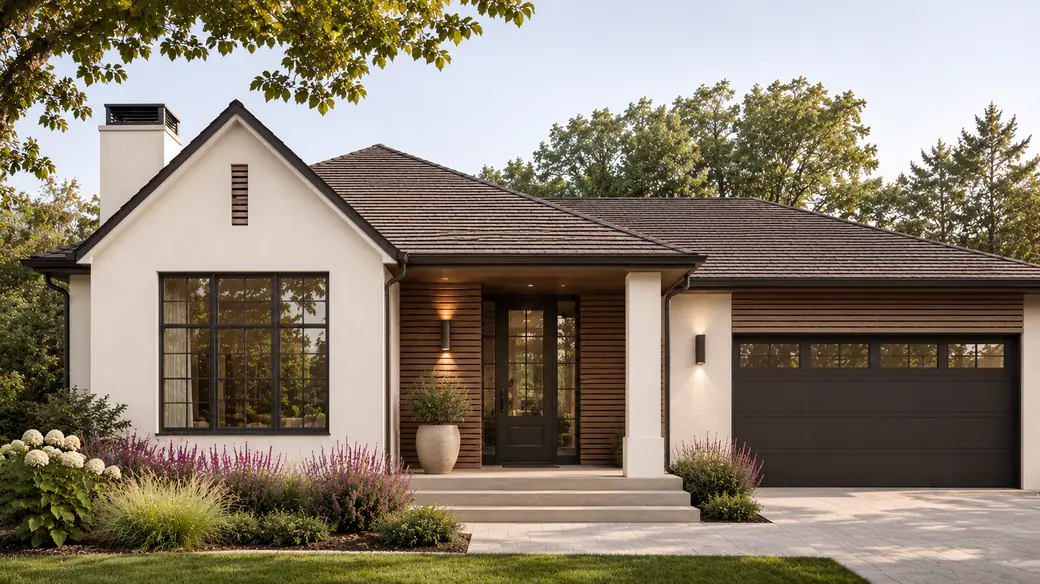
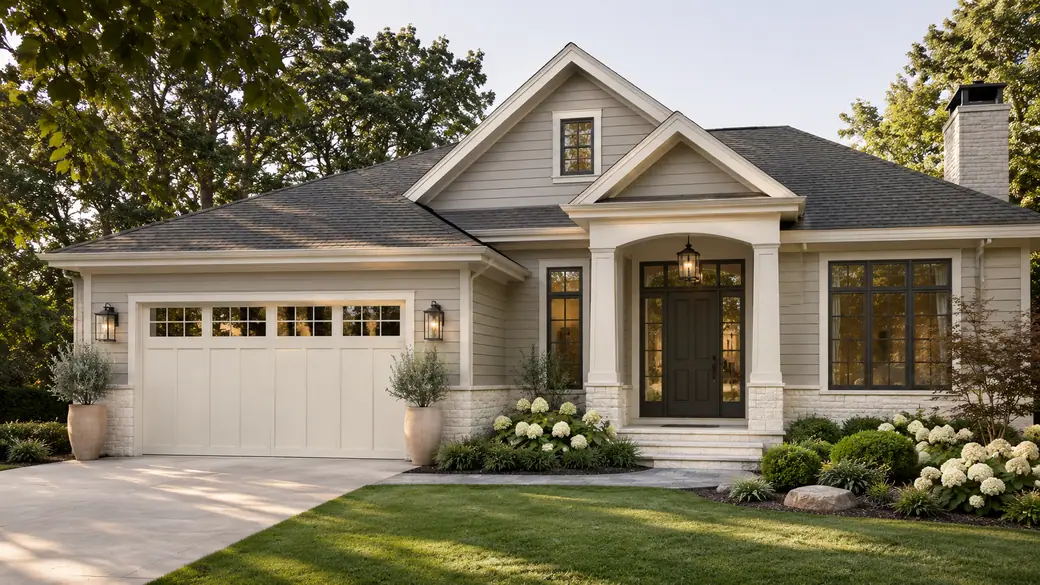
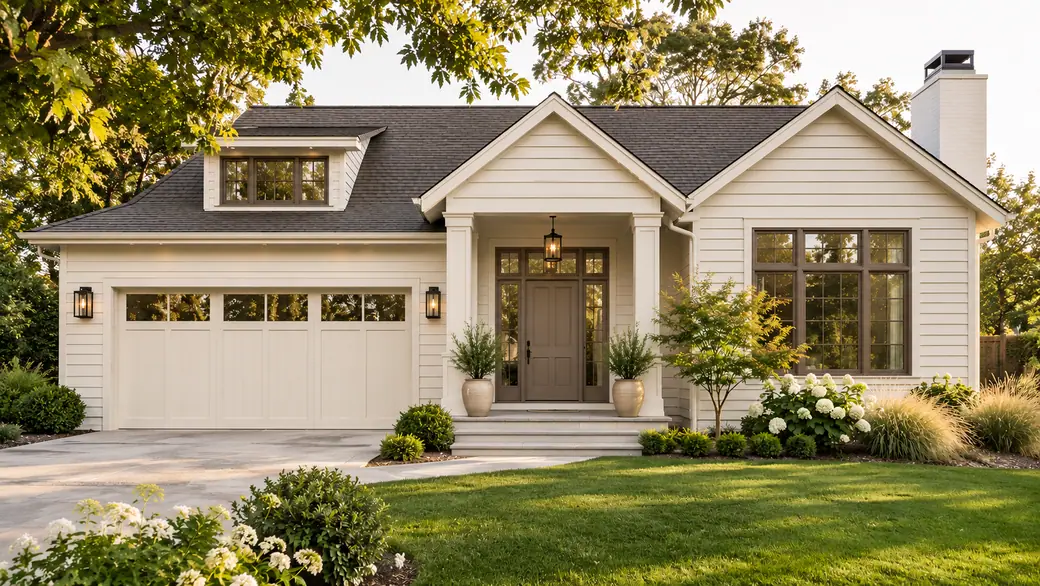
Hold the body sample against the actual window frame. Factory white windows often become the brightest white on the wall. Slightly warmer walls can still work with them when the trim or surround makes that shift deliberate. On the greige ranch, for example, the lighter garage belongs to the porch trim palette and the dark door leads the entry.
See how to work with existing white window frames
Three Sherwin-Williams whites to sample outdoors
Use these in the same light, next to the same permanent finish. I would start with the following comparison, then eliminate the swatch that is most disconnected from the house.
- Alabaster SW 7008. Start here for a soft off-white when a brighter white feels stark against the roof or columns.
- White Duck SW 7010. Sample this creamy off-white next to buff stone, tan grout or warm gray shingles.
- Shoji White SW 7042. Compare this more muted, greige-leaning white when you need the painted surface to sit more quietly beside putty trim or taupe stone.
Test the body and trim as a pair
Make two large sample boards and move both around the exterior. Compare them in direct sun, open shade, and under the porch. Check from the street and at the material seam. For textured stucco or pronounced siding profiles, ask the painter for a test on the actual surface before you approve the job.
Put the winning white beside the proposed trim, front door and garage finish as one group. Have the painter confirm an exterior coating and sheen suitable for the surface. Approve the finish at the house before scheduling the full repaint.