Best Exterior Paint Colors for a House With a Brown Roof
Choose siding, trim, garage, and front door colors that work with the undertones of your existing brown roof.
Start with the undertone of the roof
A brown roof is part of your color palette, even when you are not replacing it. Its area, texture, and position above the walls can make an otherwise neutral paint look cooler, warmer, or flatter than expected. Begin with the roof you have, rather than the siding color you wish you could copy from a photograph.
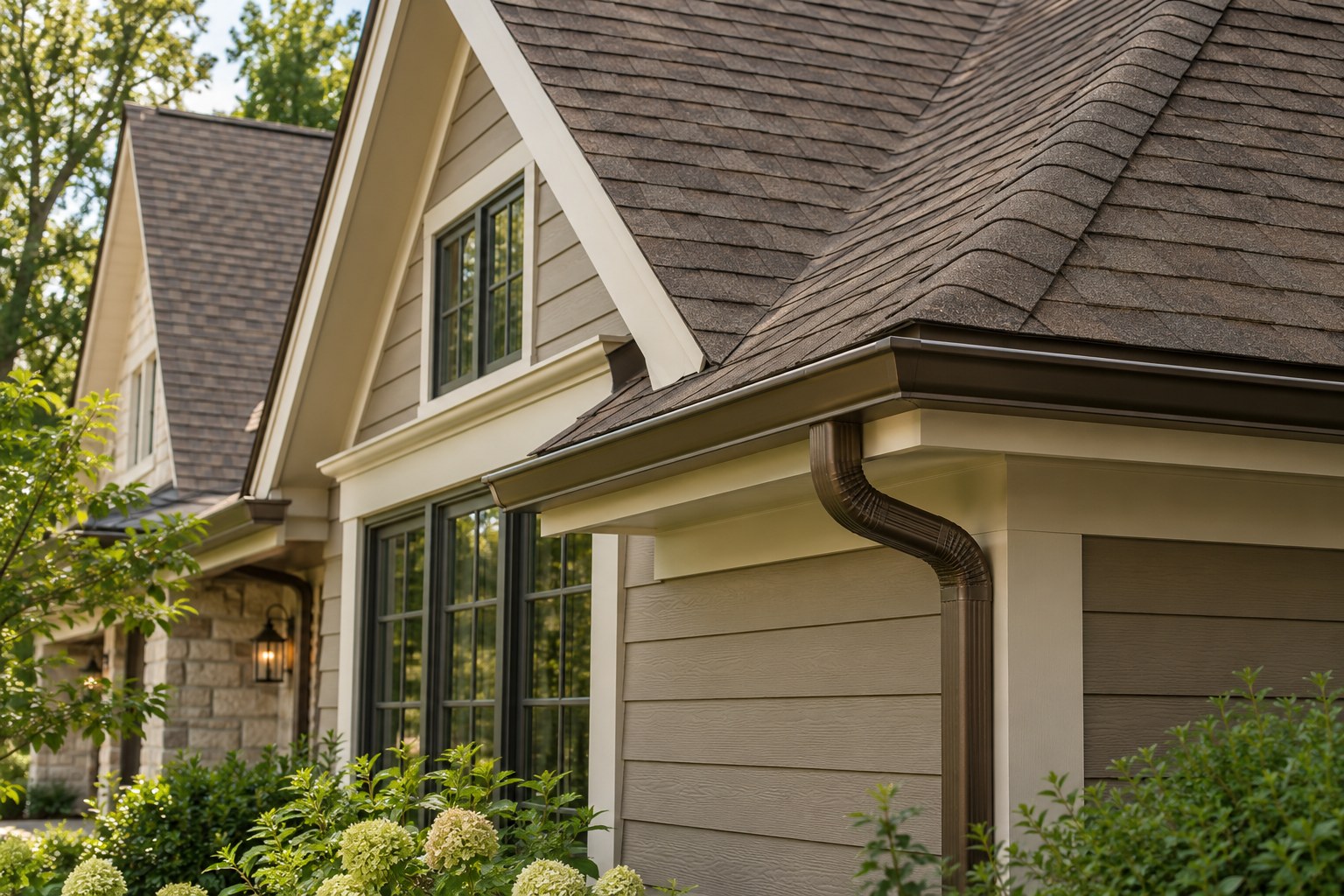
Brown shingles may lean golden, red, taupe, or espresso. Some blends contain substantial gray. Look at several sections in daylight and from the street: individual granules can look different from the overall roof. A reddish roof often needs a different balance than a gray-brown roof, even though both are described as brown.
Warm white and cream
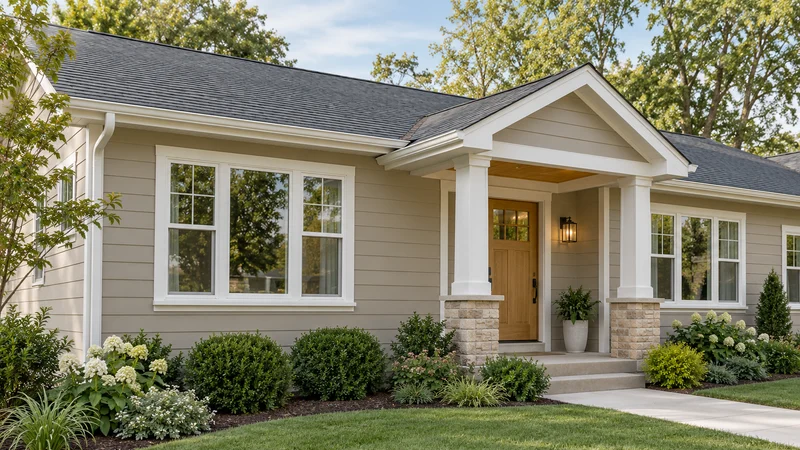
A softened white can give a brown roof a calm, traditional setting. The useful distinction is between a white with enough warmth to belong beside the roof and a strongly yellow cream that repeats too much warmth. With golden shingles, compare neutral ivory against more buttery options before choosing.
Keep existing white windows in view. A very creamy trim beside a factory-white frame may look unexpectedly yellow. You do not have to match every surface, but the contrast should feel deliberate.
Mushroom, taupe, and soft greige
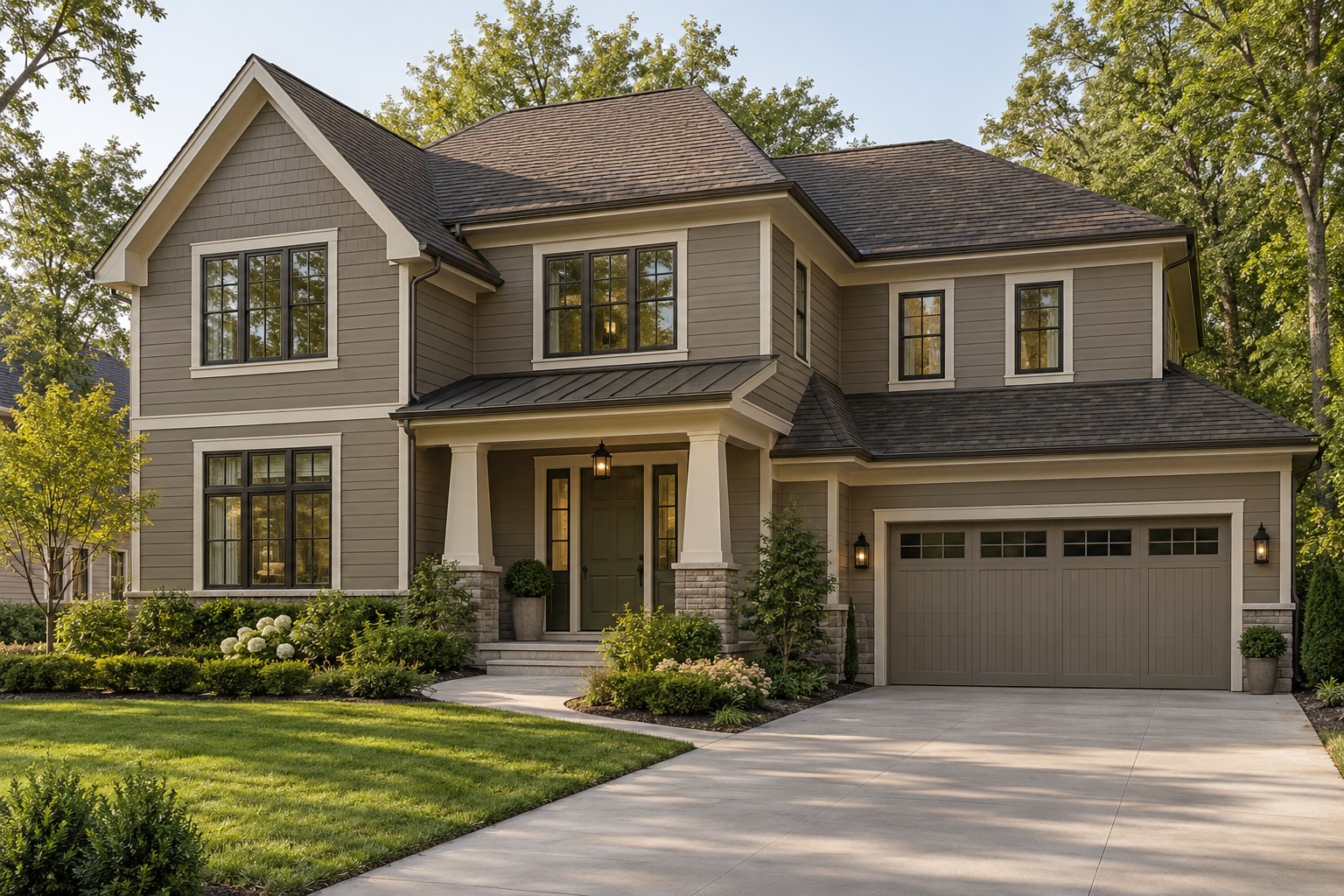
Mushroom and taupe are useful because they can bridge brown shingles, neutral stone, and darker metal. They are not interchangeable: one sample may lean pink, another green, and another violet. Compare each directly with the permanent materials.
Soft greige can work with a roof that contains both brown and gray. Avoid choosing from a small indoor chip alone. A gray-looking swatch may become beige in direct sun, while a cool gray beside warm shingles may make the roof look more orange.
Muted sage and olive
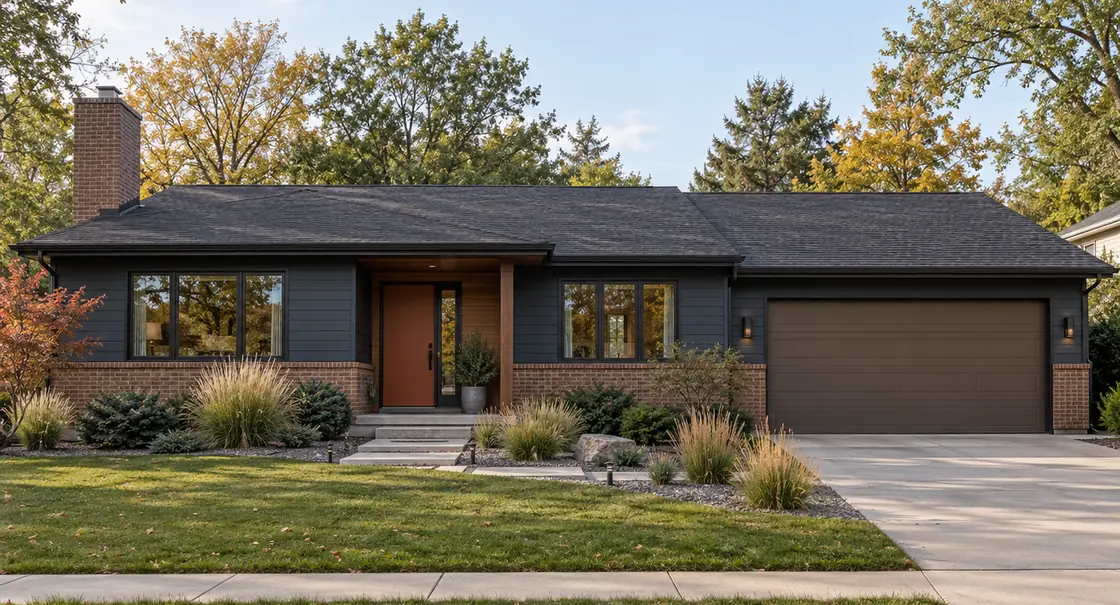
A restrained green can provide gentle contrast without disconnecting the roof from the walls. Sage often suits a quieter gray-brown roof; a warmer olive can relate well to earthy brick and deeper brown shingles. Keep the saturation controlled, especially across a large exterior.
For a darker accent, consider deep green or warm charcoal on shutters or selected trim. Repeat the accent where the architecture supports it instead of outlining every edge. An espresso roof already creates a strong dark mass, so more dark paint is not automatically better.
Choose trim, garage, and front door together
Trim sets the amount of contrast. Soft ivory can connect a warm roof to a pale wall, while a more neutral off-white may suit gray-brown shingles and white windows. Garage doors close to the wall color usually draw less attention than bright white doors. This can help the entrance become the focal point.
A contrasting front door works best when it supplies one clear accent: muted olive, stained wood, or a deep mineral tone. Check it beside the actual door surround. A beautiful door color can still feel unrelated if the surrounding brick and trim point in another direction.
Colors to approach carefully
Very cool blue-gray, brilliant white, and saturated orange-brown deserve careful sampling beside a warm roof. None is universally wrong; the risk is an unintended contrast that makes the roof or walls appear more intense. Stone, brick, and shaded porch areas can change the judgment again.
Test large samples on more than one elevation and view them in morning, midday, and late afternoon. Use the intended coating and sheen where practical. A digital concept helps compare relationships, but the final paint decision belongs to physical samples at your house.
Use the roof as one part of the complete palette when you choose exterior house colors; masonry and window finishes also influence the result.
Explore the exterior paint palette collection for ready-made color directions, then test the options beside your own roof.