Exterior Colors for a Gray Roof: Best Siding, Brick & Trim Combinations
Choose exterior colors for a gray roof with practical siding, brick, trim and door combinations, Sherwin-Williams examples, and advice for testing your palette.
A gray roof gives you considerable freedom when choosing exterior house colors. Warm white, taupe, sage and blue can all work, but the right combination depends on which gray is overhead and which materials are staying.
When I consider an exterior palette, I start with the roof, masonry and windows before selecting paint. These permanent elements occupy large areas of the house. Ignoring one of them can make a beautiful siding color look wrong once it is applied.
Identify Your Gray Roof’s Undertone
Look at the roof from the street in natural daylight. If possible, compare a roofing sample beside siding and masonry samples. Shingles contain several granule colors, so judge the overall field rather than one small speck.
A cool blue-gray roof may make a strongly yellow beige look more pronounced. A warm taupe-gray roof can make icy white siding feel disconnected. Neutral gray gives more flexibility, while charcoal creates stronger contrast and silver-gray makes the upper part of a house feel lighter.
- Cool blue-gray: often works with muted blue, mineral white and carefully tested gray-green.
- Neutral gray: a flexible starting point for white, greige, green or deeper accents.
- Warm taupe-gray: consider mushroom, cream, warm greige and earthy green.
- Charcoal gray: balance its weight with lighter walls, textured masonry or wood.
- Light silver-gray: use enough wall and trim definition to keep the exterior from looking washed out.
What Exterior Colors Look Best With a Gray Roof?
Warm white and soft off-white offer a light backdrop for medium-gray or charcoal shingles. Greige and taupe provide a quieter transition between roof and walls, particularly beside warm masonry. Beige can soften a cool-looking roof when its yellow or pink undertone is controlled.
Muted green and sage relate naturally to stone, timber and planting. Blue-gray suits a cooler roof, while navy adds more depth. Charcoal can create a restrained contemporary exterior if the roof and siding remain distinguishable. Muted brown works well when the palette already includes bronze, wood or brown stone.
These color families are starting points, to compare beside your actual roof and masonry.
Warm White House With a Gray Roof
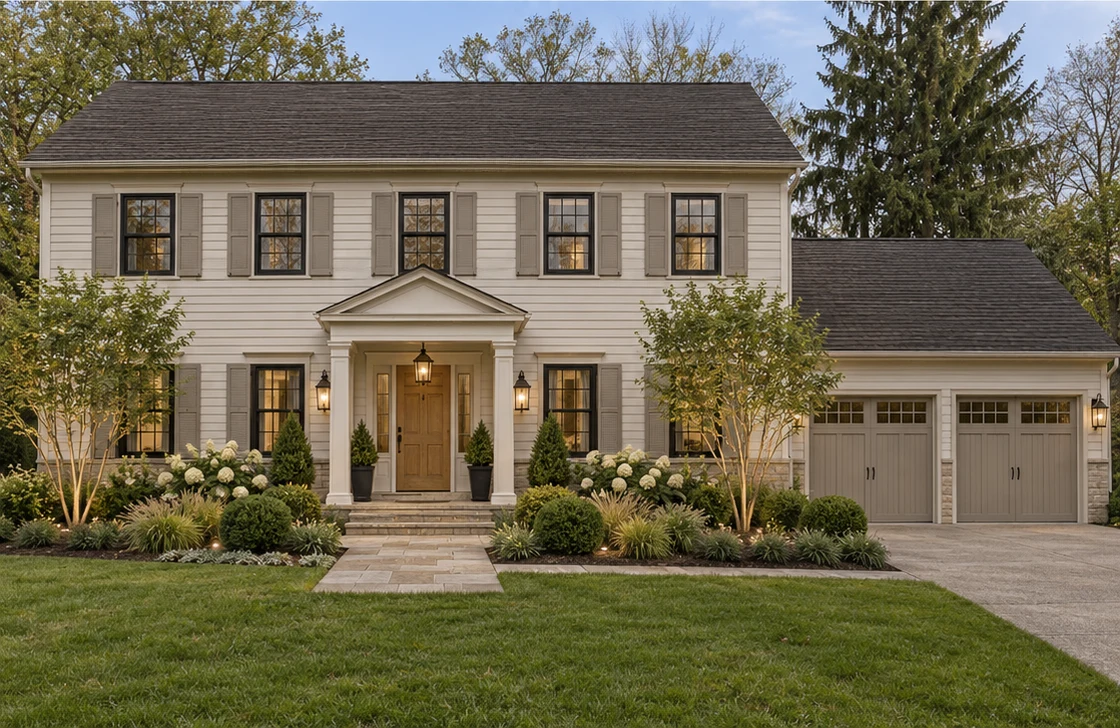
Warm white is a dependable direction for many traditional and transitional homes because it brings lightness without demanding another dominant color. With a charcoal or medium-gray roof, the walls and roof form a clear, readable contrast.
Add soft black or bronze windows, a natural wood front door and selective stone. Trim can be close to the wall color or slightly deeper, rather than forming a bright white outline around every element. That quieter treatment lets the entrance and masonry do more of the work.
Compare SW 7042 Shoji White, SW 7566 Westhighland White and SW 7551 Greek Villa as possible off-white directions. SW 7009 Pearly White is a softer, gray-influenced alternative to include in the comparison. They are not interchangeable: sample each outside beside your roof and fixed materials. Warm stone or red brick often benefits from a softer white, but roof undertones and local light still decide the result.
Greige and Taupe With a Gray Roof
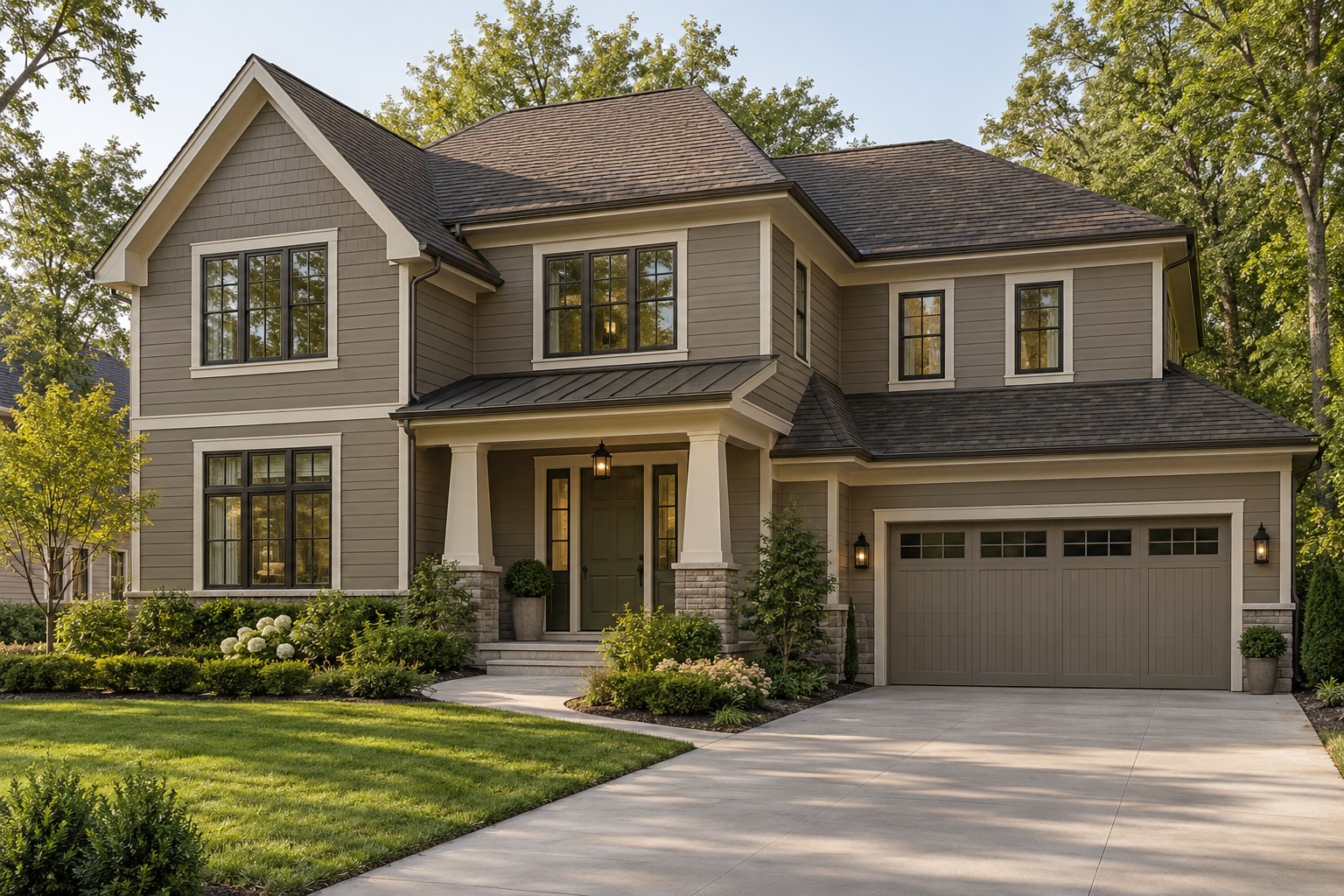
Greige bridges gray and beige; taupe can introduce more brown or muted violet depending on the shade. Both can reduce the gap between gray roofing and warm limestone, beige stone or timber. This is especially useful when a home has several permanent materials that must remain.
Consider SW 7036 Accessible Beige, SW 7030 Anew Gray and SW 7043 Worldly Gray as sample options. SW 9170 Acier offers a deeper gray direction when the walls need more definition. Compare them on the actual house: a warm beige, taupe-inspired neutral and deeper gray will not behave identically.
Bronze accents or black windows can define the openings, while a wood garage door introduces warmth. If the stone is already busy, keep siding and trim restrained. A cool gray wall can exaggerate the warmth of brown stone; a warmer neutral may connect the two more comfortably.
Sage Green and Muted Green With a Gray Roof
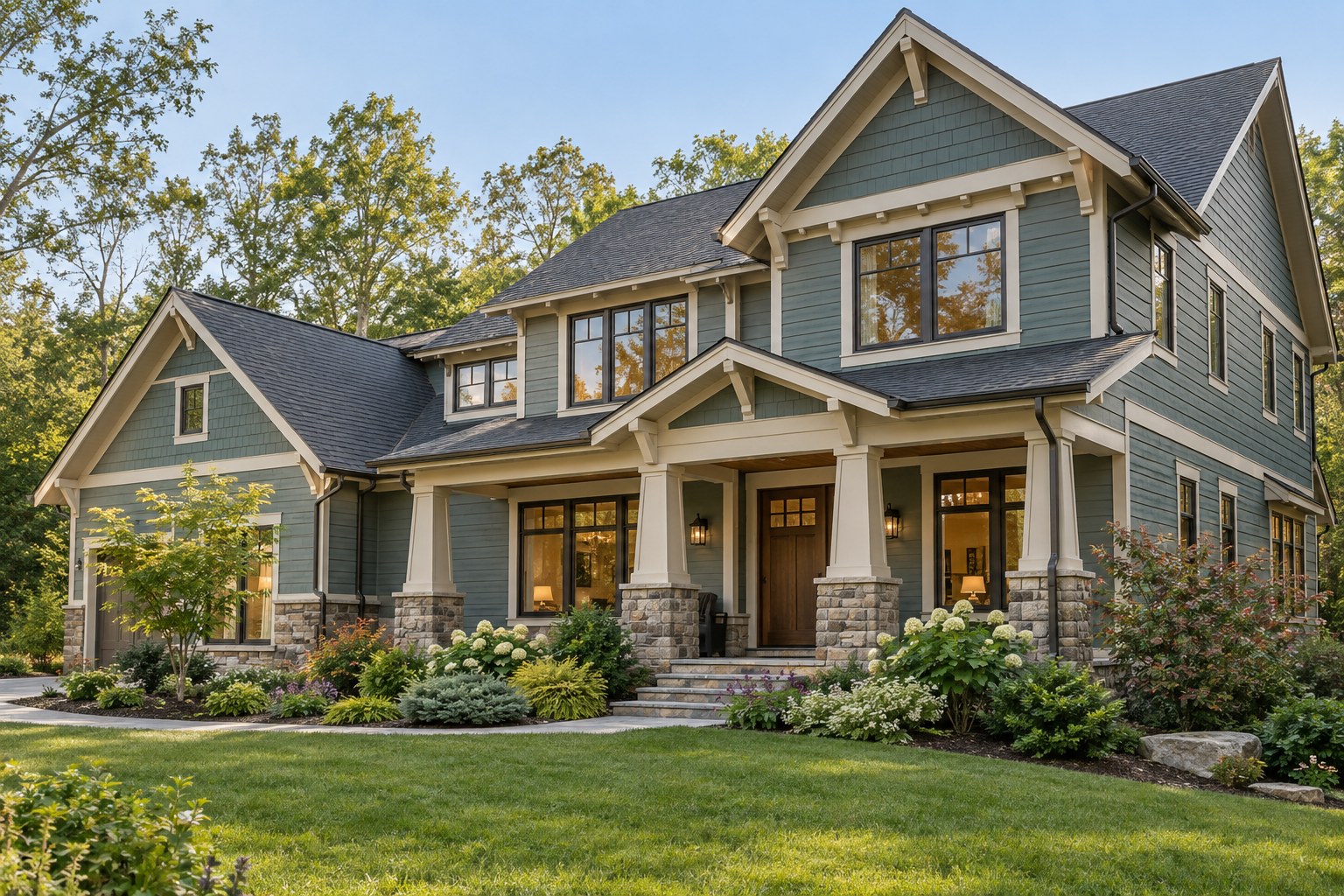
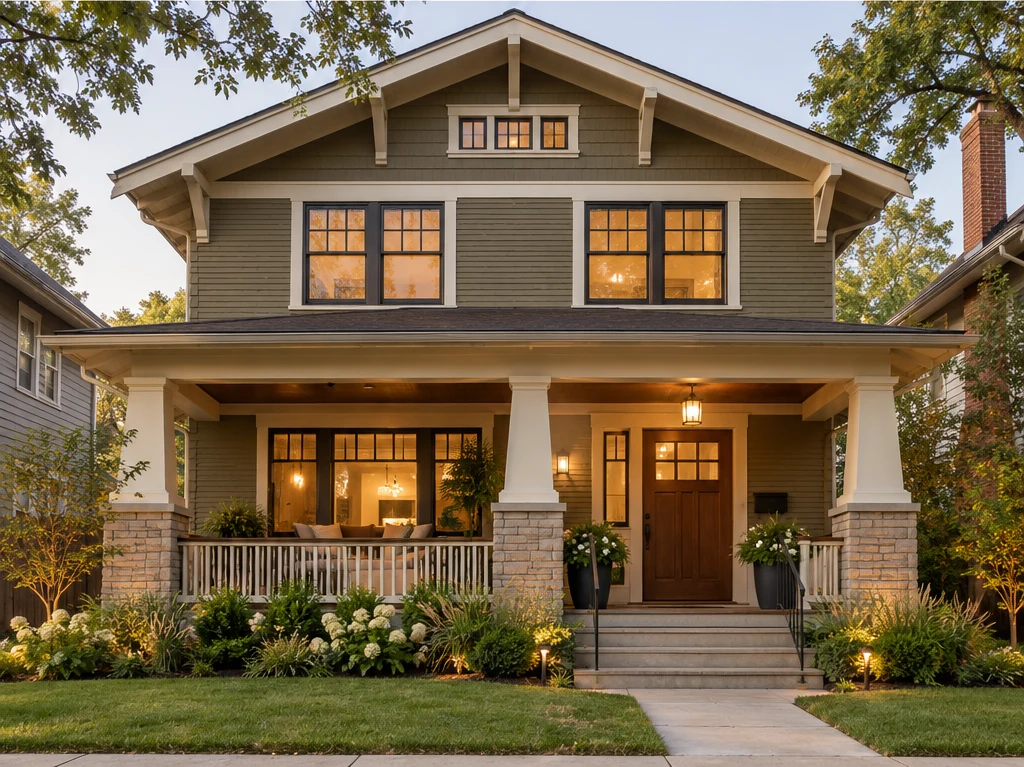
Understated green is useful when you want color without a strongly saturated exterior. Its gray component relates to the roof, while the green connects with planting and natural materials. It can suit a Craftsman, ranch, cottage or an organic contemporary renovation.
SW 6171 Chatroom, SW 6178 Clary Sage and SW 6186 Dried Thyme provide different depths to test. SW 6204 Sea Salt is a much lighter green-gray option that can shift toward blue and may look pale outdoors. Sample them at the property rather than assuming every sage works with every gray roof.
Try creamy trim with wood at the entrance and stone at the porch base. A garage close to the siding color can reduce its prominence. If the roof has a noticeable blue cast, compare the green carefully: a very yellow olive may create more tension than a grayer green.
Blue and Navy House Colors With a Gray Roof
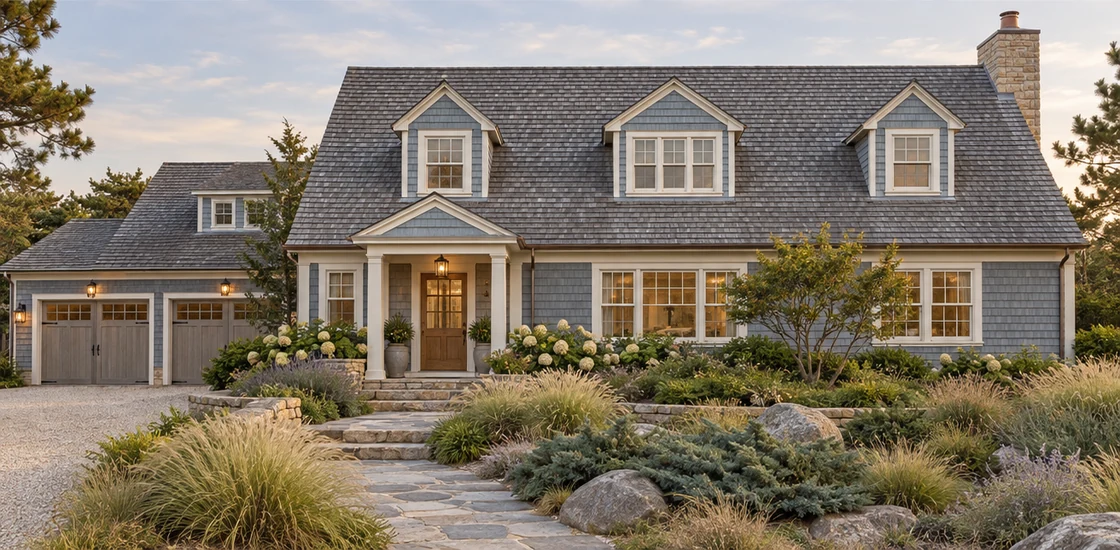
Muted blue-gray can connect gently with a neutral or cool gray roof. Deep navy creates a stronger wall plane and often feels more formal. Choose based on how much contrast the house needs, not only on the shade you prefer in isolation.
SW 7602 Indigo Batik, SW 6244 Naval and SW 6237 Dark Night are deeper directions to compare; SW 7604 Smoky Blue offers a more muted blue reference. Test painted boards outdoors because strong sunlight, shade and warm masonry can change how each reads.
Warm wood, creamy trim and natural stone keep a blue house from feeling cold. Use black accents selectively. If both roof and siding are dark, the entrance may need a lighter surround or warmer material to remain visible.
Charcoal and Dark Exterior Colors With a Gray Roof
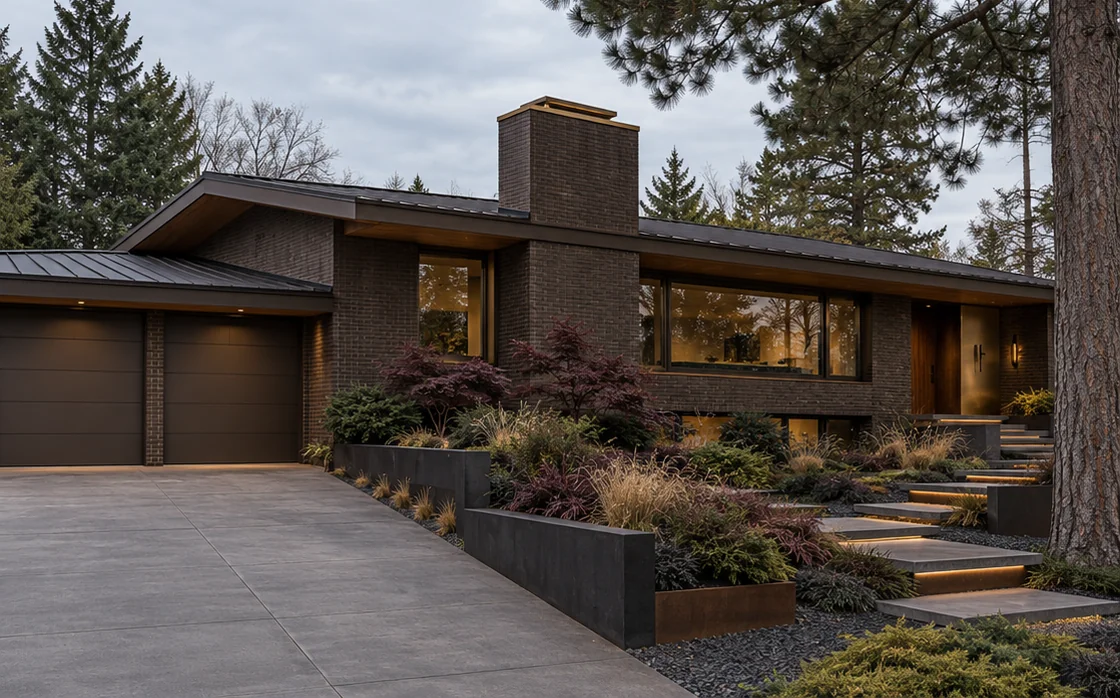
A dark exterior can work with gray roofing when there is a clear difference in value or texture. Charcoal siding beneath a medium-gray roof may read as distinct layers; nearly identical dark surfaces can flatten the roofline and walls into one mass.
Wood soffits, a timber door or limestone at the entrance can create useful relief. Black windows may sit quietly within the walls, but their visibility depends on the siding shade. Keep the material transitions tied to corners, openings and roof changes.
View dark samples on sunny and shaded elevations. Also confirm coating and color suitability with the siding or door manufacturer, particularly for products with restrictions on dark finishes. A visually successful palette must work with the chosen material system.
Beige and Warm Neutral Houses With Gray Roofs
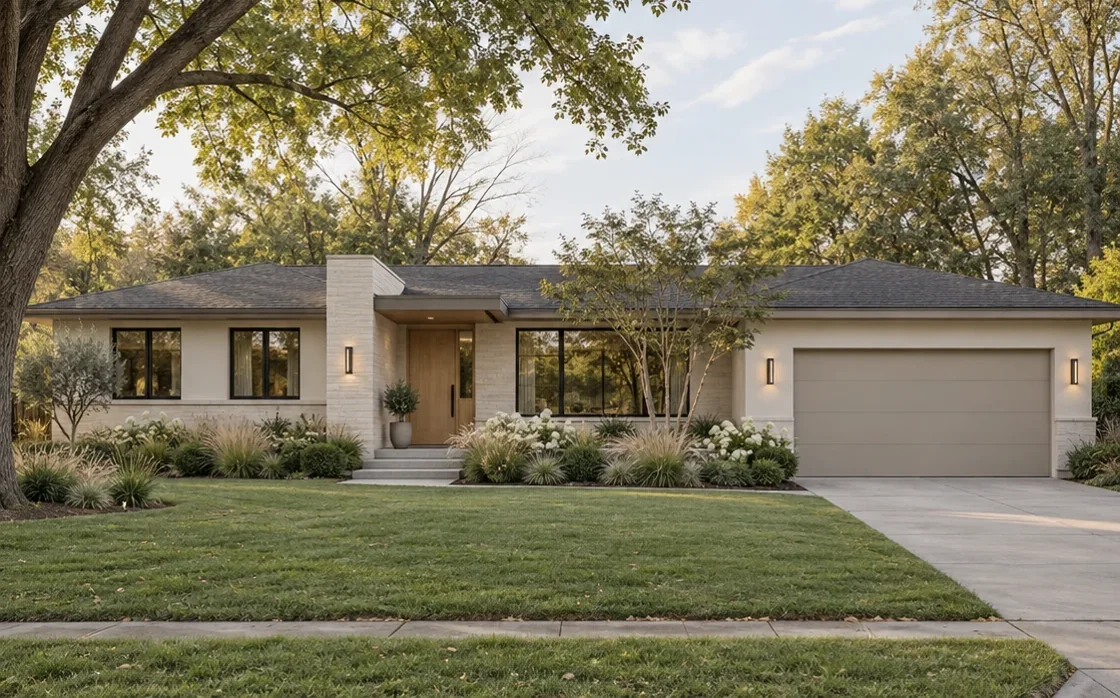
You do not need gray siding because your roof is gray. Mushroom, beige, warm stone colors and creamy neutrals can make the house feel softer, especially with bronze windows or a wood entrance.
SW 7037 Balanced Beige and SW 7506 Loggia are possible warm-neutral samples. SW 7040 Smokehouse is a much deeper brown direction, useful where greater depth is intended rather than as a substitute for light beige. Compare all options outside beside the roof and masonry.
The challenge is undertone. A very yellow beige against blue-gray shingles may intensify both colors. Start with a muted neutral, then see whether the mortar, window finish and stone support that warmth. Repeating a similar neutral on the garage can keep the large opening quiet.
Brick House With a Gray Roof
Brick adds more color variation than a painted siding surface. Read the dominant clay tone, darker flecks and mortar from a distance before choosing surrounding finishes. The goal is to work with the masonry rather than overpower it.
Red Brick + Gray Roof
Warm white, cream and muted taupe can soften red brick, while deep green, charcoal, black or bronze provide definition. Choose the amount of contrast according to the entrance and window proportions. A broad white garage door may draw more attention than the brick or front door.
Try new trim, door and garage finishes before deciding the brick needs covering. Test samples beside both brick and mortar: an orange-red wall and a burgundy-red wall may need different supporting colors.
For a full approach to keeping natural masonry, read how to modernize a red brick house without painting the brick.
Brown Brick + Gray Roof
Brown brick can work with cream, warm greige, taupe or muted green. Charcoal accents may connect to dark flecks in the masonry, but a cool gray siding can make warm brown brick appear more orange. Check the mortar too; it can provide a useful neutral for trim or siding.
Painted Brick + Gray Roof
Warm white, taupe, muted green or a darker finish can relate to gray roofing, depending on the house. Keep brick texture visible in the design and coordinate any adjoining siding. Existing coatings and masonry condition affect repainting choices, so confirm preparation and a compatible finish system locally before committing.
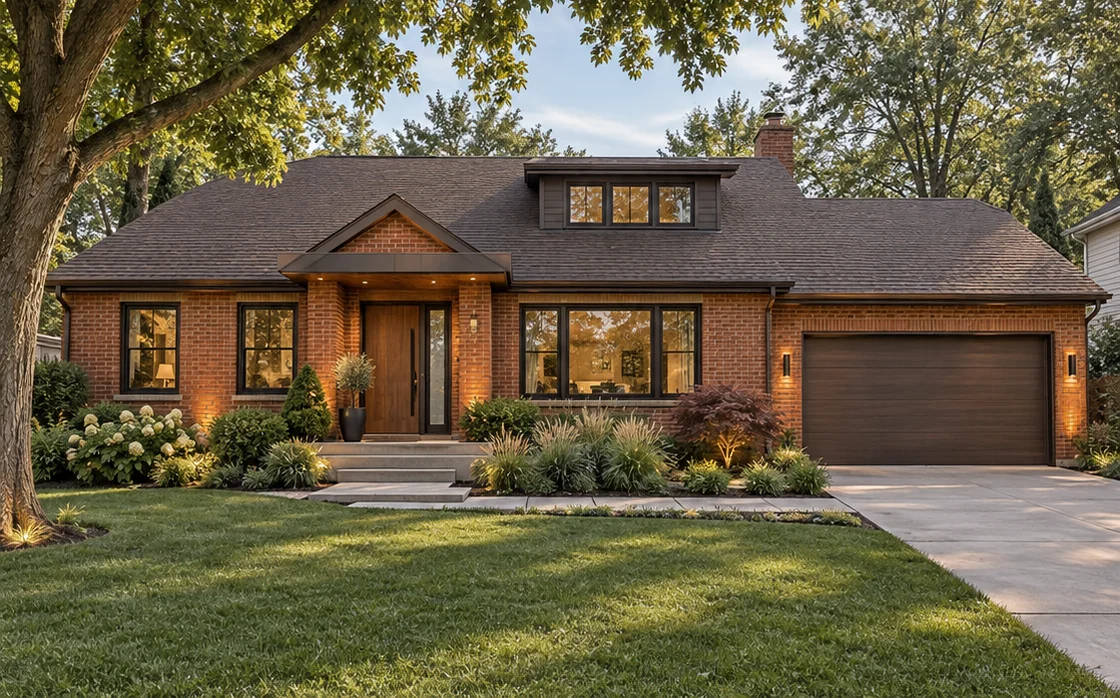
Best Trim Colors for a House With a Gray Roof
Crisp white creates clear contrast and can suit cooler palettes, but it may look harsh beside warm masonry. Warm white and cream offer a softer edge. Greige trim can connect the walls with a mixed roof or stone palette without drawing a line around every opening.
Charcoal or black can emphasize selected windows, eaves or architectural features. Repeating it everywhere can make a small home feel heavily outlined. Compare trim with the siding, roof, brick, stone, window frames and gutters together. Test the intended paint and sheen on a larger sample before choosing.
What Color Should the Front Door Be With a Gray Roof?
Natural wood, black, deep green and navy are useful options for controlled contrast. Muted burgundy can suit a traditional house; soft yellow can mark a contemporary entrance when the remaining palette is restrained. Terracotta or earthy red may work where the architecture and masonry support that warmth.
The door should identify the entrance, not add an unrelated color. Test any painted option inside the actual porch shade, and compare wood samples there too. A finish that looks clear in the yard may disappear in a deeply recessed doorway.
Use the surrounding materials to narrow your options with How to Choose a Front Door Color for Your House.
What Color Should the Garage Door Be?
A garage door generally supports the house rather than acting as its main accent. Matching siding can reduce its size visually. Matching trim can work when the trim is restrained and the garage does not occupy most of the frontage.
Wood introduces warmth when it relates to the entrance or porch. Charcoal can connect to gray shingles; black requires care because a large dark opening can dominate light walls. Test the finish at scale and confirm compatibility with the garage-door material.
See how garage-door color changes the exterior’s visual hierarchy for examples of balancing the garage and entrance.
Gray Roof Color Combinations by House Style
Architecture influences where color belongs. The same palette can feel convincing on one house and awkward on another because the roof form, porch, garage and window rhythm are different.
Ranch House
A limited palette keeps the long, low elevation readable. Warm white or sage walls, a quieter garage and selective wood at the door can make the entrance clearer without breaking the house into unrelated blocks.
Split-Level
Use related colors to connect staggered levels and concentrate contrast where it explains the entrance. A muted upper siding color with existing brick below often works better than a different accent on every volume.
Colonial
Warm white, cream, muted blue or green can support a Colonial’s symmetry. Let shutters reinforce the window rhythm and the central door lead. For a historic property, check any applicable preservation requirements before selecting finishes.
Craftsman
Sage, earthy neutrals, wood and stone relate naturally to substantial porch supports and gables. Layer trim colors carefully so the brackets, columns and windows read clearly without making each detail a different accent.
Modern Transitional
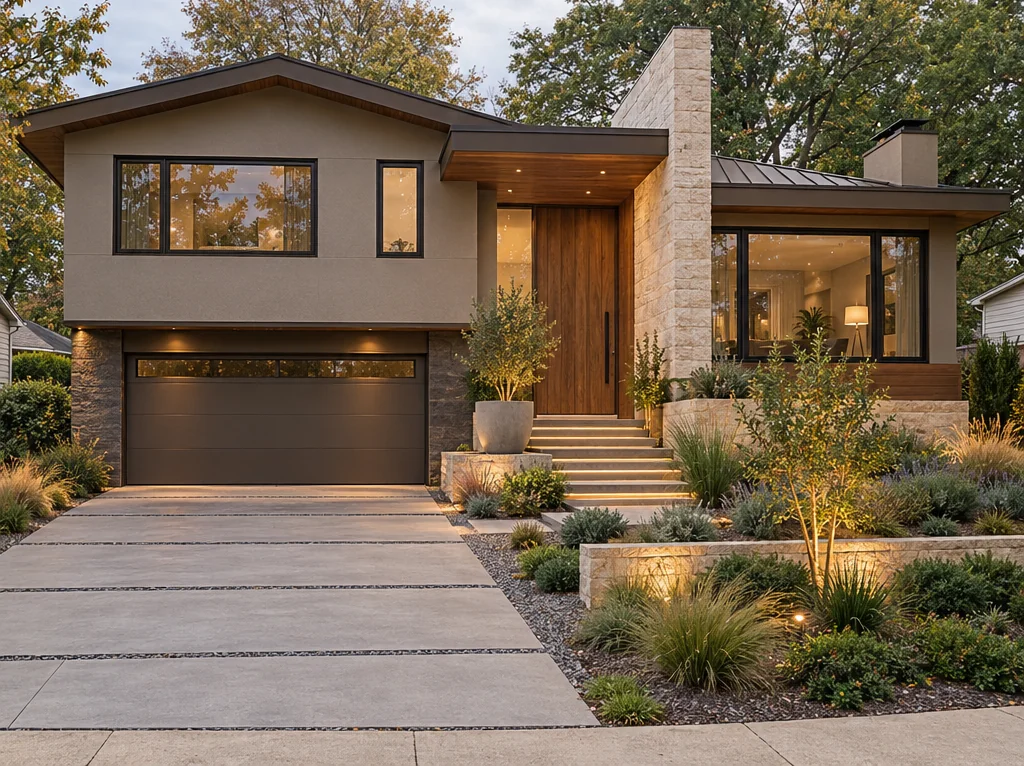
Warm white, taupe, muted green or charcoal can work with stone and wood when materials are placed deliberately. Keep the main wall color calm and reserve texture for the entrance or a genuine change in volume.
Mistakes to Avoid When Choosing Colors for a Gray Roof
Most unsuccessful combinations come from decisions made separately. Before ordering, check for these common problems:
- Choosing from a tiny paint chip: it hides the effect of color across a large wall.
- Ignoring the roof undertone: a blue or brown cast can change the entire palette.
- Using unrelated grays: several near-matches often look accidental rather than layered.
- Putting icy white beside warm brick: the contrast may exaggerate orange or yellow tones.
- Making the garage the strongest contrast: the entrance becomes secondary.
- Ignoring existing stone or brick: permanent masonry needs a place in the scheme.
- Selecting colors indoors: interior lighting does not represent the exterior.
- Copying a Pinterest house: its roof, exposure and materials may be different.
- Choosing every element independently: a good door or window finish cannot rescue an incompatible overall palette.
How to Build a Complete Exterior Palette
Work in this order so each decision has a clear reference:
- Identify fixed materials, including windows, masonry and any roof that will remain.
- Determine the roof undertone in daylight, using a sample where possible.
- Choose the main siding or body color in relation to those fixed elements.
- Choose trim that gives the openings the right amount of definition.
- Coordinate the garage so its scale does not overwhelm the entrance.
- Select the front-door or accent finish to establish a focal point.
- Confirm any new brick or stone beside the full palette.
- Test large samples outside on different elevations and in changing light.
- Visualize the complete exterior before purchasing materials.
For the wider renovation sequence, see how to plan an exterior renovation before buying materials.
See the Exterior Before You Renovate
Paint should be considered alongside siding, trim, masonry, windows, doors, garage finishes, lighting and landscape direction. Online Exterior Designer uses photos of your own property to show how these changes could work together, supported by a Design Specification & Sourcing Guide.
A visualization helps you assess the whole composition; physical samples and local technical checks remain part of making the final choices. The aim is to resolve the design before materials are ordered.
Frequently Asked Questions
What color house looks best with a gray roof?
Warm white, greige, taupe, muted green and blue-gray are useful starting points. The best option depends on the roof’s undertone, existing masonry and the house’s proportions. Test a complete palette rather than choosing a wall color alone.
Can you use beige siding with a gray roof?
Yes. A muted beige or mushroom can bridge gray roofing and warm stone or brick. Compare outdoor samples carefully if the roof leans blue and the beige has a strong yellow undertone.
Does a gray roof work with a white house?
Yes, especially when the roof provides enough contrast to define the house. Softer whites often sit more comfortably beside warm masonry or timber, while cooler whites may suit a cooler palette. Test the chosen white in sunlight and shade.
What colors go with charcoal shingles?
Warm off-white, taupe, sage and muted blue can balance charcoal shingles. Darker siding also works when there is enough difference in value or texture to preserve the roofline. Wood and light stone can bring warmth to the entrance.
Can a gray roof work with red brick?
Yes. Coordinate trim, siding and doors with the brick and mortar as well as the roof. Muted taupe, warm white, olive or bronze-dark accents are options to test before considering a change to the brick itself.
Should the gutters match the roof or trim?
Either can work depending on the roof edge. Matching the fascia or trim often makes gutters less noticeable; a darker roof-edge finish can connect them to charcoal roofing. Downspouts may blend better with the wall they cross.
Should the garage door match the siding?
Matching or closely relating the garage to the siding is often useful when the opening dominates the front. A wood or darker finish can work if it supports the architecture and relates to the entrance. Judge the entire elevation from the street.
What Sherwin-Williams colors work with a gray roof?
Shoji White, Accessible Beige, Chatroom and Indigo Batik represent different directions to explore rather than universal matches. The right choice depends on roof undertones, masonry and exposure. Sample your shortlist on the actual house and confirm the appropriate exterior product.
Choose the Palette, Not Just the Paint
A gray roof can support a wide range of exterior colors. The strongest result comes from understanding its undertone and giving the house’s permanent materials an equal role in the decision.
Roof, siding, brick, stone, trim, windows, garage and front door should read as parts of one home. Once their relationships are resolved, individual paint choices become much easier to make.