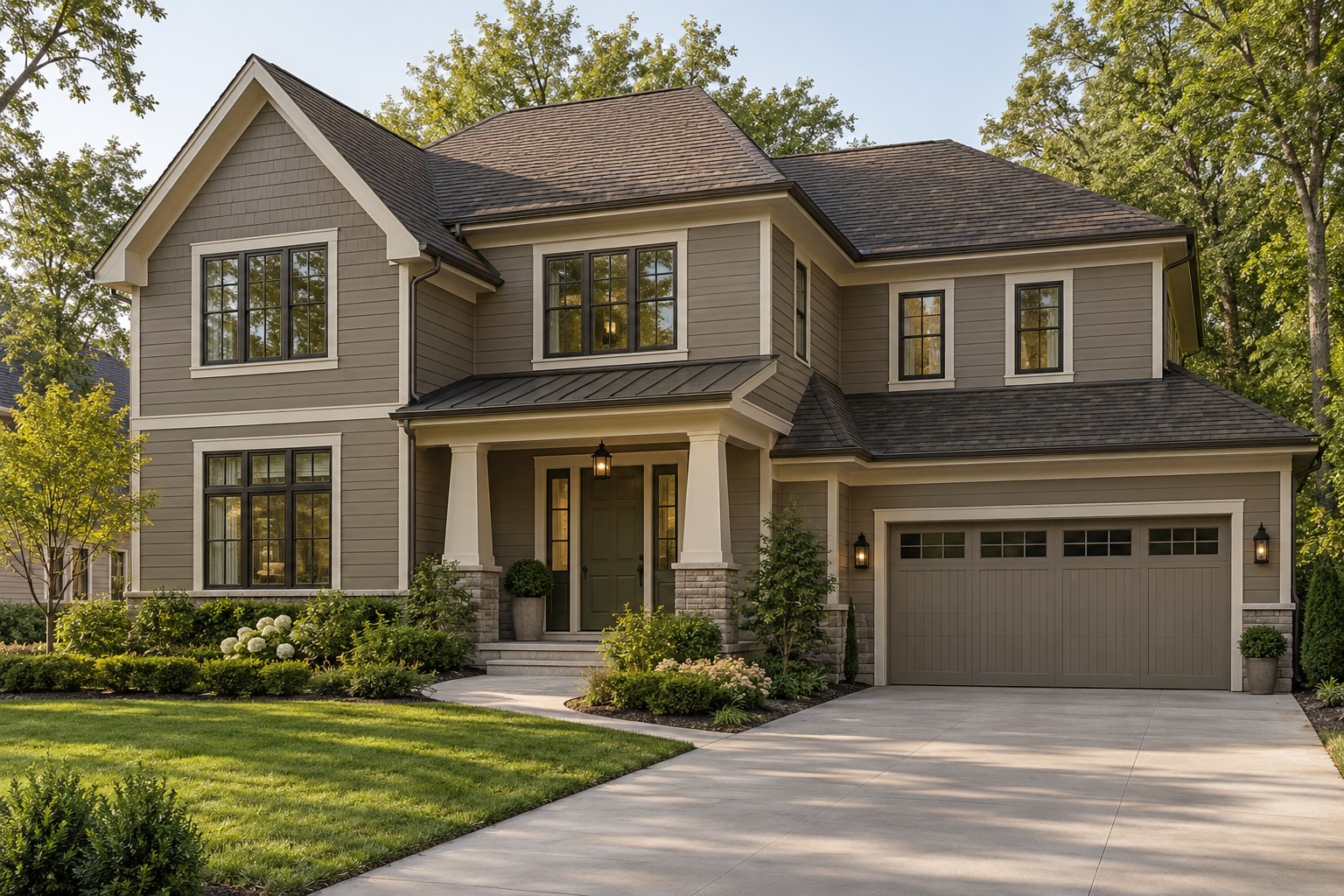
Exterior Colors for a Black Roof: Beyond White Siding
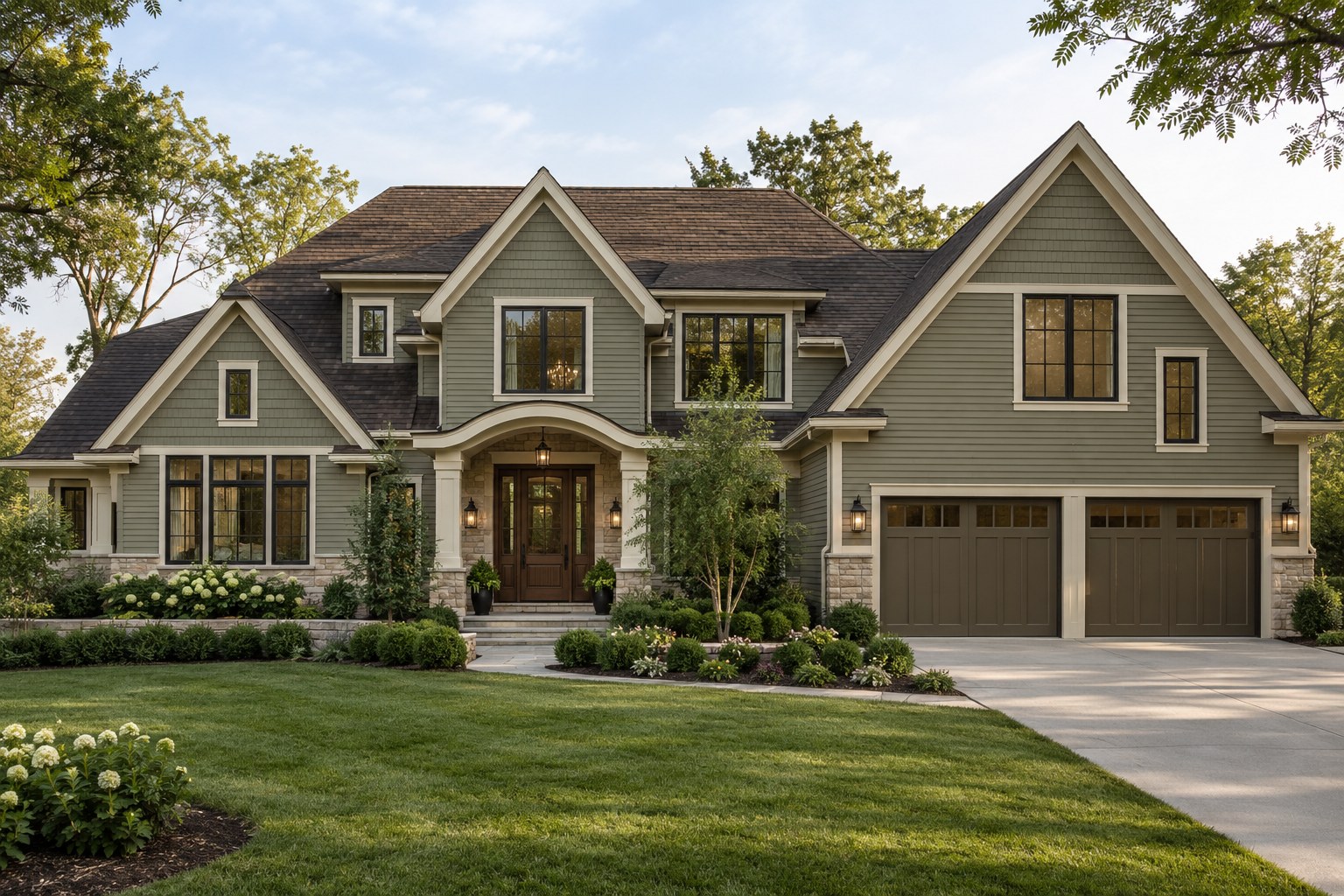
A dark roof can support mineral blue, olive, clay, and warm neutrals. The right choice depends on the rest of the house.
Start with the roof you actually have
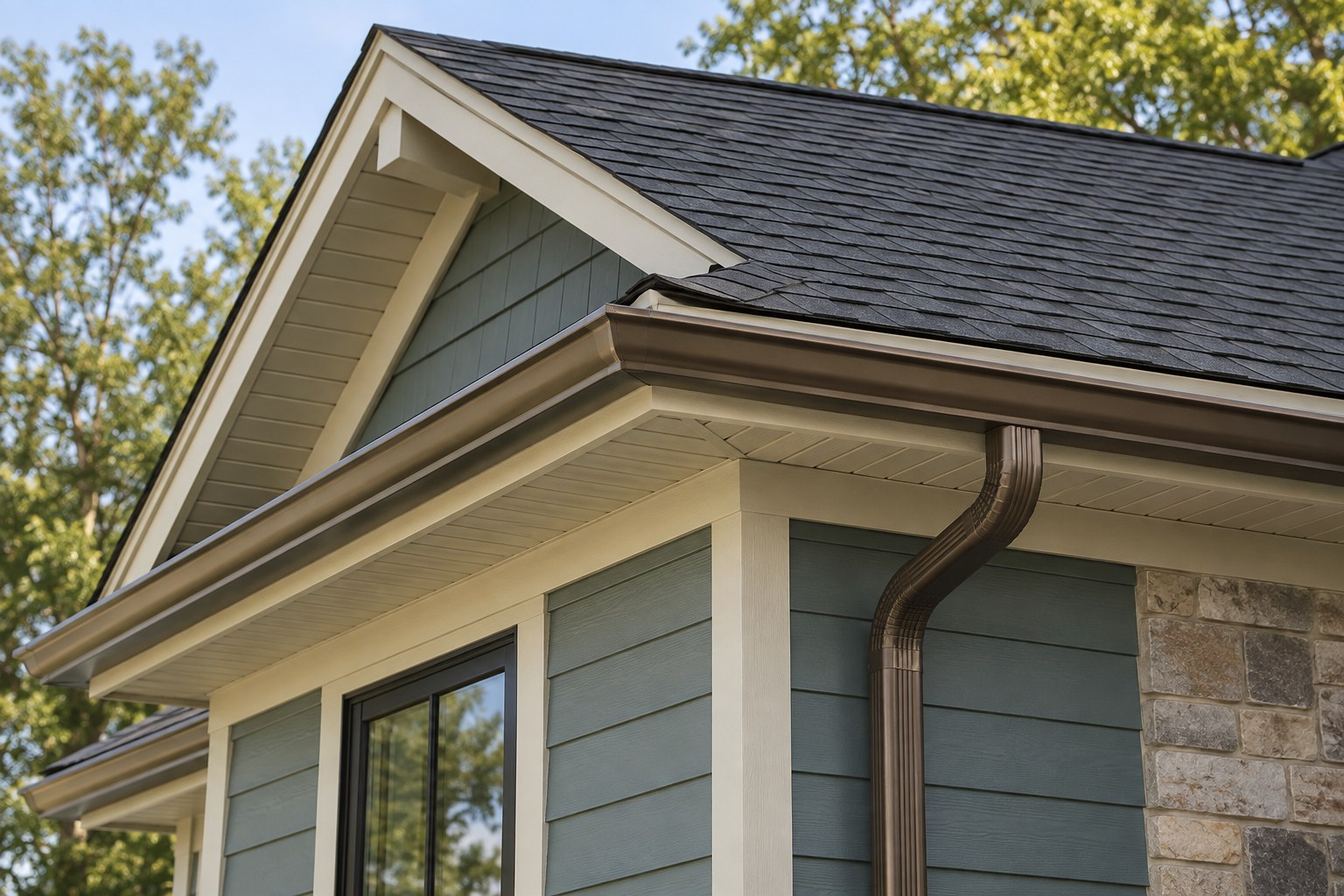
A roof described as black may read as graphite in sunlight, brown-black beside warm brick, or blue-charcoal on a cloudy day. Shingles also contain mixed granules. Before choosing a wall color, look at the entire roof from the street and then at a sample or close photograph. The overall impression matters more than one dark granule.
The next question is how much roof you see. A steep roof on a compact house can dominate the composition. A low roof behind tall walls may contribute only a narrow dark line. The same white siding produces a much more graphic result in the first situation. I would decide how much contrast the architecture can carry before deciding how light the walls should be.
Mineral blue-green gives the dark roof a quieter partner
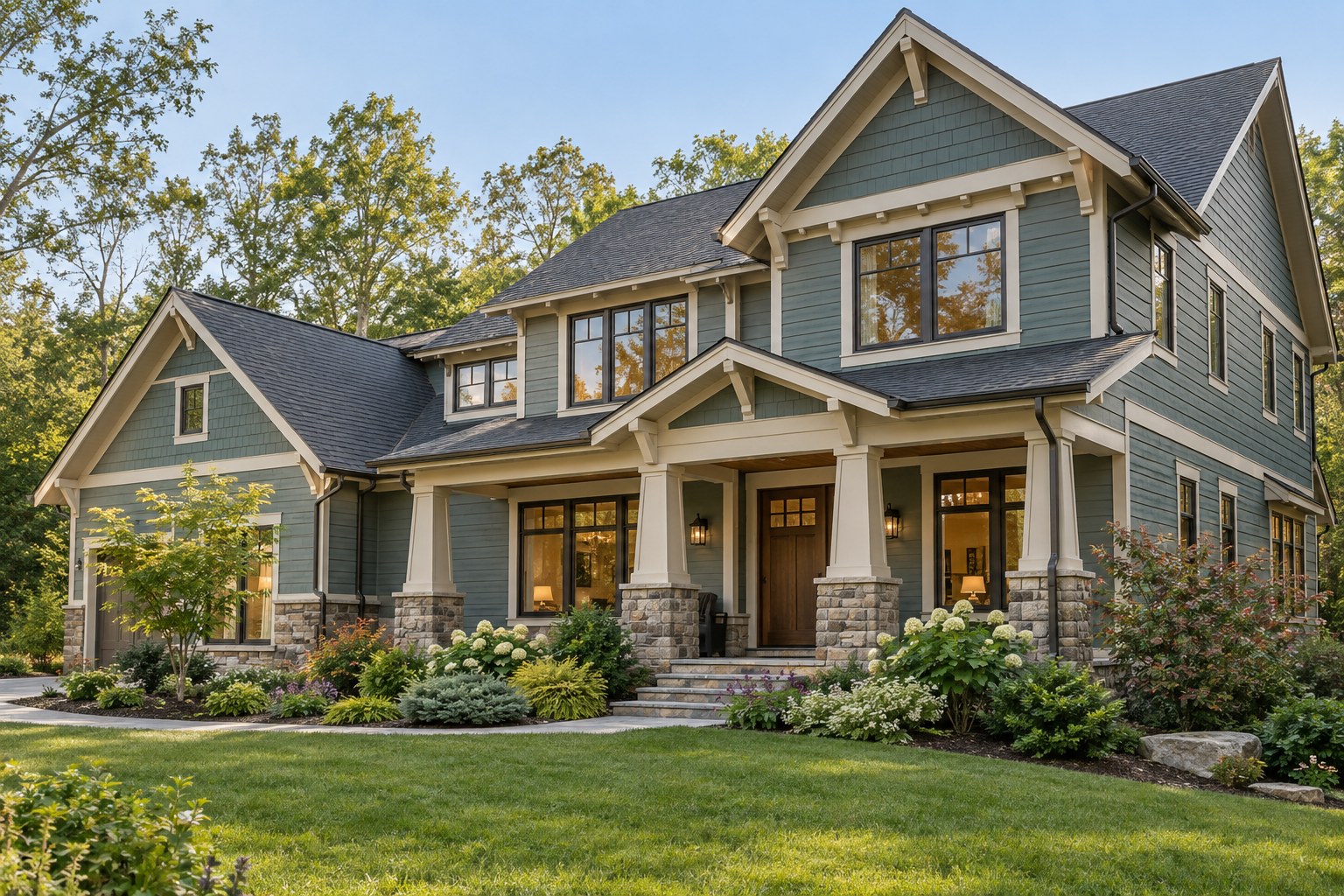
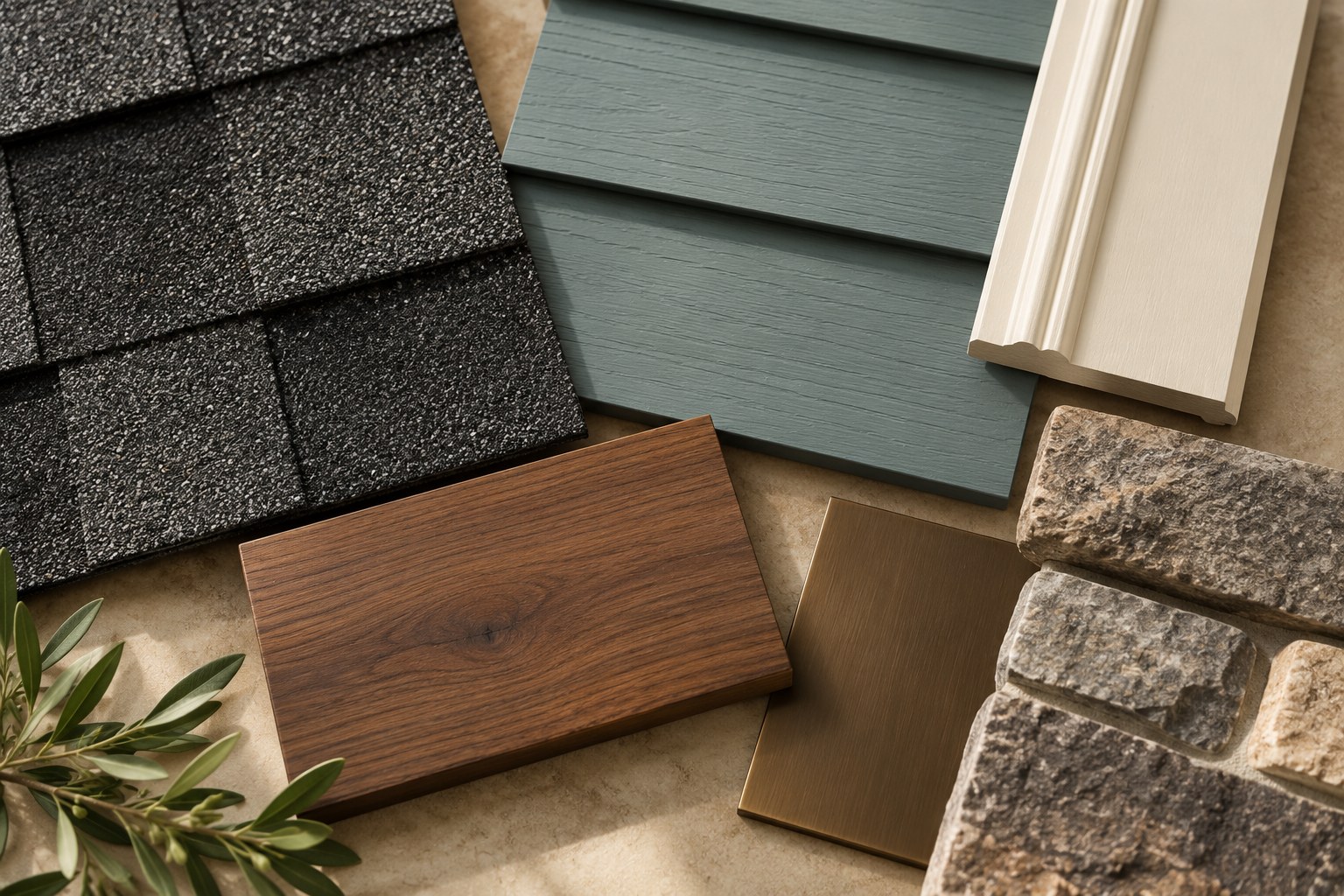
The Craftsman-inspired concept shown here uses a muted blue-green rather than a clear coastal blue. Its gray component lowers the saturation, so the siding remains calm over a large surface. The charcoal roof supplies depth; the siding supplies color without becoming the only thing you notice.
A softened cream trim separates the windows from the walls without drawing a brilliant white outline around every edge. Walnut at the entrance adds a warm focal point, while bronze metal sits between the wood and roof in value. This is a coordinated relationship, not a rule that any blue-green will work with any black roof. Gray-brown foundation stone and existing window finishes still need to agree with the samples.
Olive, clay, and chocolate offer different balances
Muted olive can work beautifully when the house has warm brick, tan stone, or established green planting. Choose an olive with enough gray to avoid an overly yellow cast across the exterior. A charcoal roof keeps the combination grounded, while pale stone trim provides a measured amount of light.
A restrained clay or terracotta wall creates a warmer relationship. This can suit a simple stucco exterior, but it needs particular care beside orange brick: repeating that warmth everywhere may make the house feel more saturated than intended. A cooler putty trim can be a useful bridge when the permanent materials support it.
Chocolate or burgundy-brown siding creates less light-dark separation from the roof. That can make a large house feel composed, but the entrance may disappear unless its surround, wood finish, or lighting gives it definition. I would use a lighter porch ceiling and a deliberate door treatment rather than adding bright trim to every gable.
Match the palette to the architectural language
A Craftsman-inspired house benefits from readable porch supports, generous eaves, and material texture. Color can emphasize those elements without inventing new ones. A Colonial-inspired exterior usually needs a more restrained treatment of its cornice, door surround, and repeated windows. Giving each gable a separate accent color can break that sense of order.
On a contemporary exterior, fewer material changes often allow the volumes to read more clearly. A dark roof does not automatically call for dark window frames, black gutters, black trim, and a black door. Repeating a dark finish is useful only where it strengthens the composition.
Check the windows, trim, and garage together
Factory-white window frames are a fixed part of the palette if they will remain. Strongly creamy trim can make those frames appear colder, while a very dark surround increases the contrast. Compare the actual frame against full-size trim and siding samples before approving the relationship.
If a front-facing garage occupies a large part of the house, a garage color close to the siding can reduce its visual weight. A contrasting garage can work when its doors have real architectural quality, but contrast should be a decision rather than the default. Let the front entrance have its own clear role.
Use the concept to narrow the choice, then sample outside
A material board is useful for checking the relationship between roof, siding, trim, wood, and metal. It cannot reproduce the scale of a painted exterior or the effect of direct sun. Test generous samples beside existing masonry and windows, on both a sunny and a shaded elevation.
The strongest palette is not necessarily the most unusual one. It is the one that belongs to the roof, materials, proportions, and setting of your particular house. If the roof reads more brown than black, start with the brown-roof guide instead.