How to Choose Exterior Colors for a Red Brick House
Keep your red brick and choose siding, trim and door colors around the roof, mortar and windows, with a practical order for testing the whole palette.
Read the brick as a mixture
If the brick is staying, choose the painted finishes around it rather than starting with a favorite paint name. The useful question is which surrounding colors will make the masonry, roof and entrance feel more settled together.
Red brick rarely contains only red. It may include orange, burgundy, brown, gray, taupe, or charcoal, with mortar adding another substantial color. Stand back to see the overall effect, then move closer to identify the quieter tones you could repeat in the painted surfaces.
Start with the brick, mortar, and roof together. A siding color pulled from one brick may work in isolation but conflict with the roof. The goal is a convincing relationship across the whole exterior, not an exact match to a single patch.
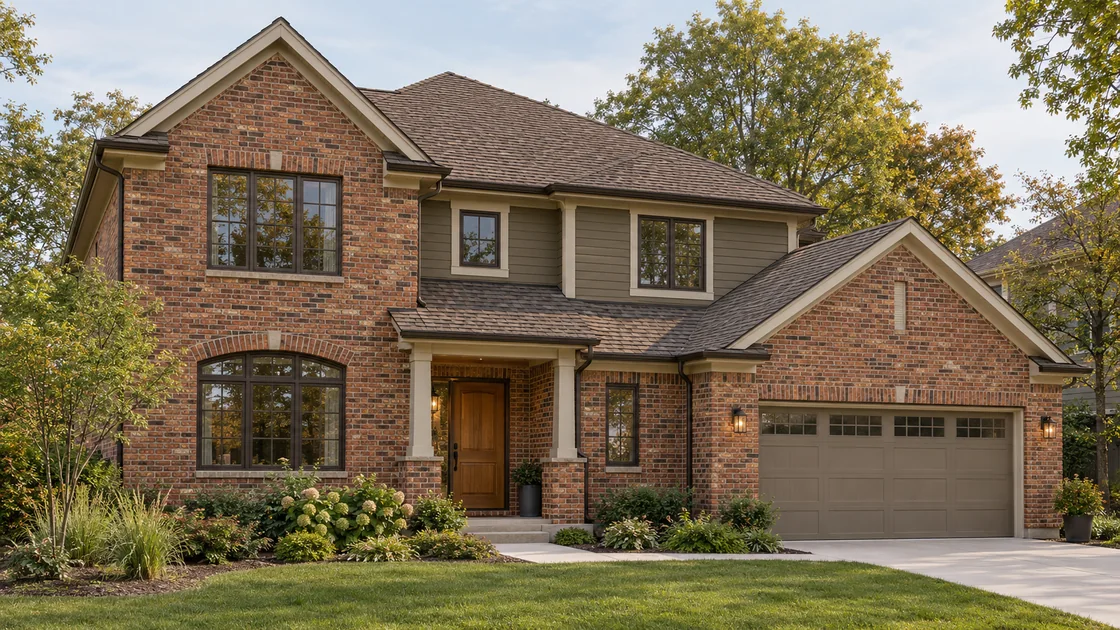
The hero is an illustrative exterior study: the red-brown brick remains the main material, while olive-taupe upper siding, warm ivory trim and a taupe garage create a softer supporting palette. The timber door brings warmth to the recessed entrance. These are visual color relationships, not confirmed manufacturer specifications.
Choose in this order: fixed finishes, main walls, trim, then accents
Record the roof, brick, mortar and factory window frames that will remain. Next, test the largest painted wall area against those elements. Choose the trim with the actual window finish beside it, then settle the garage and entrance. This keeps a small door-color decision from dictating the entire house.
When the windows are staying bright white, start by comparing a restrained light trim around them. A dark surround will emphasize the white frame inside it; that may be deliberate, but it is a different result from the dark-framed windows in an inspiration image. If there is little siding, the garage and trim may be the largest color decisions instead.
Warm white, mushroom, and taupe
A restrained warm white can lighten the painted parts while leaving brick as the dominant material. Compare it beside the mortar and existing windows. A strongly yellow cream can be too warm with orange brick, and a crisp white can make the brick appear more saturated.
Mushroom and taupe often provide a quieter bridge. Watch for pink or violet undertones when the brick is already red or burgundy. A slightly grounded neutral may be more useful than a fashionable pale gray. Test in both the shaded entry and the brightest wall area.
Muted green and deep blue-green
Muted green can balance the warmth of brick without hiding it. Sage, gray-olive, and green-taupe offer different effects; pick the direction that also respects the roof and landscape. Keep the color subdued enough that the masonry still has room to speak.
A deep blue-green can create a richer contrast on selected siding, shutters, or the entrance. It works best when the placement follows an architectural element. Avoid scattering the accent across unrelated small details just to repeat a color.
Use charcoal and bronze with restraint
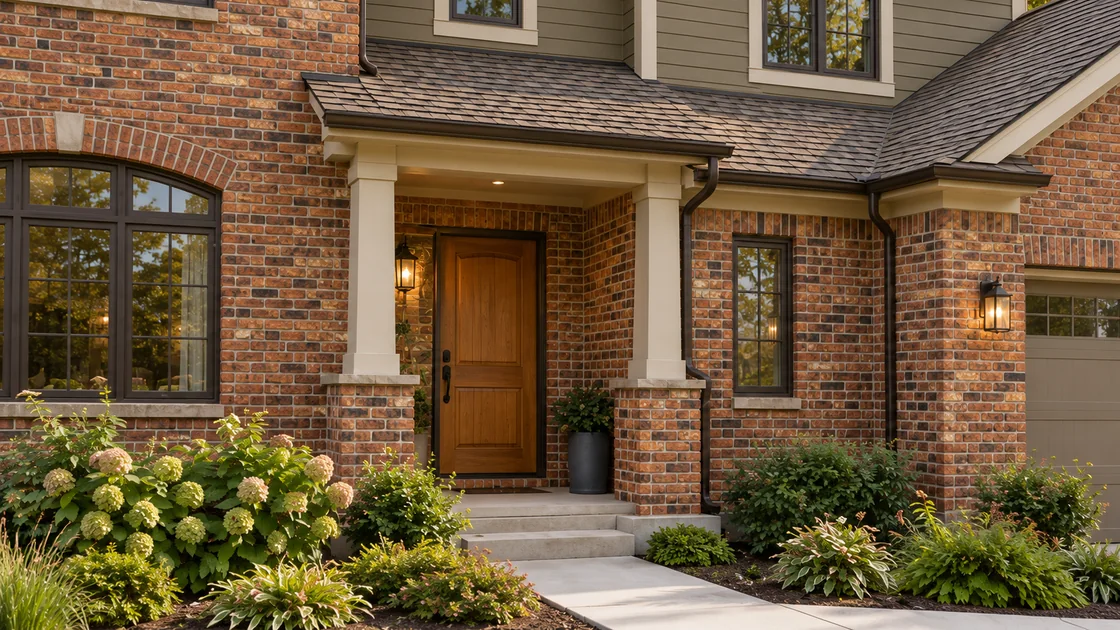
Warm charcoal and dark bronze can connect window frames, lights, gutters, and hardware. Their warmth matters: a brown-black finish may sit more comfortably beside red brick than a distinctly blue-black one.
Dark finishes also change the apparent weight of an exterior. Darkening every trim edge can make windows feel heavily outlined. Use a full-elevation study to check whether the contrast supports the house’s proportions.
Trim, garage, and entrance need different roles
Choose trim after the wall color and fixed materials. It should clarify the openings without looking like a separate white grid. Factory window finishes limit how warm or dark the surrounding trim can look before the difference becomes distracting.
A soft warm taupe garage door often recedes beside brick; a deeper tone can work if the garage needs stronger visual grounding. Give the front door a clear role through wood, a muted color, or lighting rather than relying on the brightest possible paint.
Why brick sometimes looks more orange
Cool blue-gray and pure white can exaggerate the apparent warmth of nearby brick through contrast. That is a visual relationship, not evidence that the brick changed. Compare the same sample next to the masonry and away from it to see the effect.
Keeping natural brick can be a strong design decision. Before committing, assemble roof, mortar, siding, trim, and door samples together, then verify them outside. You may only need to change the supporting colors to make the existing material feel intentional.
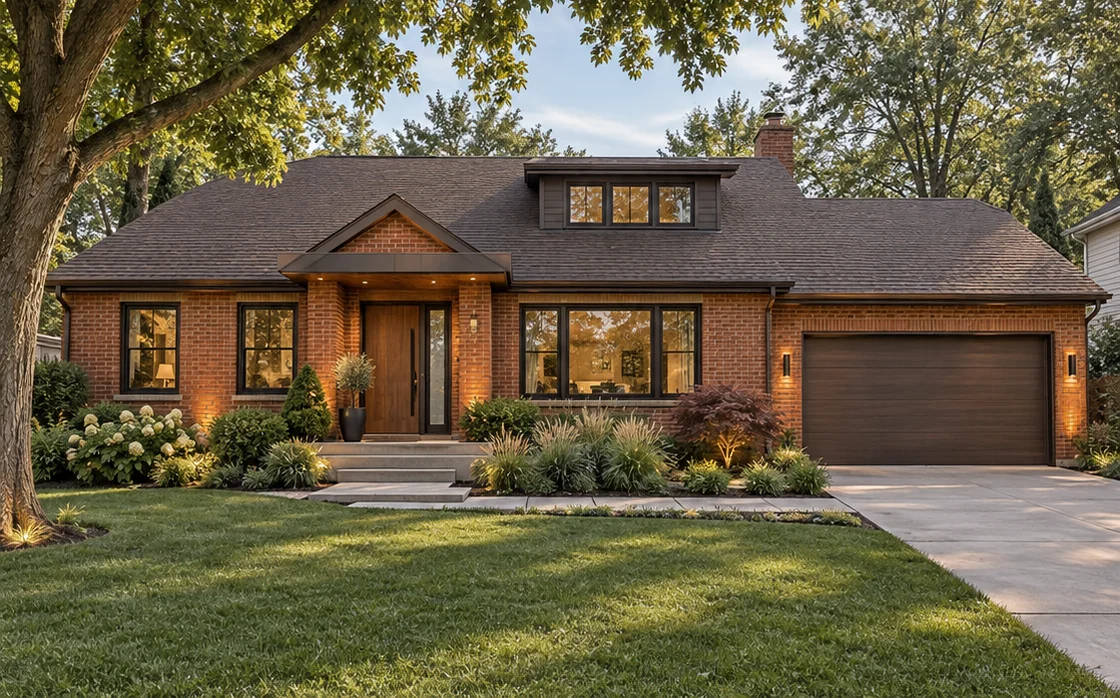
A retained-brick example: reduce the competing white outlines
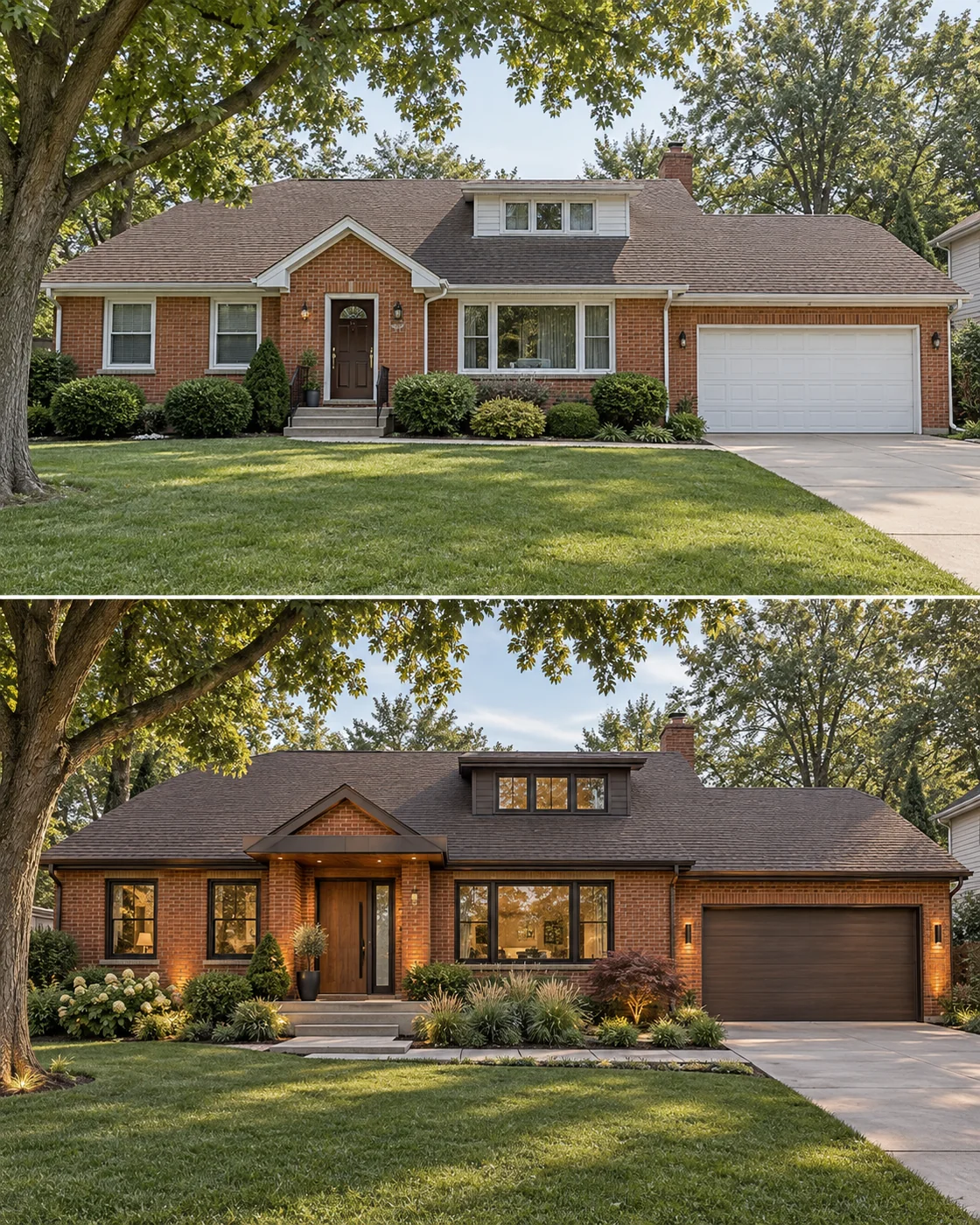
In the comparison below, the brick stays exposed while the window surrounds, dormer and garage move from bright white to deeper brown-dark tones. A warmer timber entrance and a clearer canopy give the door more presence. The new palette works by changing where the contrast sits, rather than covering the masonry.
This is a proposed exterior study, not a record of completed construction. It shows a design direction, not confirmed paint names. The earlier hero takes a softer route with green-taupe siding and a mid-tone garage; both approaches leave brick prominent, but they create different amounts of contrast.
For your home, decide first whether a dark outline supports the windows and roof. If the window frames cannot change, test a lighter-trim version instead of copying this scheme literally. Keep the entry distinct and review the garage at its full scale from the street.
View the retained-brick transformation
Explore the non-paint changes that modernize red brick
Narrow the palette before choosing exact paint names
Compare two complete directions rather than a dozen isolated swatches: for example, warm neutral walls with a quiet garage, and muted green walls with a deeper entrance. Include the trim and window finish in each option. Choose the more convincing relationship before searching for the closest manufacturer color.
Review the shortlisted samples beside the brick and mortar, under the porch and in an open wall area. If a sample works only away from the house, it has not answered the design question. Use the final combination as the reference for ordering, rather than relying on the color of a screen image.
For a closer look at where painted siding meets masonry, explore brick and siding color combinations.
If the roof, brick and architectural details need a coordinated plan for your specific house, explore online exterior home redesign with photorealistic visualization.