Charcoal Gray Exterior Paint Colors That Work With Brick, Stone and Wood
Compare charcoal, soft black, olive-gray and deep taupe. See how to use dark siding while keeping the windows, roofline and front entry readable.
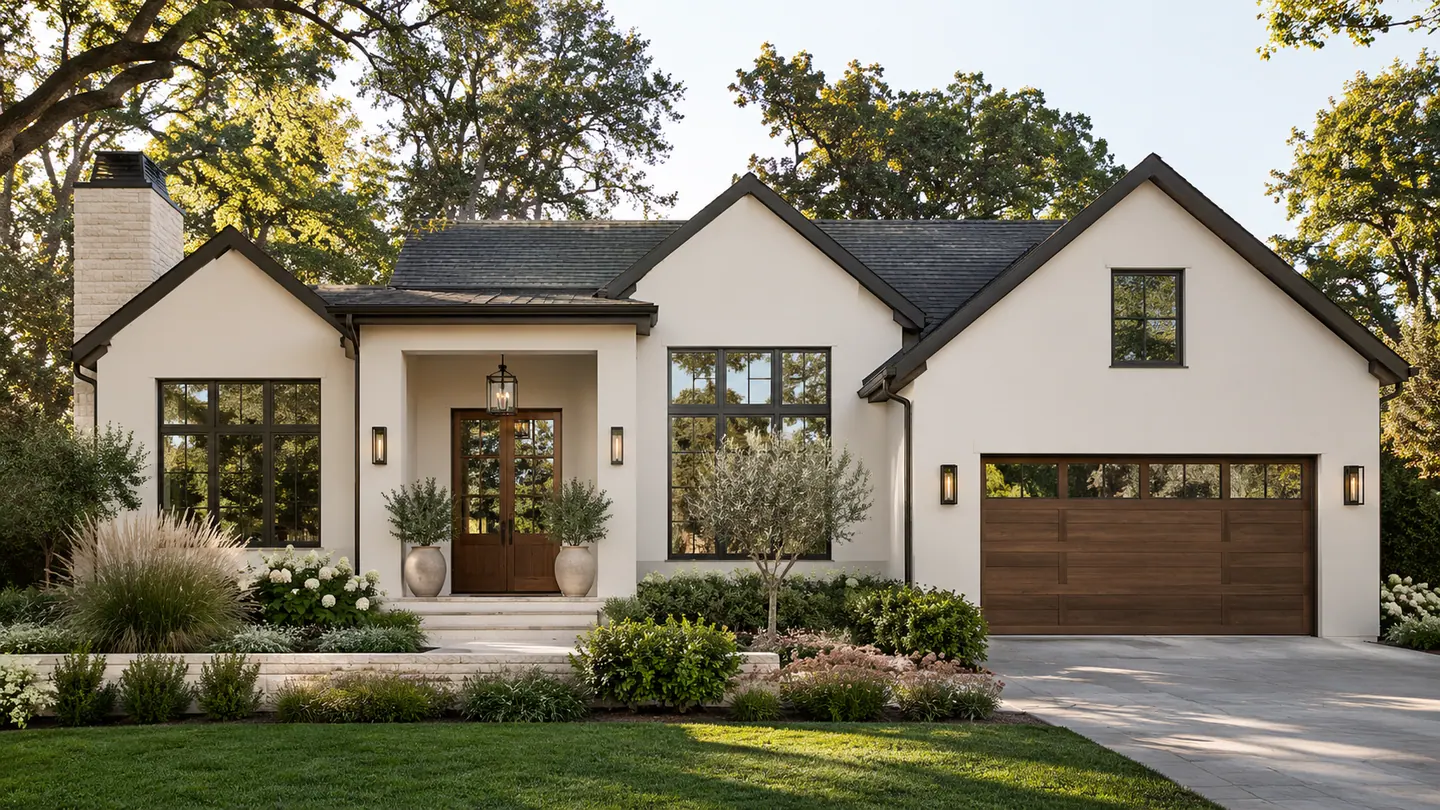
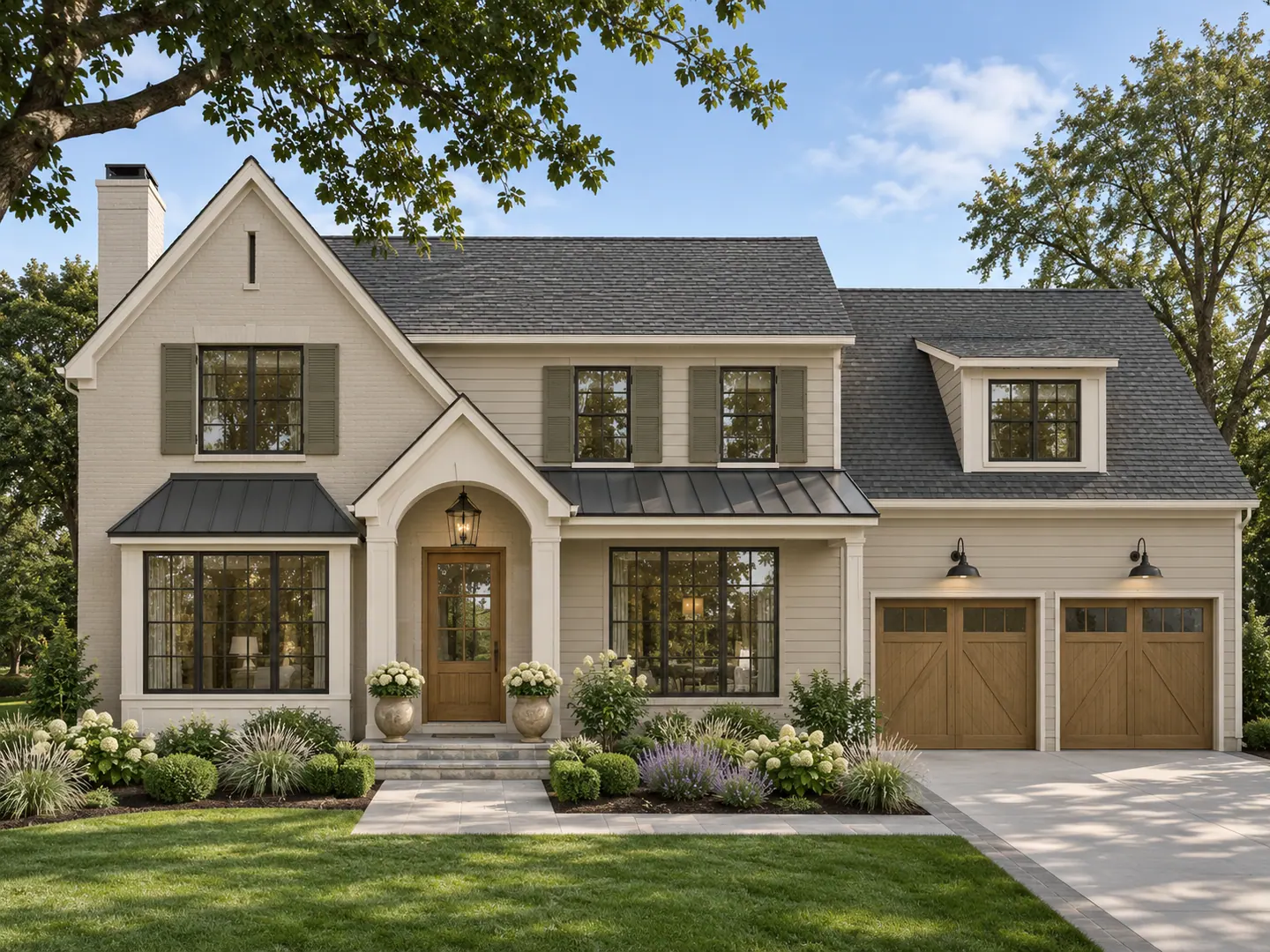
On a charcoal exterior, the first decision is how much of the house should get the deepest color. Dark gray across all the siding can work on an open, well-lit front. Where the roof and windows are also dark or the front porch is shaded, a slightly lighter body, pale masonry or warm entry will make the architecture easier to read.
These exterior design studies show how that choice changes on different houses. Use the named exterior paint swatches below as starting points for field samples.
Choose between full charcoal siding and a dark accent volume
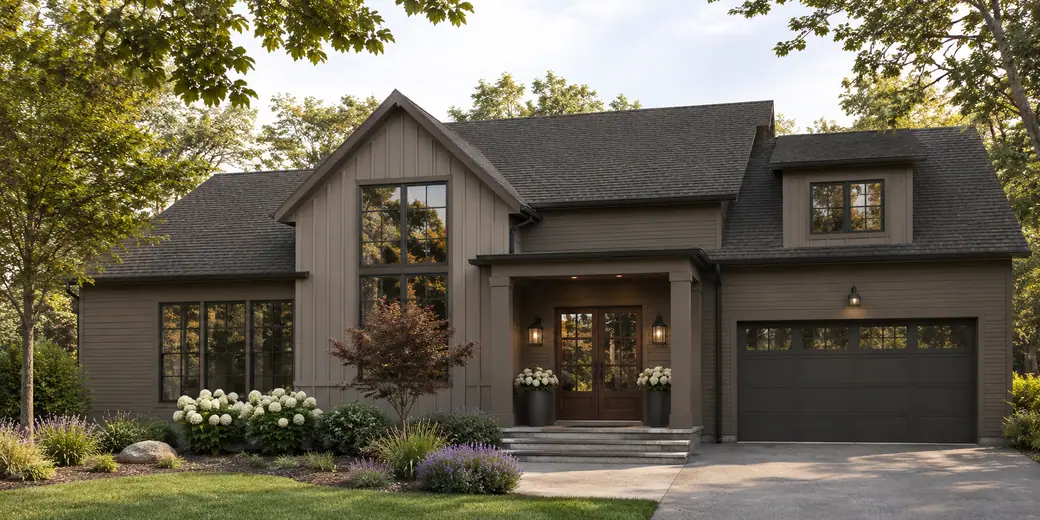
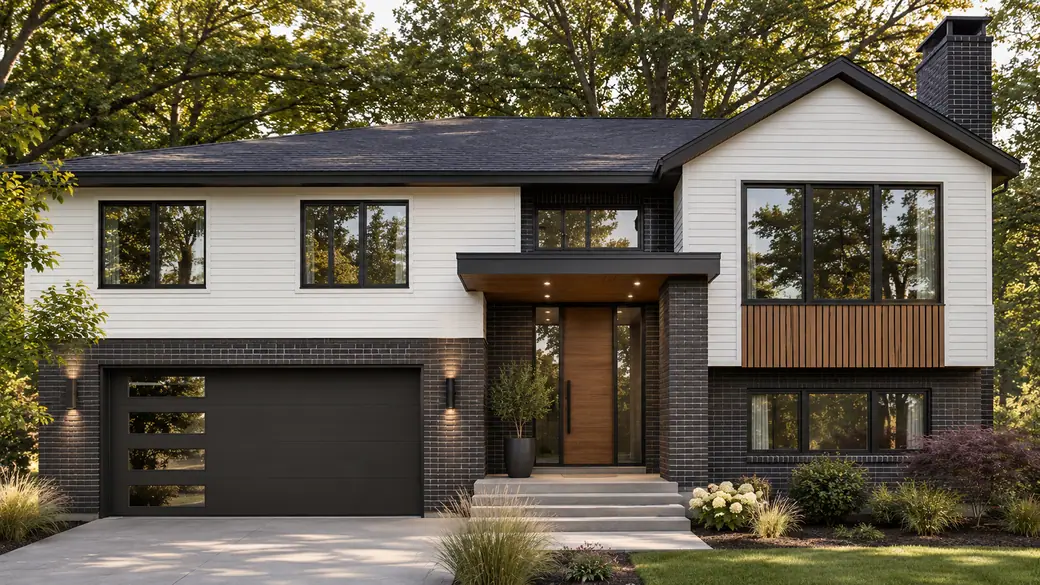
View the front from across the street and follow the outer shape of the roof, then look for the front door. In the near-black two-story study, the dormer, garage and main walls sit close together in value, making the warmly lit entry important. On a property with dense tree cover, a slightly lighter body can show the lap joints, window surrounds and gable edges in daytime.
A split-level is a good candidate for partial charcoal. The study below uses a dark base and stair volume with a pale upper story. The color stops at actual changes in the building, which keeps the two-tone finish coherent.
See more places to divide two exterior wall colors
Sample charcoal next to red brick or buff brick
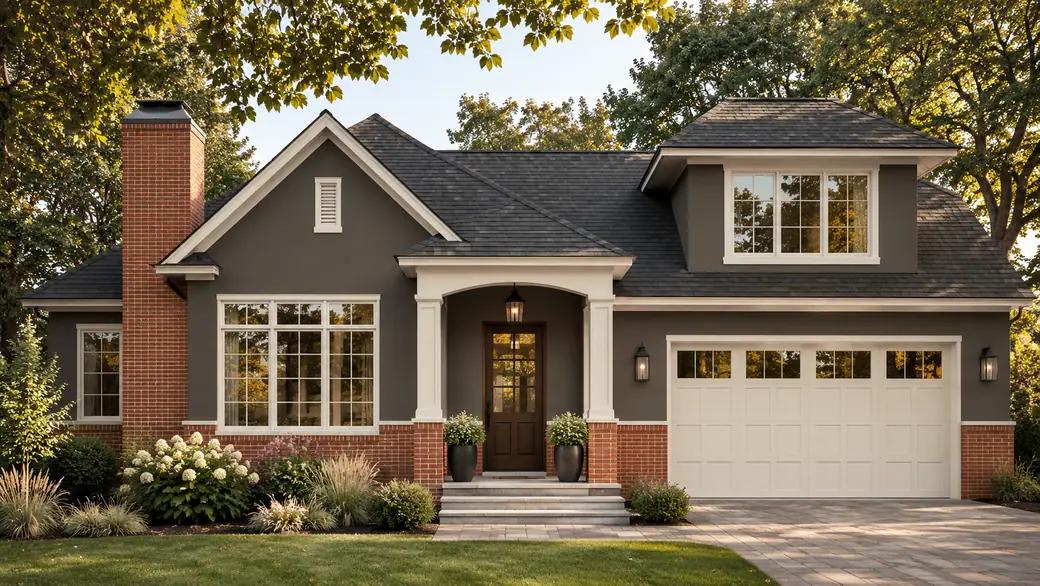
With red brick, look at the mortar and darkest flecks in the brick before picking the siding. If the brick skews rusty orange, sample charcoal alongside a brown-gray or muted bronze. A cooler gray can work when the brick and roof contain enough gray to connect the two.
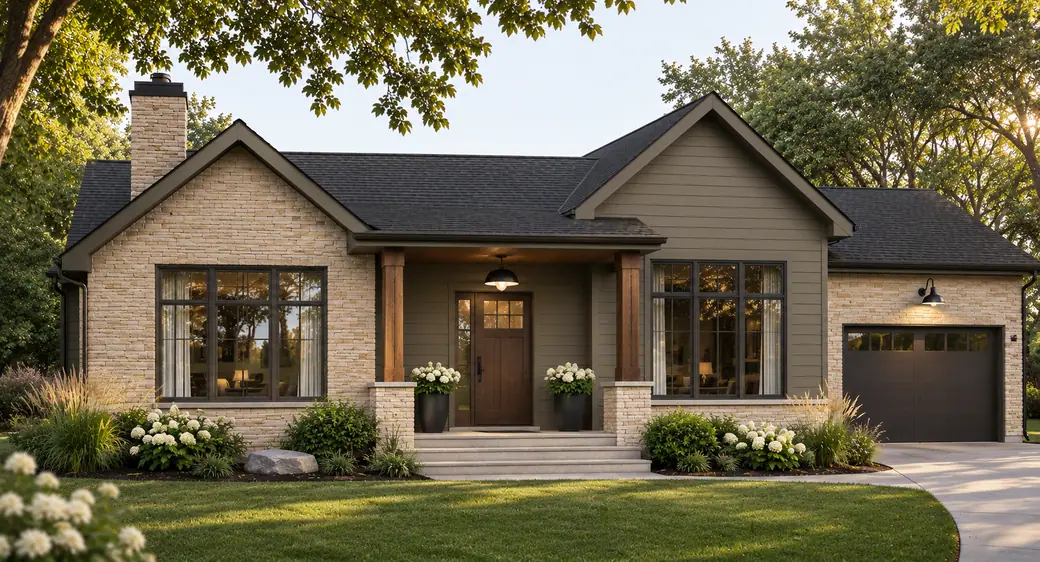
A chimney and a small foundation band provide a different balance from a full brick wing. In the example with a red chimney, brick adds warmth in a few clearly bounded places. On the buff-brick ranch, the masonry covers much more of the front, and the deeper taupe wall color carries that warmth across the gables.
Plan additional paint colors around retained red brick
Give pale stone one clear role on a dark exterior
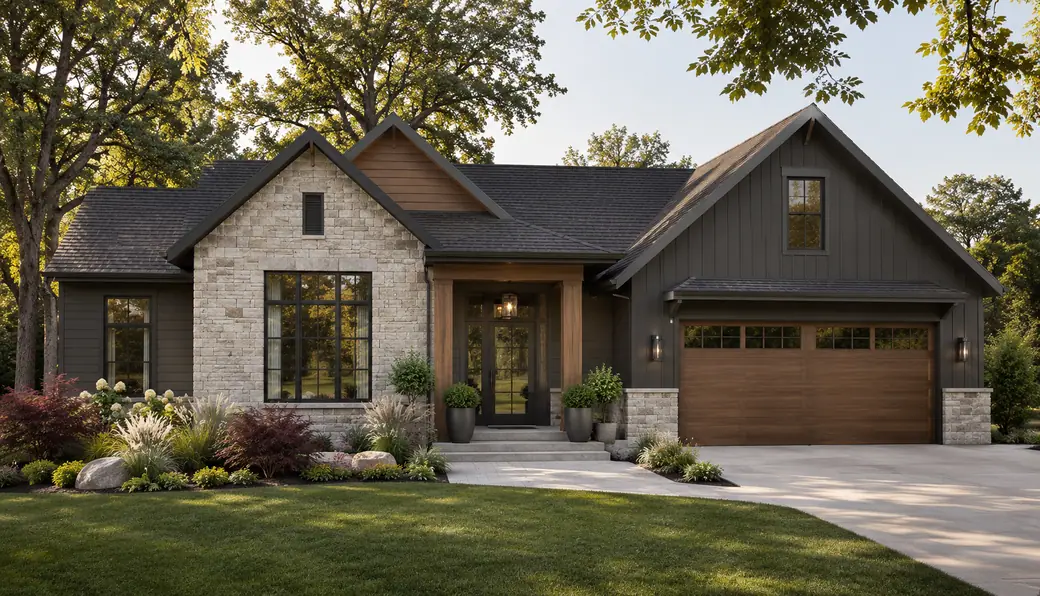
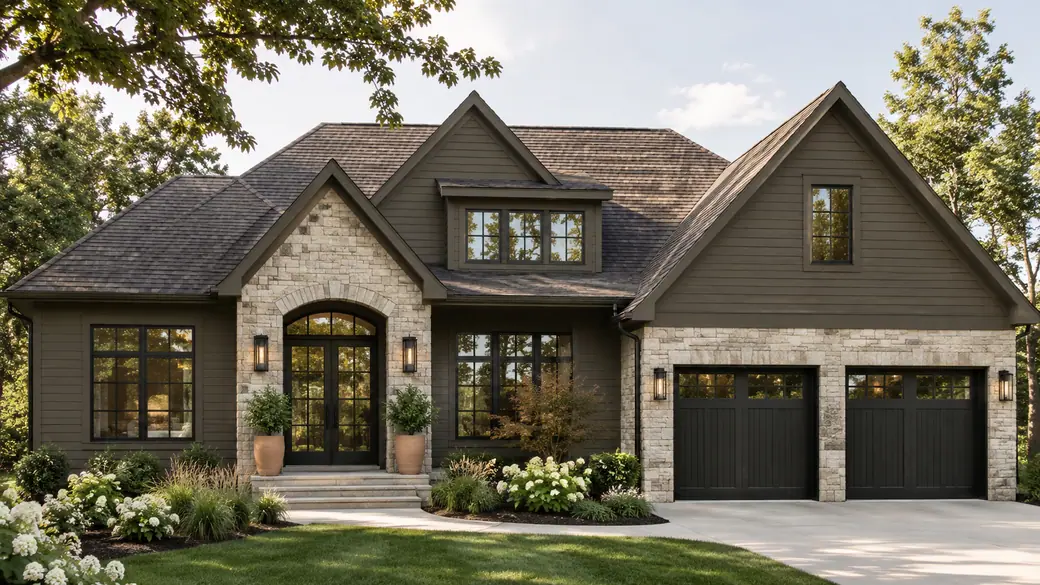
Light stone creates a strong edge against dark siding. A stone gable can emphasize a projecting room, while stone around an arch can mark the entrance. Choose the element you want noticed first. Repeating the same contrast on every small projection can make a simple house look fragmented.
Look at the mortar where light stone meets dark trim. A soft mortar joint can let the shape of the masonry volume lead. On the house with two garages, darker panels sit within the wall palette even though the stone surround is prominent.
See the guide to stone and siding combinations
Use olive-gray or deep taupe if charcoal feels too cold
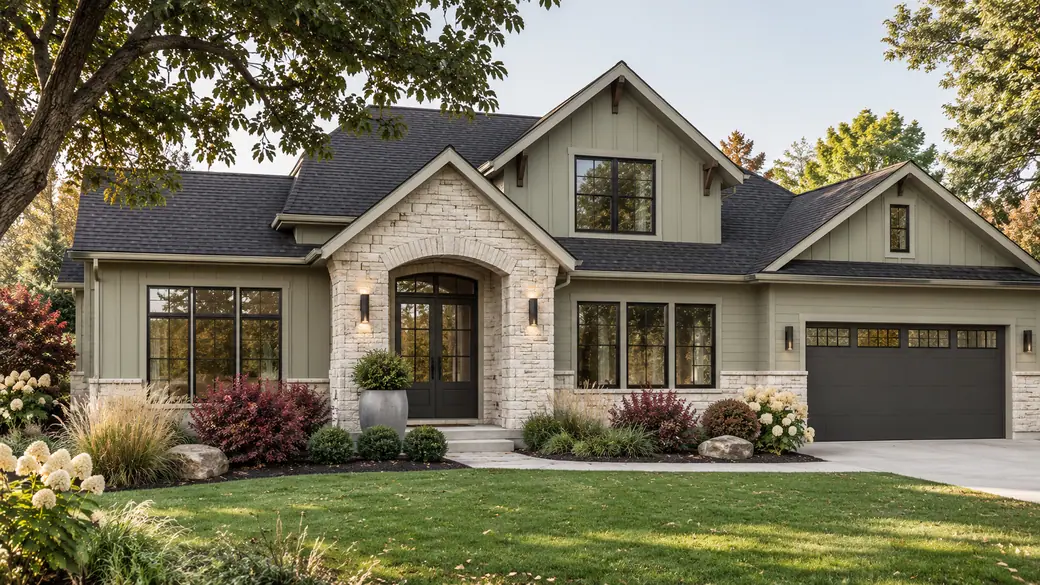
When a dark neutral looks blue next to your roof or stone, compare a smoky olive-gray and a muted mushroom-taupe at similar depth. On shady sites, start one step lighter. Both colors can still feel rich, with enough separation for dark windows and roofing to retain their outlines.
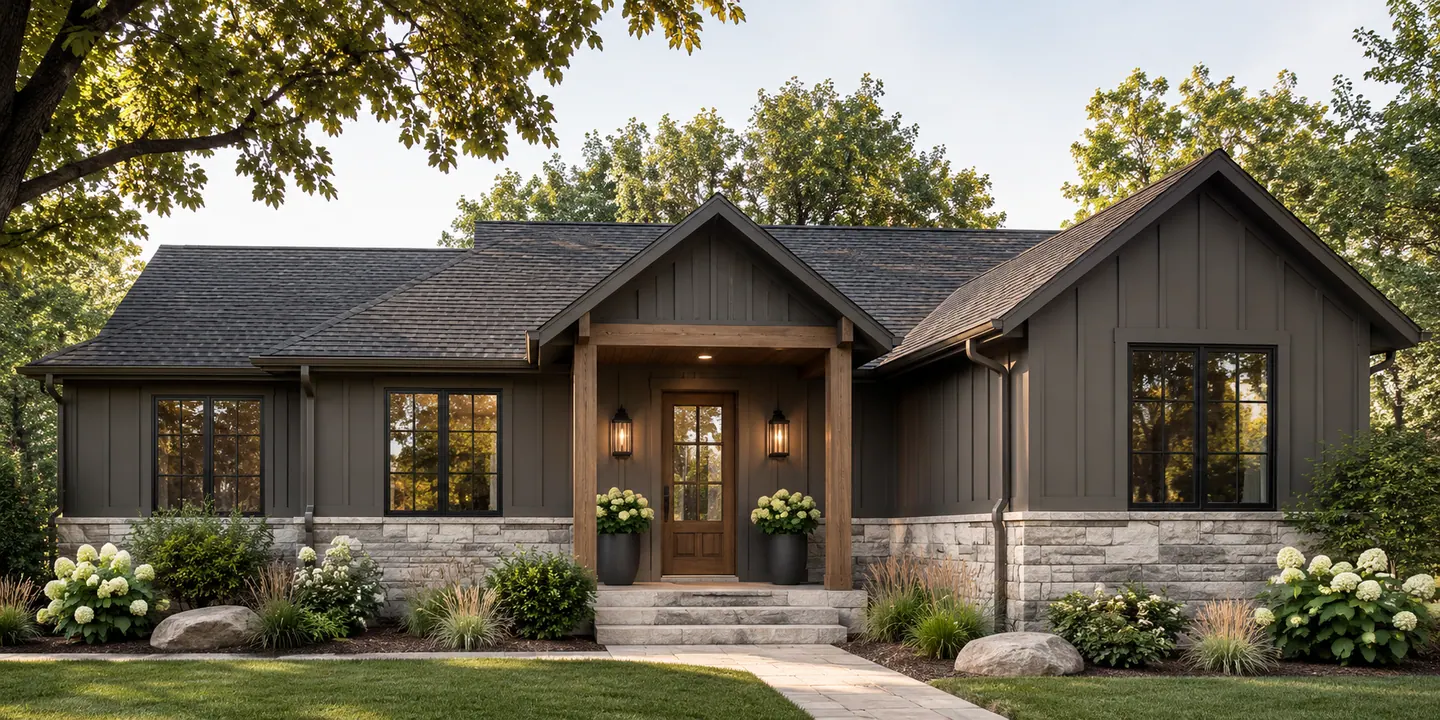
See how the slate-colored roof meets the sage gable in the ranch study. Then compare the mushroom-gray house, where the broad charcoal garage gets definition from the lighter siding. Those relationships are easier to judge at full-house scale than on a color card.
Use timber where porch shadow needs warmth
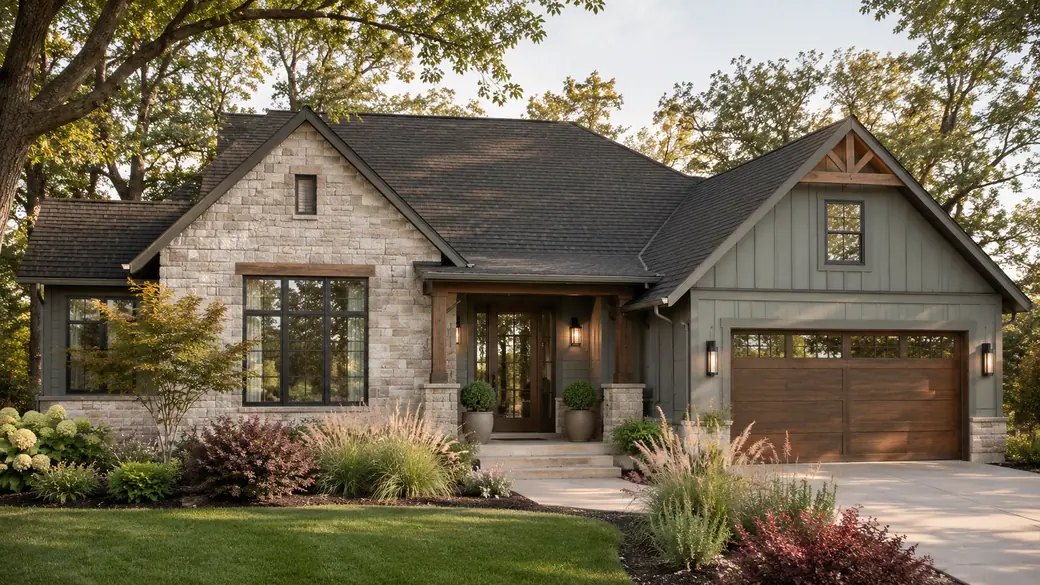
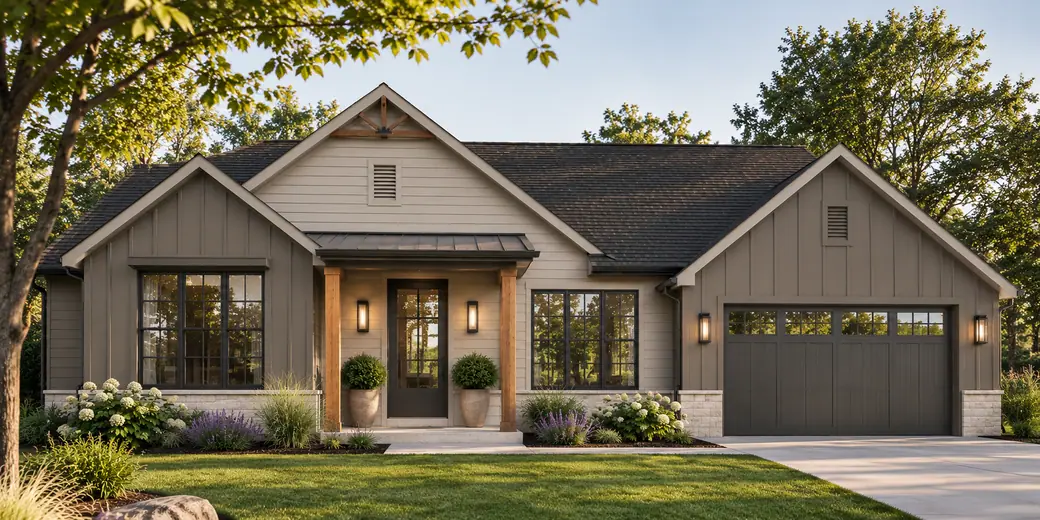
A porch ceiling, post, or front door can give a shaded entrance more presence on a dark house. Test the wood finish under the roof itself. The same wood can read deeper at the entry and brighter on the street-facing garage.
On a low ranch, timber at the center can break up a long band of dark siding. On the Craftsman study, timber posts and the porch gable give the entrance enough definition to compete with two brown garage doors.
Compare wood-look garage finishes beside front doors
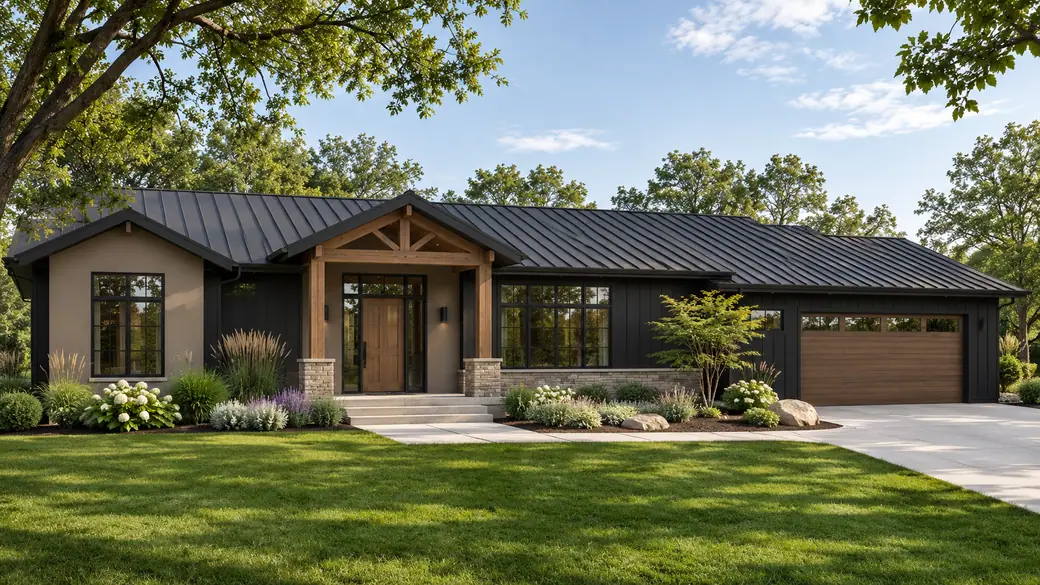
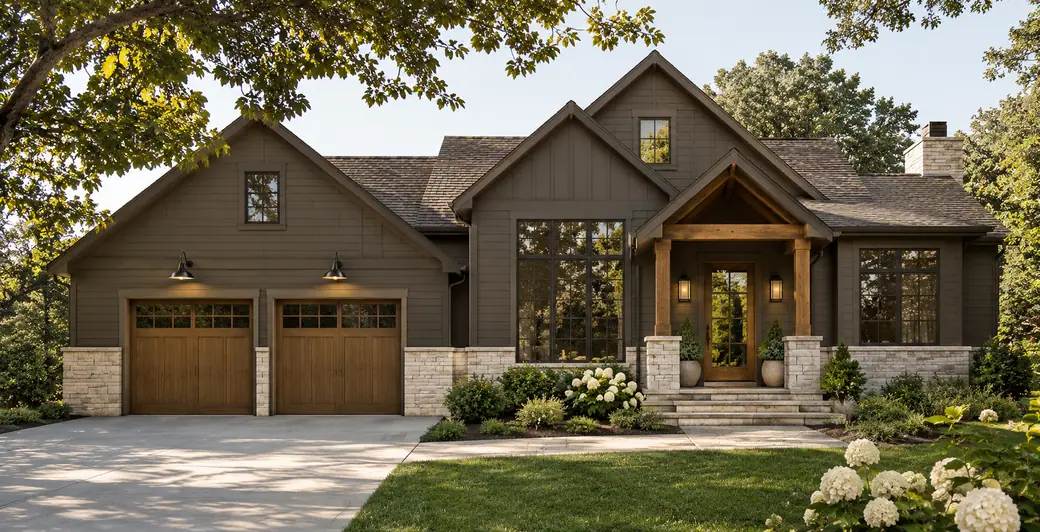
Compare Peppercorn and Iron Ore at the house
Sherwin-Williams Peppercorn SW 7674 is a starting point for a dark gray body where you want the siding to read as gray. Iron Ore SW 7069 is a deeper charcoal to compare, especially at windows or doors when you want those surfaces to approach soft black. Test both before making either the dominant wall color.
Place each sample at the eave, beside the masonry and near the front door. If the charcoal appears too heavy under the eave, try a lighter body or move the deeper shade to an accent. Before repainting vinyl, PVC, factory-finished windows or garage panels, confirm which colors and coatings the manufacturer allows on that exact product.