Wood-Look Garage Doors: How to Pair Them With Your Front Door
Compare light oak, walnut and painted entry combinations. Learn how to judge wood tone, grain and panel style before you order a garage door.
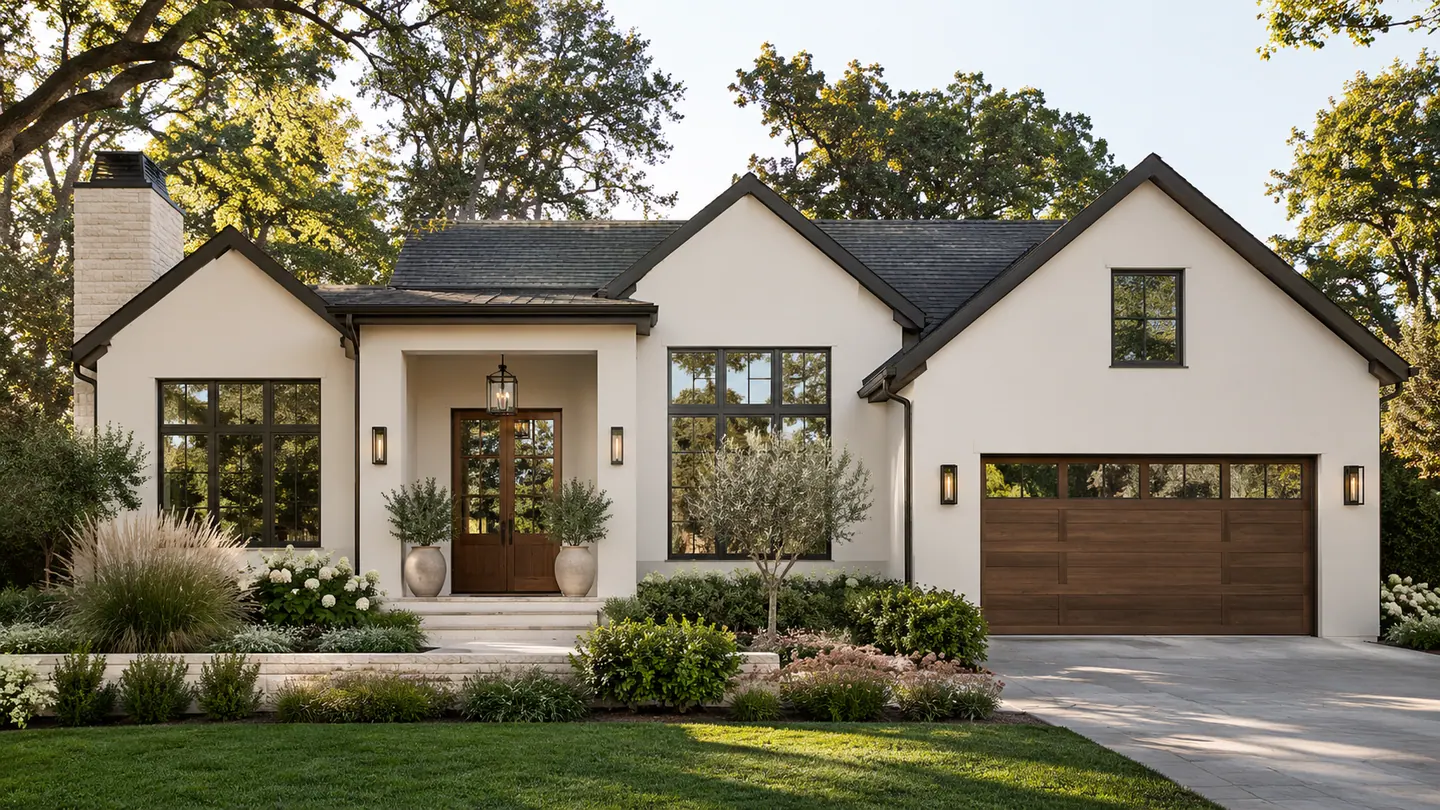
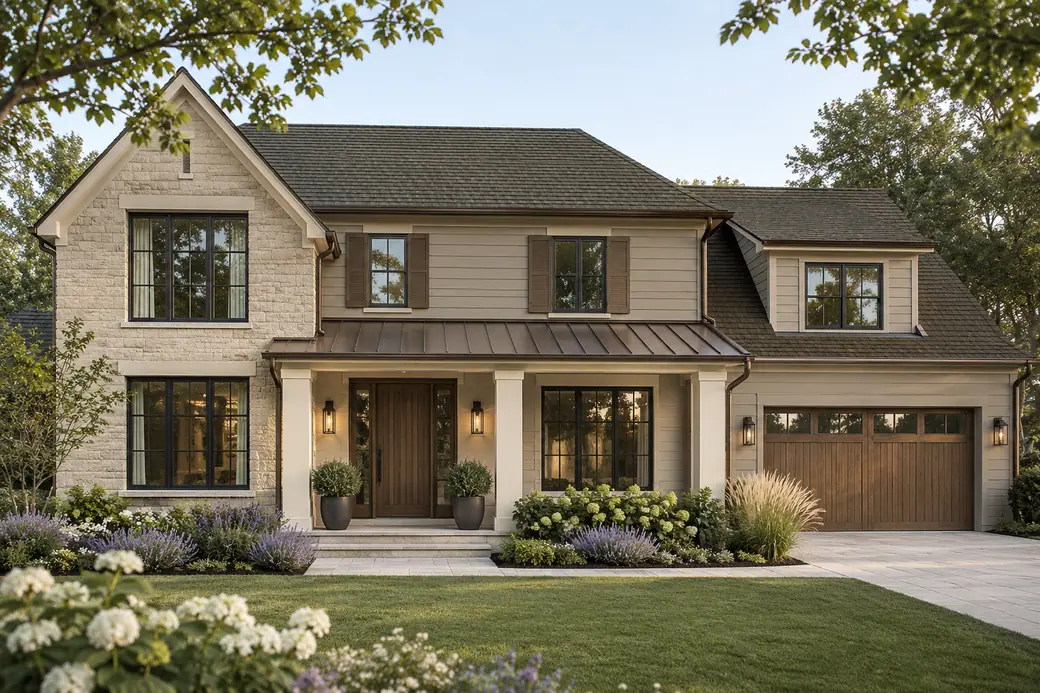
A wood-look garage door and a stained front door can work together when they share an undertone and one finish is quieter. On a double garage that faces the street, inspect the grain and panel joints before choosing a stain color. They take up far more of the view than the front door does.
The design studies below compare that pairing with two alternatives: a painted entry beside a wood-look garage, and a painted garage beside a wood entry.
Match the wood undertone first
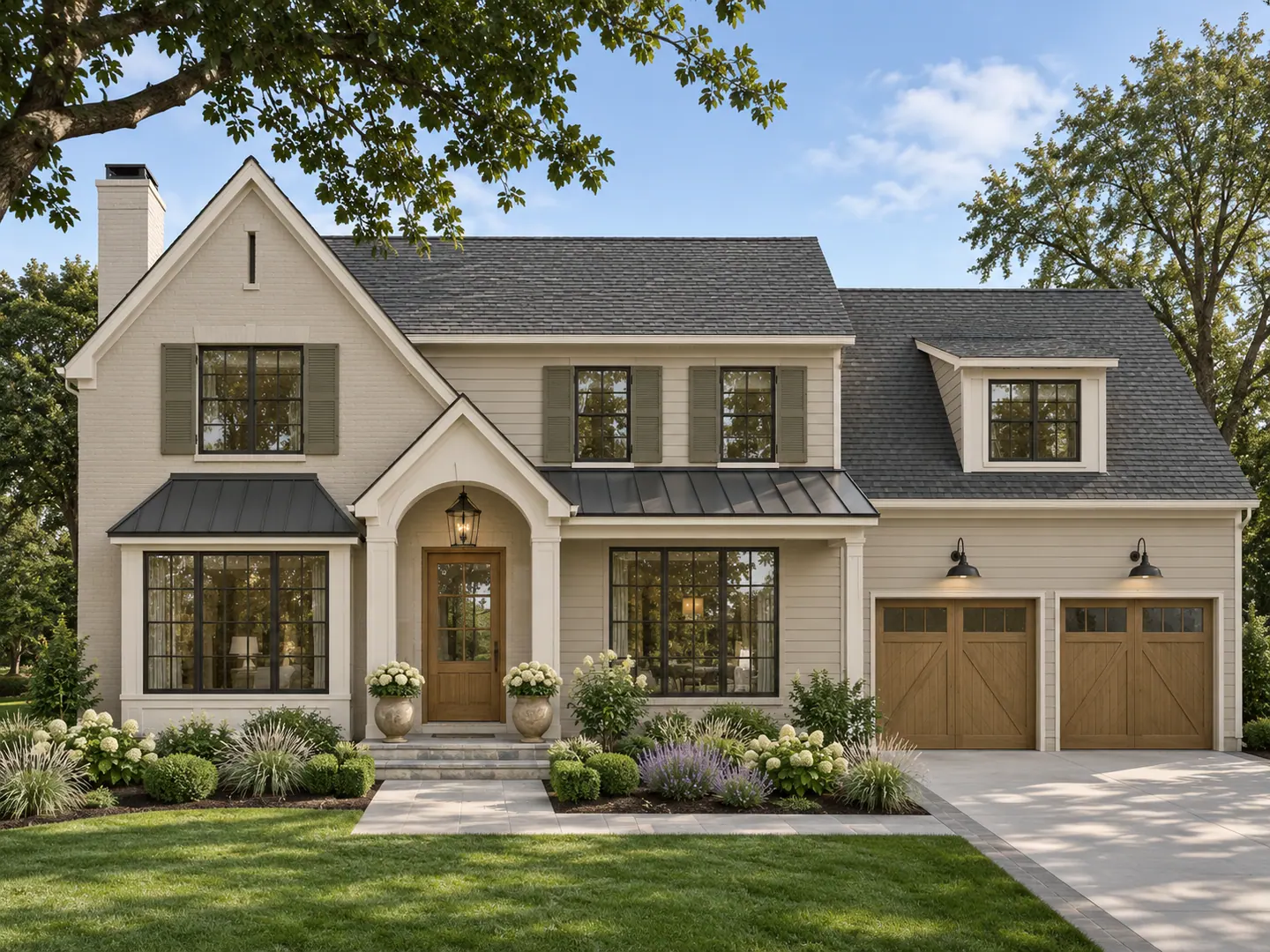
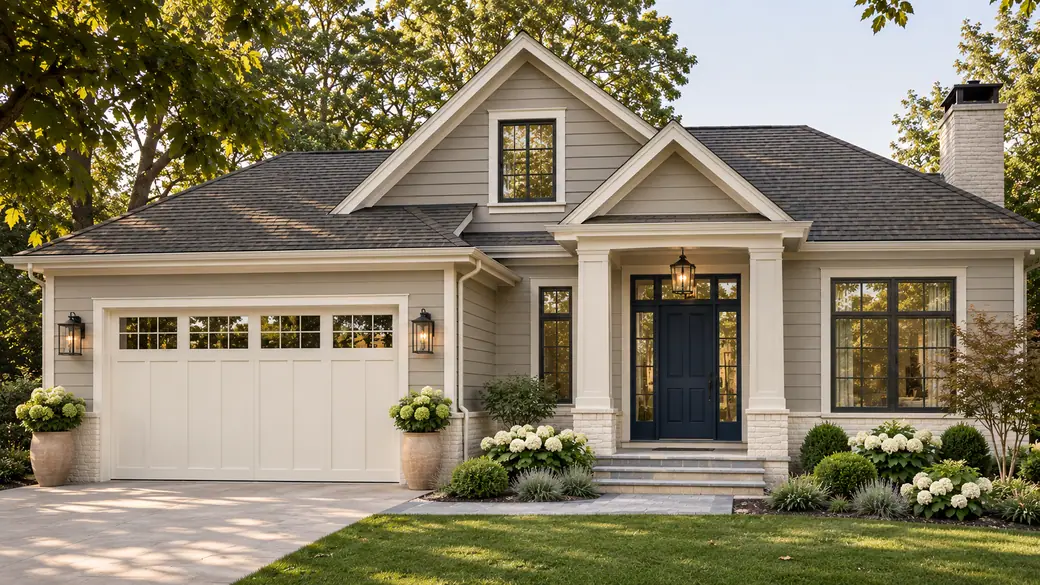
On the example with putty siding and pale garage doors, the garage finish has a light, muted oak-like appearance. The recessed entry reads deeper because the door sits in shade. A shared undertone can look natural even when the two doors read at different depths.
For a richer look, put a restrained walnut-toned garage sample beside the actual front-door stain. If one pulls orange and the other reddish purple or ashy gray, compare another finish. You can often see this mismatch by viewing both samples against the same sheet of plain light paper outdoors.
Compare grain, panel profile and garage-door width
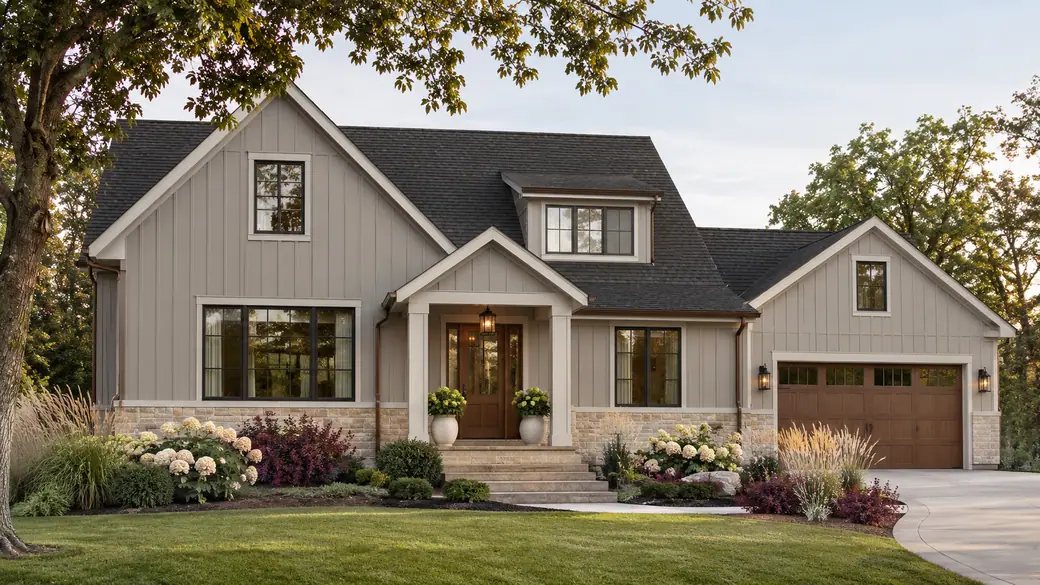
A small sample tells you the general color. A full panel or installed door shows whether the grain repeats, how dark the joint lines look, and where the sheen catches sun. Those details matter especially on a wide garage with very little trim.
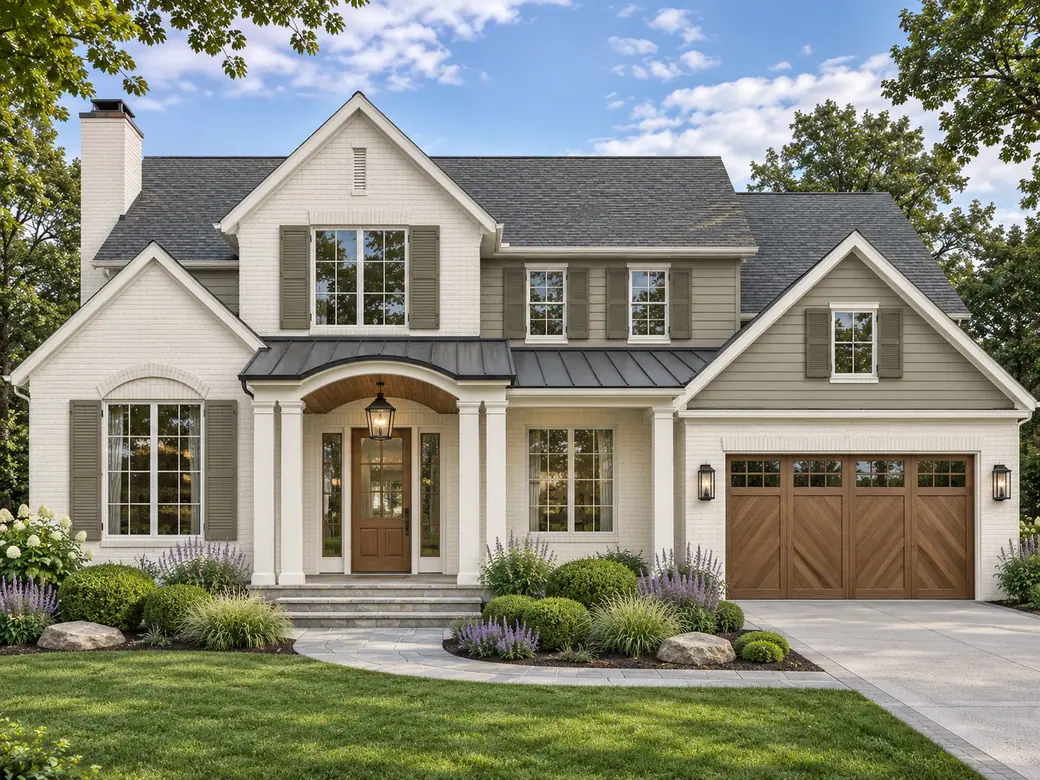
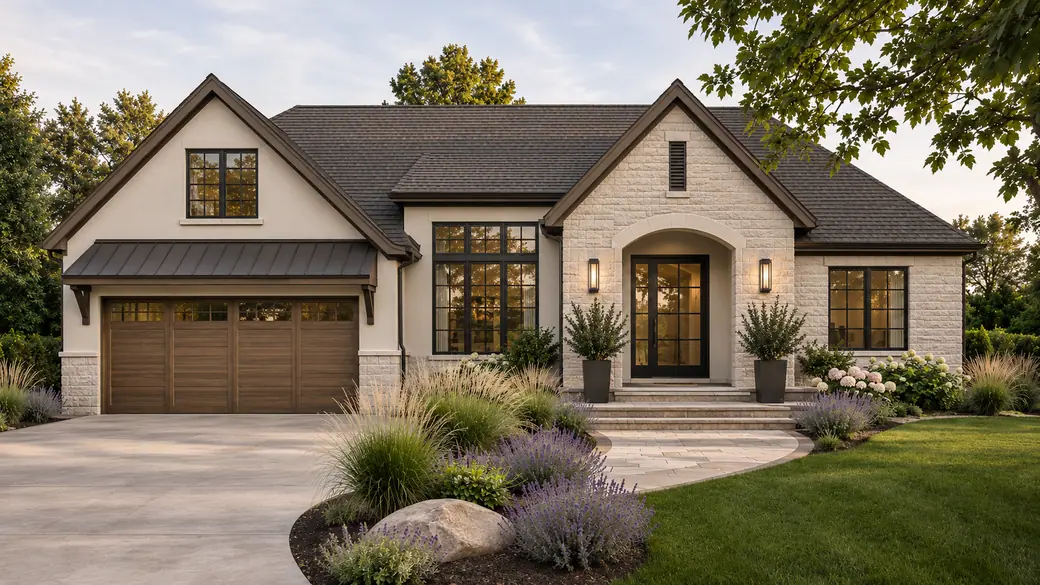
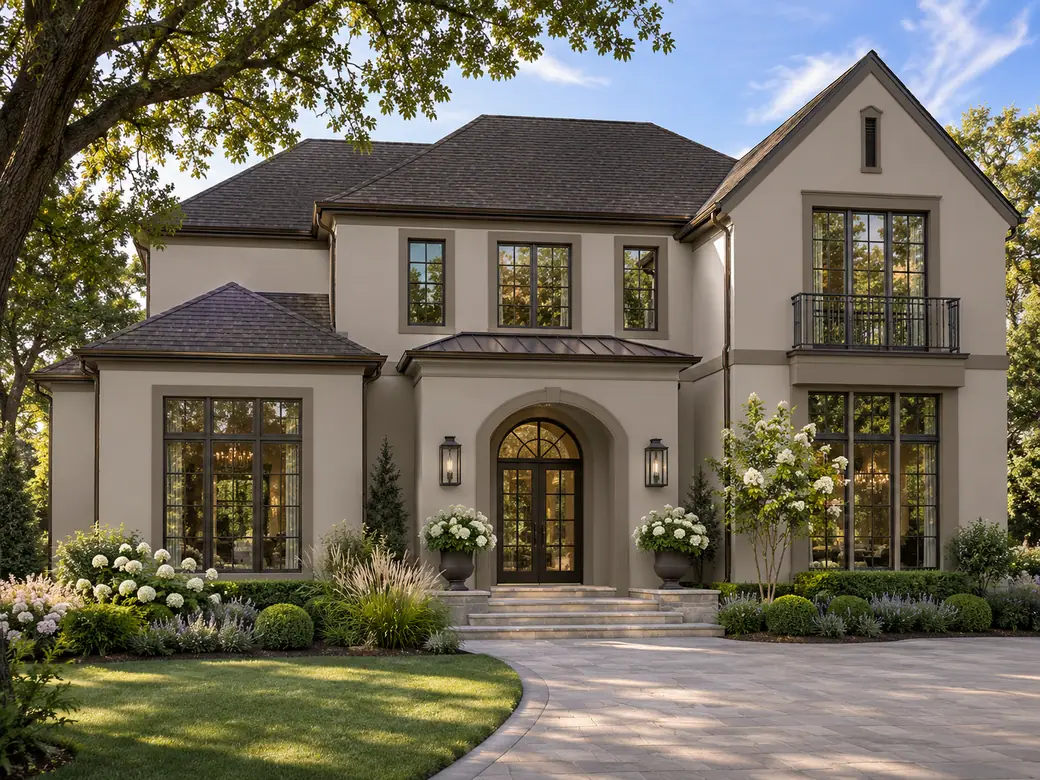
In the diagonal-plank study, the geometry creates movement even though the garage and front entry are in the same brown family. In the arched-entry study, the garage is wider and simpler. The masonry surround gives the darker entry a stronger outline. Choose the relationship that suits your house’s proportions.
Pair a wood-look garage with a painted front door
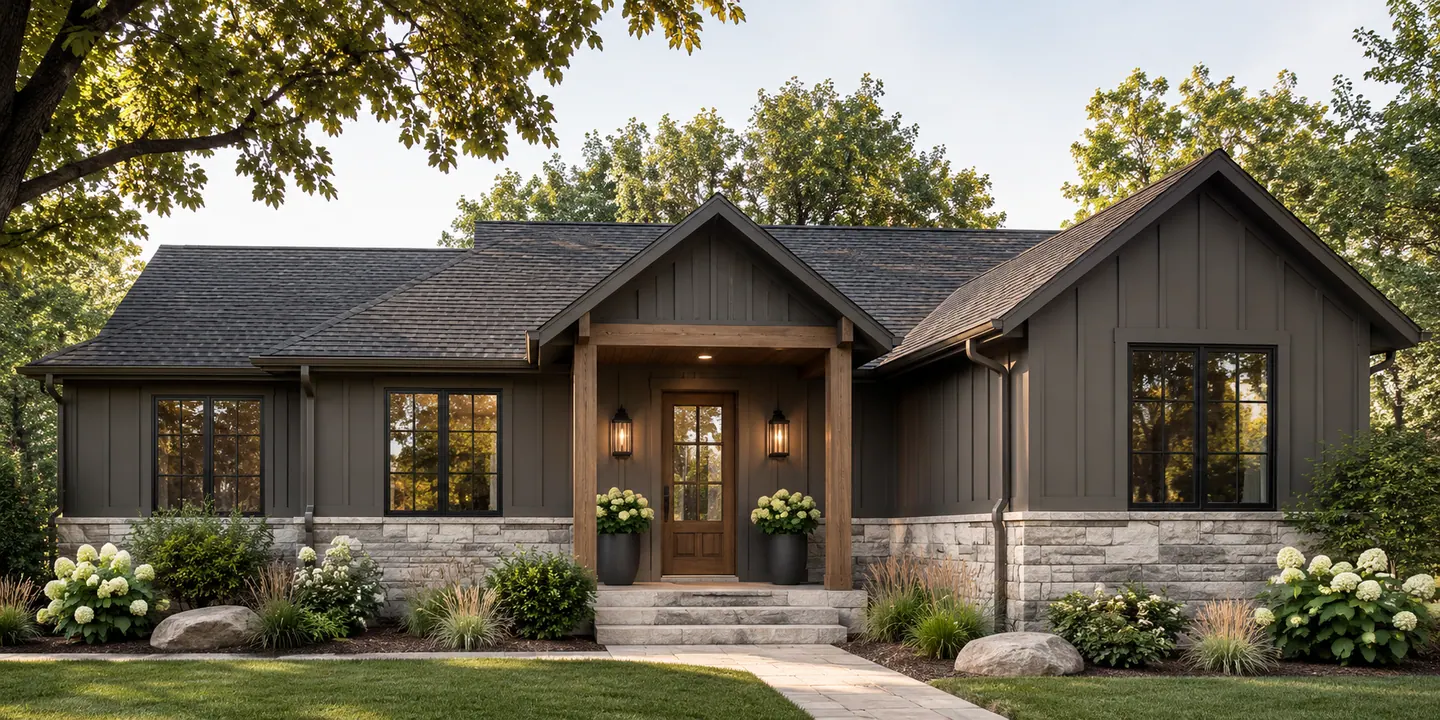
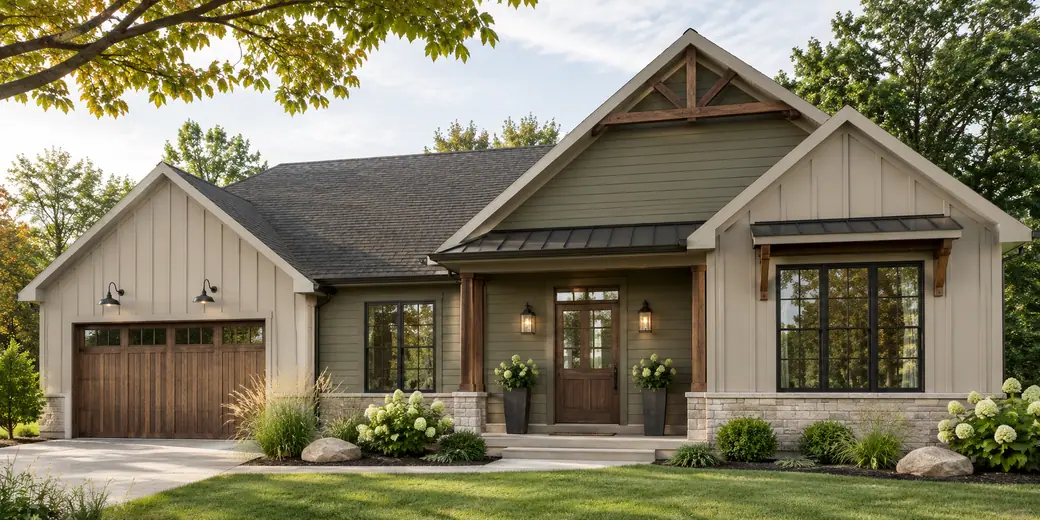
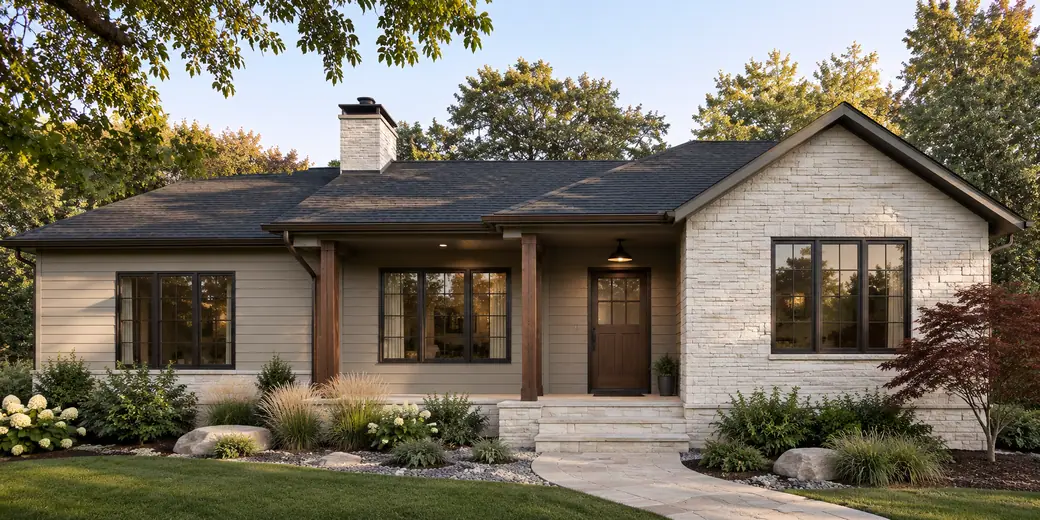
If the garage carries the wood grain, a deep olive, bronze or warm charcoal entry can pick up one of the house’s existing finishes. The sage-and-putty ranch repeats timber in the gable, giving the garage a second connection even with a painted front door.
If the wood-look options pull too orange beside the wall or stone, try the painted pairing in the greige ranch study. A cream garage blends with light trim, while a navy door gives the porch a distinct color. This works particularly well when the garage already projects toward the street.
Compare front-door colors with your siding and roof
Keep the wood at the front entry when the garage dominates
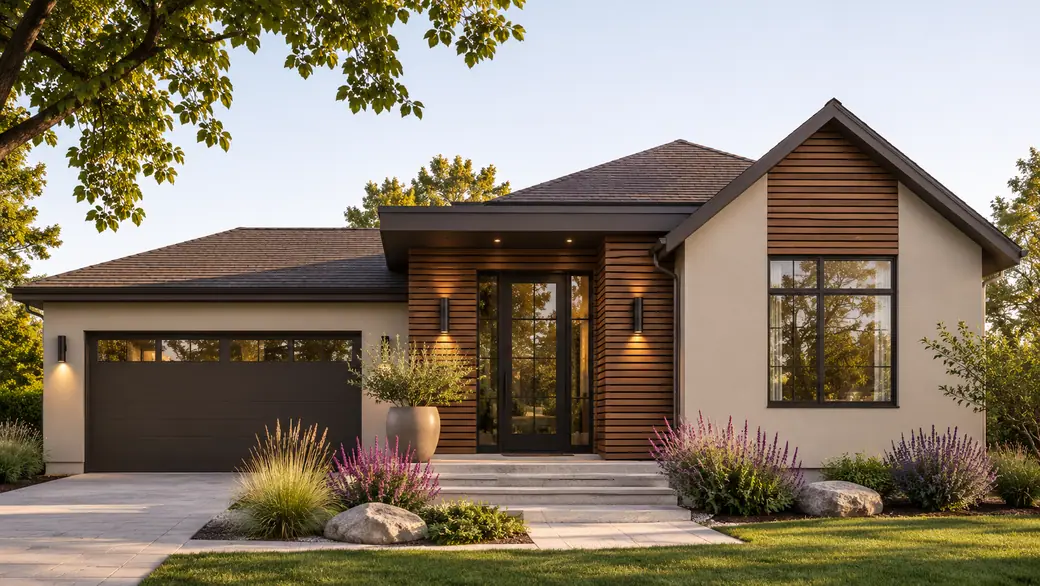
Compare a painted garage beside your existing wood door before ordering two wood finishes. On the contemporary taupe house below, the garage pulls from the dark window frames and the horizontal timber surrounds the front door. The entry becomes readable from the street even though its opening is narrower.
Where the garage is side-loaded or sits outside the main view, design the front elevation around the entrance first. The arched stucco and low taupe ranch studies both use wood at the entry, with window frames or columns carrying some of that warmth across the house.
See how garage-door contrast changes what you notice first
Check both finishes before you place the order
Ask for the exact finish sample on the garage-door material you plan to buy and a sample of the finish intended for the front door. Wood-look doors can use composite, metal and other finishes with different grain and sheen. A finish name such as walnut can describe quite different colors across product lines.
- View the garage sample in the same light as the garage and the door sample under the actual porch. Then bring both together in outdoor daylight.
- Stand back toward the street and look at the sample alongside the siding, trim and door frame. Ask for a photo or a local example of your proposed panel in the same width.
- Confirm the exact finish, profile, window inserts, care instructions and warranty with the supplier before ordering.