Stone and Siding Exterior Combinations
Choose stone and siding finishes that share undertones and meet at believable architectural transitions.
Read the stone as a material, not an accent color
Natural stone contains several tones at once. Identify the base color, darkest veining and mortar before choosing siding. Creamy limestone may suit putty, sage or warm ivory; cooler fieldstone can call for a different muted wall color. A tiny stone chip is rarely enough to judge the combined exterior.
Reading the illustrated palette
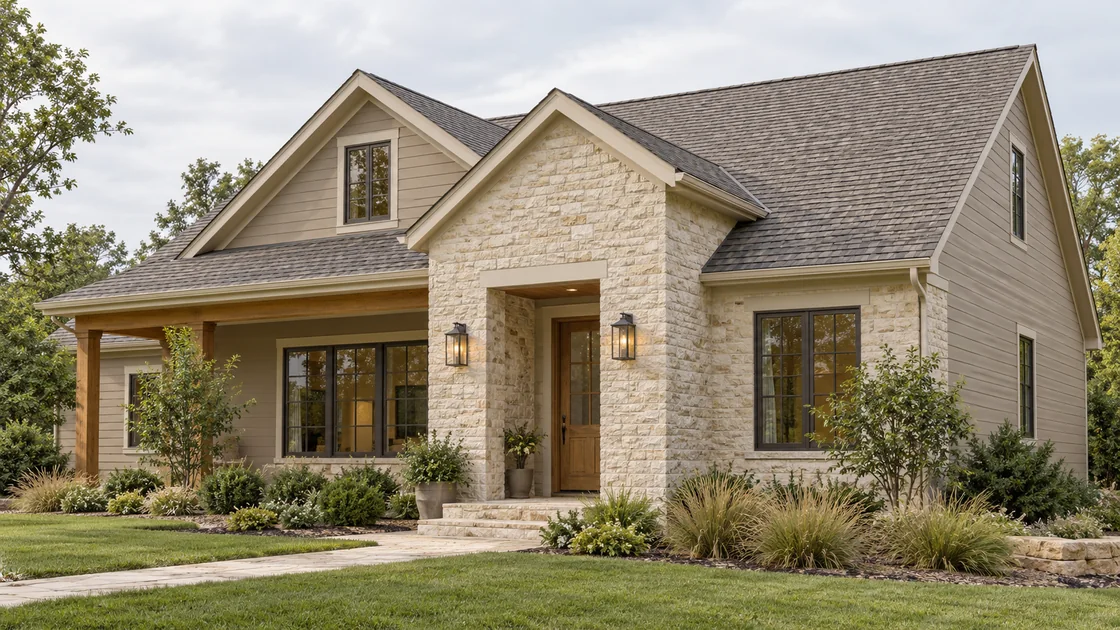
In this illustrative exterior study, pale stone frames the projecting entrance and continues beneath the adjacent window. Mushroom siding keeps the upper gables quieter, while a timber porch and entrance door add warmth. The gray shingle roof provides a restrained upper edge. The design shows material relationships, not a completed client renovation or verified product schedule.
Choose where stone belongs
Stone can ground a lower wall, frame an entrance or support porch columns. It should stop at a convincing edge such as a corner, opening or change in plane. Wrapping a random fraction of the wall often makes an otherwise expensive material look like a surface treatment.
View this exterior transformation
Balance texture and cost
If the stone has a lot of movement, let the siding profile and color be quieter. Consider actual thickness, corner treatment, flashing and maintenance with a local contractor. A visualization can test proportion and placement, but technical detailing and product suitability must be confirmed before installation.
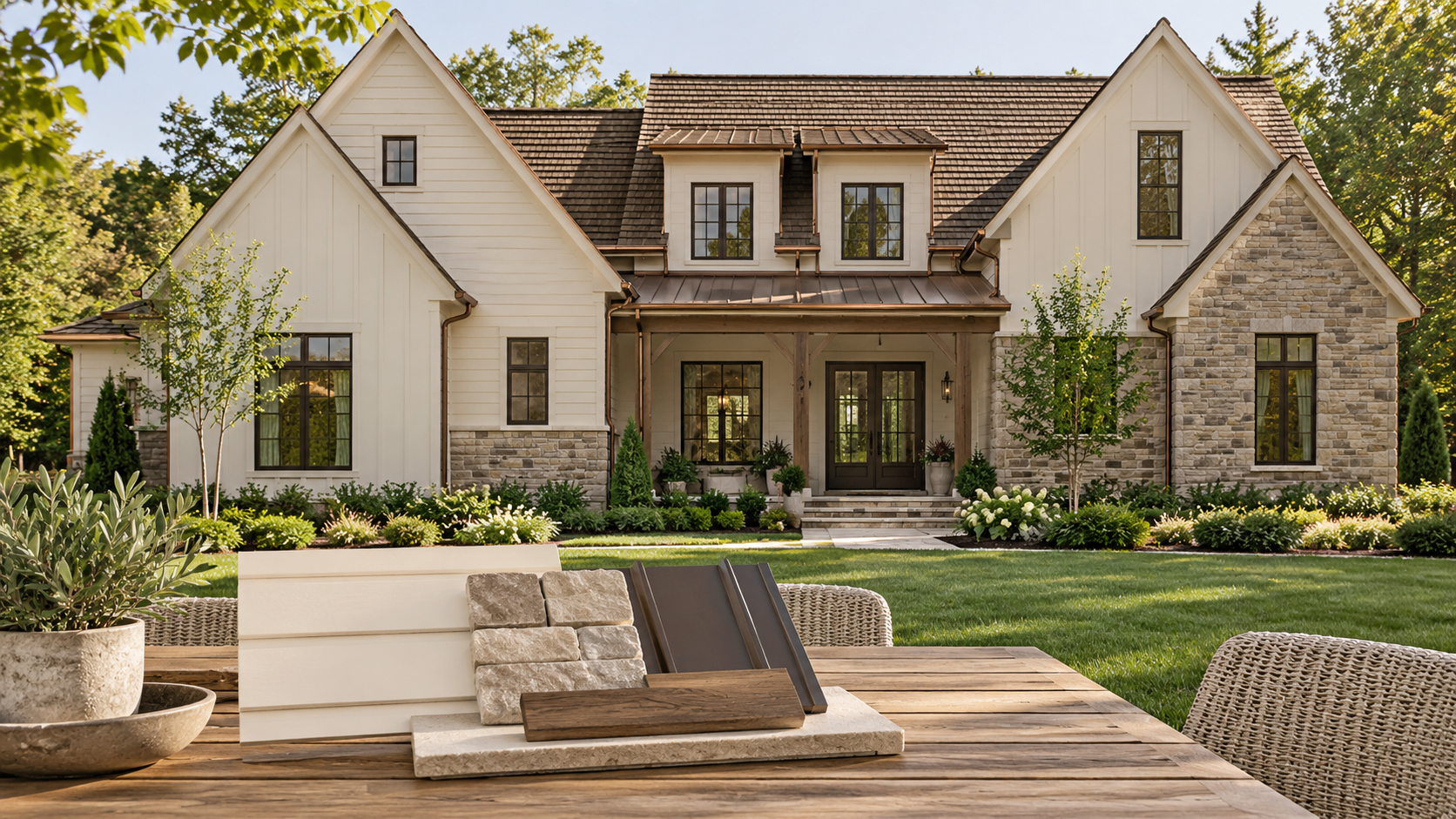
Bring the palette together
Compare the roof, stone, siding, trim and window finish on one board, then review that board at the house. Repeat a stone undertone in the walkway or entrance where appropriate; do not add another unrelated beige merely to create variety.