How to Choose a Front Walkway for a Brick House
Before matching the brick, look at where the path starts, how it meets the front steps and how much pattern the house already has.
A front walk can look beautiful in a sample display and still feel busy against a brick house. The wall already has color variation, mortar lines and a pattern. Add small pavers with equally strong color shifts, and the ground can compete with the facade before you even reach the front door.
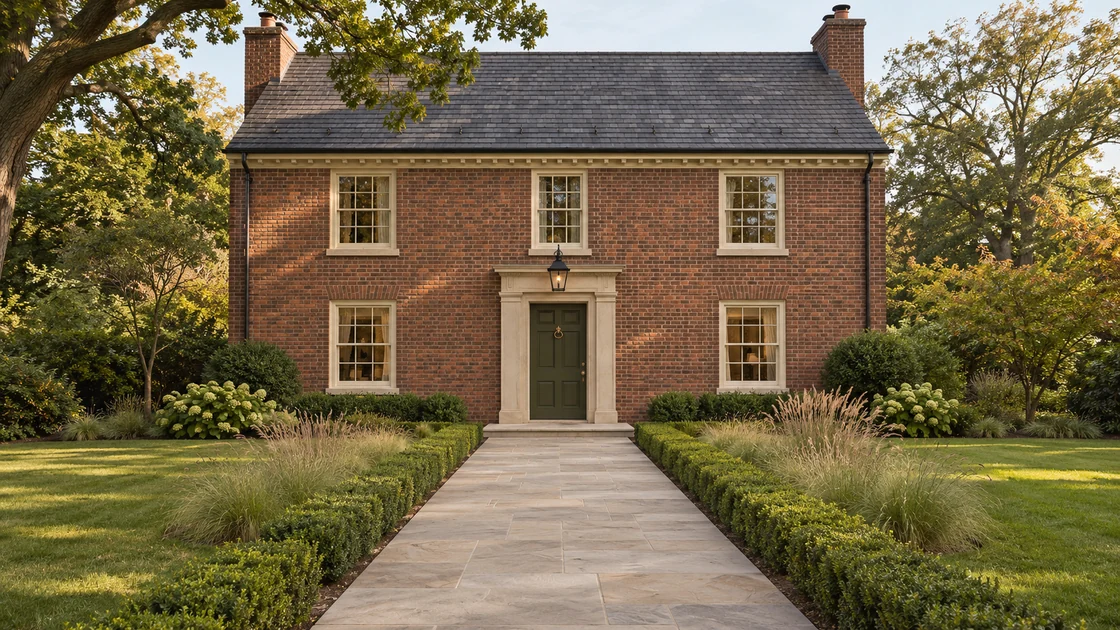
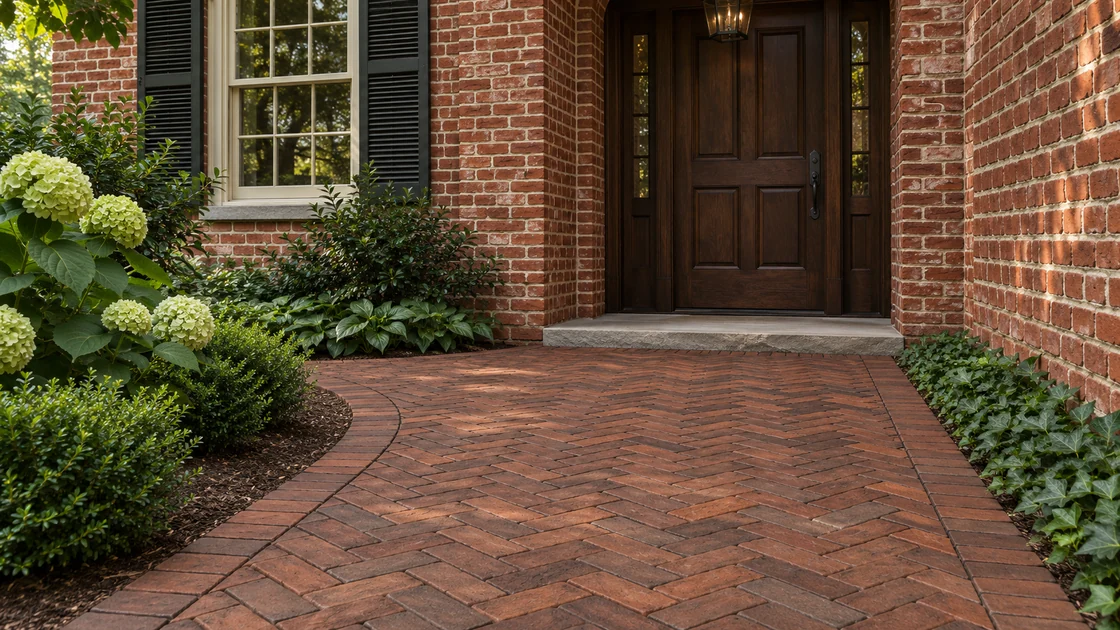
The two illustrated studies below show different ways to handle that relationship. One uses large limestone slabs to give the brick some breathing room. The other uses clay pavers that belong to the same family as the walls but are quieter in color.
Decide where the walk should take you
Stand where guests first arrive, whether that is the sidewalk or the driveway. On a symmetrical Georgian with a centered door, a straight approach can reinforce the architecture. When guests arrive from a driveway to one side, a single turn can bring them onto the door axis before they reach the landing.
Keep an existing route if people already use it naturally. If they cut across the lawn, mark the route they actually take before ordering material. Sketch the full connection to the landing, including where the last joints fall. An awkward sliver of paving against the first step can undermine an otherwise careful layout.
Use broad stone slabs when the brick already has plenty of pattern
On the Georgian shown above, muted warm gray stone makes a continuous surface beneath the russet brick. The larger slabs reduce the number of joints visible from the street. A pale stone surround at the door gives the paving a visual connection to the house without requiring an exact match.
Bring home several full-size pieces, because one small sample can hide the range you will see in a whole walk. Set them flat near the brick and the existing step. Compare them from the street, in shade and after wetting a sample. The question is whether the variation reads as gentle movement or as a patchwork.
Use clay pavers when the garden can carry more pattern
The closer entrance study uses muted clay pavers laid in herringbone. Their browner tone separates the path from the redder wall, while the plain stone threshold gives the pattern a place to stop. This can work beautifully on a shorter, more intimate approach where the paving is part of the garden.
If the brick on your house already varies sharply from orange to plum, test a quieter paver blend before trying to match every color. Ask to see a panel with the actual joint material. A pale joint makes each piece more distinct, which can be lovely near the door but busy across a long front yard.
Consider concrete if the path is long or the steps are staying
A simple concrete walk can sit comfortably beside brick, especially if a sound concrete stoop is staying. Ask to see the finish outside and review the joint layout on a sketch. The most important transitions are the driveway, any turn, and the final meeting with the landing.
Compare installed quotes for the same scope. Include removal, base preparation, edging, any work to the landing and how water will drain. The Brick Industry Association notes that clay paving systems should be selected for the actual site conditions, including soil, expected traffic and drainage. Ask your installer to verify the proposed surface, base and transitions for your property.
Review the walk with the door before you order
Lay samples near the entrance and photograph the whole frontage from the street. If your eye follows the path to the door, the paving is doing its job. If the path becomes the first thing you notice, compare a quieter blend, a larger format or a simpler joint pattern before changing the route.