Modern Farmhouse Exteriors Beyond Black and White: Brick, Wood and Muted Color
Explore brick, timber and muted siding combinations for modern farmhouse and woodland homes, with practical paint samples and material-placement advice.
A modern farmhouse does not need a white wall and black trim
The gabled roof is often the most recognizable part of a modern farmhouse. Its exterior can remain clear and contemporary without relying on stark white siding and black accents. Brick, pale masonry, timber and muted green or brown finishes offer other ways to give the architecture warmth.
These examples explore related material ideas across farmhouse and woodland homes. They are not a recipe to apply unchanged to every house. Their useful lesson is how each finish is given a role, with paint suggestions offered as samples rather than exact image matches.
Give each brick finish a reason to be there
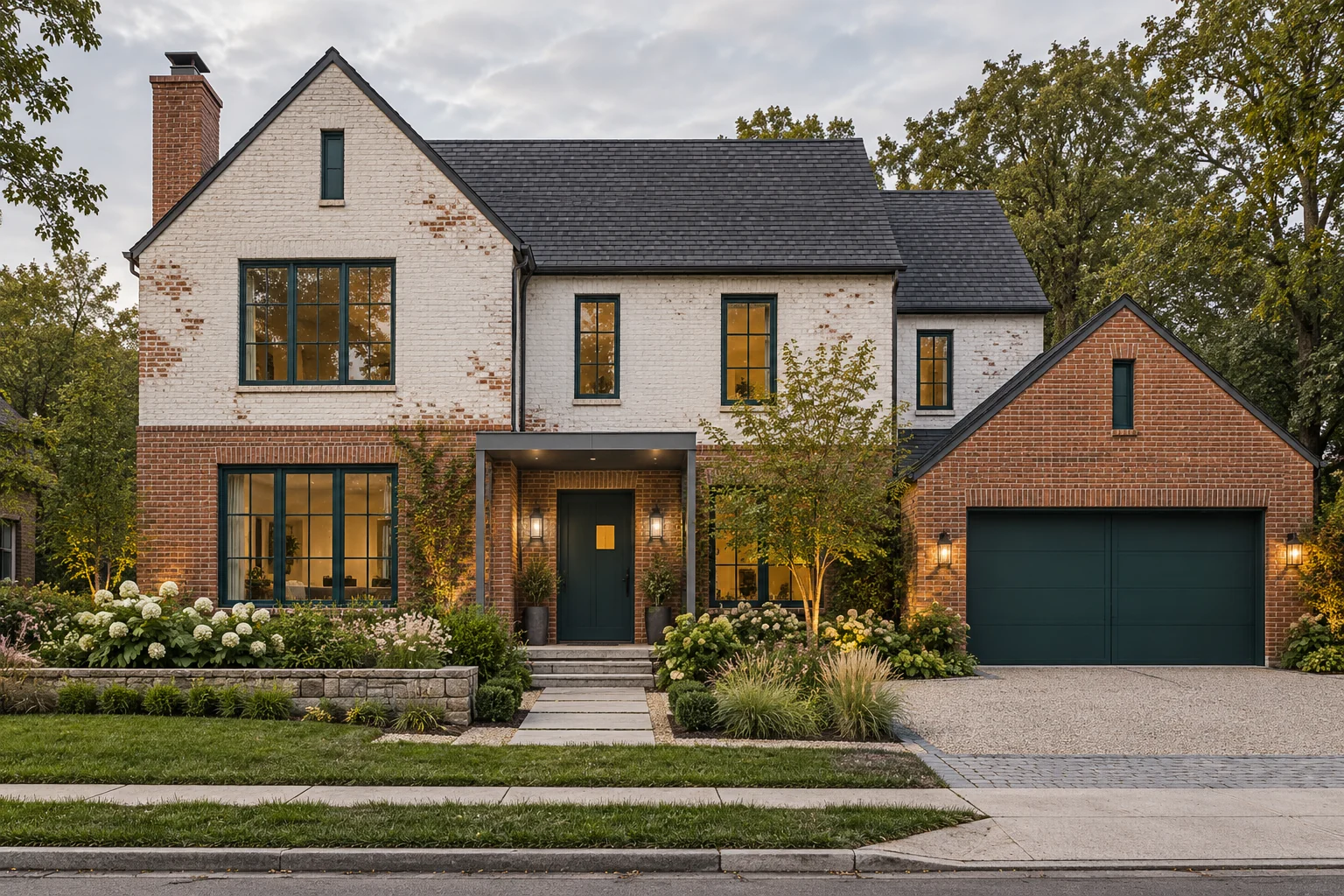
The pale-brick house with a red-brick garage illustrates a clear material boundary. The second finish belongs to a separate wing, so it describes part of the building rather than appearing as a random patch. A roof break and a change in wall depth help make that division understandable.
When updating an existing brick home, start by deciding which walls should remain visually connected. A new cladding finish is most convincing when it follows a complete volume or a recessed portion of the house. Avoid changing material simply because there is an empty area to fill.
How to combine brick and siding
Use muted siding as the bridge
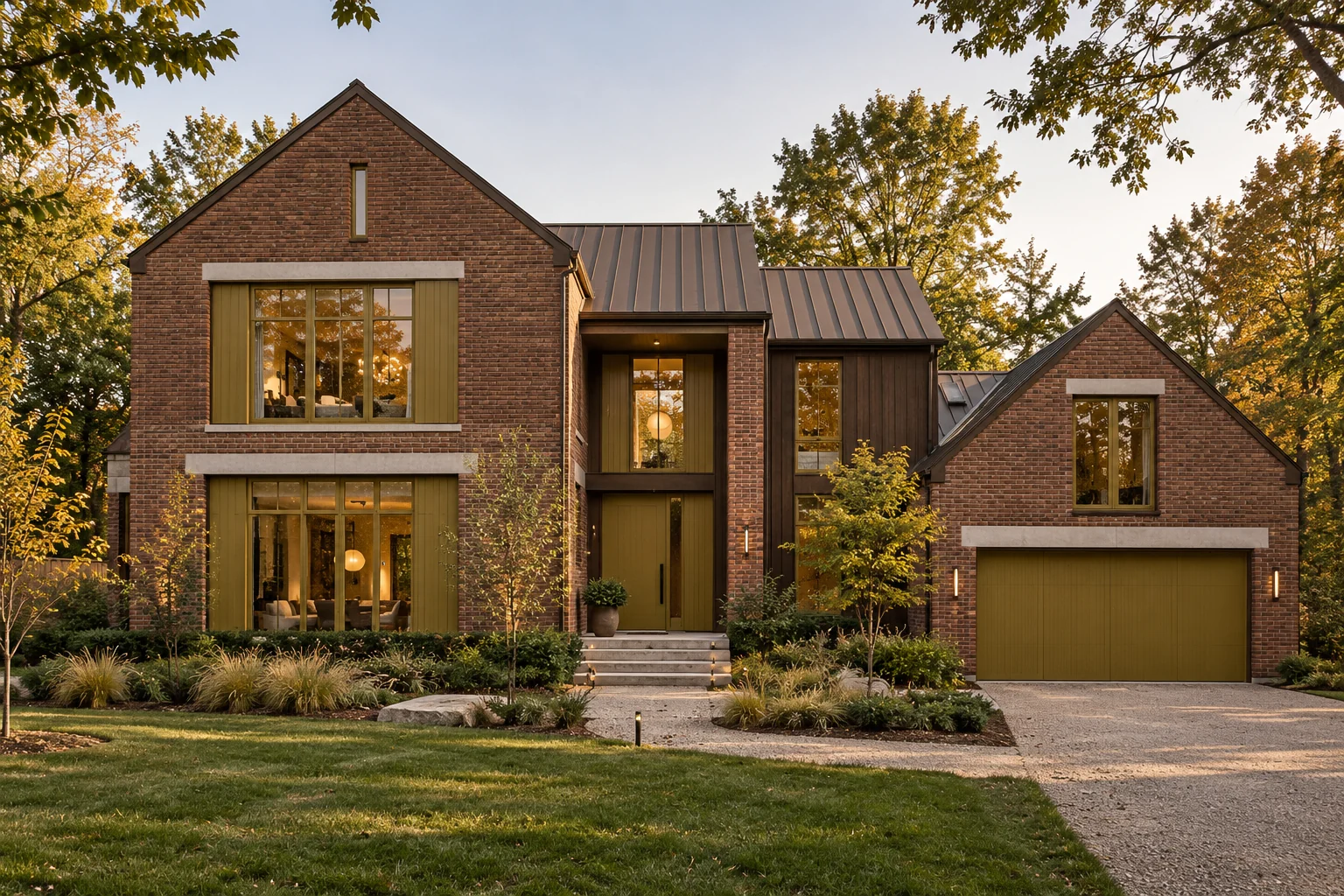
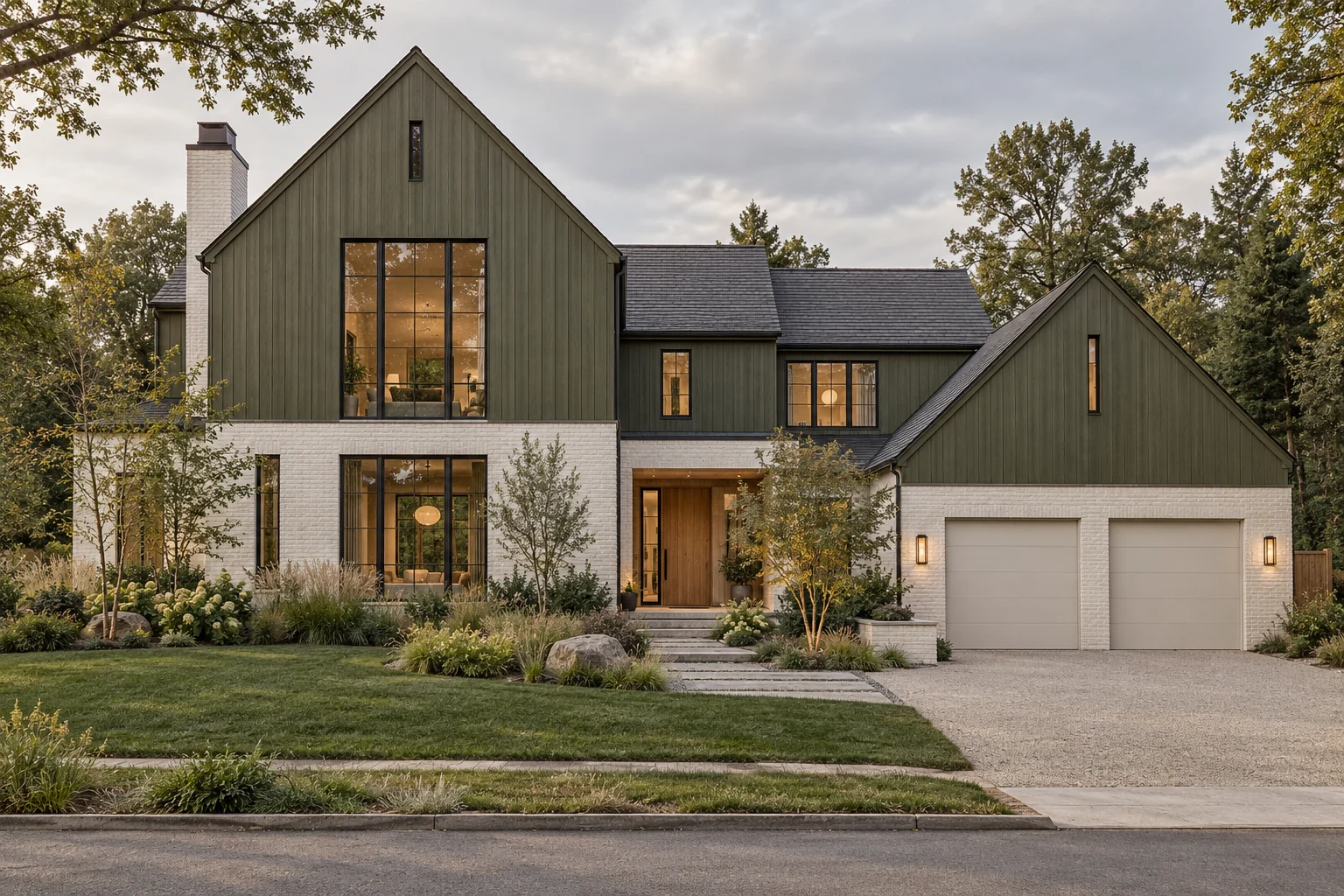
In the olive-sided example, the upper walls sit between the pale base and the dark roof. That middle value makes the change less abrupt than white siding would. The fine vertical lines also give the broad gables texture without introducing another masonry pattern.
For the olive-sided woodland home, sample Sherwin-Williams Dried Thyme SW 6186. Its muted green direction is a better starting point for this deeper upper-wall treatment than a light sage. Compare it with the pale masonry and the timber in both sunlight and tree shade; it is a suggested direction rather than an exact image match.
Sherwin-Williams Dried Thyme SW 6186
Concentrate timber where it has the most impact
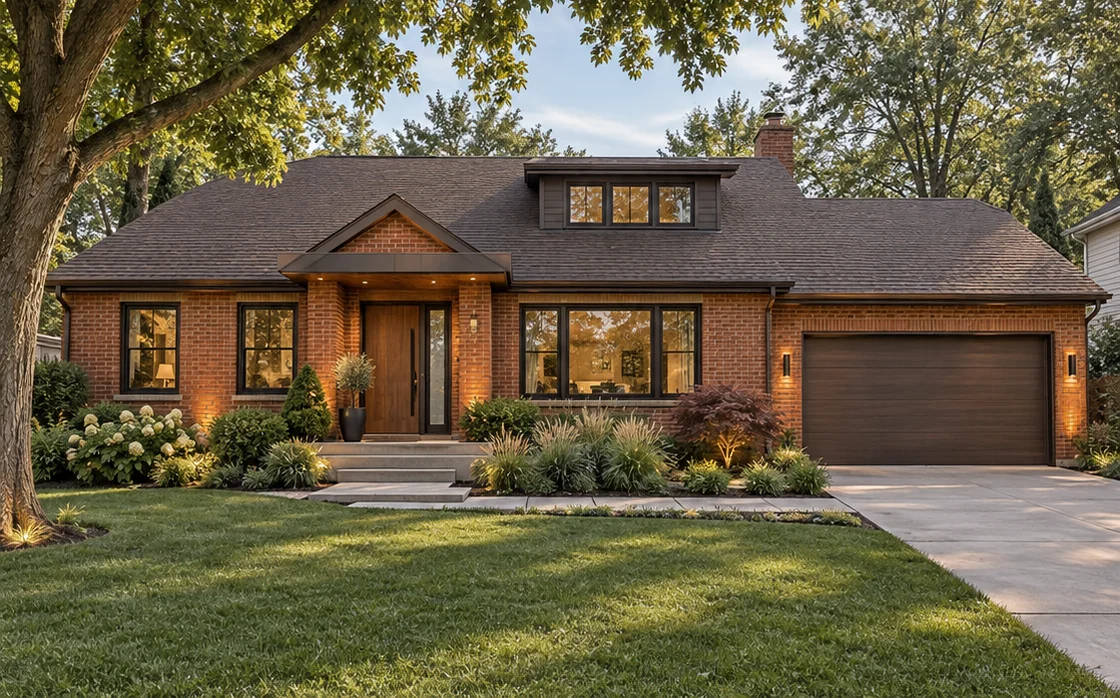
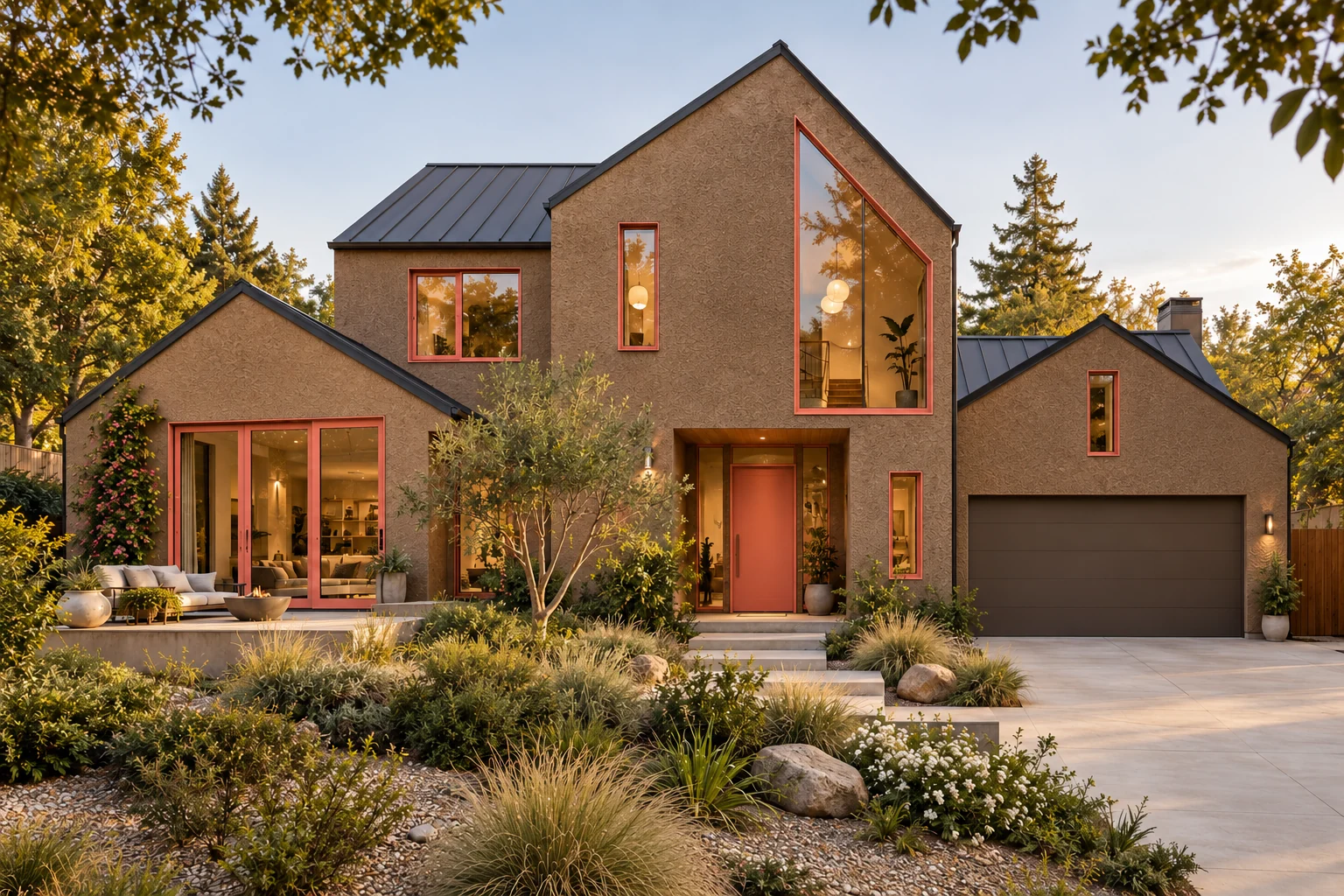
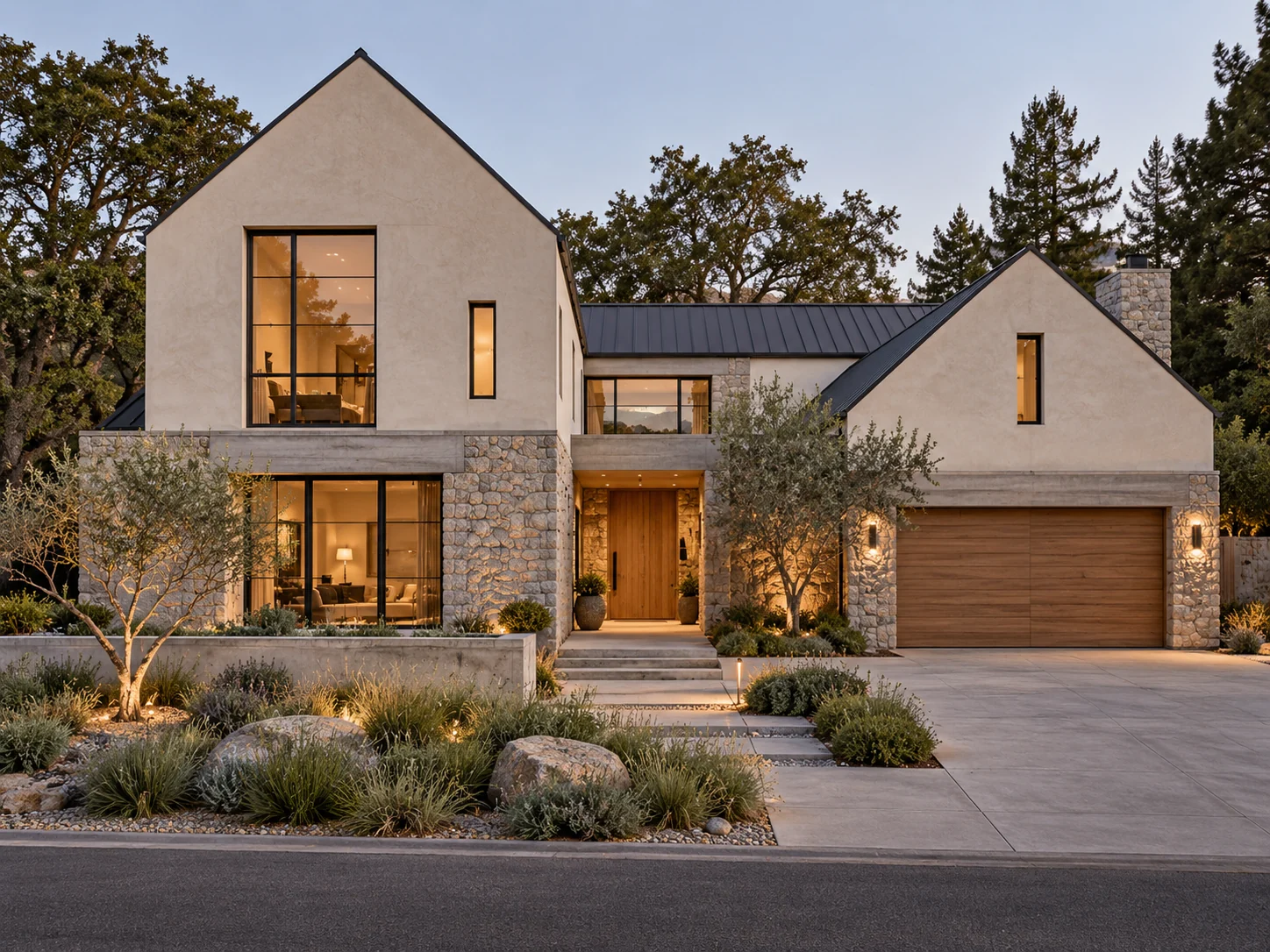
The warm-brick homes place timber close to the entrance, where it can frame the door and support the tall glazing. That concentration gives visitors a clear focal point. Covering every available surface in wood would weaken the distinction between the entry and the rest of the house.
The twilight example also shows why lighting matters: the illuminated entry becomes much warmer than the surrounding walls. Review the palette in daytime as well. Warm lamps can make several quite different finishes appear more similar than they really are.
Translate the idea to a woodland or mountain home
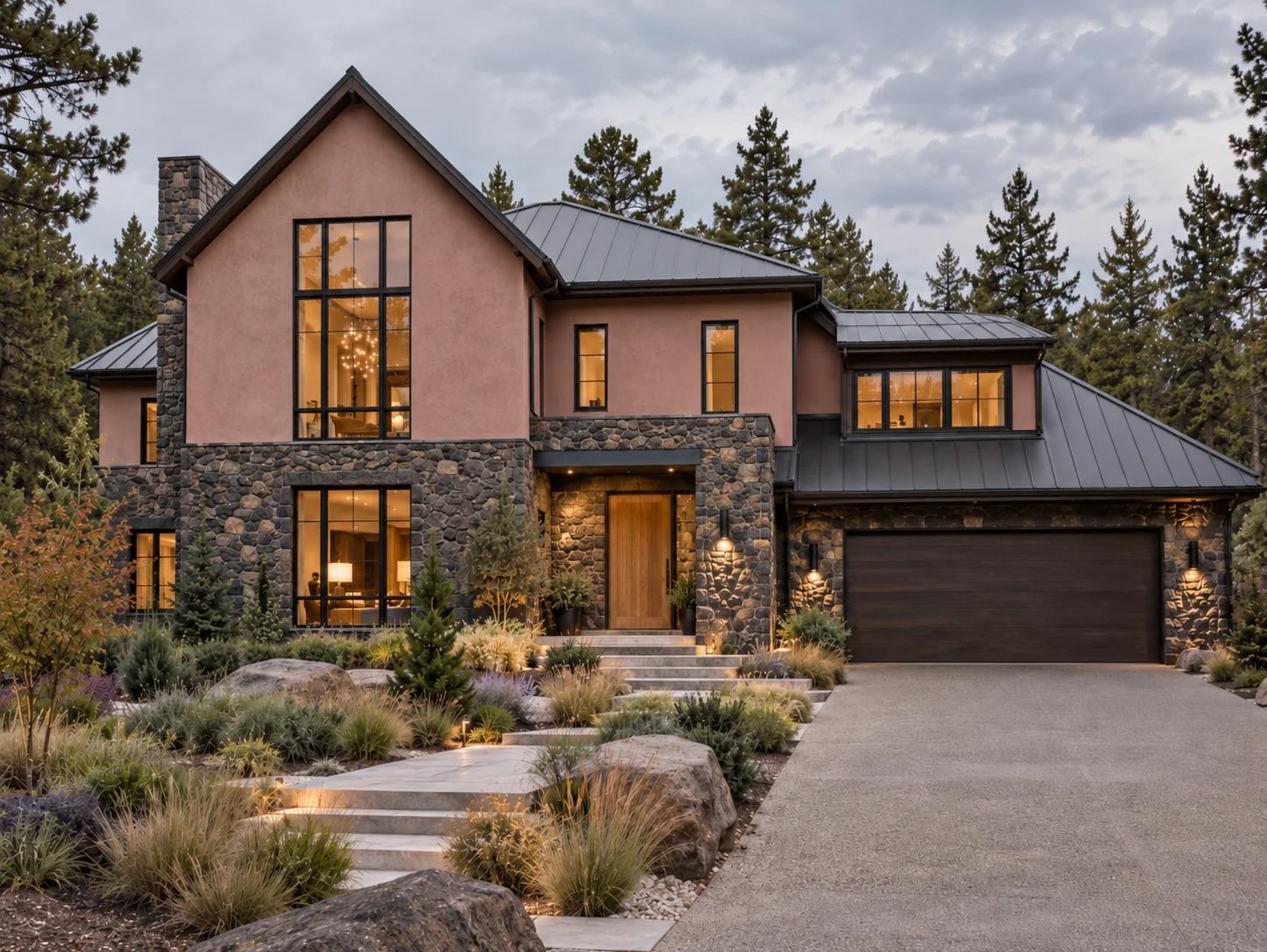
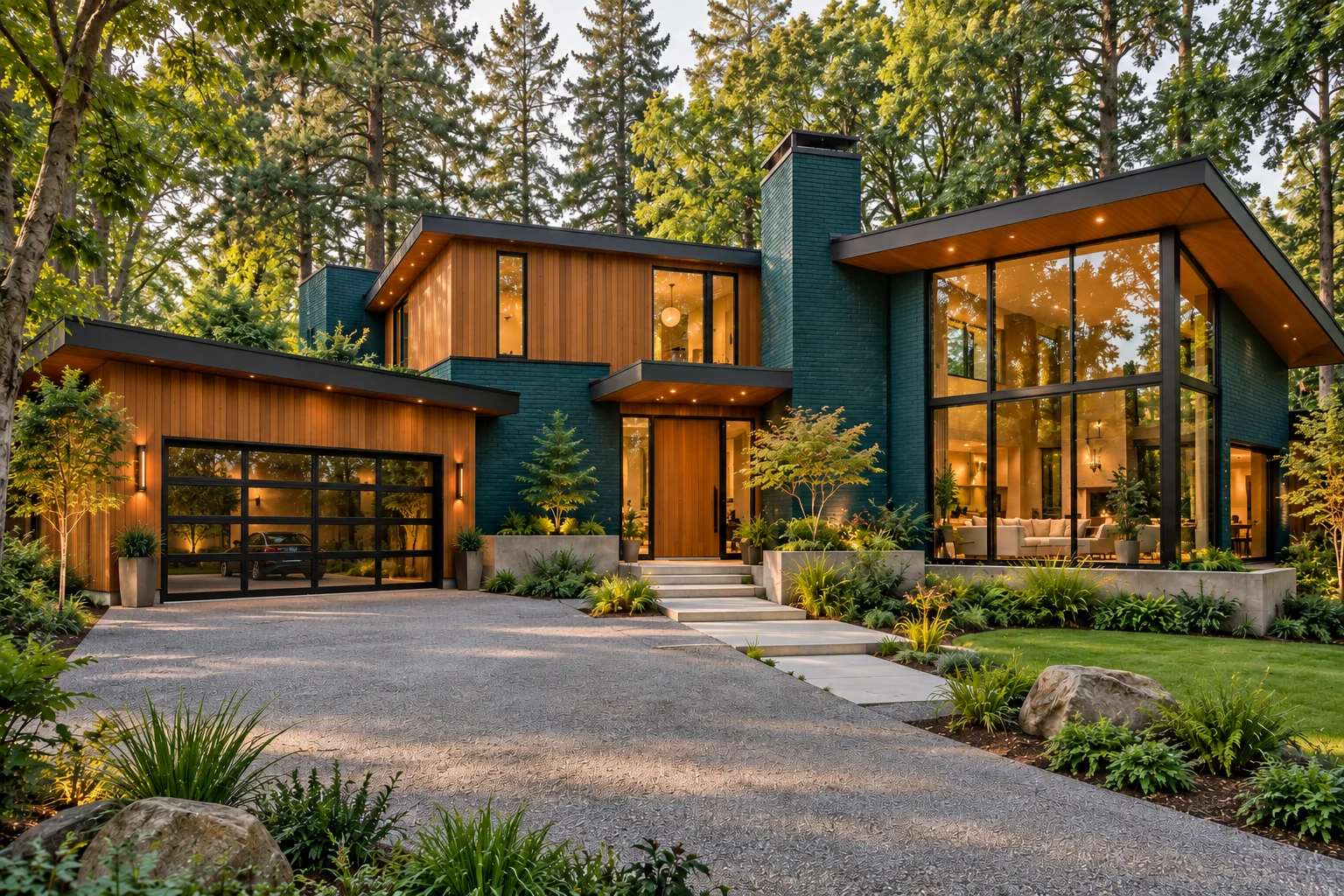
On the mountain house, stone grounds the lower walls while timber softens the taller roof forms. In the forest example, longer wood-clad surfaces follow the large building volumes. Both approaches keep the material arrangement tied to the architecture.
For an existing home, this does not mean adding gables or expanding windows simply to recreate an image. Preserve the structure that works and use finish placement to strengthen it. Larger opening or roof changes need a separate local assessment of feasibility.
Paint directions for the different homes
For the pale-brick farmhouse, compare Sherwin-Williams Shoji White SW 7042 on suitable painted trim or nearby siding. Its soft, warm direction can support the masonry without introducing a brilliant white outline. Keep the natural red brick in the garage wing as a material reference rather than trying to reproduce it with paint.
Benjamin Moore Tudor Brown HC-185 is a deep brown option to sample for painted doors or restrained details beside the warmer brown-brick examples. It can echo the depth of timber, but cannot reproduce wood grain or replace a stain specification. For the forest retreat, Sherwin-Williams Cascades SW 7623 offers a richer green direction for a painted entrance or limited accent beside timber and pale masonry.
Together with Dried Thyme for the olive-sided house, these are separate directions for different examples, not four colors to put on every home. View samples alongside the roof, masonry and wood that will actually be used.
Sherwin-Williams Shoji White SW 7042
Resolve the transitions before ordering materials
Check corners, returns, soffits and the places where timber meets masonry. A palette can look attractive on a sample board and still feel unfinished if those transitions are awkward. Confirm profiles, dimensions, installation details and finish suitability with the relevant supplier or contractor.
Start with one dominant wall finish, one supporting material and a limited accent. Add another only if it explains a real part of the house. This keeps a warm palette architectural rather than decorative.