Copper Penny Metal Roofs: Exterior Colors and Materials That Work Beautifully Together
Explore copper penny metal roof ideas with warm stone, deep green siding and charcoal accents. Learn how to coordinate finishes before renovating.
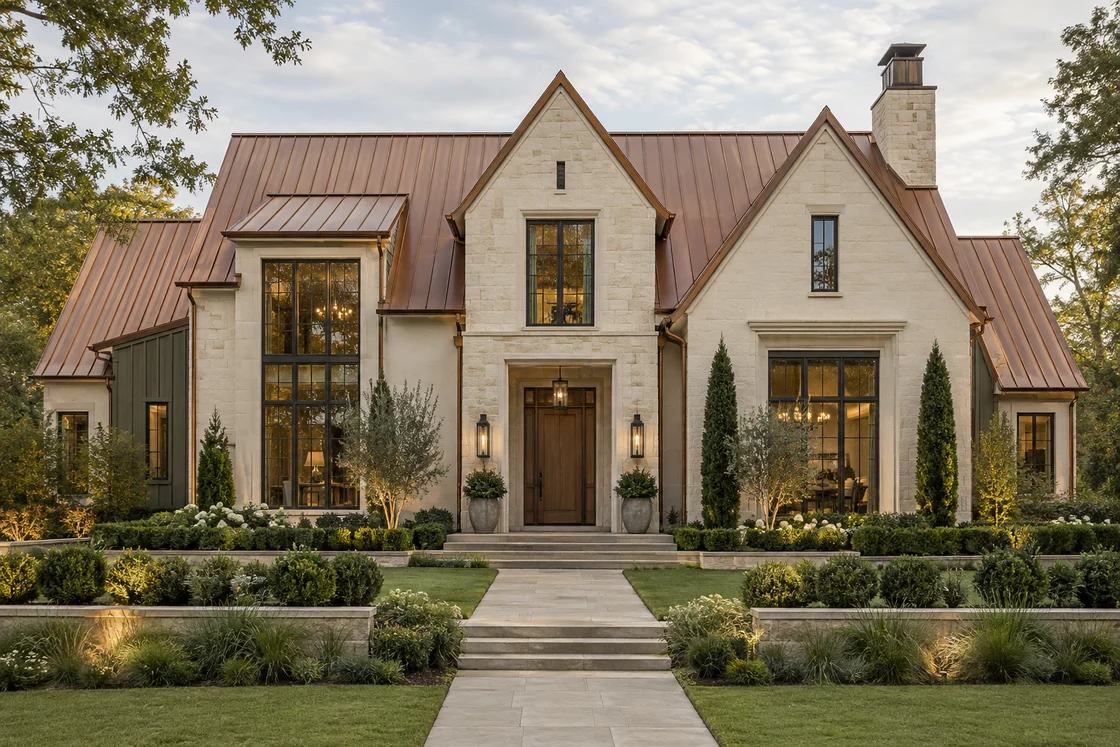
A copper penny roof brings warmth to a home in a way that a gray or black roof rarely does. Its reddish-brown metallic finish can highlight a gabled roofline, soften dark siding and give pale stone a richer appearance.
Because the roof introduces a strong color, the rest of the exterior needs careful consideration. The most successful combinations give the copper room to stand out while connecting it to the walls, windows, entrance and landscape.
The homes shown here explore several approaches, from creamy stone exteriors to deep green siding and darker architectural compositions.
What Is a Copper Penny Roof?
“Copper Penny” is a name used for certain painted metal roofing finishes designed to resemble the warm appearance of new copper. It does not necessarily mean the roof is made from solid copper. Western States Metal Roofing, for example, offers a Copper Penny painted finish on metal panels.
This distinction matters when choosing a roof. Natural copper changes through weathering, developing darker tones and potentially a green patina over time. A painted copper-look finish has its own coating characteristics and should not be expected to weather like solid copper. Always confirm the material and finish with the supplier.
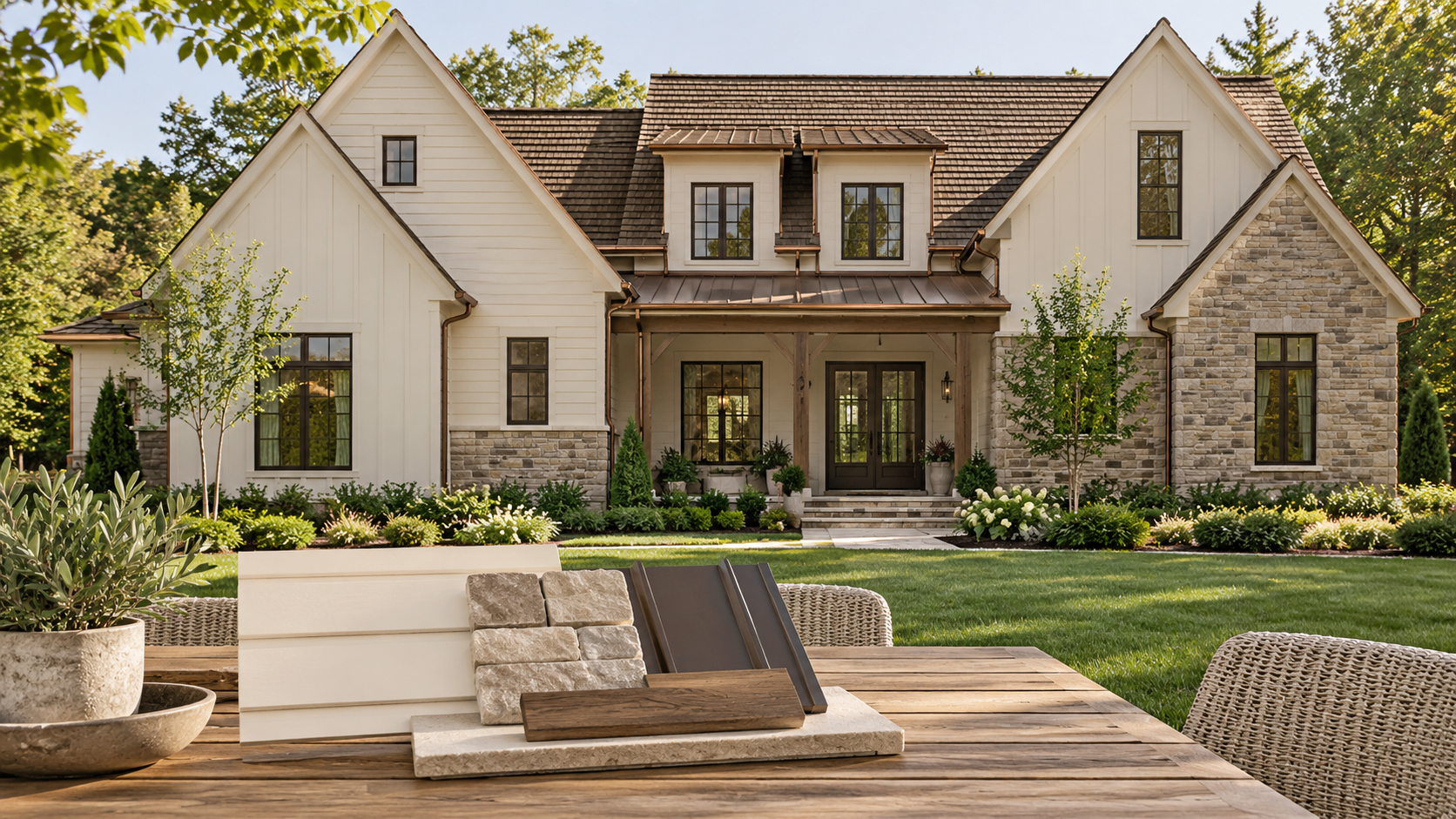
For exterior design, the starting point is the actual sample. Copper-colored finishes can vary considerably in brightness, undertone and reflectivity.
Warm Stone Creates a Natural Foundation
One of my favorite combinations is a copper-toned roof with pale, warm stone.
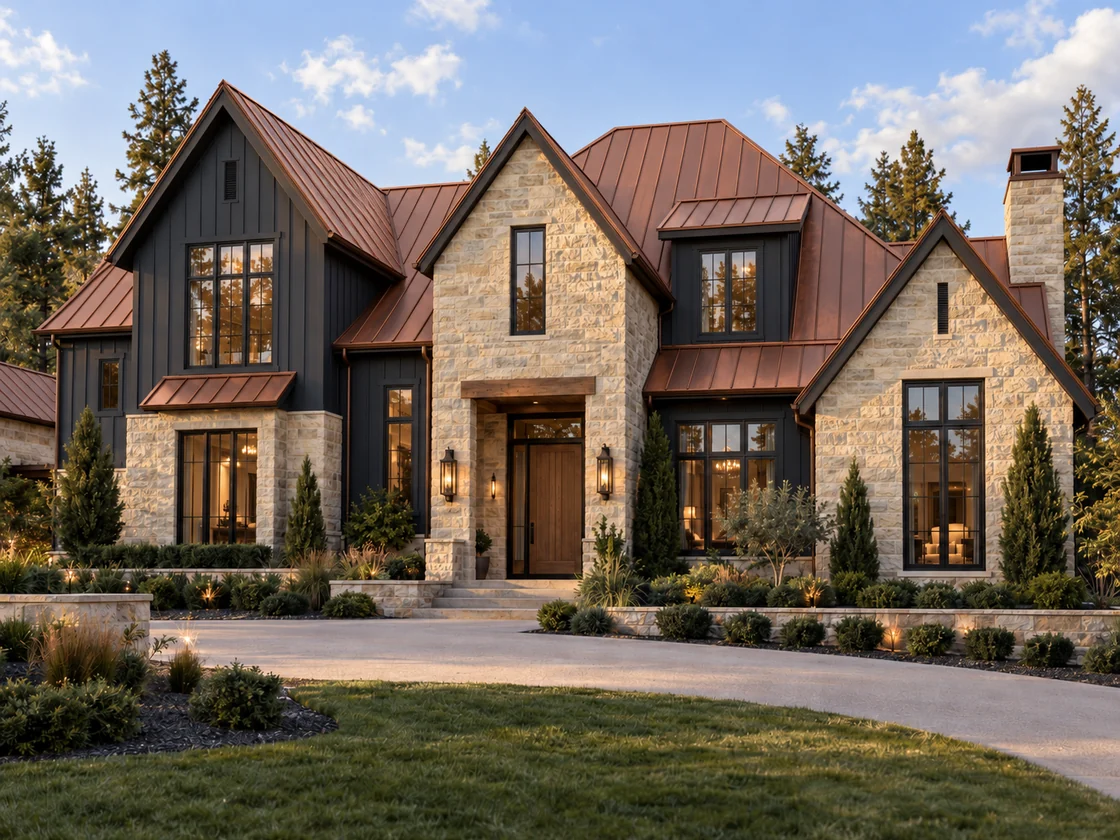
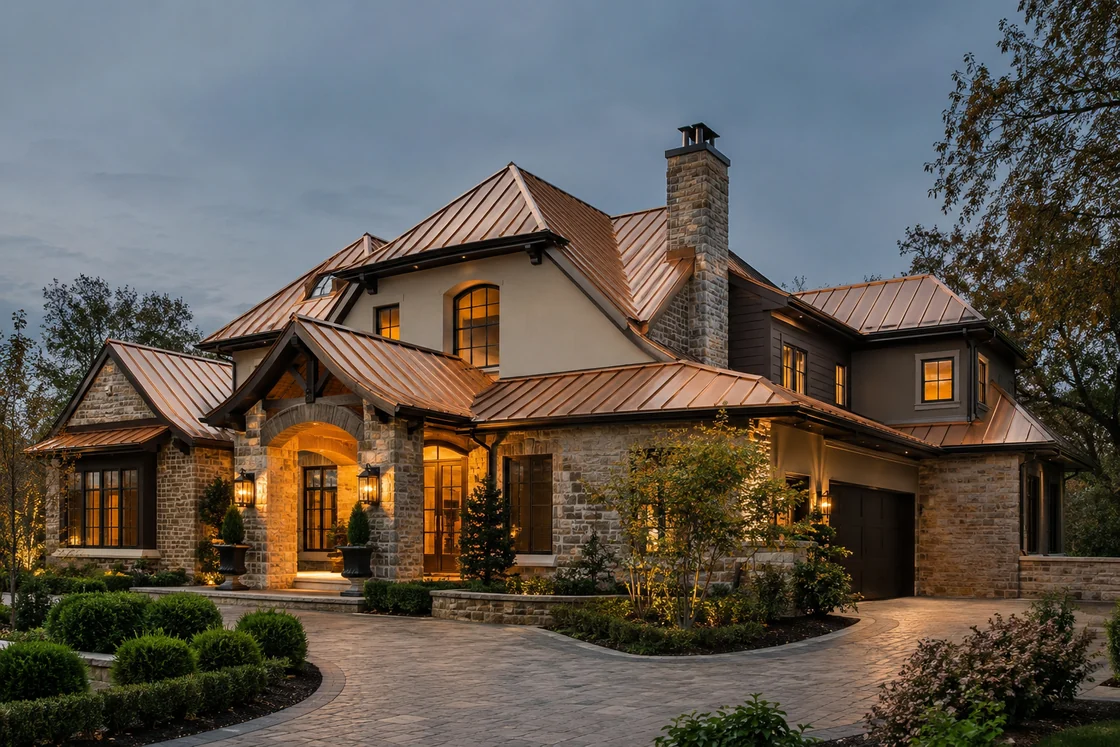
In the stone-dominant examples, creamy masonry gives the copper a quiet background. The contrast comes from texture: irregular stone below, smooth metal above and slender dark window frames between them.
Look for stone with cream, buff, sandy beige or soft warm-gray tones. Strong yellow or pink undertones deserve closer testing because they can compete with the roof.
The stone around the entrance also gives the exterior a clear focal point. This helps the roof feel like part of the architecture rather than the only feature attracting attention.
Deep Green Siding Adds Richness
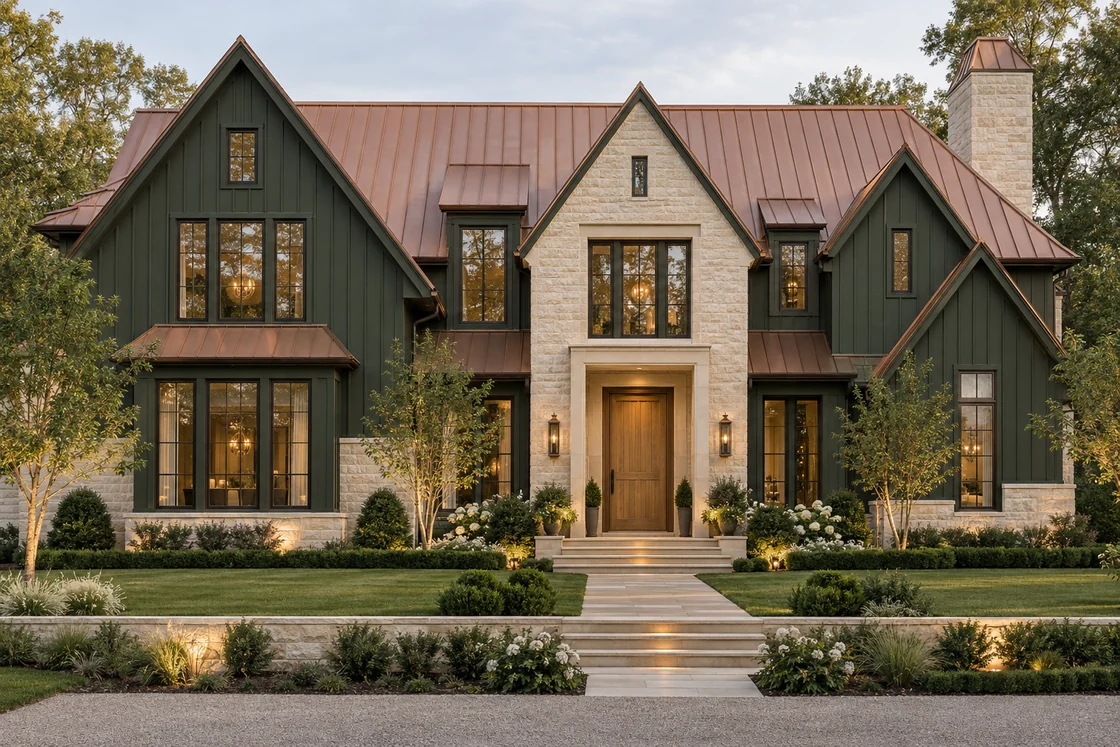
The green-sided home shows another strong direction: muted forest or olive-green siding, warm limestone and a copper-colored roof.
The green balances the roof’s reddish warmth, while pale stone prevents the composition from becoming too dark. A natural wood front door adds another warm surface without introducing a completely unrelated color.
For this palette, I would explore greens with some gray, brown or olive in them. Bright emerald or strongly blue-green finishes can create a very different effect.
The proportions matter as much as the colors. Here, stone defines the central entrance and lower exterior, while green siding emphasizes the projecting gables.
Charcoal Siding Gives the Roof More Contrast
A deeper charcoal exterior makes copper-colored roofing more prominent.
In the darker example, the siding recedes while the pale stone entrance and warm roof remain visible. The result has depth without needing several additional accent colors.
A charcoal with a brown or softened neutral undertone is worth testing alongside the roof. A very cool blue-gray may work, but it needs to be considered carefully against the stone and wood.
Rather than choosing each finish separately, place the roof, siding, masonry and door samples together. A combination that looks convincing in individual photographs can feel disconnected when seen as one palette.
Keep Windows, Trim and Lighting Restrained
When the roof already contributes a distinctive color, the smaller details can be quieter.
Dark bronze or softened charcoal window frames often provide definition without competing with copper. Warm ivory trim can suit lighter exteriors, while trim close to the siding color can simplify darker ones.
Exterior lighting should also relate to the surrounding finishes. A restrained bronze or dark metal lantern can connect the windows and entrance without trying to match the roof exactly.
You do not need copper-colored gutters, lights, house numbers and door hardware simply because the roof is copper-toned. Repeating the same metallic color everywhere can reduce the contrast that makes it appealing.
Consider the Roof’s Shape and Visibility
The roof occupies a substantial part of the homes shown here. Steep gables and clearly visible metal seams make its color an important part of the overall composition.
On a home with a lower roof pitch or less roof visible from the street, the same finish may have a much smaller visual impact.
For some renovations, a copper-colored porch roof or entry canopy may provide enough warmth. Before selecting an accent roof, consider how it will sit beside the main roofing material and whether it reinforces a meaningful architectural feature. The right amount depends on the house.
Check Samples Outside Before Ordering
Warm evening light can make a copper-colored roof appear richer and more golden. Overcast daylight can reveal a quieter brown or pink undertone.
Before committing, review a physical roofing sample outside beside the actual siding, brick or stone that will remain. Check it in sunlight and shade, beside existing window frames and proposed trim or door finishes. Look from a distance as well as close up.
A roofing contractor should confirm the appropriate panel system, installation details and suitability for your property. An exterior visualization helps you assess appearance, while physical samples and local expertise help confirm the final selections.
Plan the Whole Exterior Around the Roof
A copper penny roof can give a home warmth and character, but its success depends on the surrounding choices.
Pale stone, muted green siding, softened charcoal, natural wood and restrained metal details each offer a different direction. The best combination is the one that suits your home’s proportions, existing materials and architectural character.
If you are considering a new roof as part of an exterior renovation, explore the complete palette before ordering. Seeing the roof together with the walls, windows and entrance can make the decision much clearer.