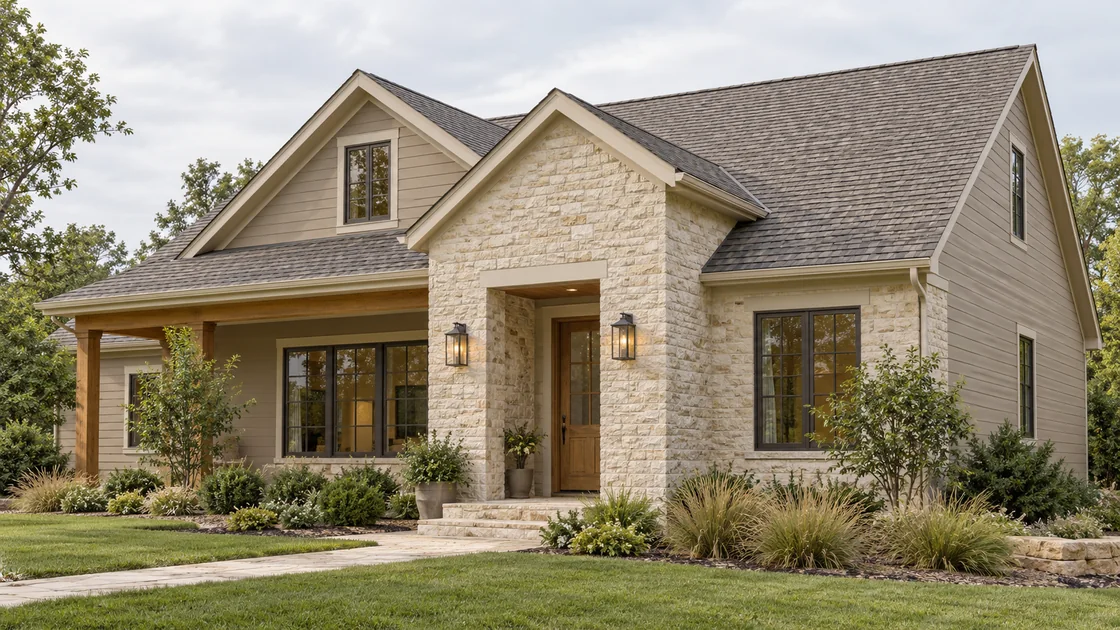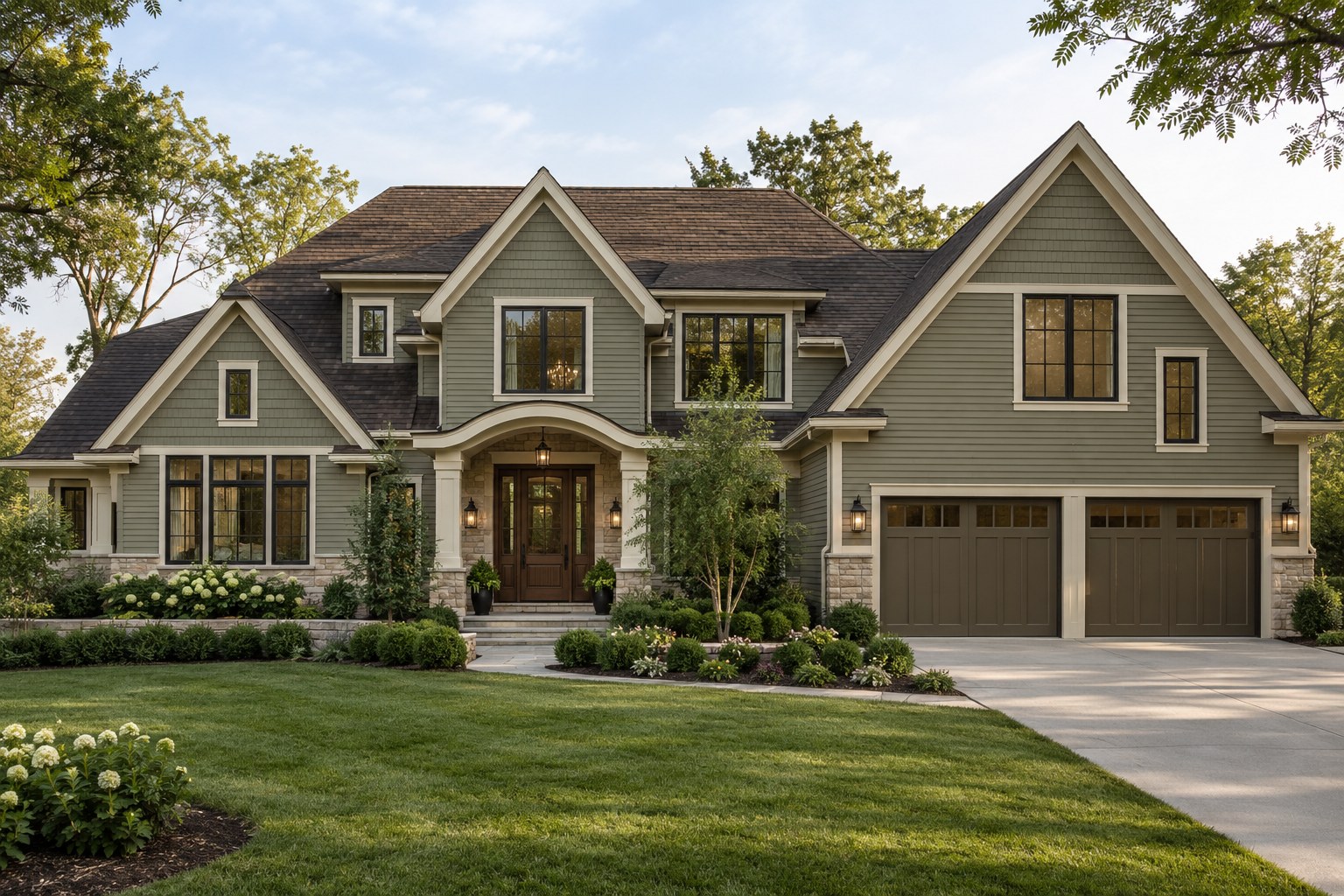
Exterior Stone Veneer Ideas: Where Stone Looks Beautiful—and Where It Doesn't
Explore exterior stone veneer ideas for entrances, columns and wall volumes. Compare stone types, exterior paint palettes and practical renovation decisions.
An exterior can have expensive stone and still feel unfinished. Usually the problem is not the stone itself: it is where the material starts, where it stops, and whether it belongs to the architecture. A little well-placed masonry can give a house more presence than several unrelated accent patches.
When I explore exterior stone veneer ideas, I begin with the entrance and the house's main volumes. The aim is to make the building easier to understand from the street. These are design starting points for a renovation, with installation details to resolve with your local contractor before ordering material.
Where should stone veneer go on a house?
Stand across the street and identify the entrance, the largest wall plane, and any projecting or recessed sections. These are more useful guides than the amount of stone you can afford. Give the material one clear job: anchor the porch, identify the entrance, or distinguish a substantial building volume.
A stone-clad entrance should have a deliberate boundary. An inside corner or the edge of a projecting wall usually gives a convincing stopping point. Ending stone halfway across a flat wall, with no architectural reason, can make it look like a sample attached to the house.
For a closer look at the material relationship, explore these stone and siding combinations.
Entrance walls and porch columns
For an entrance, consider a complete wall plane around the door rather than a thin decorative outline. If the wall projects, show the stone returning around its visible side. This gives the entrance depth and avoids a pasted-on appearance. Keep the door surround simple enough that the stone texture remains legible.
On a porch, substantial stone column bases can work beneath simpler upper posts. Their proportions should suit the roof they appear to support. A narrow post sitting on an oversized stone block can look awkward; so can small stone collars that seem unrelated to the rest of the porch.
Lower walls and architectural volumes
A lower-level wall can visually ground a split-level or sloping-site home. Carry the material across a coherent base rather than creating disconnected rectangles beneath individual windows. Align transitions with actual changes in wall plane where possible.
A waist-high band is not automatically the right answer. On a low ranch it may divide an already shallow elevation into competing strips. Compare a full entrance volume with a broad lower band before deciding. The simpler placement often makes a stronger composition.
Natural stone versus manufactured stone veneer
Natural stone veneer is cut from quarried stone; manufactured stone veneer is generally a molded cement-based product. Neither label alone tells you whether the finished house will look refined. Scale, variation, corners, mortar joints, workmanship and compatibility with the wall assembly all matter.
View a generous physical sample panel, not one loose piece. Look for repeated shapes, abrupt color changes and the effect of the proposed mortar. Compare installed thickness, available corner units, maintenance information and the complete installed quote. Natural stone may have appealing variation, while a thoughtfully selected manufactured product may suit the budget and design. Ask the installer which system fits the existing wall.
Three stone and siding combinations to sample
These Sherwin-Williams colors are exterior-available color directions, not approved installation systems or guaranteed matches to a stone name. Two limestones described as ivory can have quite different undertones. Select the actual stone, roof and mortar samples before approving paint.
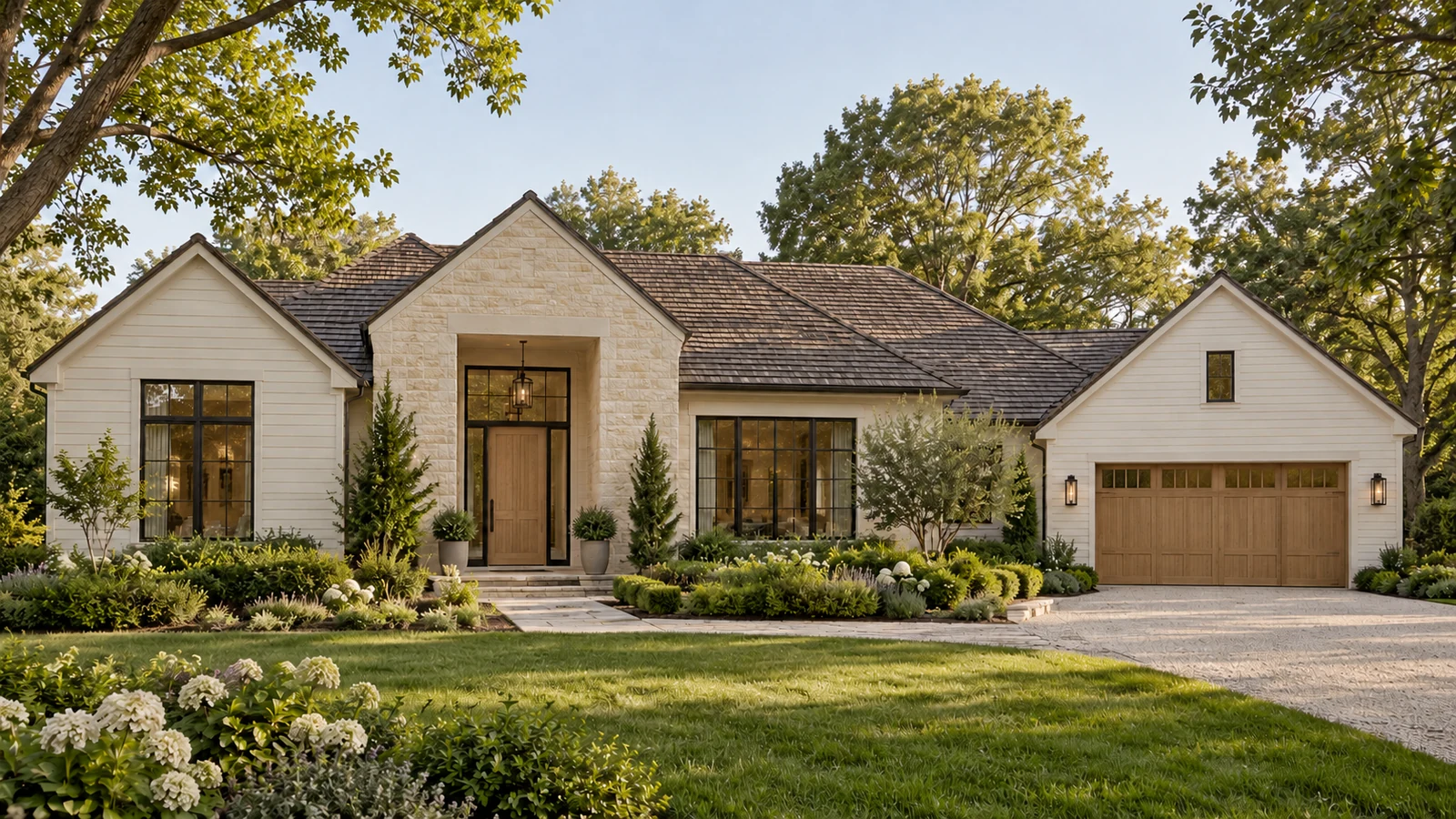
Warm limestone with Shoji White SW 7042
Warm ivory limestone and Shoji White can create a quiet, creamy composition. I would try Shoji White on the siding and trim, a natural wood entrance, and bronze-colored window frames where those are an existing or planned factory finish. Let the garage blend with its surrounding siding so the stone entrance receives attention.
Check the combination beside the roof: a strongly pink or cool blue-gray stone may not share the same warmth. The goal is a related undertone with enough material contrast to keep the entrance distinct, rather than trying to make paint impersonate stone.
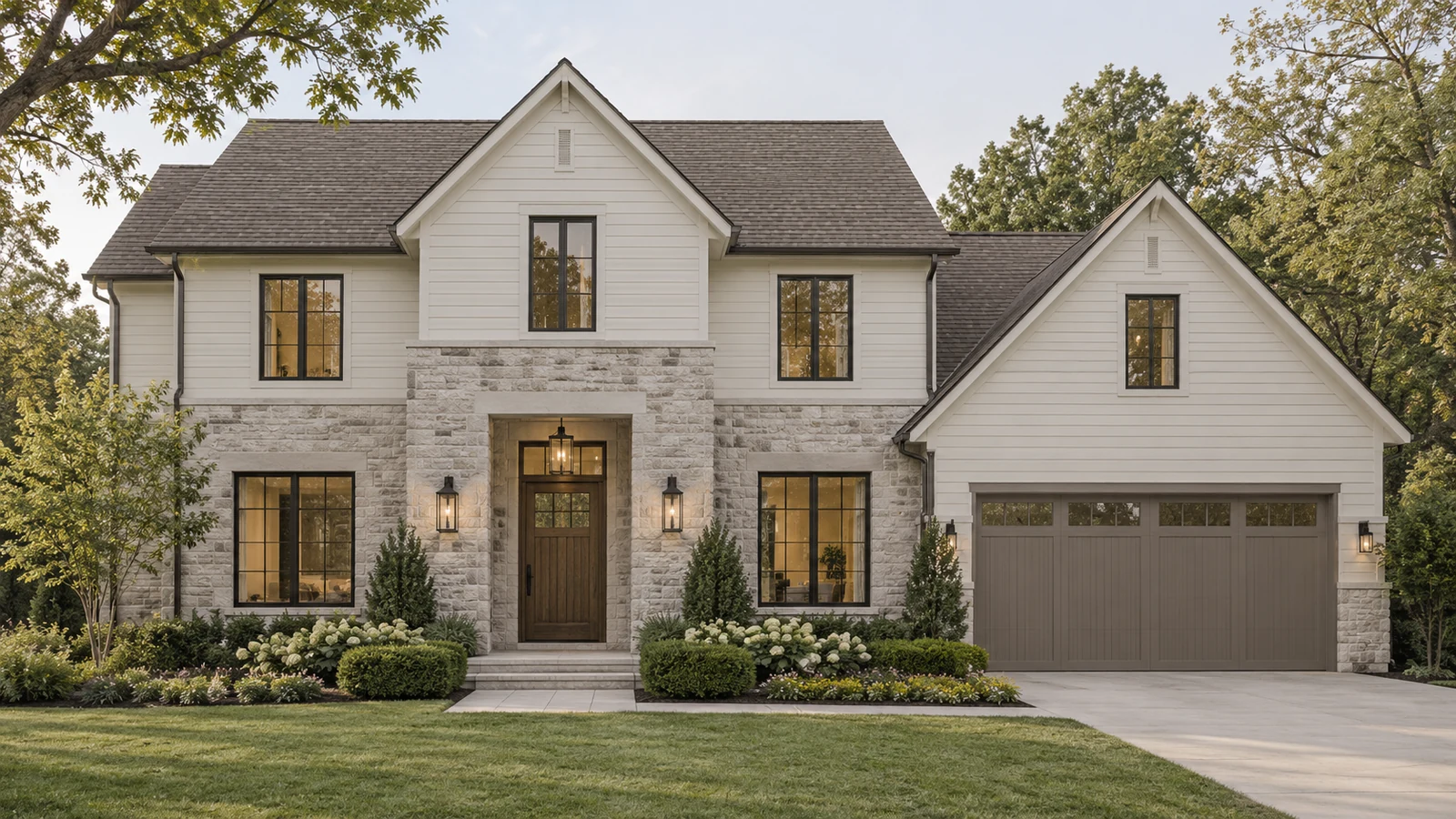
Gray stone with Oyster White SW 7637 and Dovetail SW 7018
For a softer gray composition, sample Oyster White on the body and trim with Dovetail on a garage or a secondary painted volume. A weathered gray-brown roof can connect the warm and cool notes. Choose stone with some tonal movement instead of assuming every gray material coordinates.
Dovetail is a substantial accent. If the garage dominates the street view, compare it with a body-colored version before committing. Keep the entrance warmer through timber or lighting rather than introducing a fourth paint color to compete with the masonry.
Earthy stone with Pewter Green SW 6208
Pewter Green gives warm buff or earthy stone a deeper background. Try the green on siding, a restrained warm-white trim direction, and a wood door. Carry the siding color onto a compatible painted garage when the aim is to keep that surface quiet.
Stone with abundant orange or burgundy variation can change this relationship considerably. Sample outdoors in both sun and shade. On an existing vinyl surface, these general exterior recommendations require separate vinyl-specific approval; a dark green is not automatically suitable.
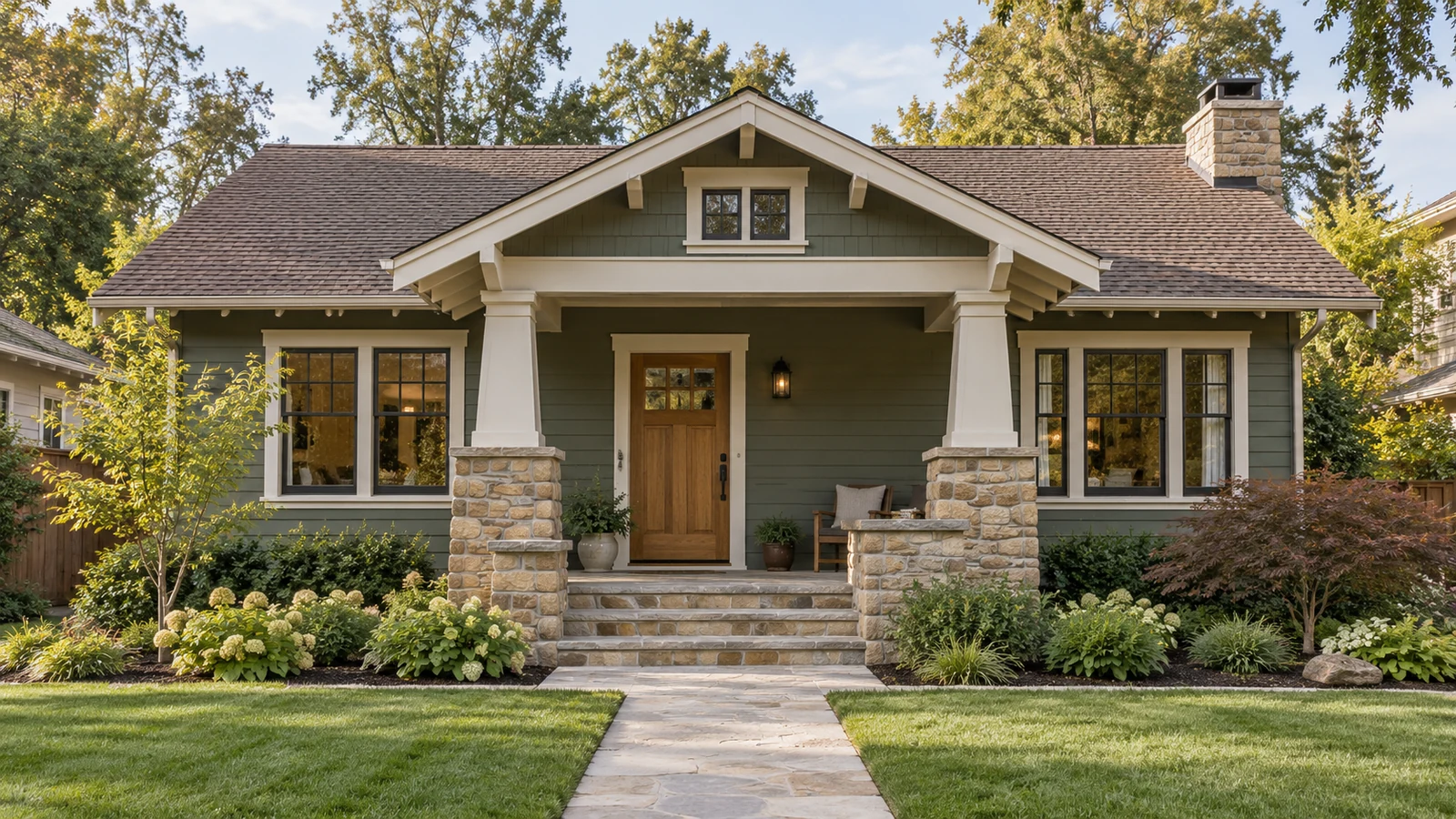
Material transitions make the difference
Decide where the top, bottom and corners of every stone area will end. Discuss returns, caps, window surrounds and transitions to siding before approving the elevation. A beautiful straight-on rendering can hide an unresolved side edge that becomes conspicuous on the actual house.
Avoid placing several strong textures together without a hierarchy. If retained brick already dominates the front, another busy stone blend may add noise rather than depth. Sometimes a simpler painted wall and a better entrance light do more than introducing a second masonry material.
Installation and moisture questions to ask
Stone veneer is a wall-cladding decision, not just a finish selection. Ask a qualified installer to identify the existing backing and propose the appropriate attachment, water-management layers, drainage approach, flashing and terminations for the selected system. Window openings, roof intersections and the base of the wall deserve particular attention.
Do not cover active leakage or damaged backing. Ask how the work will preserve drainage and the clearances required by the product and applicable local rules. I would request a written scope and an installed sample before committing to the full elevation. This guide does not specify universal flashing dimensions or replace manufacturer instructions.
A refined renovation without stone everywhere
Prioritize one visible, meaningful area. For many homes that is the entrance, together with a coordinated door, walkway and planting. A smaller, well-detailed installation may be more effective than spreading the same budget thinly across the front.
When comparing quotes, include preparation, corners, trim interfaces and cleanup rather than comparing material square-foot prices alone. Keep sound existing finishes where they help the composition. A coherent exterior comes from the relationship between surfaces, not the number of new products installed.
Stone veneer questions homeowners ask
### Does stone veneer increase curb appeal? It can strengthen an entrance or ground a building volume, but the result depends on placement, proportions and workmanship. Adding stone indiscriminately is not a design improvement by itself.
Should stone match the roof?
It should relate to the roof, especially in warmth and overall depth, without being identical. Compare the actual samples together from the street-view distance as well as close up.
Can stone go over existing siding?
Do not assume so. The wall needs a suitable system and backing. Have the existing assembly assessed and ask for the preparation and water-management details in the installer's scope.
Plan the whole elevation before buying stone
Choose the stone location first, then coordinate the siding, garage, trim, door and landscape around it. If you are weighing several placements, visualization can help compare their proportions before a construction quote becomes a purchase. Explore what your home's exterior could become with a coordinated design.
Explore my exterior design portfolio for more examples of coordinated home updates.
Primarily choosing paint colors? Ask about my Color Consultation ($200), which provides color guidance without visualization.