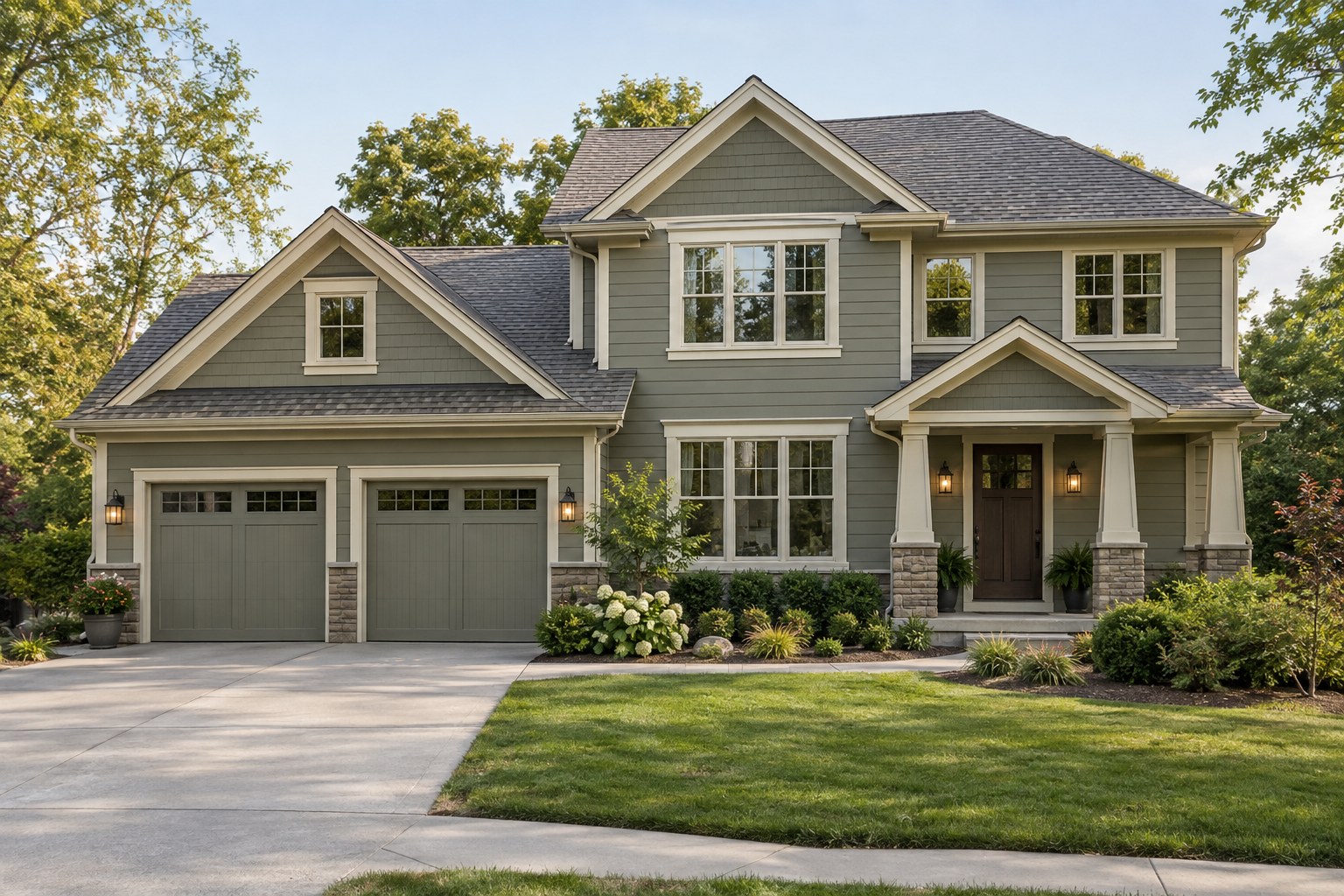
How to Modernize a Vinyl Siding House Without Replacing All the Siding
Modernize a vinyl-sided house with a coordinated entrance, garage, lighting and landscape. Learn when painting, repair or siding replacement makes sense.
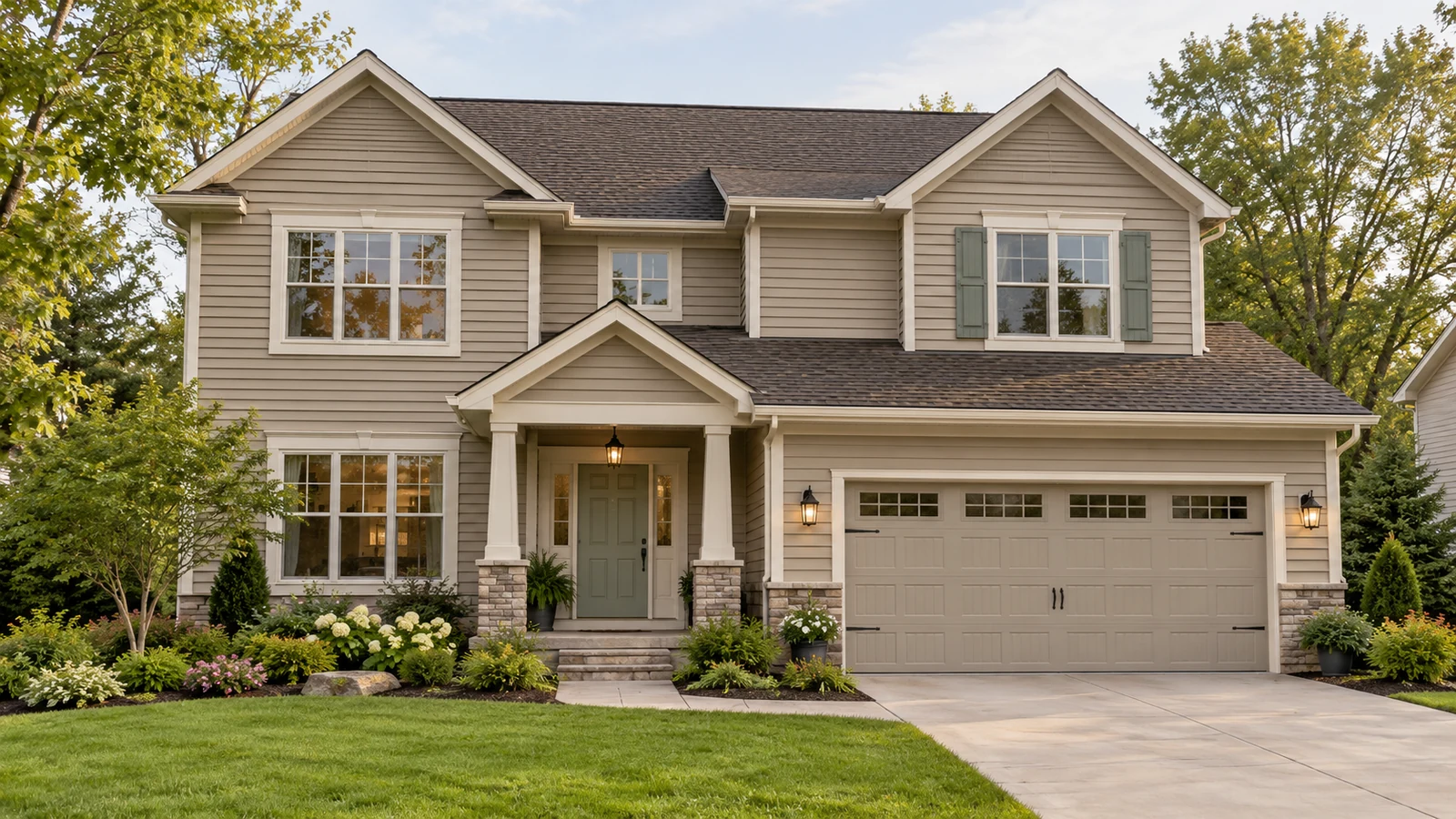
A vinyl-sided house does not need a completely new exterior to feel more considered. Often the basic roof, siding and windows are serviceable; the entrance is simply hard to notice, the lights feel undersized, or several finishes were chosen without a shared direction. Replacing every panel can consume the budget before those problems are addressed.
When deciding how to modernize vinyl siding, I start by separating what is worn out from what is merely unfashionable. Keeping sound siding can be a sensible choice. The important distinction is that a pleasing paint color and a suitable paint specification are two different decisions.
Is the existing vinyl siding worth keeping?
Walk the entire house and note cracked, loose, distorted or missing panels. Look around windows, roof junctions and the bottom of walls for signs that water may be reaching places it should not. Dirt and faded color are different issues from physical damage or an underlying leak.
Have suspected water damage or repeated movement assessed before planning cosmetic work. Ask whether localized repairs are practical and whether matching profiles remain available. A sample replacement panel can differ from older, weathered siding even when the original color name is the same. Evaluate the whole wall, not just the easiest piece to replace.
When can vinyl siding be painted?
Painting may be an option for sound, stable vinyl when the siding manufacturer and the selected coating system permit it. Review the warranty and confirm the existing material, color and condition. Preparation and adhesion matter, but color selection also affects how much heat the surface absorbs.
Do not use painting as a repair for warped panels or unresolved moisture. Before approving the job, ask the contractor to identify the exact coating, tint formula and preparation method, and confirm compatibility with the siding. A broad statement that a paint is 'for exteriors' does not answer these vinyl-specific questions.
Why darker paint can be a problem
Dark finishes can increase heat absorption and contribute to vinyl distortion. Sherwin-Williams advises against ordinary darker-than-original repainting and offers designated VinylSafe color options for use with specified coatings on sound, stable vinyl. That is a particular color-and-coating route, not permission to use any dark paint.
The siding manufacturer's restrictions still matter. Do not substitute a standard tint for a designated vinyl-safe formula or treat a similar-looking chip as equivalent. Ask the supplier to confirm the exact system in writing. A dark front door in an inspiration image does not mean that its surrounding vinyl siding should receive the same finish.
Three color directions for a quieter renovation
For vinyl, I would explore warm off-white, light taupe and muted light sage as visual directions, then select an allowed color within the approved system. This guide deliberately does not assign a named Sherwin-Williams house-body color as universally vinyl-safe. Even a pale-looking shade needs confirmation for the actual product and substrate.
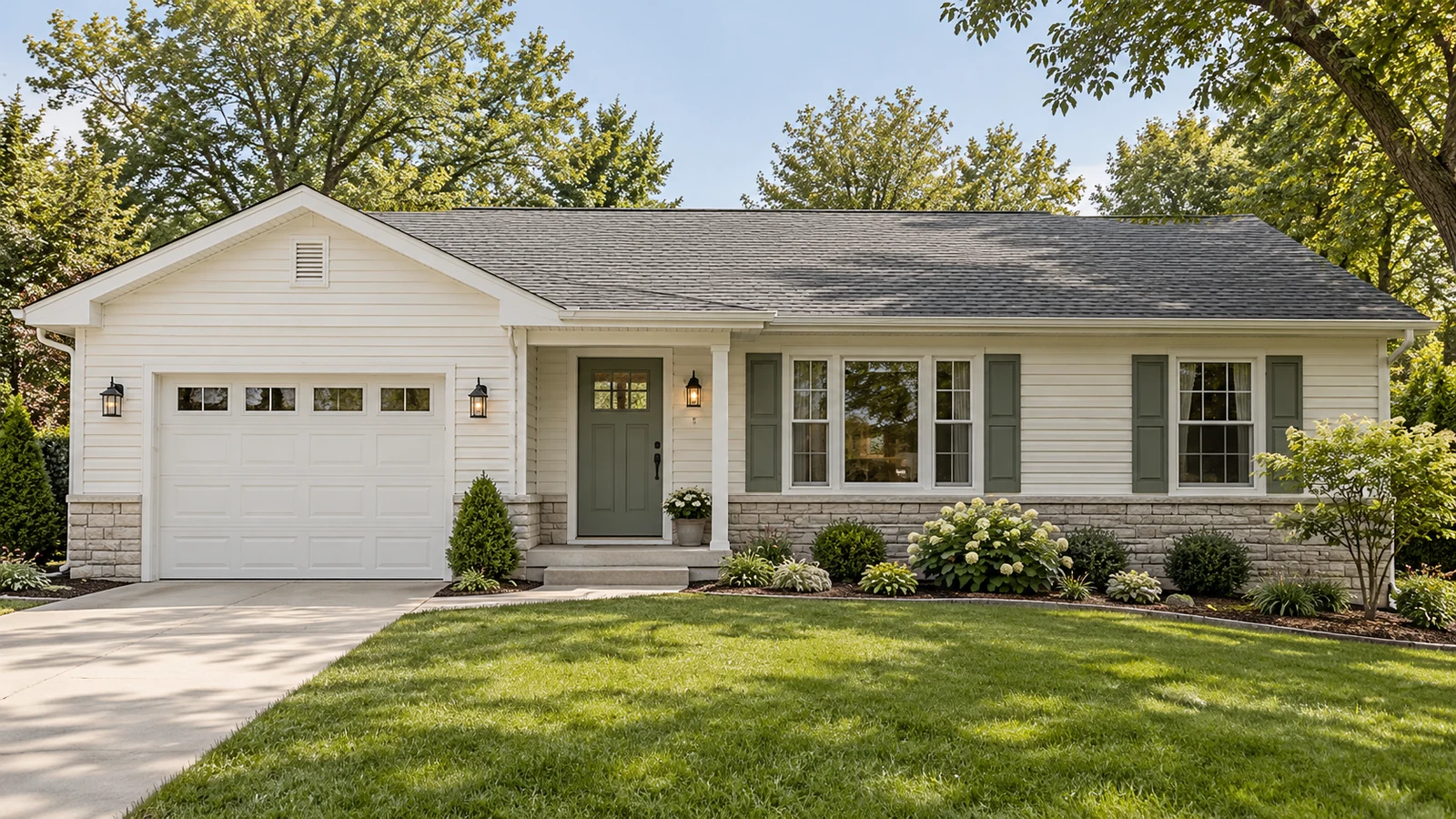
Warm off-white with a green entrance
Warm off-white siding can feel welcoming beside weathered brown or charcoal-brown shingles. A muted green entrance gives the house a focal point without needing strong contrasts around every window. Keep the garage and corner trim close to the siding when the front door should lead.
This direction can work with existing white windows, but sample the wall and trim together. An overly yellow off-white may look disconnected from bright white frames. The door needs a coating approved for its own material; a steel, timber or fiberglass door does not share a single universal paint specification.
Light taupe with restrained ivory trim
Light taupe can soften a suburban house while relating to a brown roof or warm masonry. Ivory trim provides definition without the sharpness of bright white. I would begin with a body-colored garage and a warm timber or muted colored entrance, depending on what is already there.
Avoid introducing a strongly contrasting garage just to make the scheme feel more finished. If it is the largest feature facing the street, contrast may draw attention to the least welcoming part of the house. Check the taupe against the driveway and retained brick before approving its undertone.
Muted light sage with simple details
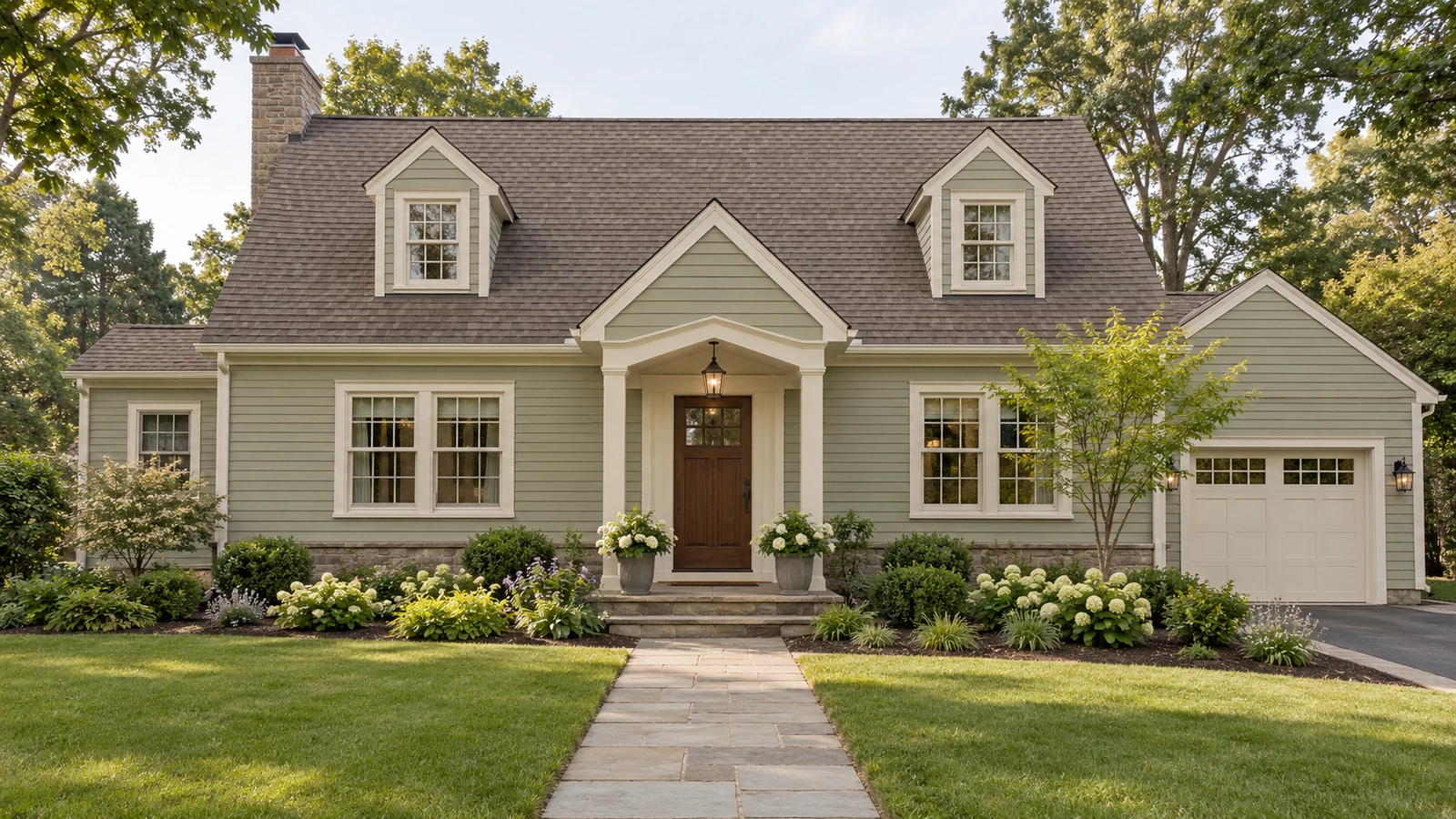
A soft sage direction can connect a house to planting and suit a modest Cape Cod or traditional suburban form. Keep trim restrained and use a quiet roof relationship. The greener body already provides character; extra shutters, a contrasting garage and several decorative brackets may be unnecessary.
Choose the actual color through the siding or coating manufacturer's permitted route. These illustrations show an appearance to explore, not a tested application or an endorsement of a particular vinyl formula. A visualization cannot establish thermal suitability.
Update the entrance before reinventing the architecture
A clearer path, a clean landing and an appropriately sized light can make an existing entrance feel intentional. Consider the door, fixture, numbers and nearby planting together. Keep finishes coordinated instead of ordering each item from a different inspiration photograph.
For a modest house, a straightforward replacement door may suit better than an elaborate new porch. If a canopy or structural change is needed, have its feasibility and approvals checked locally. Do not let a limited refresh quietly become a roof-and-foundation project without revisiting the budget.
Garage doors and shutters: reduce visual clutter
Start with the garage color close to its surrounding wall, especially on a narrow lot. If the door is sound, improvements may be limited to an approved finish and compatible hardware. Confirm the garage manufacturer's coating restrictions before painting a factory finish.
Evaluate whether existing shutters suit the windows. Narrow decorative shutters that could never visually cover an opening may add little character. Removing them can simplify some houses, but first inspect what is behind them and confirm how holes will be repaired. If keeping or replacing them, choose proportions and mounting details appropriate to the window and cladding.
For help balancing the garage and entrance, read about garage door color and visual hierarchy.
Lighting and landscaping can add depth
Repeated small fixtures and a row of identical shrubs often leave a flat impression. Consider a better-scaled entrance light, lower planting near windows and a few layered groups along the approach. Preserve visibility of the door and avoid crowding the siding with vegetation.
Choose plants for the local climate, mature size and maintenance you will actually provide. A small tree set thoughtfully away from the house can balance a garage more effectively than an expensive ornamental wall treatment. Keep required access, drainage paths and component clearances in the landscape plan.
Set budget-conscious renovation priorities
First address leaks, damaged panels and safety concerns. Next establish the finish direction around the roof and windows that will remain. Then improve the entrance and the most visible landscape areas. Only after that compare the cost of painting, partial replacement and full recladding.
Request complete scopes rather than material-only prices. Painting can involve extensive preparation and access; replacement can reveal repairs not visible from outside. Keep a separate allowance for unknown conditions instead of spending the entire budget on the initial color concept.
When replacement or fiber cement makes more sense
Replacement deserves serious consideration when the siding is extensively damaged, distorted, difficult to repair, or unsuitable for the appearance you want. A new siding project also offers an opportunity to assess the underlying wall and resolve details that repainting would leave untouched.
Fiber cement may provide different profiles and detailing, but it is not a like-for-like panel swap. Compare installation requirements, wall preparation, trim interfaces, maintenance and the complete cost with a qualified contractor. A lighter-touch refresh remains a reasonable option when the existing vinyl is sound and the desired improvement is mainly visual.
Vinyl siding renovation questions
### Can I paint vinyl siding any color? No. Confirm the exact siding restrictions and coating-and-color system. Exterior paint availability alone does not establish vinyl suitability, and ordinary darker-than-original repainting can be problematic.
Is cleaning enough to improve the appearance?
Sometimes. Appropriate cleaning, repairs and a coordinated entrance can make serviceable siding look substantially better. Use the siding manufacturer's cleaning guidance rather than assuming aggressive pressure washing is harmless.
Can I modernize the house without painting?
Yes. Improve the door, lights, numbers, garage coordination, shutters and planting around the existing siding color. A retained color becomes easier to accept when the surrounding choices support it.
Compare the refresh before committing to replacement
Create one coherent proposal that keeps the siding, then compare it with a replacement scheme if needed. Seeing both can clarify which changes actually affect the house's character. Plan the renovation around the whole exterior while confirming every coating and construction decision with the relevant professionals.
Explore my exterior design portfolio for more examples of coordinated home updates.