How to Coordinate New Exterior Finishes With a Roof and Brick You’re Keeping
A beautiful renovation starts with relationships: between color, material, proportion, and the house already standing.
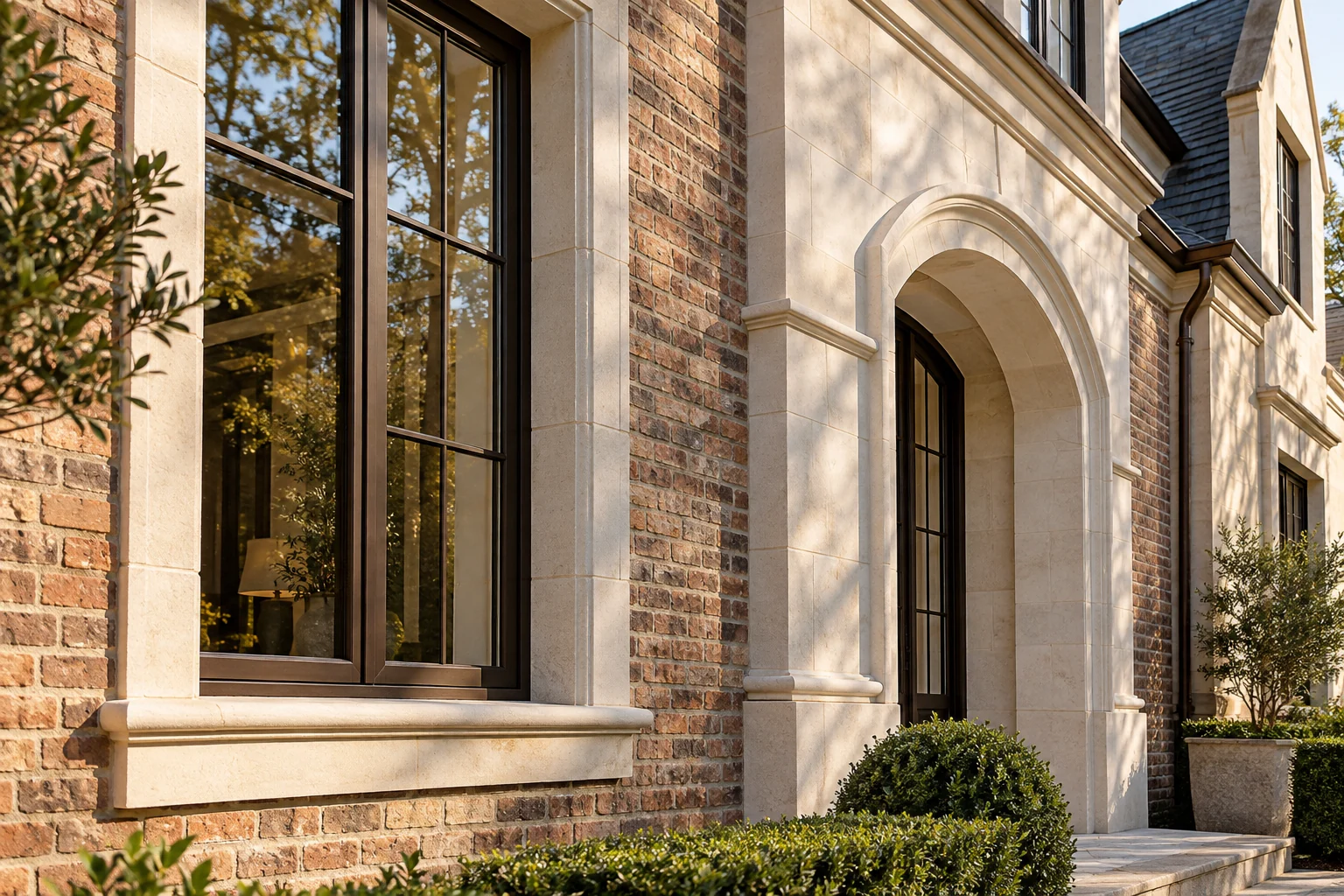
The most convincing exterior renovations rarely rely on one spectacular feature. Their strength comes from how every decision supports the next. A front door can be beautiful on its own and still feel wrong beside the roof. Stone can be expensive and still look accidental if it appears in only one unexplained patch.
Before choosing a paint color or a new light fixture, look at the architecture as a whole. What is already worth keeping? Where does the eye land first? Which existing material will remain after the renovation? These answers become the framework for every later choice.
Begin with what will stay
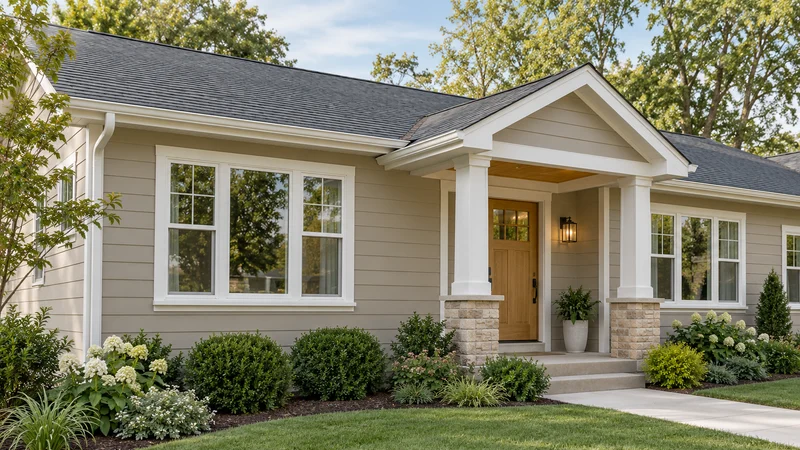
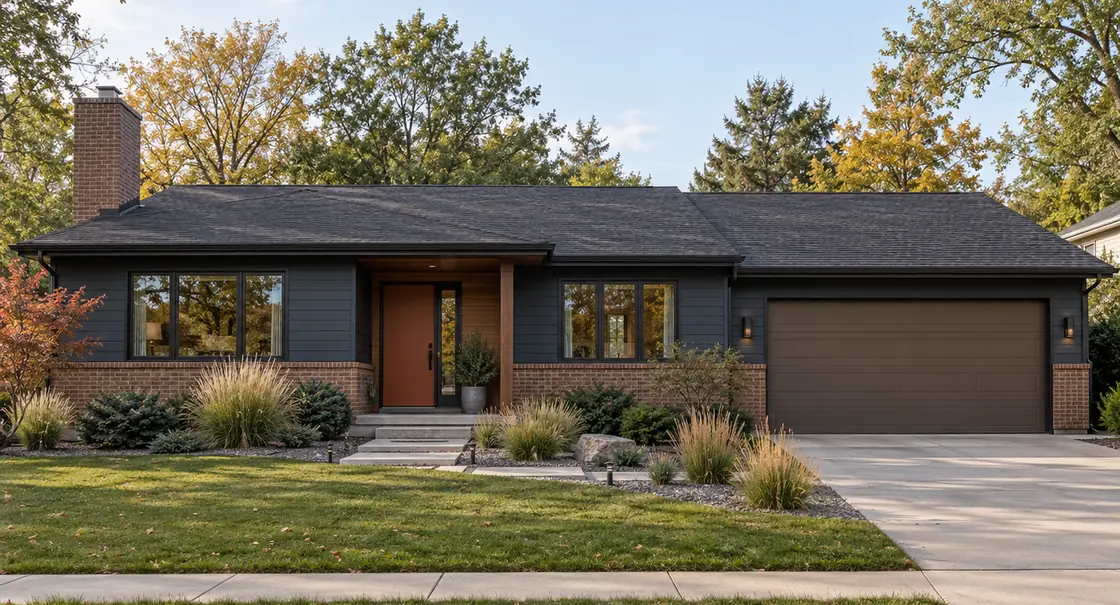
A roof, a large field of brick, or the proportions of the windows may be outside the scope of the project. Treat these elements as anchors rather than obstacles. If a roof has warm brown tones, for example, a wall color can acknowledge that warmth without matching it exactly. If a home has formal symmetry, the entry and lighting should reinforce that rhythm.
This is also why copying an inspiration image literally can disappoint. Its materials may look wonderful because of the proportions, climate, and light in that particular photograph. Translate the feeling you love into choices that belong to your own house.
Give each material a reason
A limited palette often reads as more considered than a long list of accents. One main wall finish, a supporting trim tone, a grounded window or metal color, and a restrained natural material can be enough. The natural material should appear where it makes architectural sense: at an entry, a base, a chimney, or another element with a clear role.
The same discipline applies to landscape. Plants can soften a hard exterior, frame an approach, or balance a tall elevation. They should work with the design rather than conceal unresolved details.
See the composition before committing
A visualization is useful because exterior choices are relational. It lets you judge the amount of contrast, the scale of a fixture, and the balance of materials together. A specification and sourcing guide turns that visual direction into a practical starting point for sourcing. Final samples should still be reviewed in daylight at the actual property, and local professionals should confirm specifications before installation.
The goal is a home that feels unmistakably itself, only more resolved.