Exterior Color Ideas by House Style: Ranch, Craftsman, Colonial and Brick Homes
Explore six exterior color palettes for ranch, Craftsman, Colonial and brick homes, with practical ideas for siding, trim, doors, garages and materials.
The best exterior color ideas begin with the house itself. A long ranch, a porch-centered Craftsman and a symmetrical Colonial need different kinds of emphasis, even when they share the same roof color or brick.
These six exterior studies show how warmer neutrals, muted greens, blue-gray tones and natural masonry can suit familiar house types. The aim is to understand the relationships between the walls, roof, entrance and garden, then adapt them to your own property.
The colors described here are visual palette references, not exact paint matches. The images show design possibilities rather than documented completed renovations, and their evening or autumn light adds warmth that should be checked against physical samples at your home.
1. A Two-Story Home With Brown Siding and Tan Brick
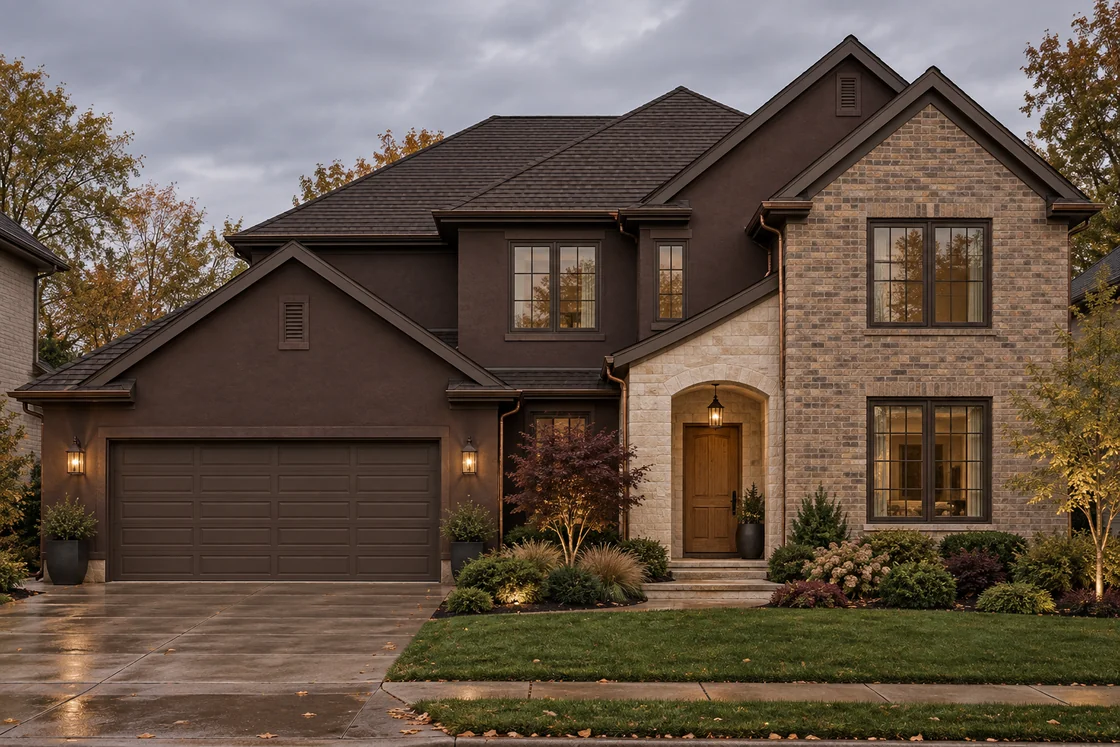
The first exterior combines deep brown siding with lighter tan brick. The contrast makes the principal gable easy to read, while the brown siding connects the remaining walls to the roof and garage.
The entrance is smaller than the garage, but a pale stone surround gives it enough presence to remain the focal point. A natural wood door adds warmth inside that frame. The garage door stays close to the siding color instead of becoming a large bright rectangle.
This is a useful direction for suburban homes with several roof forms and mixed existing materials. Keeping the secondary surfaces close in tone allows the larger brick area to provide texture without making every wall compete for attention.
When developing a similar palette, compare the siding sample with both the brick and mortar. A brown that looks gentle beside tan masonry may appear too red or too gray against a different brick. Keep trim restrained if the roof shapes already create plenty of detail.
2. A Ranch Home With Warm Brick and Olive-Gray Siding
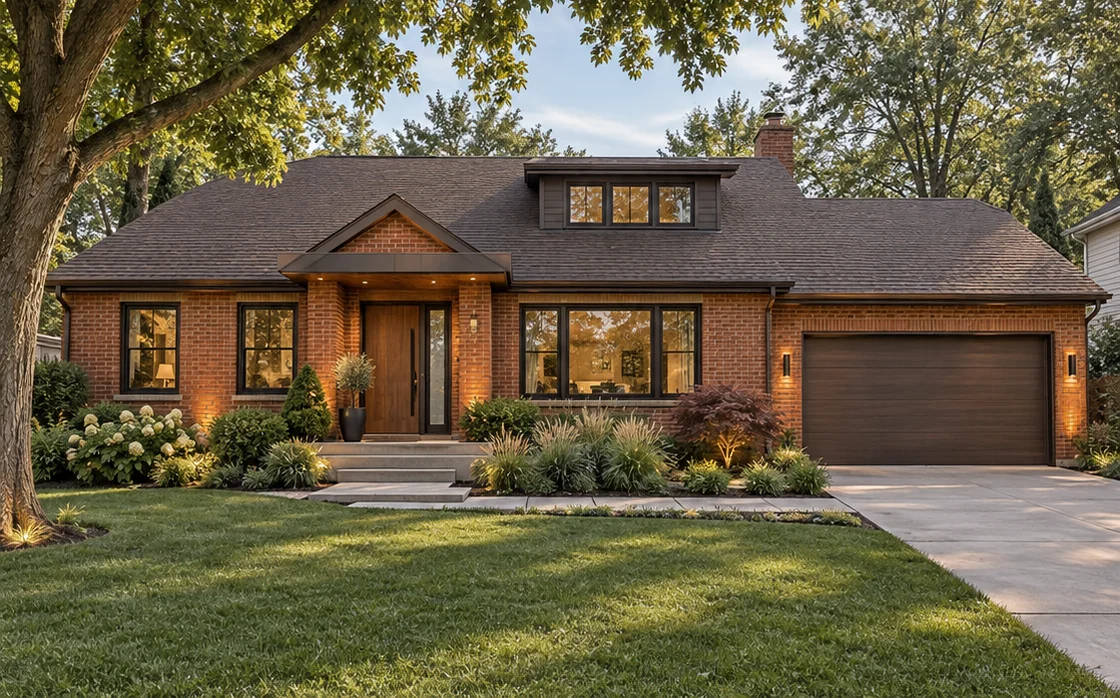
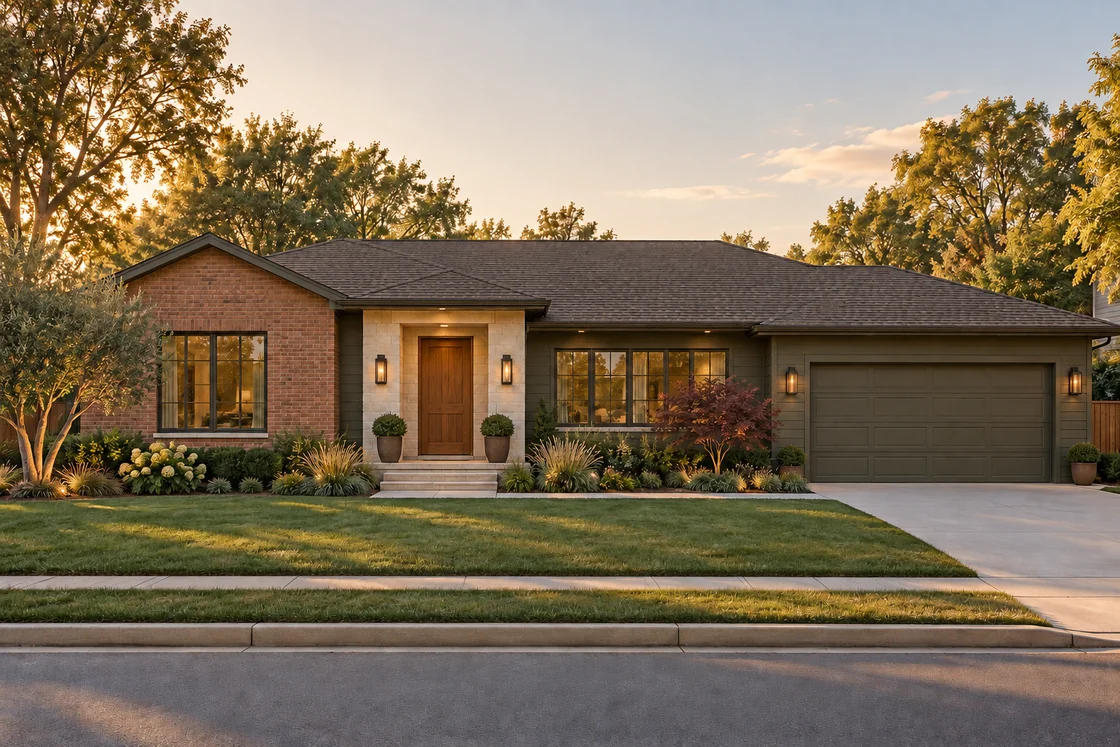
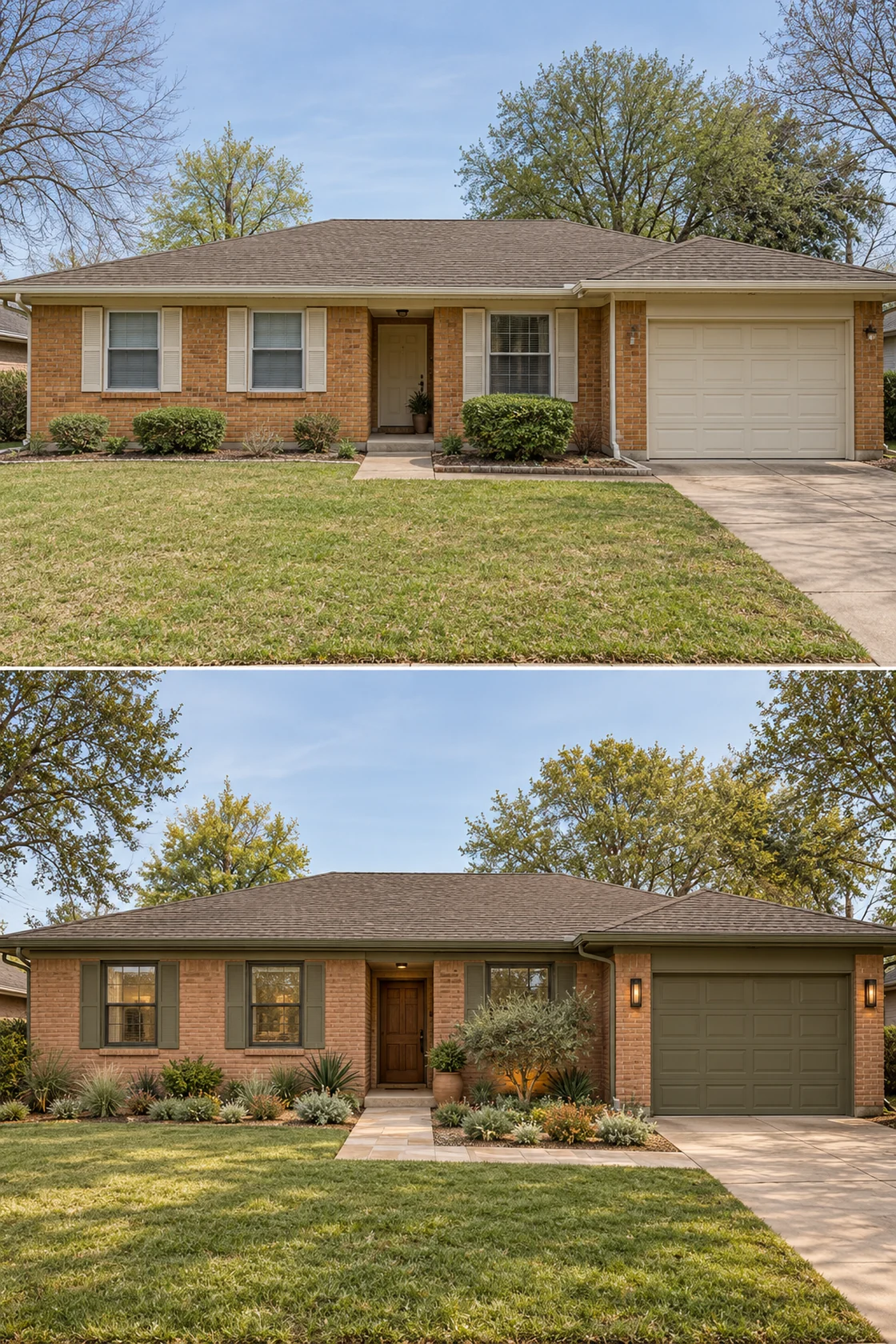
The ranch example uses warm brick on one side and olive-gray siding across the other. The colors are quiet enough to respect the low roofline, while the brick adds interest to the broad horizontal composition.
A light entrance surround creates a clear center. The wood door and small repeated planters make that arrival feel intentional without needing a new towering porch. The garage finish relates to the siding, helping it recede from the entrance.
For a ranch exterior renovation, the challenge is often deciding where to focus attention along a long wall. One deliberate entry treatment can be more effective than adding contrasting colors to every window, roof edge and garage panel.
The garden also supports the house’s proportions. Low planting keeps the windows visible, and the walkway offers a clear route through the lawn. In a smaller front yard, a simpler version of this arrangement can achieve the same sense of order.
For a retained-brick ranch, compare olive siding with the roof as well as the masonry. A deep olive can relate to brown shingles and warm brick, but may look almost gray in a shaded entrance. Paint a large sample near the brick and a second near the garage before deciding how much contrast to use.
The additional comparison below shows how the same family of materials can be applied to another low ranch: warm brick remains visible, the entrance gains wood, and the siding provides a quieter background. Notice the material boundaries and the clearer approach rather than trying to copy an exact color from the image.
Explore ranch house exterior renovation ideas
How to choose a garage door color for brick and siding
3. A Craftsman Home With Golden Tan Siding and Deep Green Trim
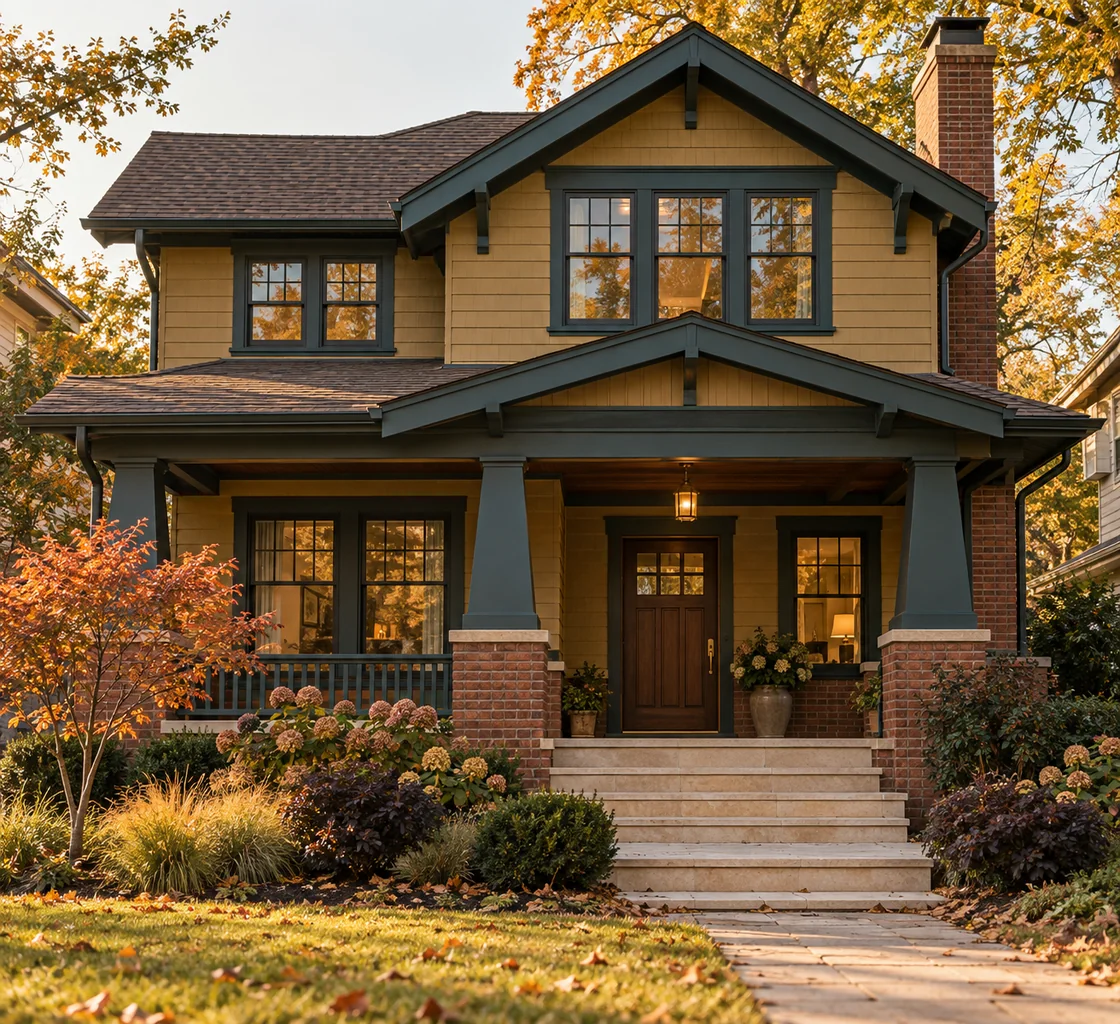
This Craftsman palette combines golden tan siding with deep green trim, warm brick and a wood entrance. The green defines the gables, brackets and porch structure, making the architectural details part of the overall composition.
The tapered columns have brick bases that visually anchor the porch. Above them, the darker painted elements continue through the beams and roof edges. Repeating the green in deliberate places gives the detail a clear rhythm.
The golden siding is particularly warm in autumn light. For an actual paint selection, test a quieter tan or ochre direction in normal daylight as well as shade. The goal is a warm body color that complements the roof and brick throughout the day.
Craftsman homes can accommodate expressive trim, but they do not need a separate color for every bracket and rail. A main wall color, a consistent trim color and the existing masonry can provide enough variety.
4. A Colonial Home With Blue-Gray Brick and Burgundy Shutters
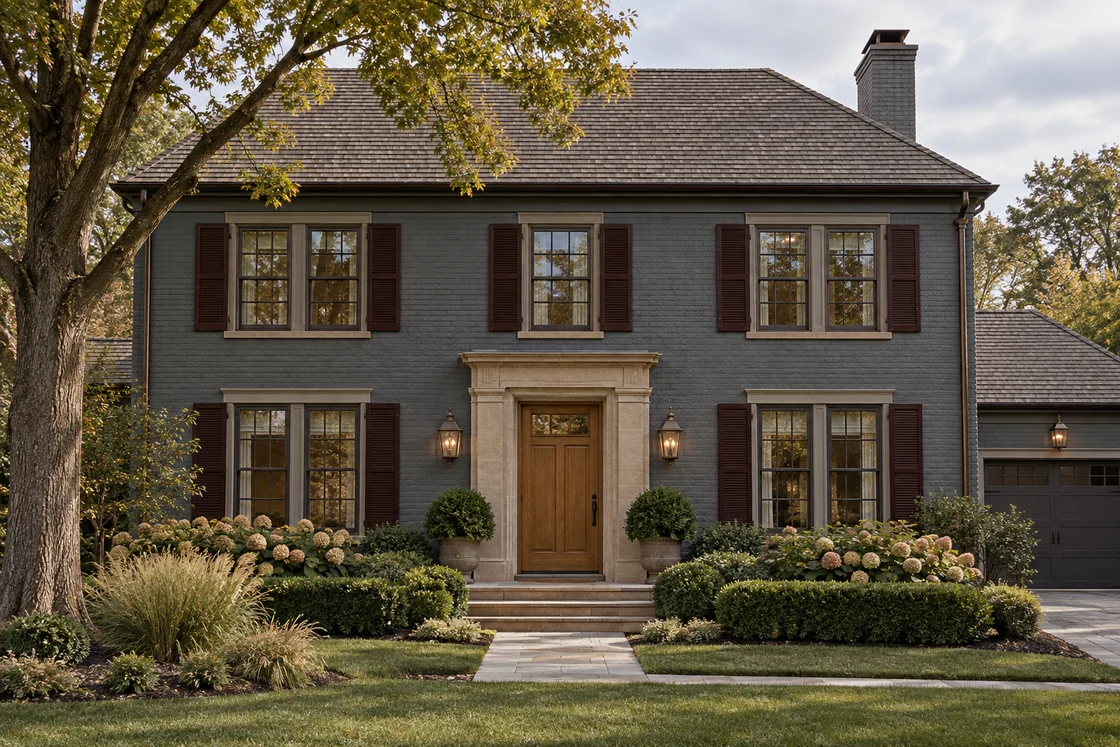
The Colonial example uses blue-gray masonry with dark burgundy shutters. The cooler wall color gives the house a calm background, while the red-brown shutter tone introduces warmth around the repeated windows.
A pale entrance surround and wood door emphasize the central axis. That is important on a symmetrical exterior: the entrance should organize the composition rather than disappear among the windows. Paired planting reinforces the same balance.
The gray roof supports the blue-gray walls, and the shutters provide a deeper accent without relying on stark black. The door remains a different material rather than another competing paint color.
If you are considering changing the finish of existing brick, do not assume this appearance specifies a particular coating. A visualization can establish the desired color relationship, but the suitable treatment depends on the actual masonry and should be confirmed locally. Also review shutter proportions and placement against each window.
Explore Colonial exterior renovation ideas
Should shutters match the front door?
5. A Craftsman Home With Blue-Gray Siding and Cream Columns
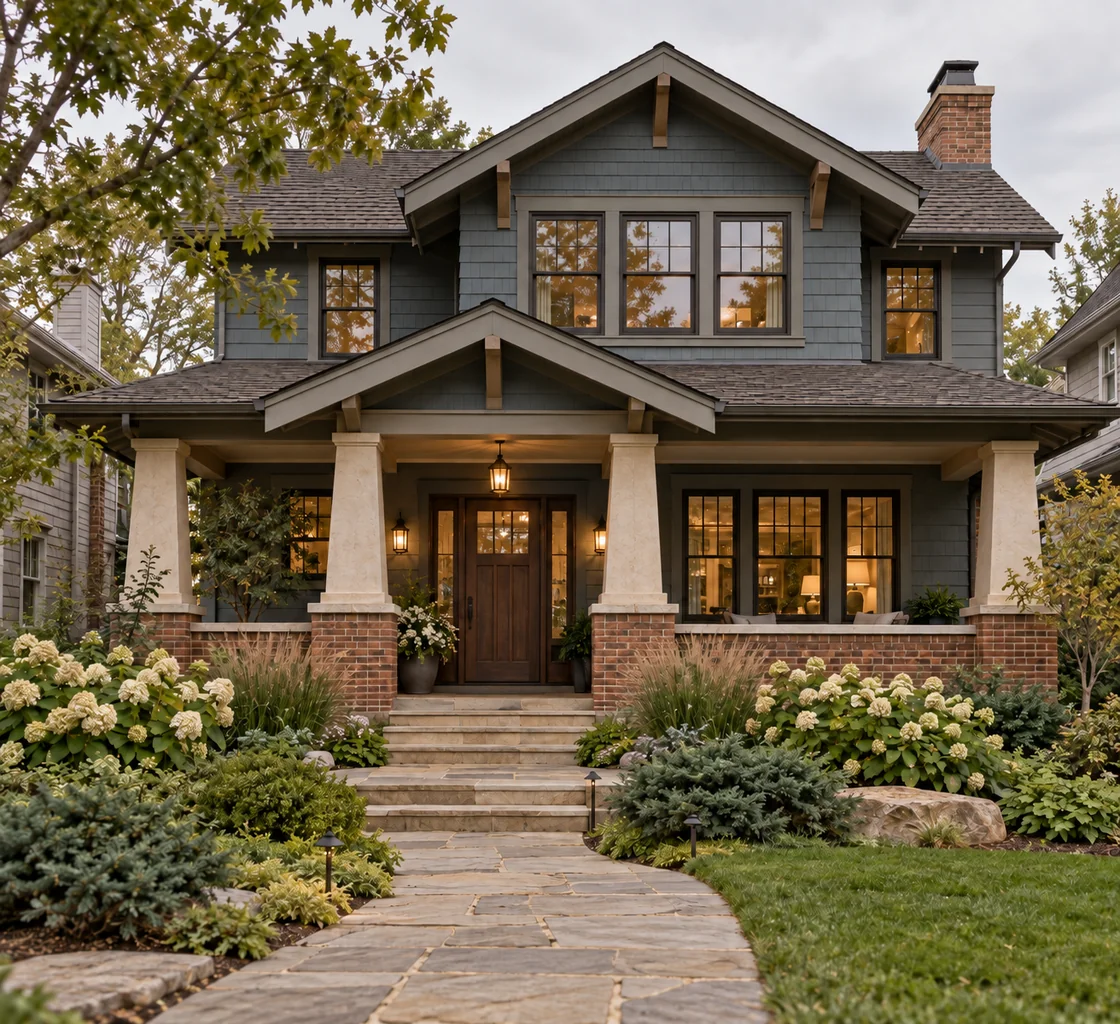
The second Craftsman takes a softer approach. Blue-gray siding sits behind cream porch columns, with red brick at the base and warm wood near the entrance. The pale columns make the porch easy to distinguish from the main walls.
Unlike the green-trimmed example, this palette uses contrast to highlight the columns rather than every roof detail. The darker porch roof and window frames give definition, but the cream creates a gentler transition to the brick.
The curved stone path and layered planting soften the repeated vertical elements. Together, the porch and approach feel like a single arrival sequence rather than an entrance added independently of the garden.
For a home with existing brick porch bases, start there when choosing the column color. A muted cream may relate more comfortably to warm masonry than a very bright white, but the right shade depends on the brick and mortar at the property.
See more Craftsman exterior design ideas
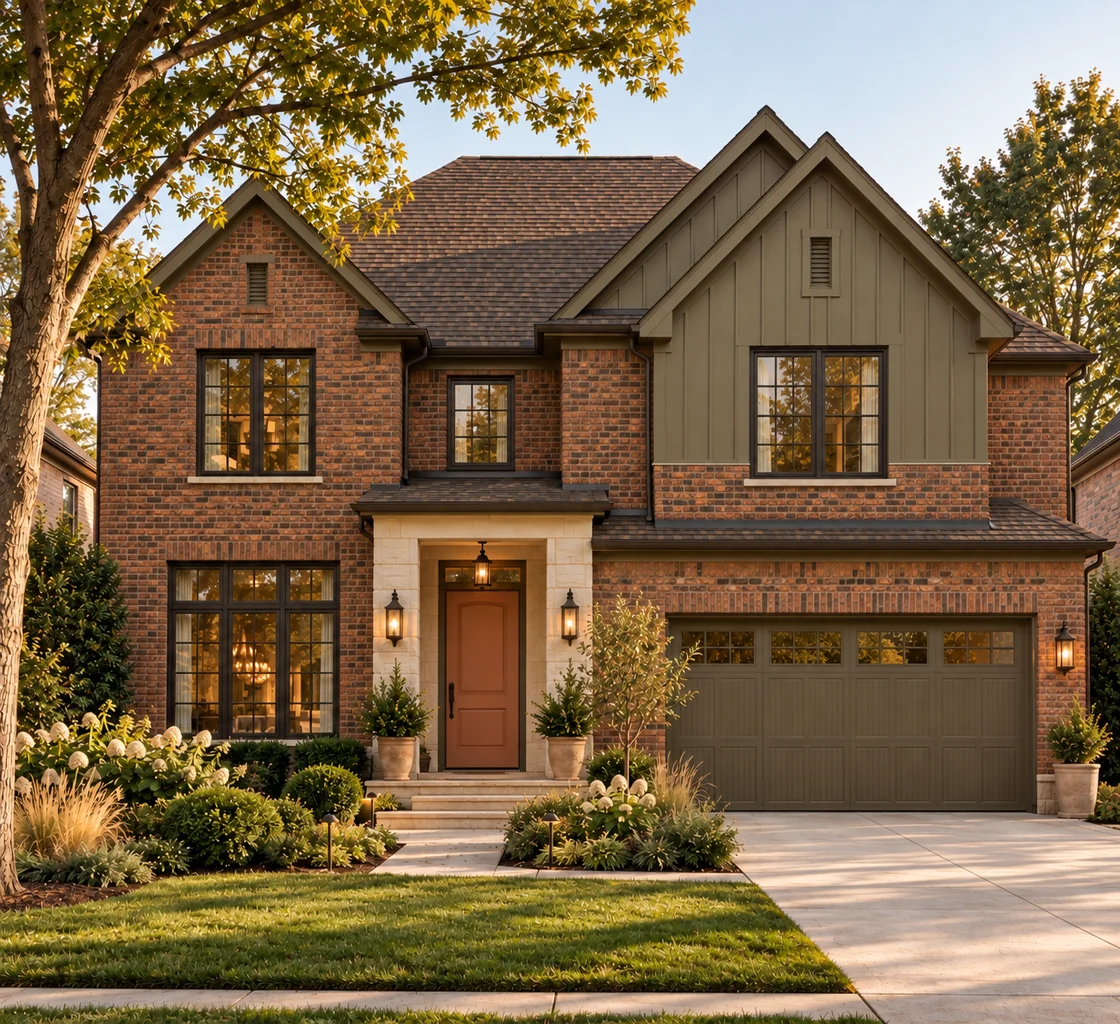
6. A Red Brick Home With Olive Siding and a Rust-Colored Door
The final home shows how natural red brick can lead the palette. Olive vertical siding occupies the upper gable, adding a different texture without covering the masonry or making the house feel disconnected.
The front door has a warm rust color that relates to the brick while remaining distinct inside the pale entry surround. The garage uses a quieter olive-gray finish, so its larger area supports the palette rather than drawing attention away from the doorway.
The change in siding direction also helps identify the gable. Because the brick already provides small-scale pattern and color variation, the siding and trim stay relatively simple.
If your brick is in good condition and suits the house, explore the surrounding finishes before deciding it must be painted. Roof color, mortar, shutters, doors and planting can all influence whether the existing masonry feels dated or well integrated.
Modernize a red brick house without painting it
Explore brick house exterior renovation ideas
What These Six Exterior Palettes Have in Common
Each example gives the entrance a clear role, lets the garage recede where appropriate and repeats a limited number of colors. The materials are placed according to the house’s proportions instead of being distributed randomly.
They also show that an exterior can feel updated without turning every surface black or white. Brown, olive, blue-gray, cream and burgundy offer different levels of contrast, especially when paired with brick or timber. The architecture determines which relationship is most useful.
Lighting and landscaping complete the presentation. Well-placed fixtures identify the entry, while planting frames the house rather than hiding it. Use the illustrated planting as guidance for height, texture and placement, then choose locally suitable species for your climate.
How to Choose Colors for Your Own House Style
First decide what will stay. The existing roof, brick, stone and window finishes are the starting point for a renovation. For a new build, review those selections together before treating any one of them as final.
Next, choose where the strongest contrast should be. On a ranch it might be the doorway; on a Craftsman, the porch structure; on a Colonial, the centered entrance and repeated shutters. The house should have a clear hierarchy rather than several unrelated focal points.
Finally, review the entire exterior before ordering. The wall color alone cannot show how the garage, door, lighting, trim and garden will work together. A visualization helps assess that balance, while physical samples and local supplier checks establish the actual finishes.
- Start with the roof and masonry that will remain.
- Choose a main wall color that supports those fixed finishes.
- Use contrast to identify the entrance or a meaningful architectural feature.
- Coordinate the garage without making it the strongest focal point by default.
- Test samples at the property in sunlight and shade.
- Confirm material suitability and installation details before purchasing.
Do You Need to Change Every Exterior Material?
No. The useful lesson from these examples is coordination, not the number of changes. A retained brick wall, a better siding color, a clearer entrance and a quieter garage finish may provide the main transformation.
For larger renovations and new builds, the same thinking extends to windows, roofing, porch details and material placement. Decide what supports the architecture first, then invest in the changes that have the strongest effect on the whole exterior.