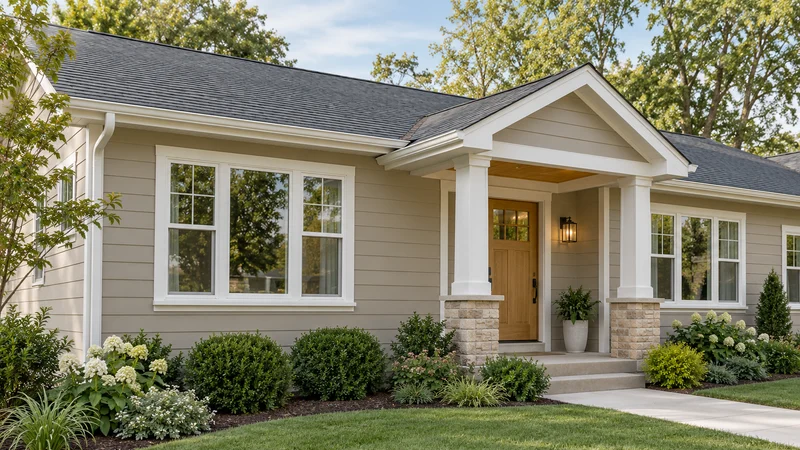
6 Exterior Window Trim Ideas, From Craftsman to Modern Ranch
See what changes when you give a window a wide cream casing, a quiet taupe border, or simply a deeper shadow.
Look at a photo of your house from across the street. What gives the windows their shape? On a Craftsman, you may notice the wide painted boards around a pair of windows. On a stucco house, you may see only a fine dark frame and the shadow inside the opening. Either can give the facade plenty of definition.
The six illustrated design studies below separate three things that are easy to lump together when choosing colors: the sash or frame immediately around the glass, any casing around that frame, and the wall or recessed surface beside it. Decide which one should stand out before you choose a trim color or add a wider board.
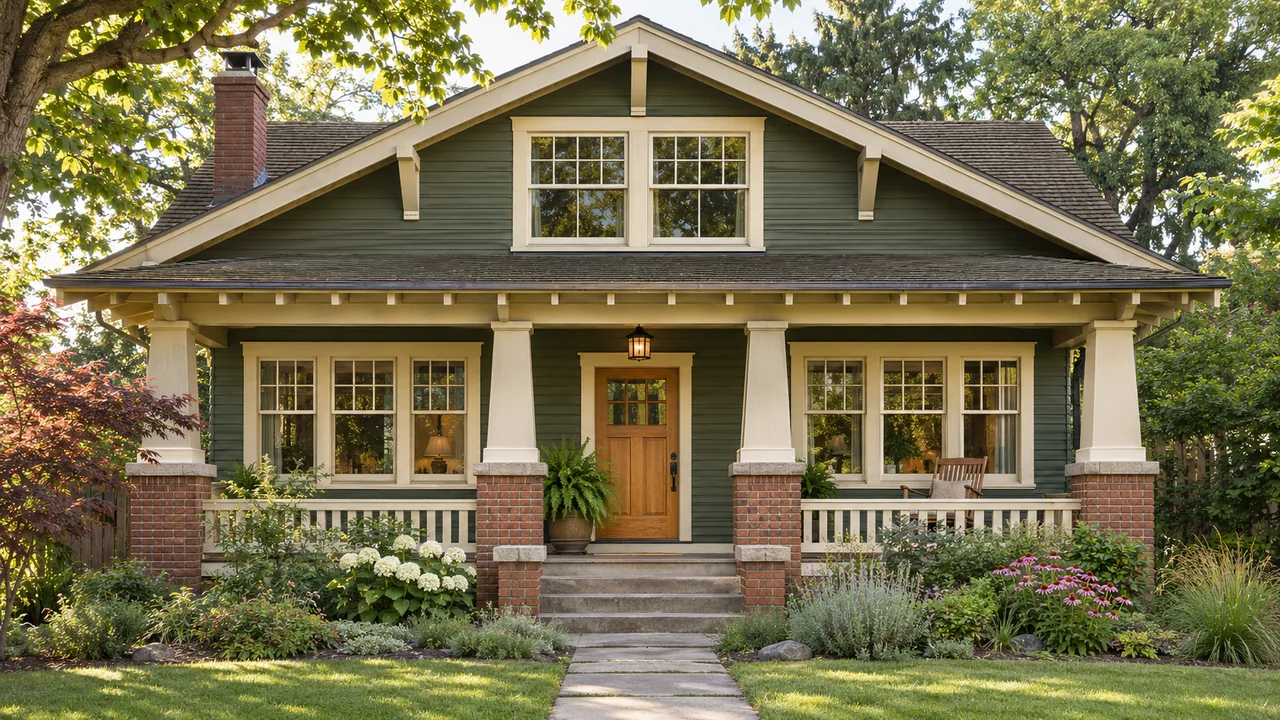
1. Frame grouped Craftsman windows in cream
In the sage bungalow above, the creamy outer casing draws the eye to the window groups and picks up the warmth of the oak door. The dark siding gives it enough contrast to be read from the street, and the broad gable can carry the stronger outline.
If you have two windows under the same gable, mock up the whole pair before widening the casing. The sliver of wall between the windows matters as much as the width of the boards. When those gaps get cramped, the openings can look like two separate boxes fighting for space.
2. Try soft taupe casings on an ivory Colonial
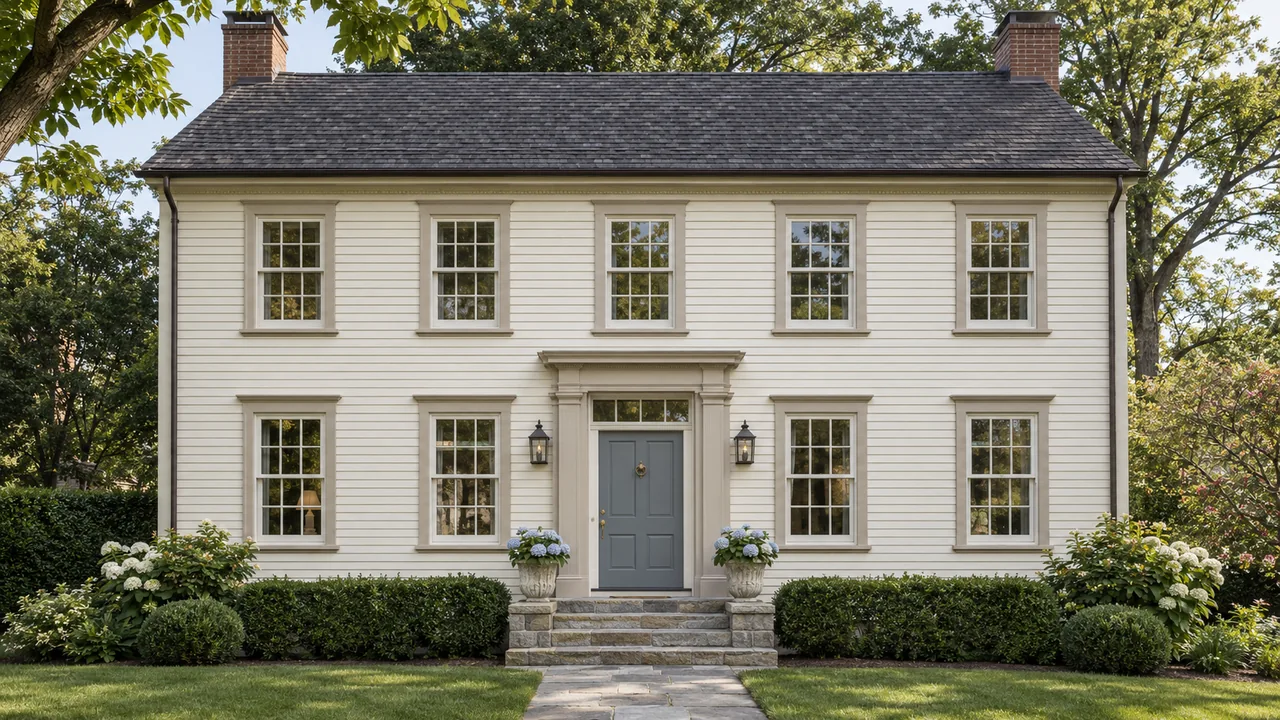
This Colonial already has a regular rhythm. A subtle taupe edge is enough to trace it. The front door can carry the most color because the surrounding windows stay close to the siding in tone.
If your sash is a fixed factory white, hold the trim and siding samples beside it outdoors. A taupe that looks quiet on a sample card can make a cooler white look sharper. Compare the three surfaces together on both the sunny and shaded sides of the house.
3. Let slim cream surrounds sit directly against red brick
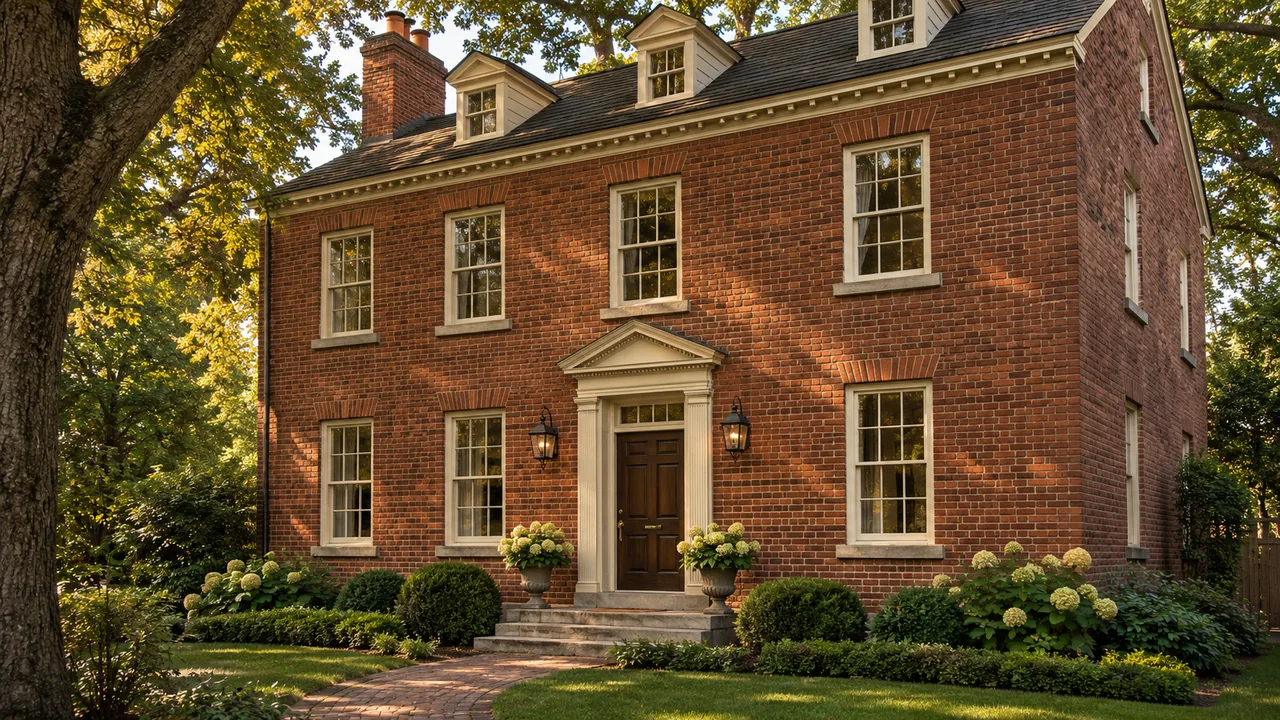
Brick already brings small joints, variation and shadow to the wall. Here, the warm cream windows give those openings a clean edge. The sill is part of the composition too, so a much wider painted surround would introduce a second outline.
When a brick house already has attractive sills or lintels, start with samples for the painted parts you actually have. Photograph one window with the sample in place and look at the whole facade before deciding if it needs more contrast.
4. Use narrow bronze frames beneath a Tudor gable
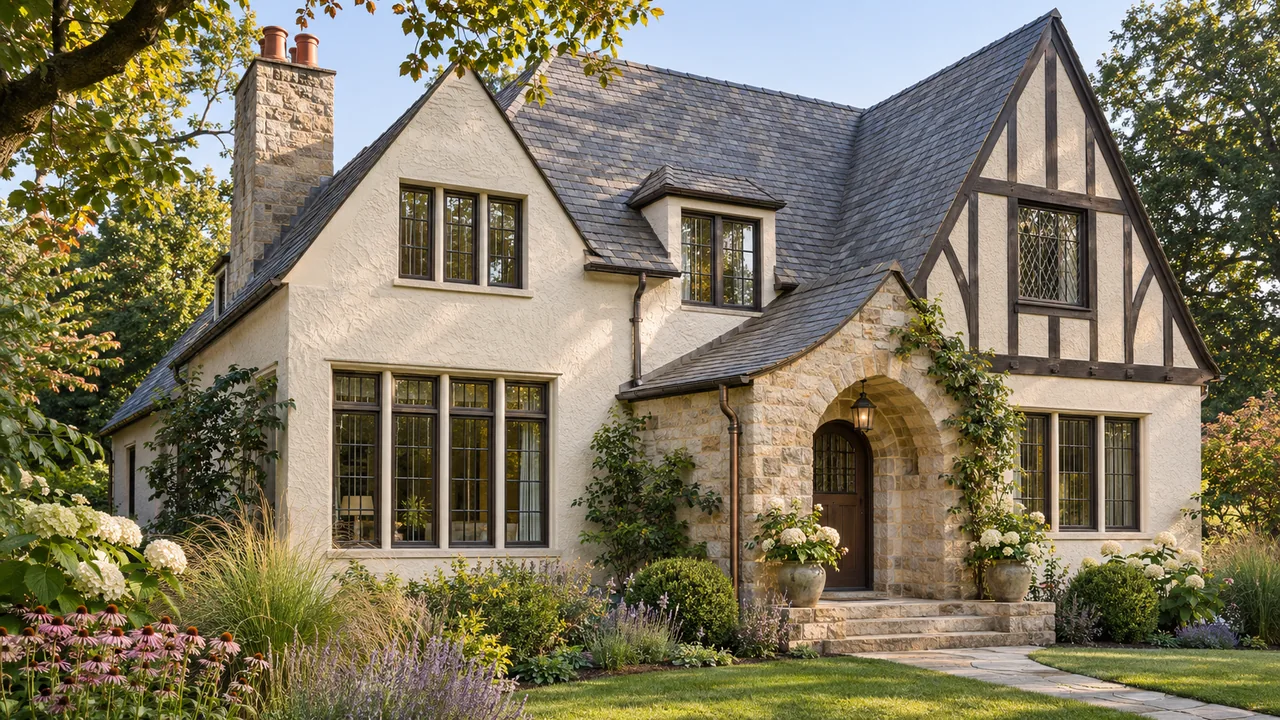
The Tudor already has a strong graphic element in the gable timbers. A narrow dark window frame repeats that color in smaller amounts, while a wide dark casing would give every opening the same weight as the timber.
Check the upper windows as well as the ground floor in your mockup. Small windows high in a gable can look especially heavy with a thick border, even when the same width feels comfortable around a larger opening.
5. Let a recessed stucco opening create its own border
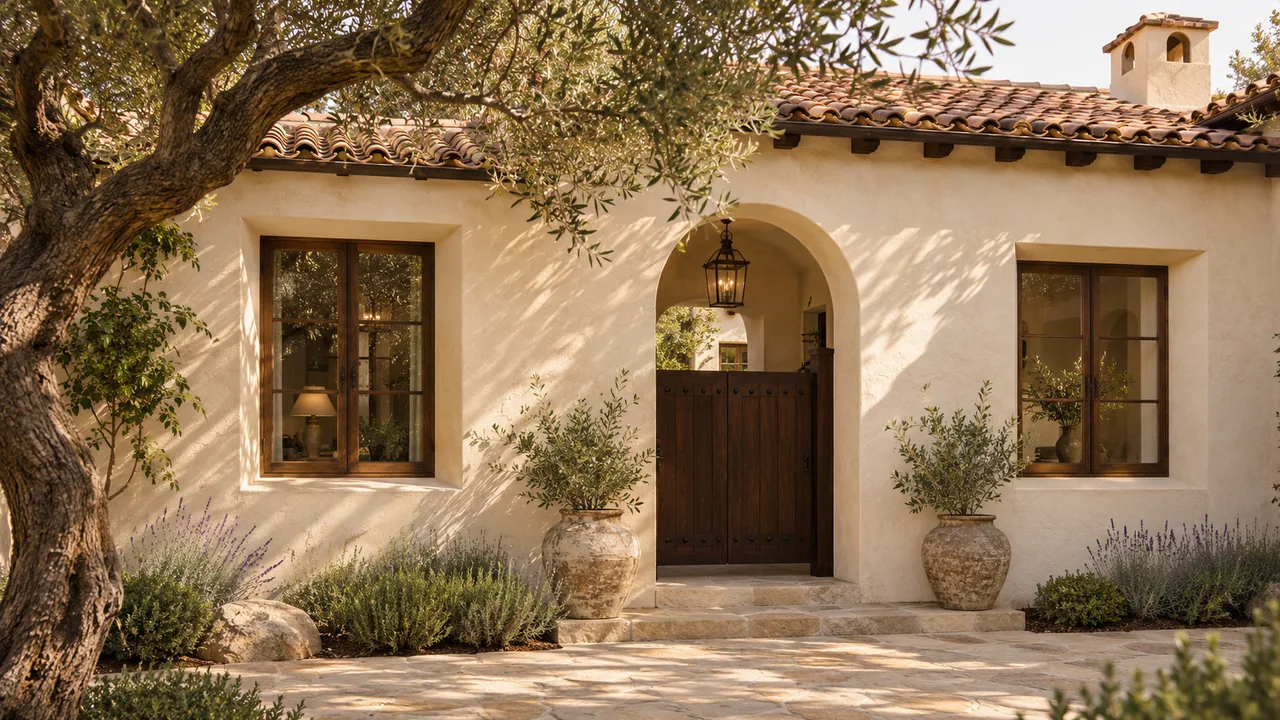
On this Spanish Revival courtyard, the wall finish continues into the openings. Angled daylight makes the inside edges read darker than the face of the wall. The contrast changes during the day, which gives the facade depth without introducing another finish.
If your own windows already sit back from the wall, see how they look in side light before outlining them with a new color. This idea depends on the depth you already have. Review a proposed change to the opening itself with the window installer.
6. Keep modern ranch window frames slim against cedar
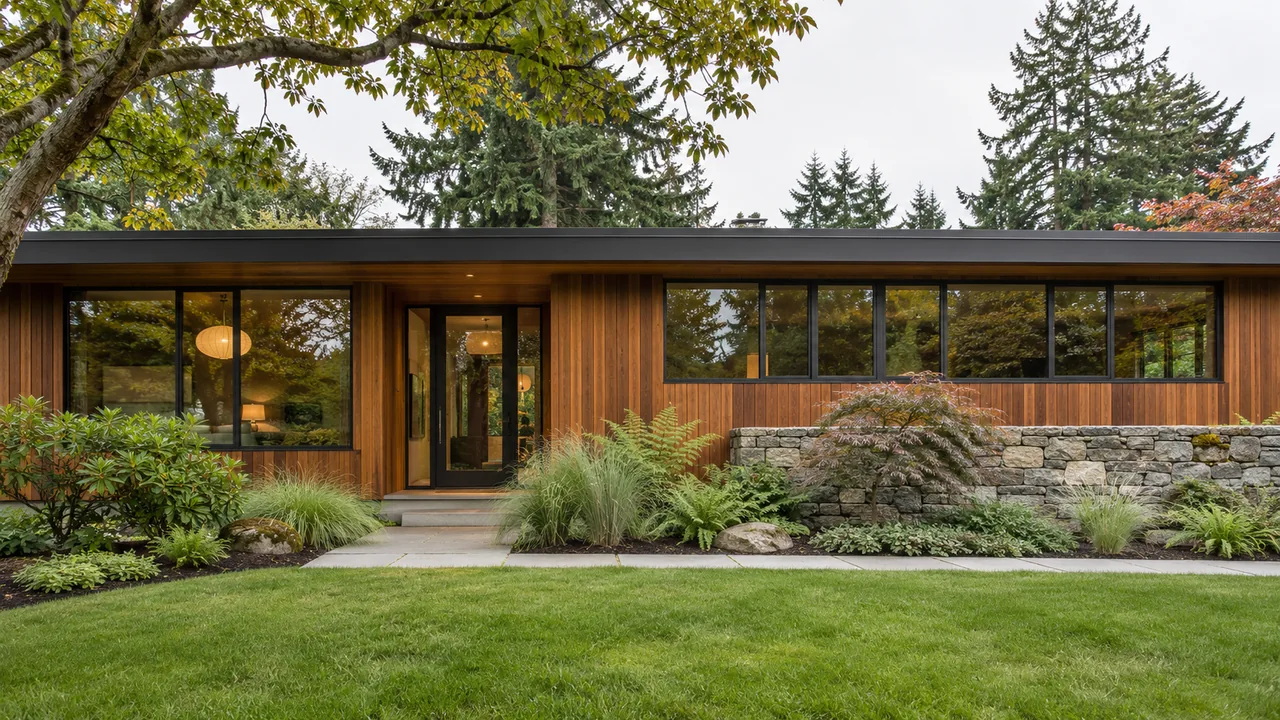
The cedar ranch has two strong directions: vertical boards and a long horizontal roof edge. Slim charcoal frames pick up the roof and let the wood continue visually around the windows. Adding a wide casing would divide that elevation into more pieces.
If you are choosing replacement windows, ask for an elevation showing the visible frame, mullions, and any exterior trim together. Two options with the same color can look very different from the street if one has a wider profile.
Test the trim at street distance
Mark up one photo with three options: close to the wall color, a slightly deeper edge, and a stronger contrast. Include the roof, garage and front door in every version. Use the option that gives the windows the right amount of attention, then check actual samples against the existing frame and wall in daylight.
Confirm what can be finished on your particular windows before ordering paint. If the frame color has to stay, work with the casing or surrounding wall where those surfaces can be coated.