How to Update a Stucco House Exterior Without Removing the Stucco
Update a stucco house without removing sound walls. Compare warm exterior palettes, entrance improvements, texture changes and realistic renovation scopes.
If your stucco house feels dated, removing all the stucco may be an unnecessary place to begin. An awkward color, a busy entrance or overgrown planting can make a sound exterior look older than it is. The first decision is whether the wall needs technical repair or simply a better design direction.
When I consider how to update a stucco house exterior, I separate the condition of the building from its appearance. Keeping what works can leave more budget for the entrance, lighting and details that people actually notice. Start with an assessment, then choose the scope that addresses your house's real problems.
Repair first, redesign second
Walk around the house after ordinary weather and look for staining, peeling coatings, cracks, loose areas and signs of repeated wetting. Photographs help you record where problems occur, especially around windows, the base of walls and roof intersections. A photograph cannot establish whether the wall is dry or structurally sound.
Have unexplained or recurring damage evaluated before repainting. Identify whether you have traditional stucco, an exterior insulation and finish system, or another assembly, and establish what coatings are already present. These systems can look similar while needing different repair and finishing approaches. Painting over a problem may briefly hide it without solving the cause.
Modern stucco colors begin with the roof
Stucco reflects light differently from smooth sample cards. Texture creates small shadows, and a recessed porch may read much darker than the same wall in sun. The roof, paving and unpainted masonry should guide the palette before a trend photograph does.
The following Sherwin-Williams colors are available for exterior use, but the appropriate coating still depends on the actual wall and existing finish. Treat each palette as a direction to sample, not a promise that it will look identical on every property. Keep factory-finished windows and roof materials as fixed reference points unless replacement is genuinely part of the scope.
For more style inspiration, compare these Mediterranean exterior color ideas while keeping the condition and coating review separate.
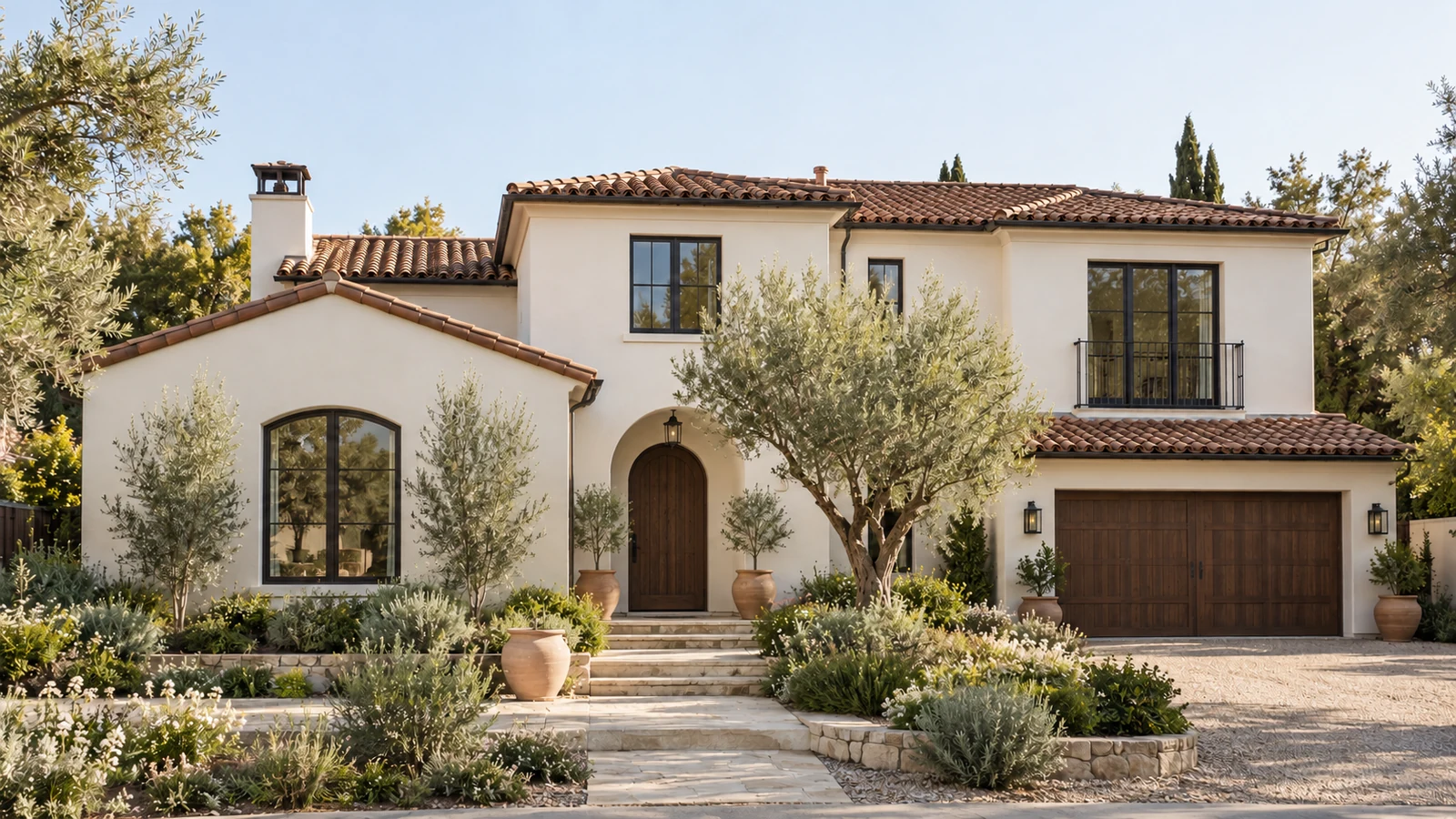
Mediterranean: White Duck SW 7010 with timber and terracotta
White Duck offers a warm off-white direction beside a terracotta roof. I would keep the walls and most trim closely related, let a dark natural wood door anchor the entrance, and use restrained bronze-colored fixtures. The warmth can feel more comfortable than a stark white beside aged clay tile.
Preserve convincing arches and roof details when they suit the architecture. Simplify decorative clutter instead of automatically removing every traditional feature. Repeat terracotta or warm stone at ground level in small amounts, then let climate-appropriate planting soften the approach.
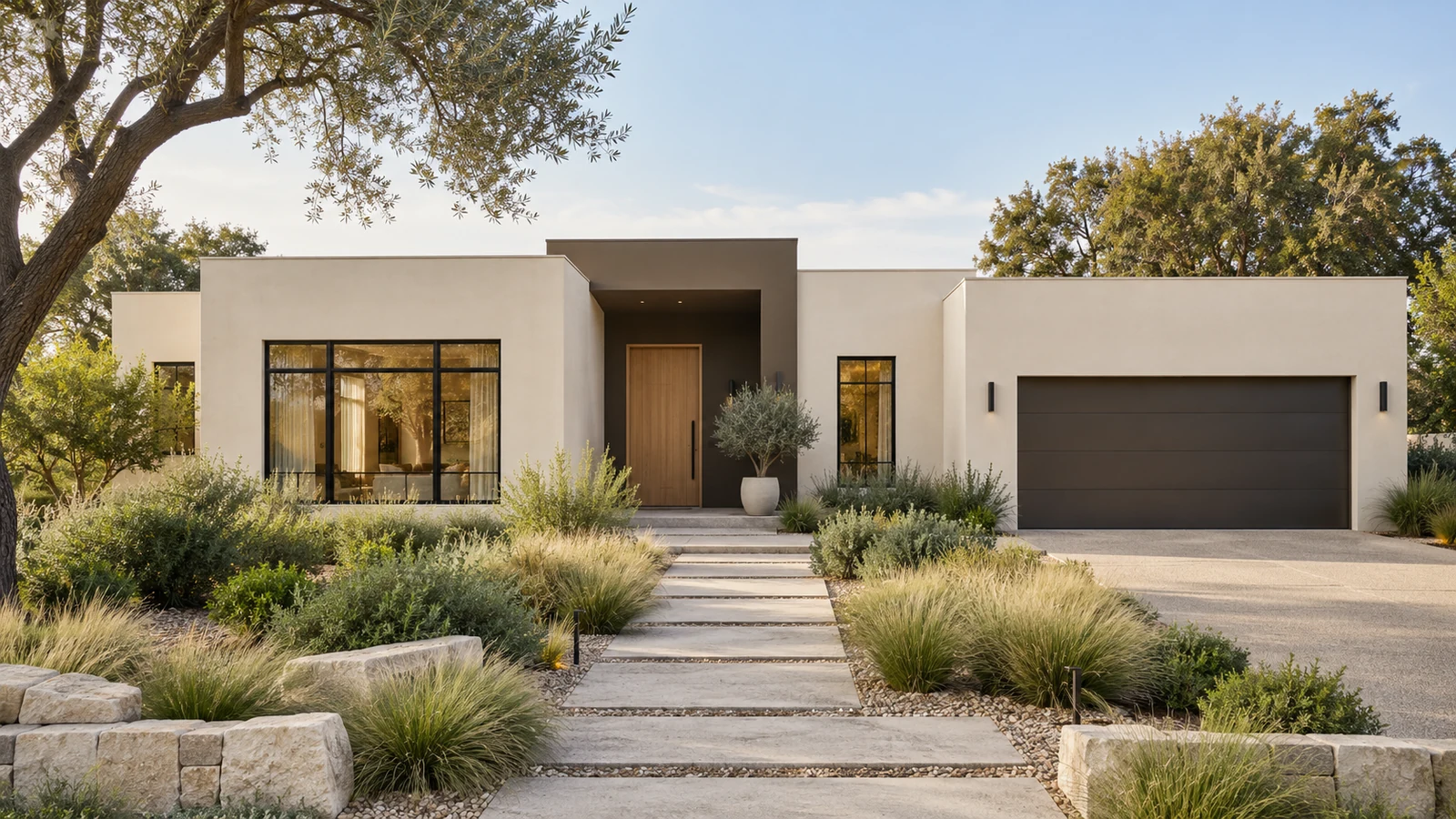
Modern organic: Shoji White SW 7042 and Urbane Bronze SW 7048
Sample Shoji White on the main stucco and Urbane Bronze in one meaningful recess or on a compatible painted entrance door. The soft light body and deep earthy accent create depth without requiring multiple wall materials. Natural timber and a simple stone path can add warmth.
Keep the dark color attached to a whole recess or defined volume. Random dark rectangles around windows can make the building feel busier. If the garage sits within the main wall, a body-colored finish usually keeps the entrance more important than the vehicle opening.
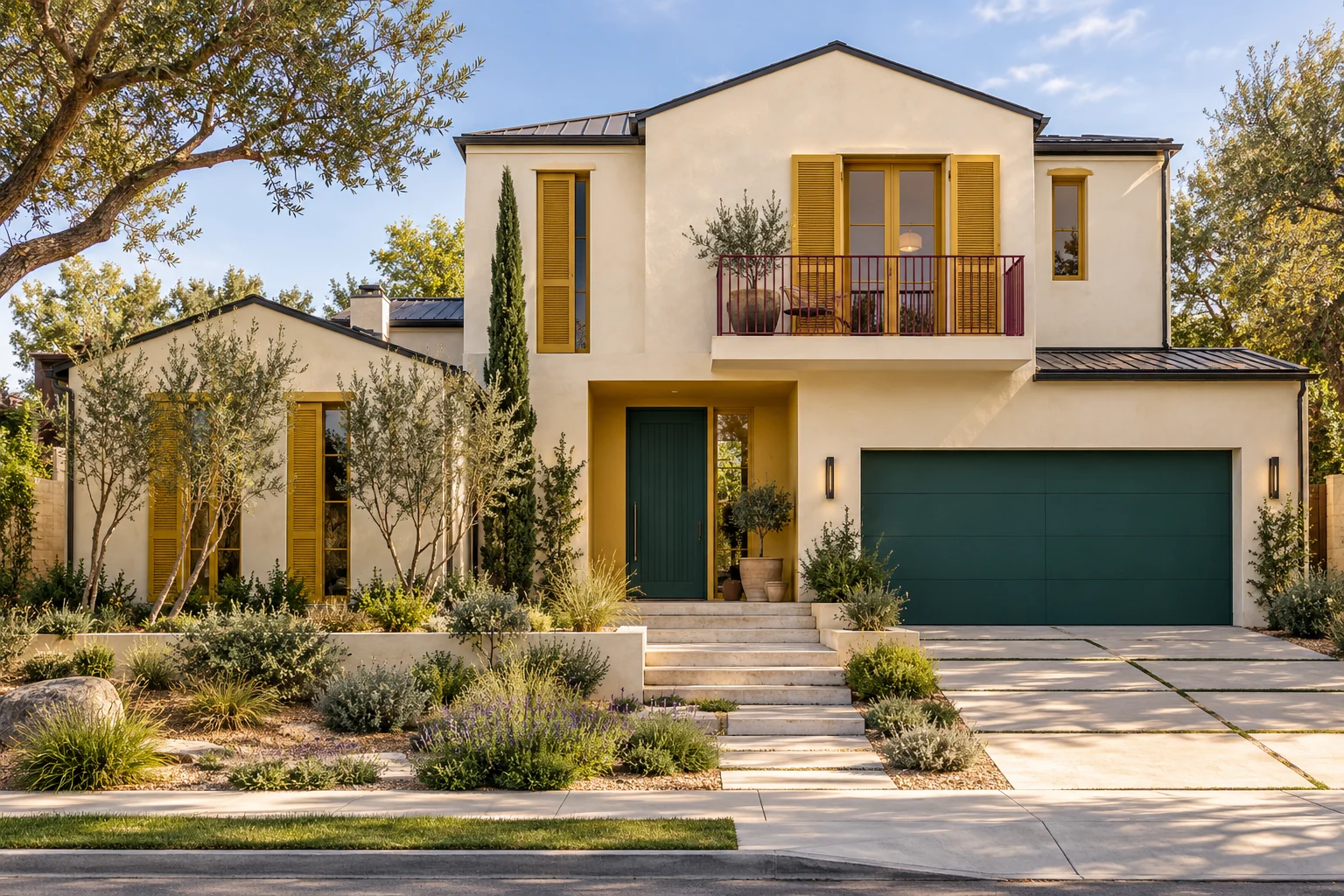
Earthy contemporary: Accessible Beige SW 7036 and Pewter Green SW 6208
Accessible Beige can support an earthy scheme when it agrees with the retained roof and paving. Try Pewter Green on a suitable painted front door or a limited secondary element rather than assuming every window needs a contrasting outline. The palette feels softer when the trim stays close to the wall color.
A beige sample can shift beside pink concrete, orange tile or cool stone. View it next to all three if those remain. Carry the main wall color onto a compatible garage for continuity, and use the green again in planting rather than adding numerous painted accents.
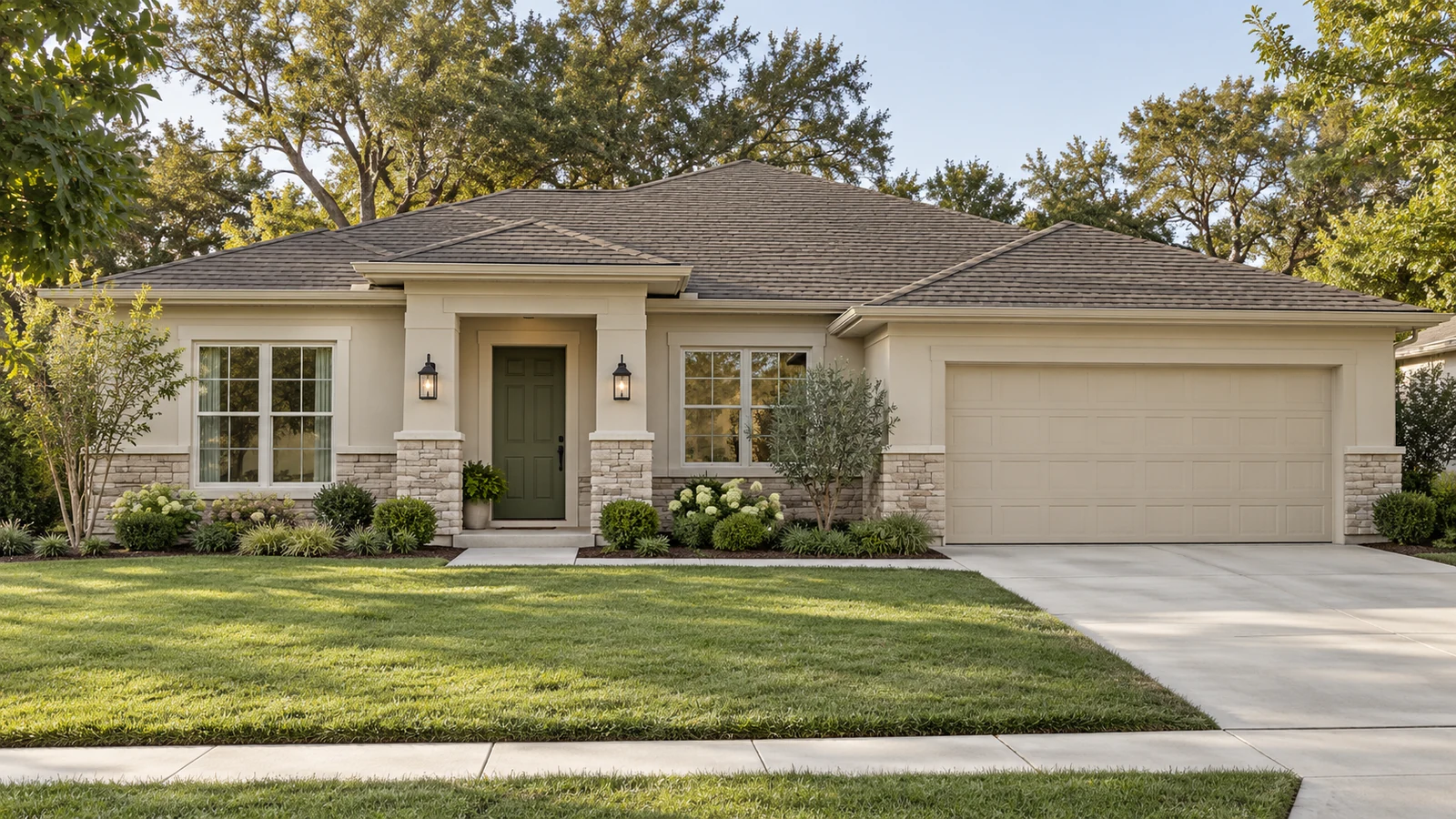
Give the entrance a clear focal point
A stucco exterior often improves when the approach becomes easier to read. Consider the path, steps, door, light and address numbers as a small composition. An entrance lost behind tall shrubs may need pruning more urgently than a new door surround.
Choose fixtures that suit the scale of the doorway and the character of the home. A large contemporary lantern is not automatically an upgrade on a delicate Mediterranean porch. Where the entrance needs a new canopy, deeper opening or altered arch, check the construction implications before treating it as a cosmetic finish change.
Window trim: simplify or strengthen deliberately
Broad painted outlines can emphasize windows that are already too small for the wall. In that case I might reduce contrast and let planting or a better entrance provide the detail. On a traditional home with substantial existing trim, a restrained contrast may help restore definition.
Do not assume vinyl or factory-coated window frames can receive the wall paint. Confirm the manufacturer's restrictions separately. Where the windows remain, design around their actual finish; that is more realistic than approving a palette that depends on painting an unsuitable frame.
Should you change the stucco texture?
A smoother finish can change the character of a house, but it is a separate project from repainting. Ask a stucco professional to assess whether the existing surface can accept the proposed treatment and how repairs, movement joints, edges and adjacent materials will be handled.
Request a sample area in representative light. Very smooth walls can reveal irregularities that a textured finish disguised, and patches may remain visible if their texture differs. Do not specify a skim coat, grinding or a new finish system based on an inspiration image alone. Compare the cost with the benefit from normal viewing distances.
Choose one of three renovation levels
### Simple refresh: retain the architecture Repair identified defects, prepare the surface correctly, repaint with a compatible system and improve lights, numbers and planting. This level suits a house with sound proportions and an entrance that mainly needs clearer emphasis. Keep the roof and usable windows.
Moderate makeover: coordinate the details
Combine the refresh with a new front door where appropriate, a revised walkway, simplified trim or selected finish changes. Decide the complete palette before ordering each item. A moderate makeover works best when several small decisions reinforce one another rather than behaving as independent upgrades.
Extensive redesign: resolve the proportions
Consider changes to porch forms, openings or substantial wall features only when they address a real architectural problem. These can require drawings, local approvals and specialist advice. Visualization helps compare the appearance, while the relevant professionals establish what can actually be built and how.
Coating compatibility and moisture matter
Ask the painting contractor to identify the existing coating, verify adhesion and select preparation, primer and finish for the substrate and exposure. Fresh repairs may have different curing and surface requirements from older walls. Follow the selected manufacturer's current instructions rather than applying one timetable to every stucco house.
An elastomeric coating is not a universal answer to cracks or moisture. Some systems are suitable for particular conditions, but a coating cannot repair a leaking window junction or damaged backing. Establish the source of recurring moisture, repair it, and confirm that the proposed coating works with the existing wall assembly.
Stucco renovation questions
### Can a stucco house look modern without removing the stucco? Yes. A quieter palette, a deliberate entrance, simpler details and better planting can change the impression substantially while preserving sound stucco and the original character.
Will paint hide a rough texture?
Paint changes color more than physical texture. Assess a test area before expecting repainting to produce a smooth finish. A texture change needs its own technical review and quote.
Should I paint stucco bright white?
Only if it coordinates with the fixed materials and suits the light. Warm roofs and paving often benefit from a softer off-white, but physical samples should decide the final choice.
See the complete update before committing
Begin with the condition assessment, decide what will remain, and compare one coordinated scheme at a time. Keeping the stucco can be a thoughtful renovation choice when the wall is sound and the design addresses the house as a whole. Plan the colors, entrance and materials together before buying individual upgrades.
Explore my exterior design portfolio for more examples of coordinated home updates.
Primarily choosing paint colors? Ask about my Color Consultation ($200), which provides color guidance without visualization.
Further reading
Sherwin-Williams: exterior substrate and coating guidance
Sherwin-Williams: exterior product selection FAQs
Pewter Green SW 6208 — manufacturer color reference
White Duck SW 7010 — manufacturer color reference
Accessible Beige SW 7036 — manufacturer color reference