Should Fascia, Soffits and Gutters Be the Same Color?
Choose fascia, soffit, gutter and downspout colors together. Learn when to match the trim, follow the roof or let the underside bring warmth to your exterior.
You can choose a beautiful siding color and still end up with an exterior that feels unfinished. The missing decision is often the roof edge: the fascia was called “trim,” the gutters arrived in standard white, and nobody selected the underside of the porch.
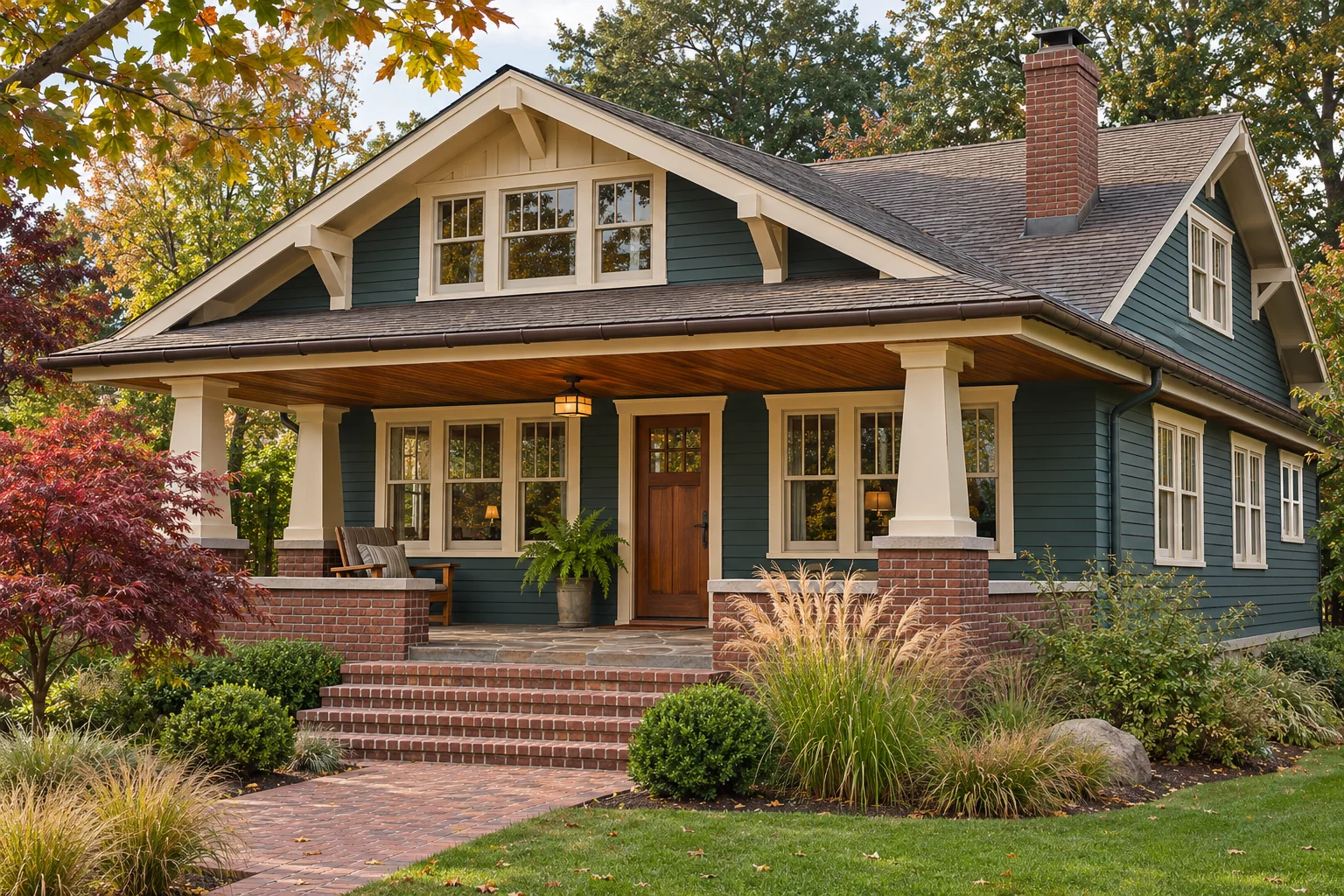
These parts do not have to match. They do need a clear relationship. Start by deciding whether the roof edge should frame the architecture or blend into it, then assign a finish to each surface. The Craftsman study shown here explores a defined ivory edge, rich blue-green walls and warm timber underneath.
Name the parts before choosing their colors
The fascia is the vertical face along the roof edge. The soffit is the underside of the overhang. Gutters collect roof runoff, while downspouts carry it downward. They may sit close together, but they face different directions and cross different backgrounds.
That distinction matters visually. A gutter can disappear against the fascia while its matching downspout becomes a bright stripe across a dark wall. A soffit can look much darker in porch shade than the same color on a sunlit trim board.
- Fascia: choose the visible line you want around the roof.
- Soffit: consider the shaded underside separately.
- Gutter: decide whether it blends with the fascia or reads with the roof.
- Downspout: compare its finish with the wall it crosses.
Use a lighter fascia when the roof shape deserves a clear outline
On this Craftsman, the broad front gable and substantial porch are worth keeping legible. Ivory fascia relates to the columns and window trim, so it belongs to an existing family of details rather than introducing a new color. The blue-green siding remains the larger color field.
The trade-off is contrast: a light edge emphasizes every change in the roof silhouette. If your house has several small competing gables, bright trim may draw attention to the complexity you hoped to quiet. Compare a softer trim tone or a finish closer to the roof before deciding.
A dark edge works differently on a low, horizontal house
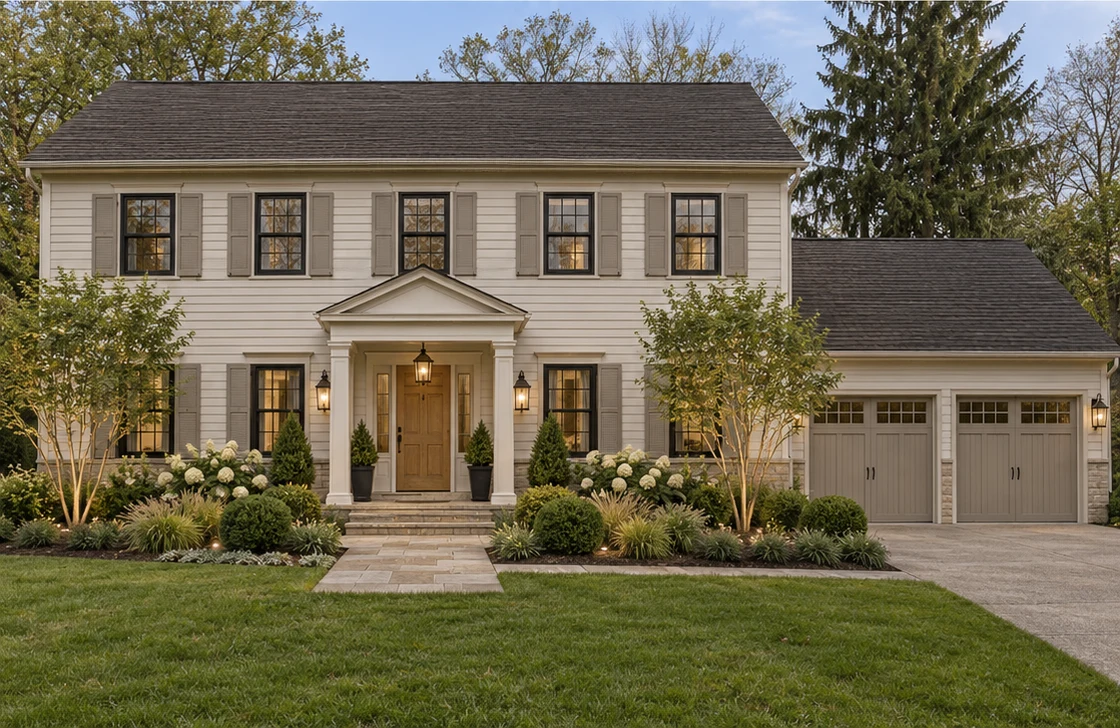
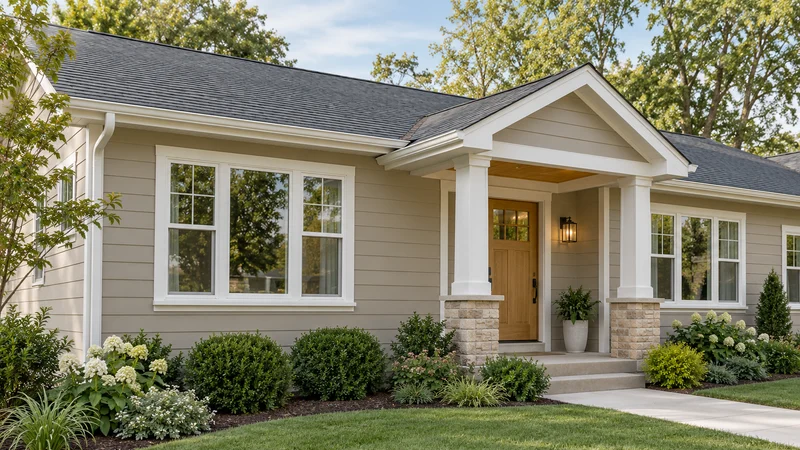
On a low ranch or contemporary home, a deep brown or charcoal fascia can connect visually with the roof and emphasize a long horizontal form. That is a different goal from outlining the projecting Craftsman gable.
Avoid choosing black simply because the windows are black. Compare the entire roof edge against the retained shingles, masonry and wall color. A very dark stripe may look crisp on one house and unnecessarily heavy on another.
Let the soffit support the porch experience
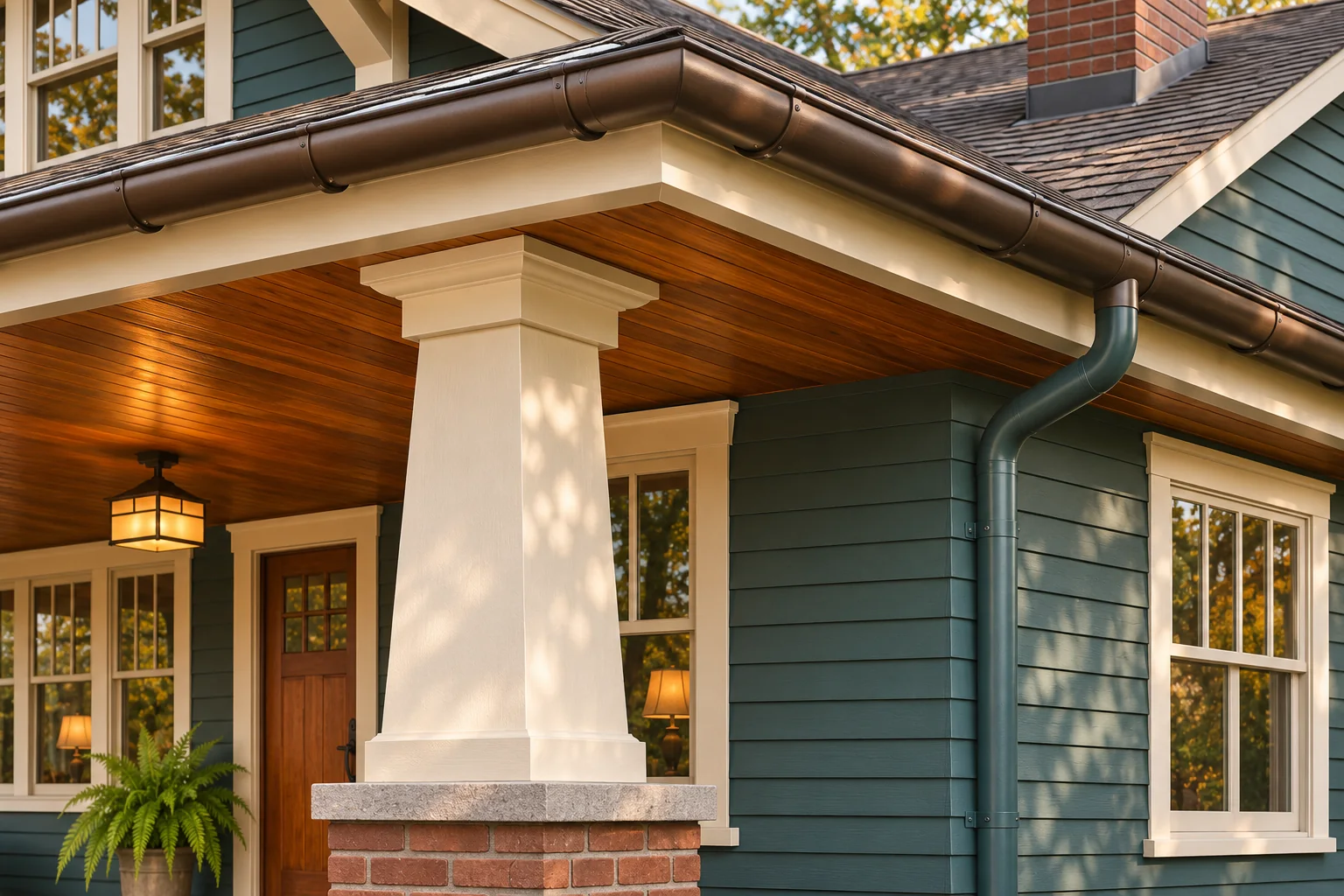
Timber beneath a deep porch can add warmth where someone approaches the door. Keeping it below a quieter painted fascia gives each finish a clear job: the fascia defines the outer edge; the wood makes the sheltered space feel welcoming.
A painted soffit closer to the trim may be the simpler choice when you already have several prominent materials. If the underside is shallow and barely visible, adding a contrasting finish there may contribute little. Judge a sample from the path and from beneath the porch, not only at eye level in full sun.
Gutters and downspouts do not need one visual rule
Matching gutters to fascia is a useful starting point when you want drainage details to recede. A muted dark metal finish can also relate to a brown roof, but it adds another visible line; compare it in the full elevation.
For downspouts crossing a colored wall, a finish close to the wall often looks quieter than the light gutter color. Where a downspout runs along a substantial trim board, matching that board may make more sense. Select from actual available finishes rather than assuming every material can take the same paint.
Keep drainage routes and functioning components in place while exploring colors. A contractor should resolve attachment, ventilation and drainage requirements; a visual palette is not an instruction to cover vents or move downspouts.
Write four selections instead of “all trim white”
Before approving the work, mark fascia, soffit, gutter and downspout on a photograph of each relevant side. Record the color or factory finish and the surface it applies to. Include porch ceilings and exposed timber separately if they differ.
Ask the supplier or contractor to confirm coating compatibility for the actual materials, especially factory-finished metal or PVC. Then view the choices together with the roof and siding. The useful final question is simple: does the roof edge make the house easier to understand, or does it become the first thing you notice?