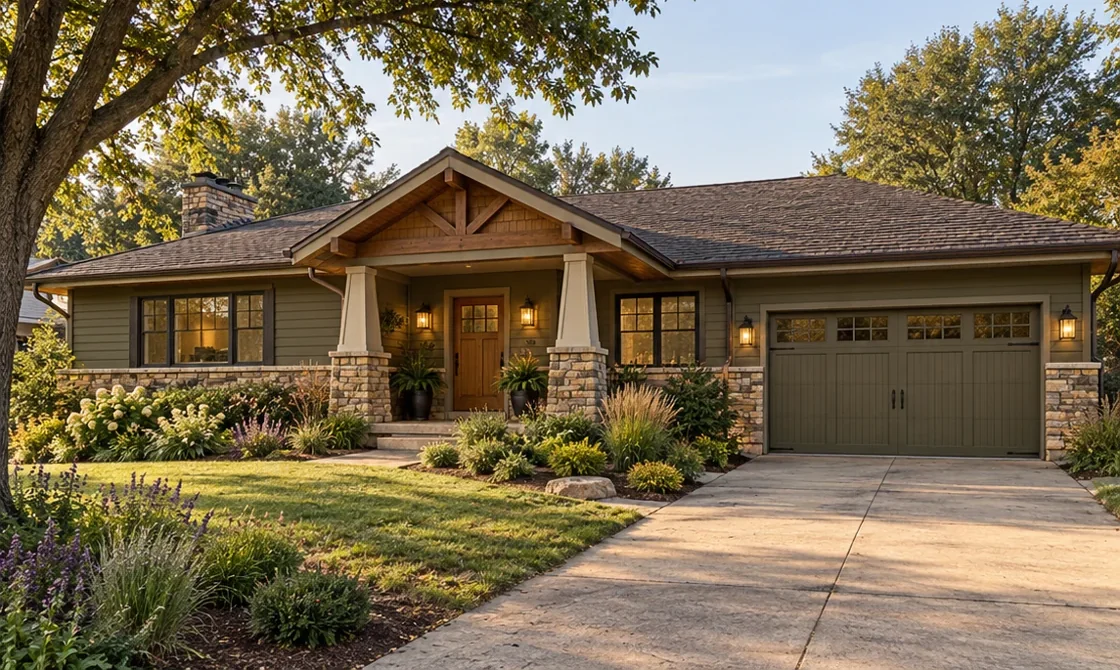
27 Budget-Friendly Ranch House Exterior Ideas
Explore 27 ranch house exterior ideas with budget-friendly takeaways for siding, brick, front doors, garage doors and landscaping, plus practical design advice.
The most useful ranch house ideas work with the home you already have. A low roof, a long horizontal façade and simple one-story massing give you a clear starting point: coordinate the large surfaces, make the entrance easier to find and give the garden a deliberate relationship to the house. You do not need to rebuild the roof to improve those relationships.
These 27 exterior design visualizations explore different combinations of siding, brick, stone, doors, windows, garages and landscaping. They are inspiration concepts, not photographs of completed client renovations. Some include new porches, enlarged openings or masonry work. Each example separates the full design from a smaller-budget takeaway, so you can use a color relationship or entry detail without reproducing every change.
Start with the roof and masonry you intend to keep. Then choose the feature that should attract attention first. A better door color, quieter garage or clearer walkway can make more difference than adding another decorative material. Compare the examples below to find approaches that suit your ranch’s actual proportions and renovation scope.
To update a ranch house exterior, coordinate siding with the brick and roof, then give the front entrance a clear focal point. A refreshed front door, a garage door that fits the palette and consistent trim can make the long façade feel more cohesive. Update windows where needed, soften the frontage with layered landscaping and preserve sound masonry when its color and texture already contribute to the design.
1. Give a Charcoal Ranch a Small Cottage Gable
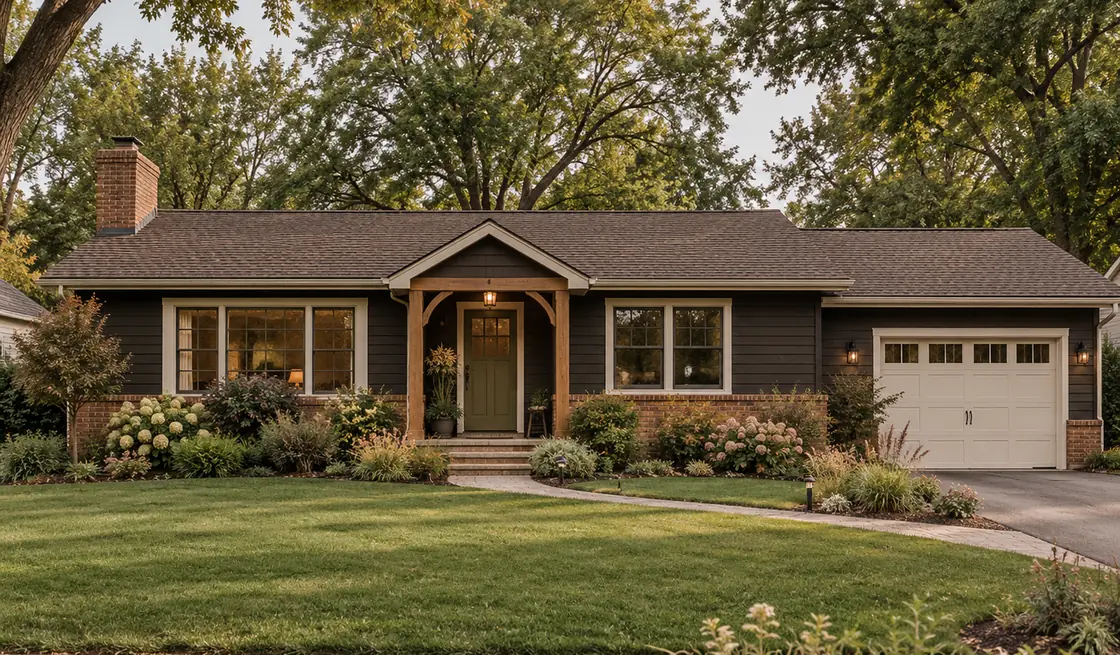
The small peaked porch gives this dark ranch a recognizable point of arrival. Charcoal horizontal siding runs across the long frontage, while the warm brick below it keeps the house connected to the ground. Pale window trim and the light garage door soften the contrast. The green front door adds color within the shelter of the timber entrance rather than across another large wall.
Take the entry scale from this example, not necessarily the new roof construction. A modest door-color change, coordinated porch lighting and refreshed existing posts can create a similar focus. Adding a gable involves framing and weatherproofing, so it belongs in a larger renovation budget. Keep planting below the main windows and leave the front steps visible; otherwise, the garden can hide the doorway that the porch is meant to emphasize.
2. Frame a Taupe Ranch Entrance With Pale Brick
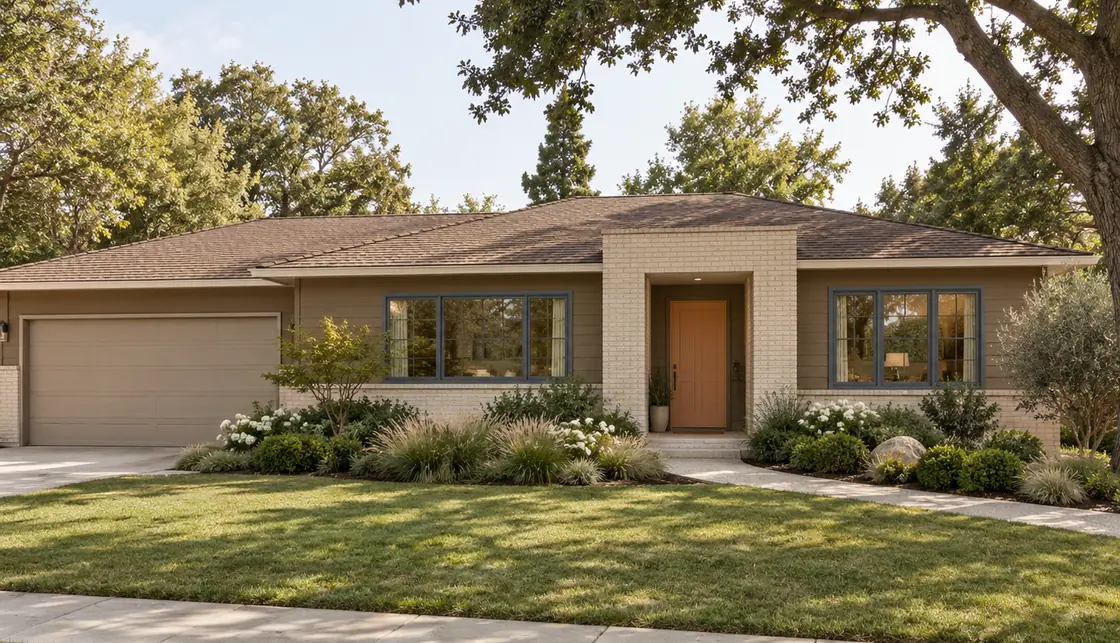
A nearly monochromatic ranch can still have a clear front entrance. Here, taupe siding and a similarly toned garage create a quiet background. The pale brick rectangle projects around the wood door, giving the arrival a taller, more substantial outline. It is a localized vertical gesture within a house that remains distinctly horizontal. Broad windows and low planting keep the composition open on either side.
The budget lesson is to concentrate contrast around the existing entrance. You may not need to build a new masonry surround: a carefully chosen trim color, larger light or repaired doorway finish can distinguish the recess. Match the garage to the surrounding wall before adding decorative details elsewhere. Test the taupe against both the roof and brick, since a neutral that looks warm on a sample can appear cooler beside cream-colored masonry.
3. Let a Stone Chimney Anchor the Low Roofline
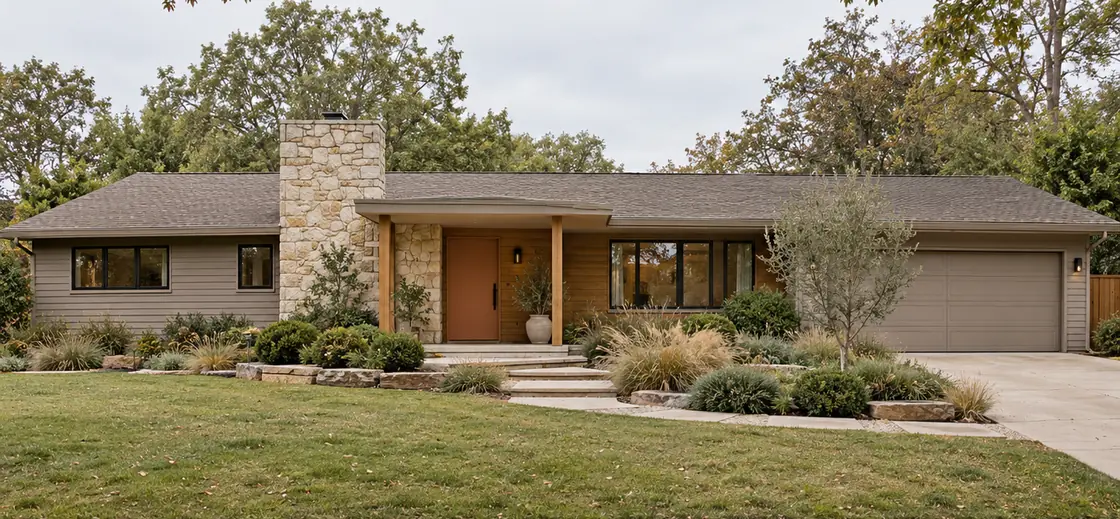
The tall pale-stone chimney gives this low ranch a natural anchor. Gray horizontal siding and a restrained garage finish let that masonry remain the strongest material feature. The wood porch frame adds a warmer tone beside the front door without covering the whole façade. A shallow roof extends continuously over the windows, emphasizing the width of the house rather than breaking it into unrelated pieces.
If your ranch already has a chimney with appealing texture, begin by designing around it. Replacing it with a fashionable finish may remove the most useful part of the exterior. A lower-budget update can coordinate the garage, refresh existing wood and reduce competing trim colors. New stone cladding or a rebuilt porch is a larger scope. Keep shrubs away from the chimney face so its proportions remain readable from the street, especially where the entry and chimney sit close together.
4. Use a Breeze-Block Screen to Mark a Mid-Century Entry
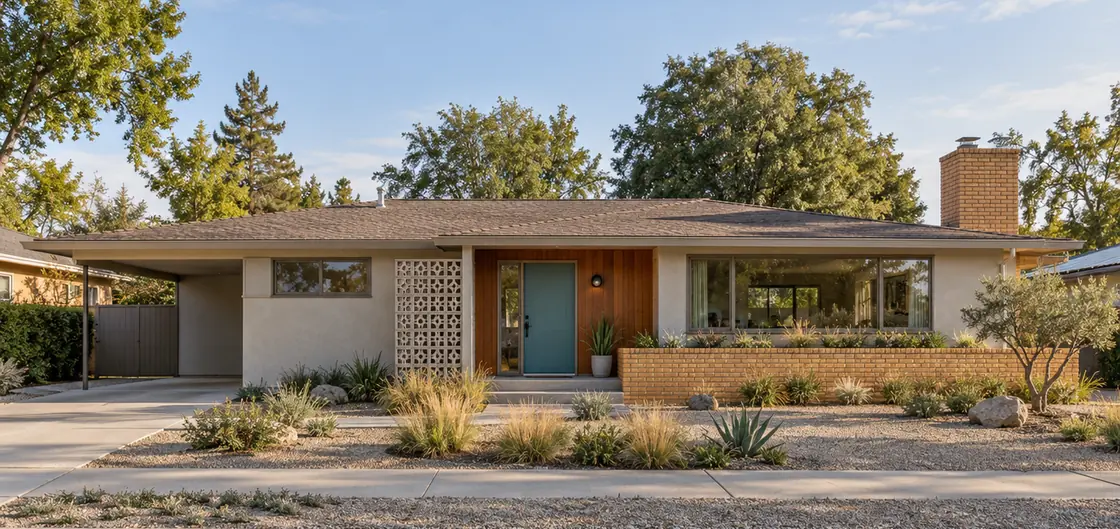
This mid-century ranch uses a patterned block screen beside the entrance instead of a conventional porch with several columns. The screen introduces texture and partial enclosure, while the blue-green door provides a small area of color. Pale wall finishes keep the façade light. A long warm-brick planter and low gravel planting reinforce the horizontal roof rather than compete with it.
A new masonry screen is a built element, not a paint-only project. Its support and location need proper construction planning. The accessible takeaway is the concentrated accent: choose one door color and one textural feature near the entrance. A planter or freestanding garden feature can supply interest without rebuilding the doorway. Avoid covering the screen with climbing plants if you want its pattern to remain visible. Keep gravel paths and planting edges distinct so the front approach is easy to understand.
Explore breeze-block and wood entry ideas for a mid-century ranch
5. Warm a Dark Ranch With a Wood-Lined Entrance
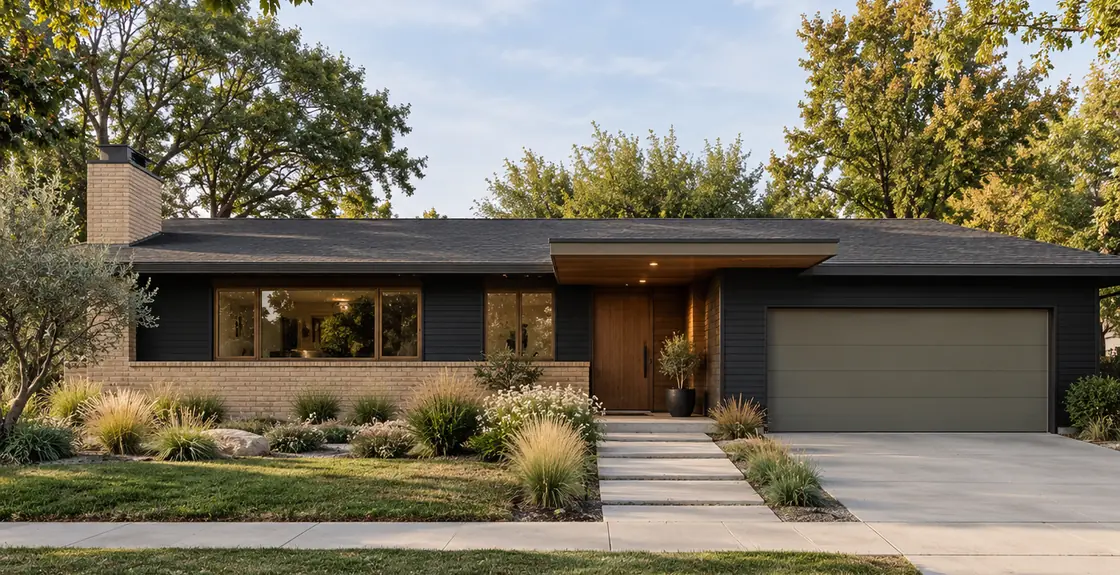
The wood-toned ceiling and doorway draw attention into the shaded entrance of this dark ranch. Blue-charcoal siding makes the wall areas feel continuous, while a band of tan brick adds warmth beneath the glazing. The garage uses a quieter gray finish, avoiding a large white rectangle at the end of the house. Broad steps and a direct approach give the entrance enough width to balance the long frontage.
A full canopy and lining are substantial changes, but the color relationship can guide a smaller makeover. Retain sound brick, choose siding paint that relates to the roof, and bring warmth to the existing door. If the porch ceiling is already wood, refreshing its finish may be more useful than adding another material. Keep the wood accent visually grouped with the entrance. Scattering small wood panels across the garage and windows would weaken the focal point.
6. Keep Earthy Siding and a Gravel Garden in Balance
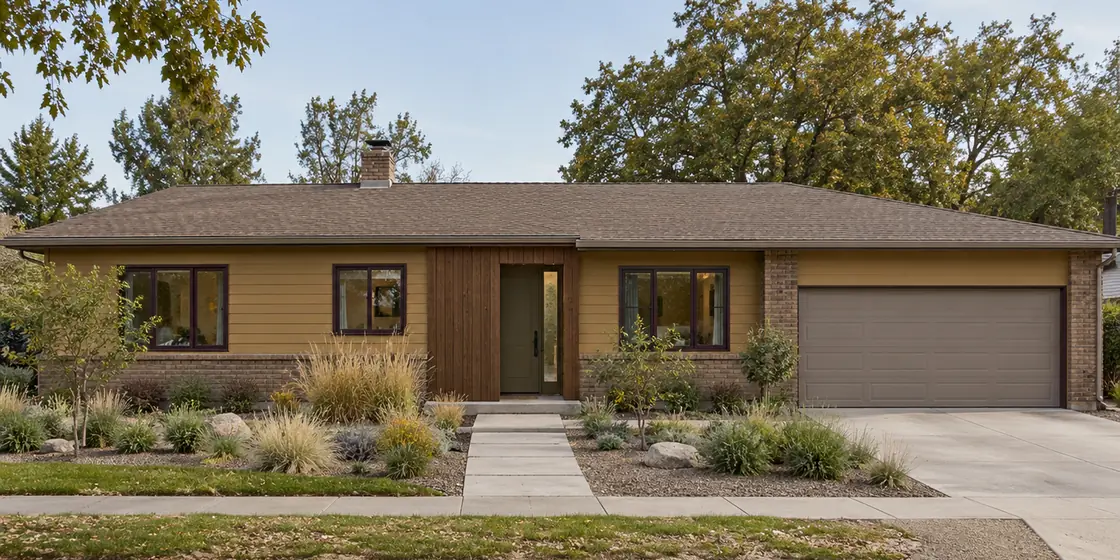
Muted ochre siding gives this ranch warmth without relying on bright yellow. The brown brick below the windows, wood entrance and subdued garage stay within an earthy family. Gravel beds and repeated grasses create an open foreground, allowing the house to remain visible. The planting is broken into groups rather than forming one solid hedge across the entire frontage.
Copy the relationship between the wall and garden before copying individual plants. Retaining existing shrubs that suit the site, removing crowded growth and establishing clear bed edges can be a useful first phase. Gravel does not automatically make a yard low-maintenance or drought-tolerant; plant suitability, soil and water needs still matter. Repainting sound siding is a smaller scope than replacing it. Keep the garage close to the siding color so the ochre feels like a coherent exterior choice instead of an isolated decorative patch.
7. Connect a Brown Ranch to a Flowering Garden
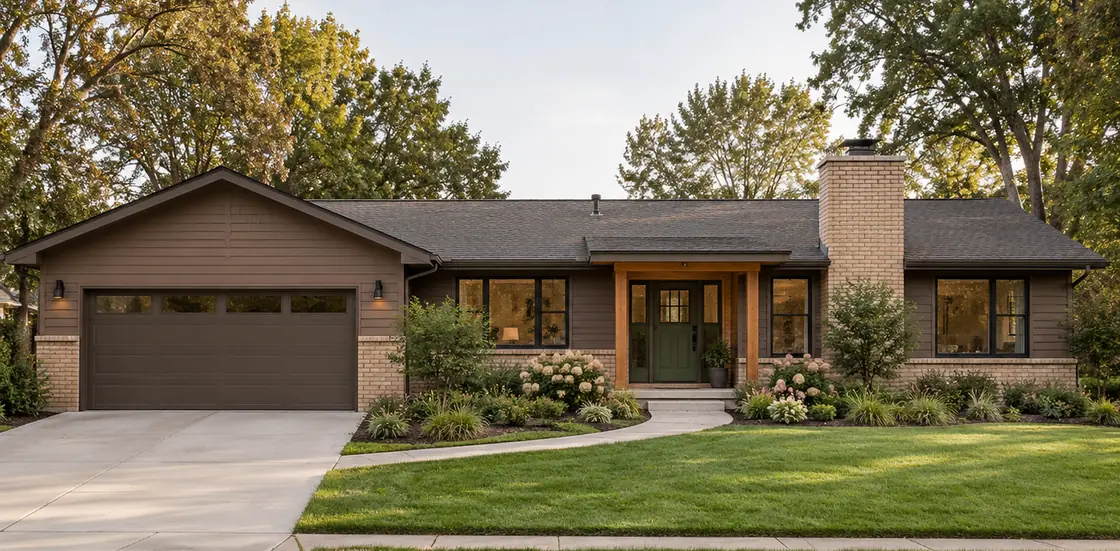
Brown siding and a matching garage give this house a calm, grounded background. A green front door and timber porch create a welcoming center, while the brick chimney provides texture near the right-hand windows. The gently curving garden edge softens the driveway and helps connect the entry planting to the broader lawn. Flowering shrubs sit within a layered bed rather than appearing as a few isolated decorations.
This is a useful ranch house curb appeal idea when the building itself is already in good condition. Start with pruning, bed reshaping and a small group of well-chosen plants rather than replacing every exterior finish. Allow for mature plant size so flowers do not eventually block the windows or narrow the steps. A new porch structure is a separate, larger project. The garden and door color can provide much of the welcoming effect before any roof or siding work begins.
8. Use Deep Brown Instead of High-Contrast Black
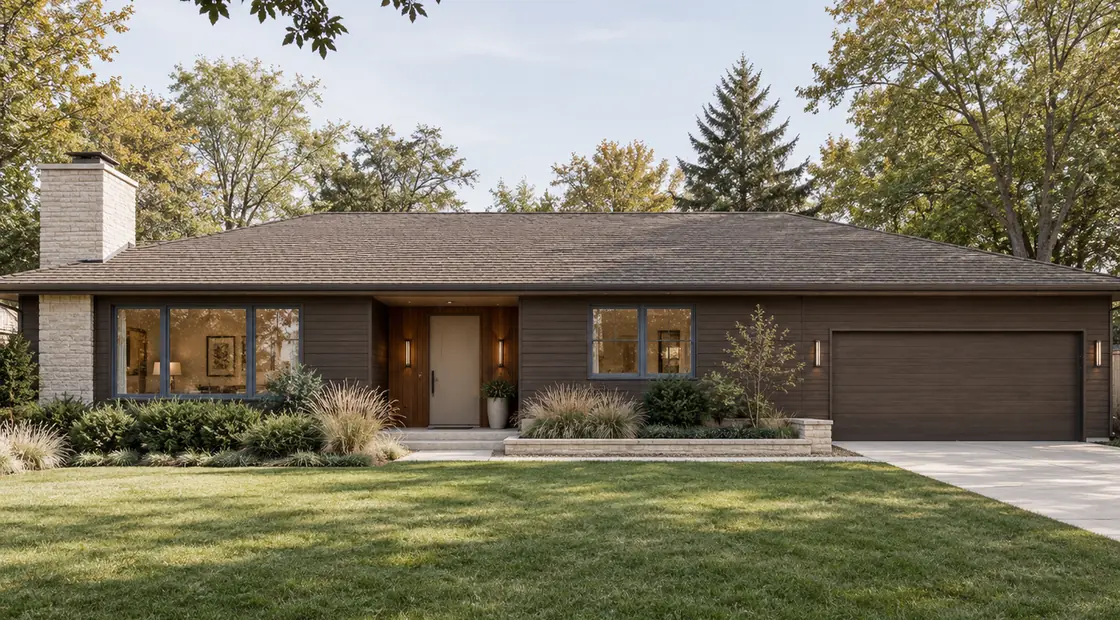
This ranch shows how a deep-brown exterior can feel substantial without stark black-and-white contrast. The siding and garage share a similar depth, while the roof stays in a related brown-gray family. Pale masonry at the chimney interrupts the dark wall with useful texture. The wood door is recessed within the main roofline, giving the entrance depth without an additional peaked porch.
For a budget ranch house makeover, consider the garage finish before replacing windows or rebuilding the entrance. A coordinated door can reduce the visual weight of a large opening. Bring a brown paint sample outside beside the shingles and masonry; some near-black colors reveal purple or green undertones in daylight. Window replacement and new stone are larger investments, so preserve serviceable existing elements where they suit the palette. Low planting keeps the dark wall from becoming a continuous, unbroken surface.
9. Make an Ochre Front Door the Main Accent
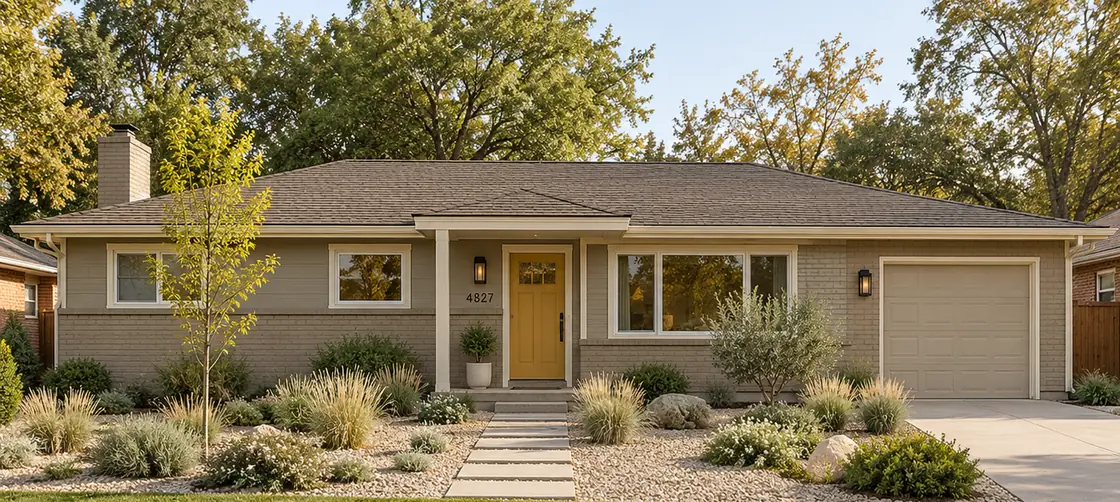
The ochre door is the most concentrated color on this gray ranch. Pale trim outlines the broad windows and low porch, while the garage remains close to the siding tone. Rectangular paving surfaces make a straightforward route through the gravel garden. With the strongest contrast at the entrance, the long wall does not need several competing material changes to feel organized.
Door paint is one of the smaller updates represented in these ranch house ideas, provided the door is sound and the finish is compatible with its material. Choose the color in relation to the roof and window trim, not from an isolated swatch. You can also repeat the clarity of the approach by improving an existing path edge and removing planting that hides the steps. A new paved walkway may be a larger expense; the useful lesson is that the route and accent door work together.
10. Pair Navy Siding With a Light Entry Screen
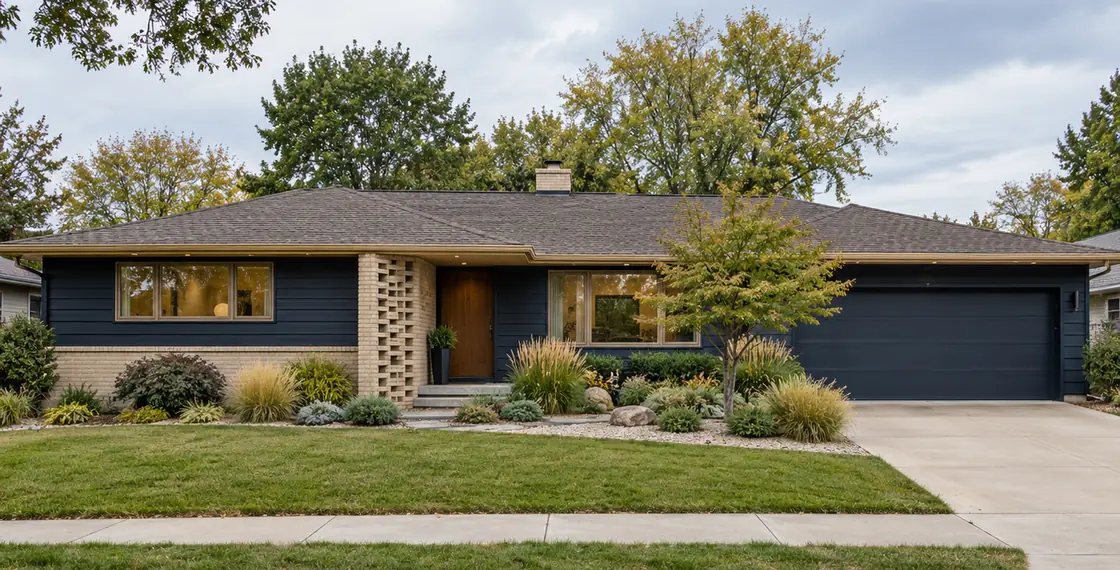
Navy siding gives this house a strong horizontal field, including the garage door. The pale openwork wall beside the entry interrupts that field with light and texture. A warm door sits behind it, while the brick base ties the front windows together. The small tree and low grasses add another layer without obscuring the house's simple silhouette.
If you like this contrast, start with the parts you can retain: a warm-brick base, sound horizontal siding and an existing door. Repainting the siding and garage together can produce a stronger result than introducing separate colors for each. The decorative screen requires a planned installation and should not be treated as a quick cosmetic attachment. A simpler budget interpretation might use a lighter entry trim or a pale planter near the door. Reserve the strongest light-dark contrast for the entrance rather than outlining every window in bright white.
11. Group Stone and Wood Around the Front Door
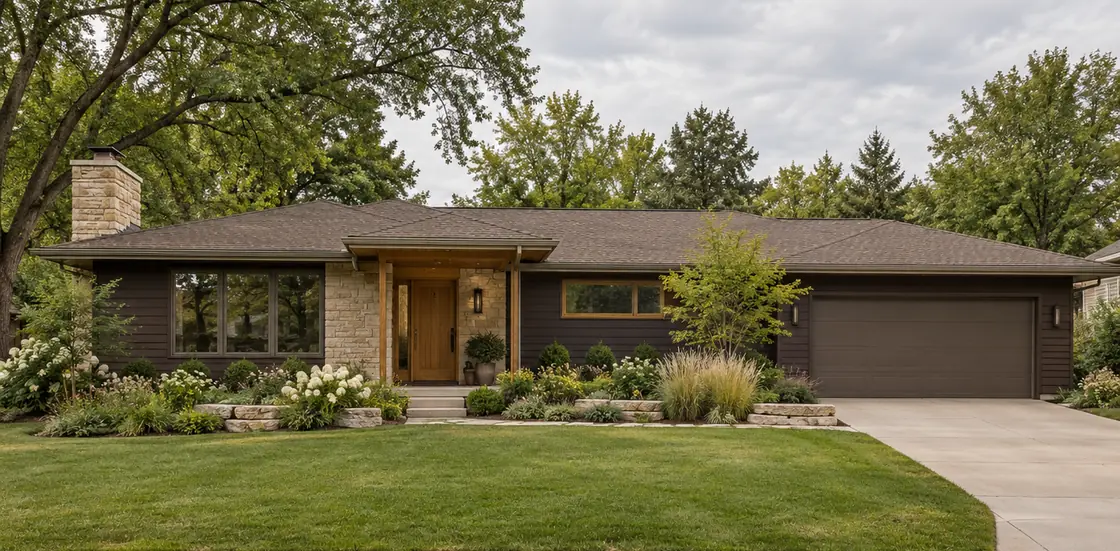
The stone and wood in this ranch are grouped around the doorway, where a material change makes architectural sense. Olive-brown siding continues across the quieter wall areas, and the garage stays in a related dark neutral. The broad front windows share dark frames, creating a consistent rhythm. Low stone edging and planting draw attention to the entrance without adding a tall new feature above the roof.
Selective cladding can cost less than resurfacing the entire house, but it still needs careful detailing at edges and openings. For a smaller update, work with any masonry already present and concentrate a warm finish on the door. Avoid applying disconnected rectangles of stone or wood simply to fill blank wall space. Notice how the material changes here align with the entry recess and porch frame. That placement makes a limited palette feel purposeful, even if the individual finishes are understated.
12. Use a Red-Brown Window Accent on a Green Ranch
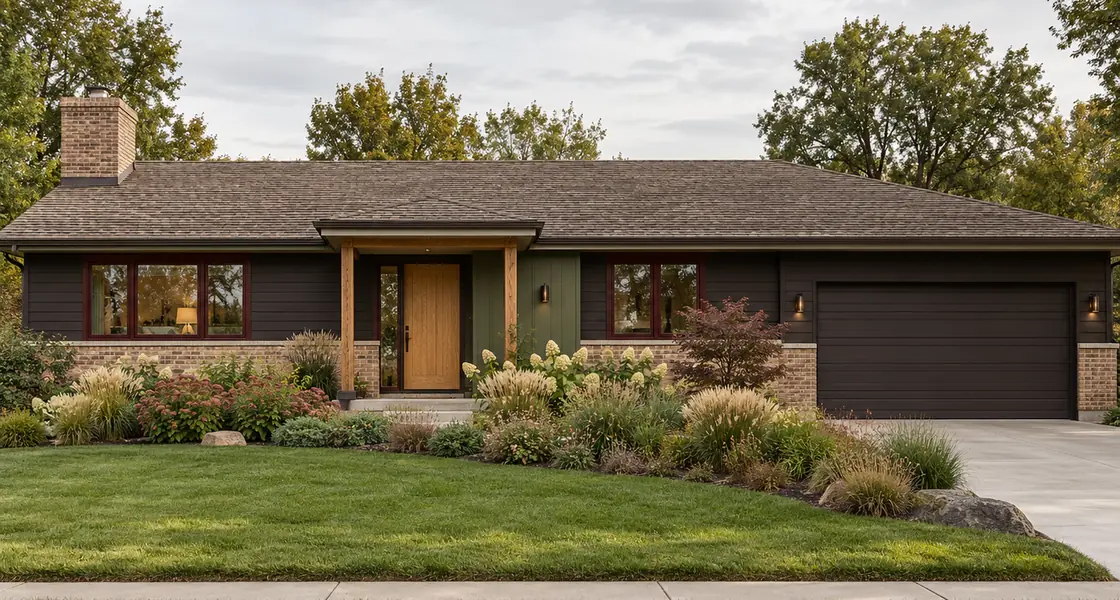
Deep green siding and the dark garage unify this long ranch, while the warm red-brown color around the windows makes the façade less severe. Tan brick adds another warm note beneath the glazing. Timber at the entrance repeats that warmth at a larger scale. The palette works because the accents share an earthy quality; none reads as a bright primary color against the dark walls.
Window color is an important decision, but changing it is not always a paint project. Check the existing frame material and manufacturer guidance before considering a finish change. If replacement windows are outside the budget, adapt the idea through suitable surrounding trim, the front door or porch accents. Compare samples with the brick and roof in both shade and sun. Keep the garage subdued so the window rhythm and entrance remain the expressive parts of the composition.
13. Match an Olive Garage to the Surrounding Exterior
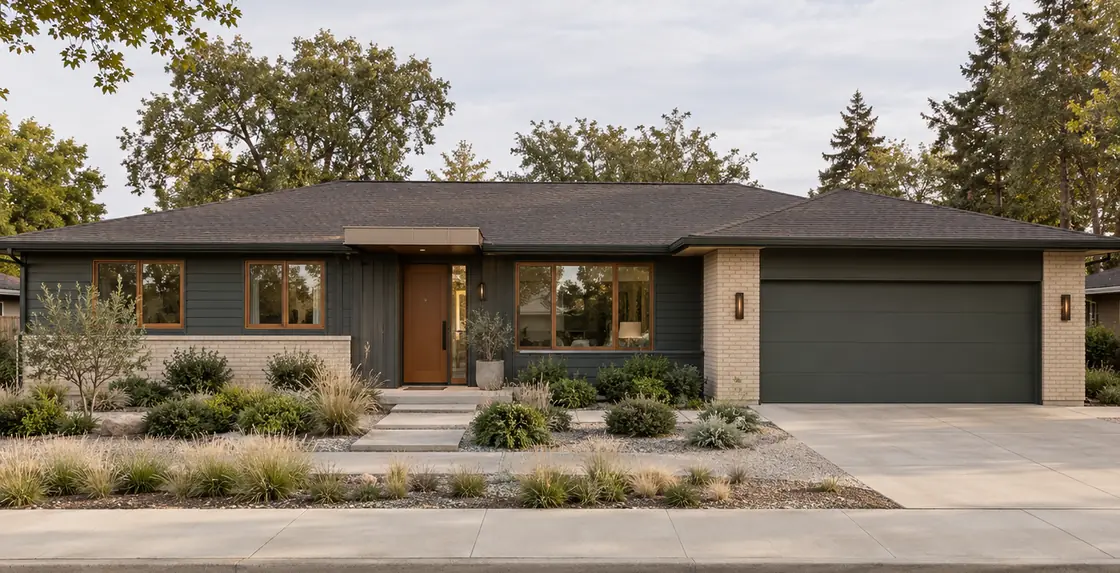
The garage occupies a substantial part of this façade, but its muted olive finish prevents it from dominating. Pale brick piers frame the opening without turning it into a bright white feature. The same quiet green runs across the house, while warmer window surrounds and the wood entrance create smaller points of interest. Low grasses and gravel give the front wall room to breathe.
Garage-door paint can be a useful first step when a ranch feels visually unbalanced. Test a finish close to the adjacent siding, then compare it from the street. The goal is coordination, not an exact match under every lighting condition. Keep the existing door if it functions well and accepts a suitable finish. Replacing it, rebuilding piers or changing the canopy is a larger scope. Lighting at the entrance can then reinforce the front door without adding more contrast around the garage.
14. Retain Red Brick Beneath Blue-Gray Siding
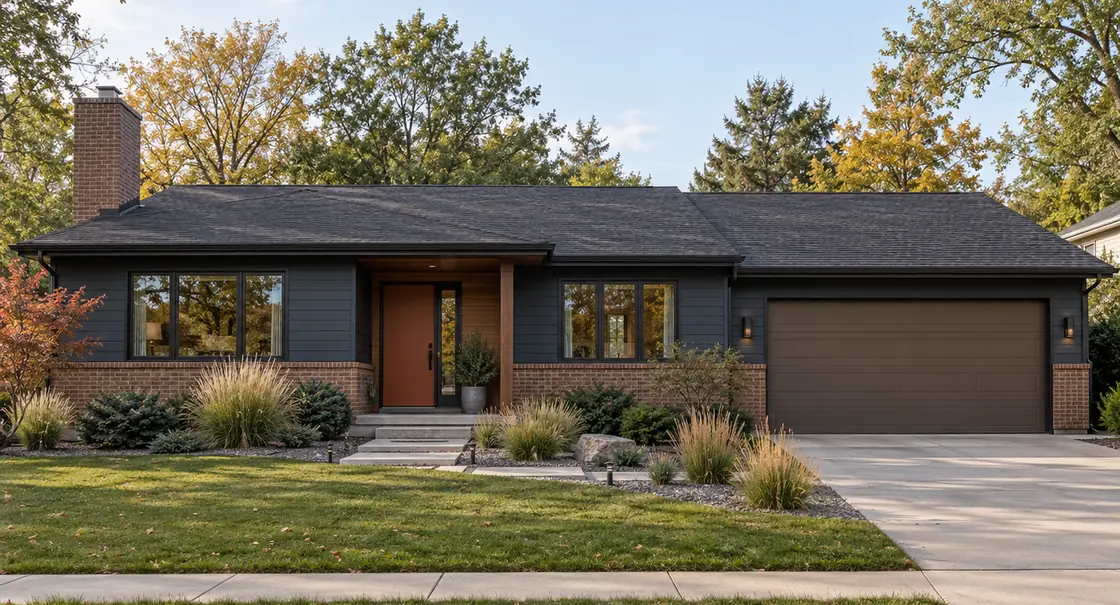
Slate-blue siding sits above warm red brick on this ranch, producing a balanced cool-and-warm relationship. The door introduces another warm tone near the center, while the garage uses a brown-gray finish rather than bright white. Dark shingles and window frames connect the composition at the upper edge. The result feels modern without removing the masonry texture that gives the house its character.
Keeping existing brick can simplify a renovation scope. Begin by selecting siding and garage colors that relate to its actual undertones, including the mortar, instead of assuming all red brick requires the same palette. Test the blue-gray next to the warmest and darkest bricks. A lower-budget version may retain the windows and roof while refreshing paintable surfaces, lighting and landscaping. Painting the masonry is a separate maintenance decision; it is not a requirement for this color relationship to work.
15. Use Vertical Siding Only on a Secondary Gable
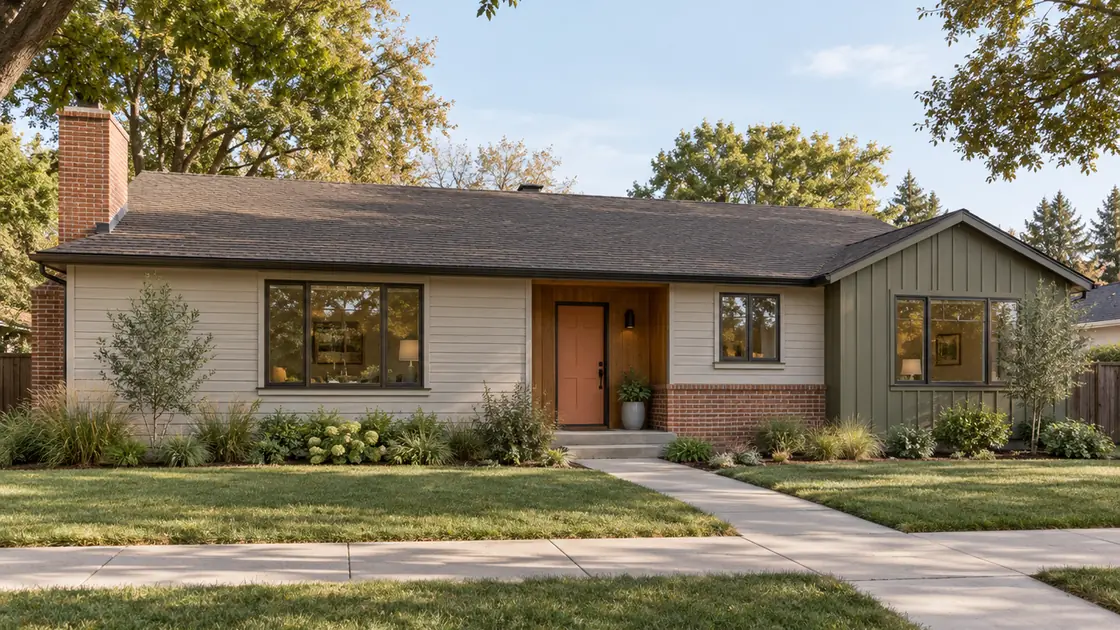
Cream horizontal siding keeps the main body of this ranch light, while the garage gable uses sage-colored vertical boards. The difference in direction identifies that secondary volume without adding another roof shape. Red brick below the windows and on the chimney gives the pale façade a warmer base. A plain wood door supplies a quiet focal point between the larger window and garage areas.
This is a targeted siding idea rather than a reason to replace every wall. If the garage gable needs repair, it can be the right place to introduce a new texture while retaining sound cladding elsewhere. For a smaller budget, keep the existing siding direction and use a muted gable color to establish the same hierarchy. Align material changes with corners and roof boundaries. Avoid a narrow decorative strip that stops arbitrarily in the middle of a wall; it tends to look applied rather than architectural.
16. Plan a Calm Ranch Around Existing Pale Masonry
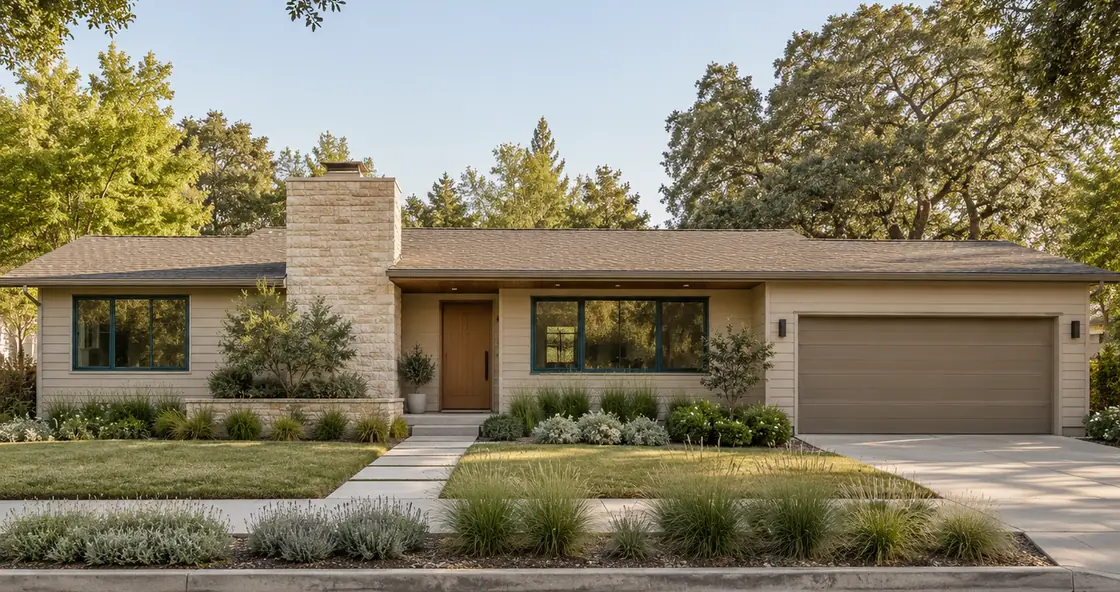
This ranch uses a small number of closely related neutral tones. Sand-colored siding, a taupe garage and pale chimney masonry create a calm composition. Broad dark-framed windows add definition, while the entrance remains simple and recessed. A layered strip of grasses and shrubs stretches along the front, but the central path keeps the door legible. The house's low silhouette is the principal architectural feature.
When working on a budget, a calm scheme often begins by removing visual conflicts rather than adding decorative elements. Coordinate paintable trim, replace mismatched lights and choose a garage finish that sits comfortably with the wall. If the existing masonry already looks good, leave it visible. Window replacements and new cladding are larger decisions that can wait until they are necessary. Test subtle neutral differences in daylight: shades that look identical indoors may separate noticeably across a long façade.
17. Give a Charcoal Ranch a Garden-Led Cottage Feel
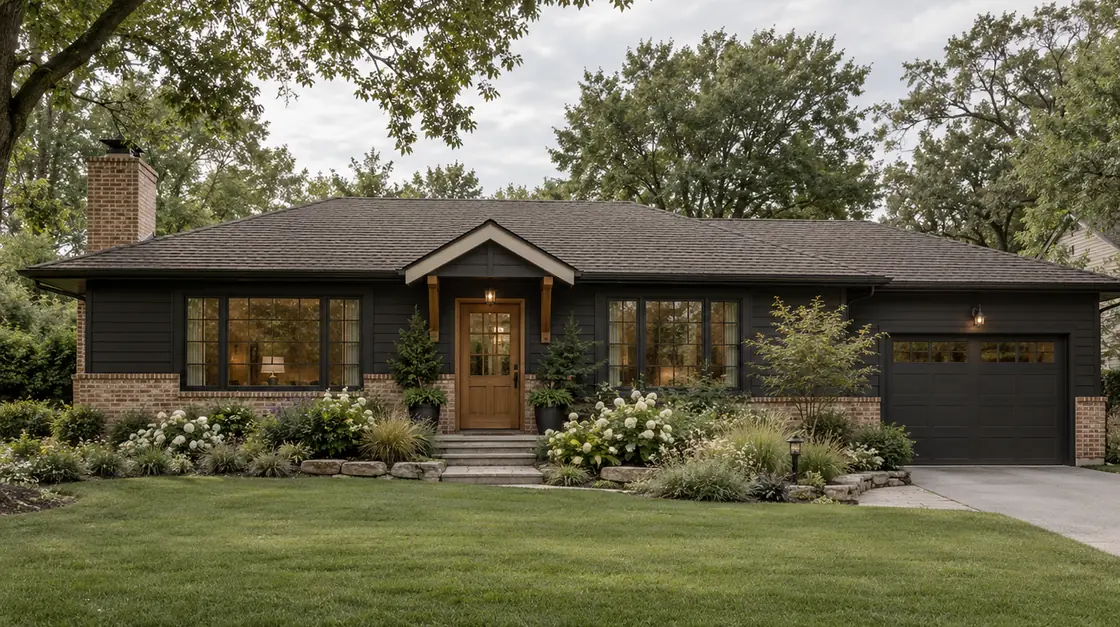
The dark walls on this ranch are softened by flowering shrubs, loose garden edges and a small gabled porch. Tan brick remains visible below the windows, preventing the charcoal from becoming a single heavy surface. The timber door and restrained porch detailing add warmth without imposing a large farmhouse-style structure. The garage keeps a dark finish and recedes beside the more welcoming garden frontage.
Use this example when you want cottage character without changing the ranch into a different architectural type. A manageable planting plan, a refreshed existing door and warm lighting can create that feeling before any structural work. Do not assume the dense planting shown is suitable for every site; mature sizes, access and maintenance need consideration. If adding a porch, keep its scale subordinate to the main roof. The garden should frame the doorway rather than screen it from the approach.
18. Soften Blue-Gray Siding With Cream Trim
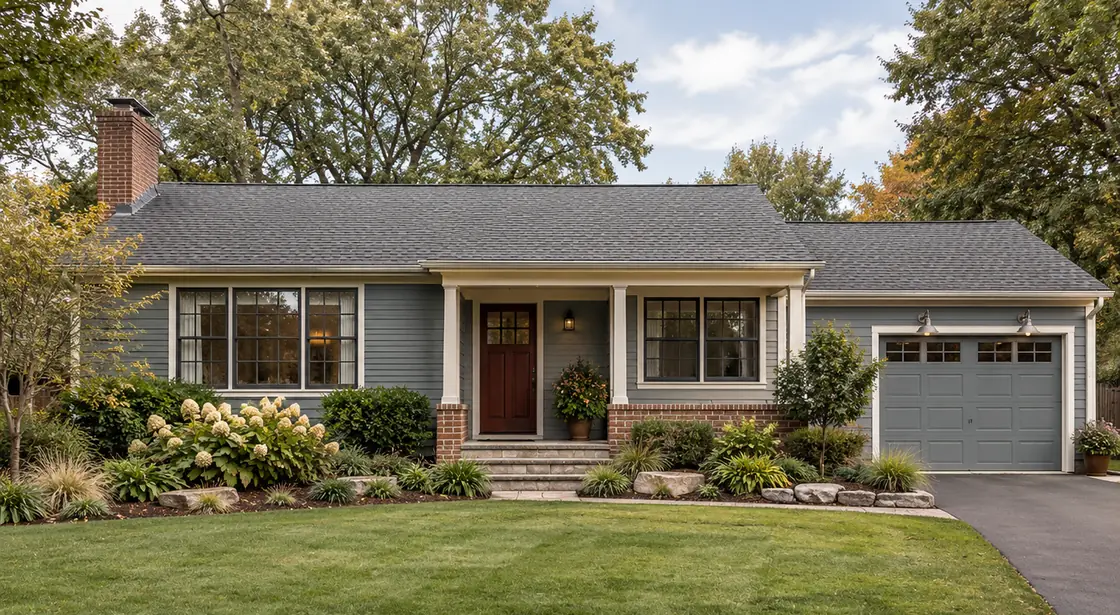
Blue-gray siding gives this ranch a fresh identity, but the cream trim keeps the overall mood warm. The window outlines and porch posts repeat that light tone across the frontage. Red brick below the walls and the dark wood door add richer colors in smaller areas. The curved planting bed softens the straight roof and broad garage, balancing the building's horizontal geometry.
A budget-conscious version can focus on siding and trim paint, provided those surfaces are in sound condition. Compare the cream with the brick mortar and roof before committing; a yellow cream may look different beside cooler gray shingles. Keep trim widths consistent so the façade does not become a collection of unrelated outlines. Existing landscaping can often be reshaped and supplemented rather than replaced. The larger front windows shown are inspiration, not a necessary purchase to achieve the softer color relationship.
19. Make a Pergola the Entry's Distinctive Detail
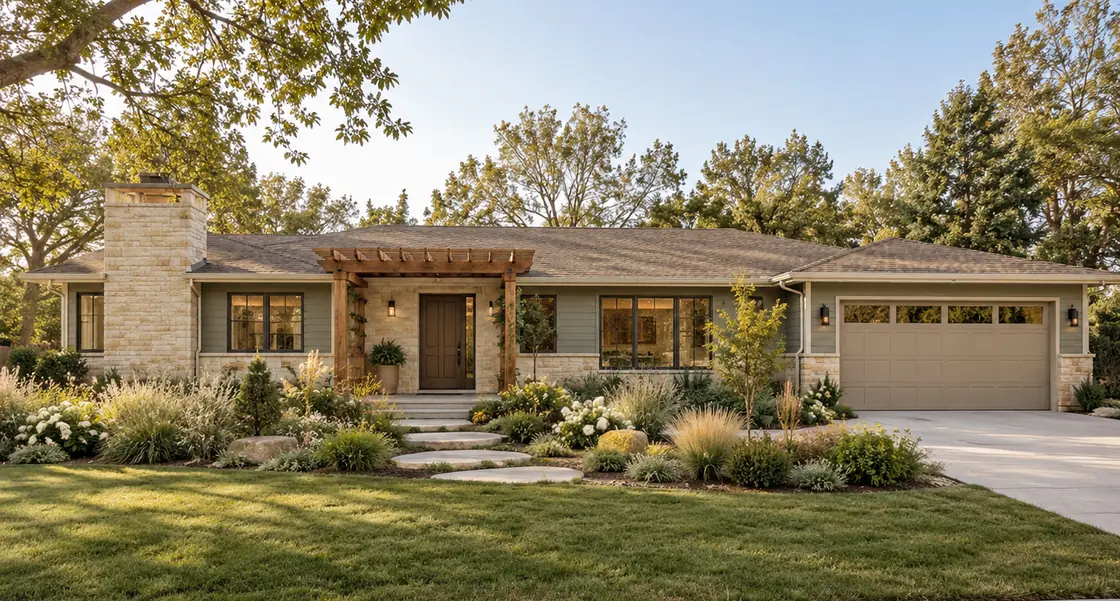
The timber pergola makes the entrance the distinctive part of this otherwise pale ranch. Its open members create a visible rhythm above the dark door, while the main roof remains low and continuous. A pale chimney and subdued garage share the wall's quiet tone. Garden planting softens the front steps and relates the entry to the lawn rather than leaving it isolated on a small landing.
A pergola is not a substitute for a weather-tight porch roof, and a new structure requires suitable attachment or independent support. For a smaller makeover, borrow the warm entry emphasis through the door, lighting or an existing porch ceiling. Preserve the light wall palette so the wood remains meaningful. The stepping-path composition can also inspire clearer bed edges around a current walkway. Keep everyday access comfortable instead of copying decorative gaps that do not suit the household.
20. Combine Sage Siding With a Cream Brick Chimney
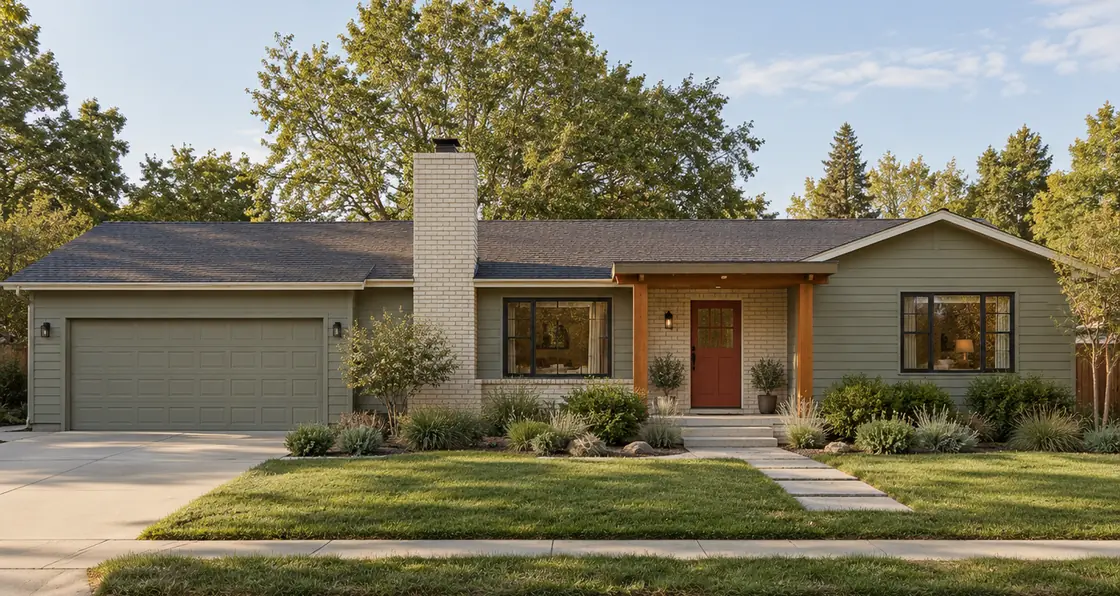
Sage-green siding gives this ranch a gentle connection to the garden. The cream-brick chimney introduces a tall light feature, while the timber porch and red-brown door establish a warmer point of arrival. The garage remains close to the siding color. Because the palette is restrained, the shallow roof and broad wall proportions stay readable instead of disappearing beneath decorative trim.
Begin a similar update by comparing green samples with the roof, existing masonry and shaded entry. Sage can read gray, blue or yellow depending on its surroundings. The lower-budget takeaway is a coordinated paint scheme and a deliberate door accent, not necessarily a new chimney finish or porch. If your chimney is natural warm brick, test greens around it before considering a coating. Keep the garden varied in height but low enough near the windows to preserve the open, one-story character.
21. Use a Wood Garage Door Within a Dark Cottage Palette
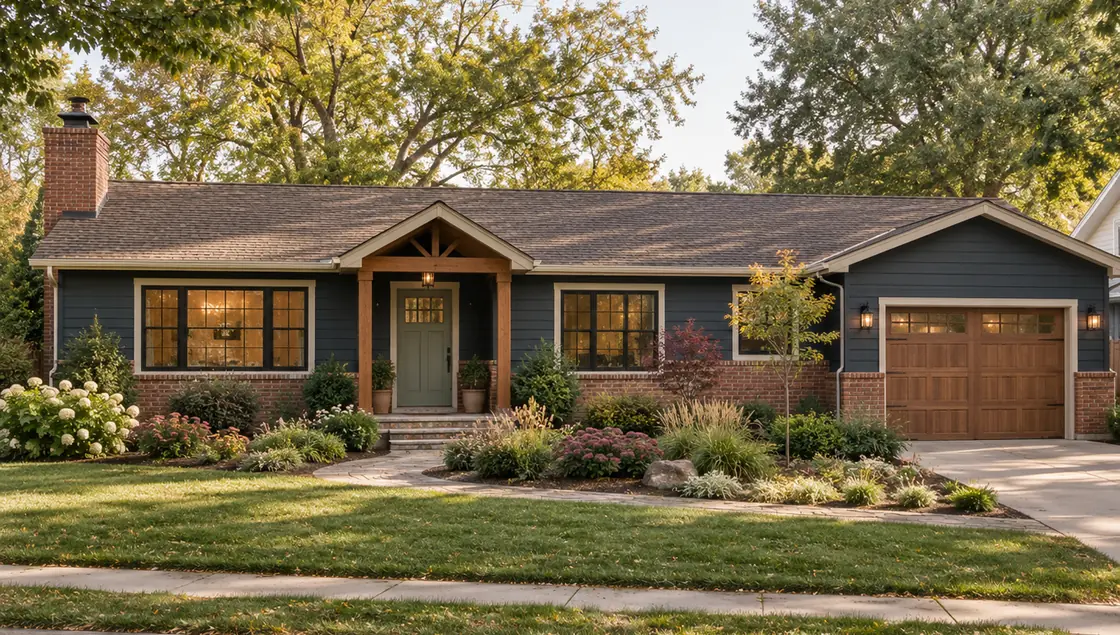
This ranch gives the garage a wood-toned finish while keeping the surrounding gable and siding dark blue. The warm color relates to the timber entrance, so the garage does not feel disconnected from the rest of the house. A green front door provides a quieter secondary accent. Flowering beds extend across the lawn edge, softening the larger paved area at the garage.
A new timber garage door is a larger purchase, and the visual warmth does not require that exact product. A suitable warm paint finish on an existing door may produce a more modest interpretation. Choose it alongside the porch and brick rather than in isolation. The budget priority is coordination: one blue wall color, one family of wood tones and a contained door accent. Avoid adding unrelated decorative garage hardware if the front entrance already has the detail you want to emphasize.
22. Add Cottage Character With Shutters and a Trellis
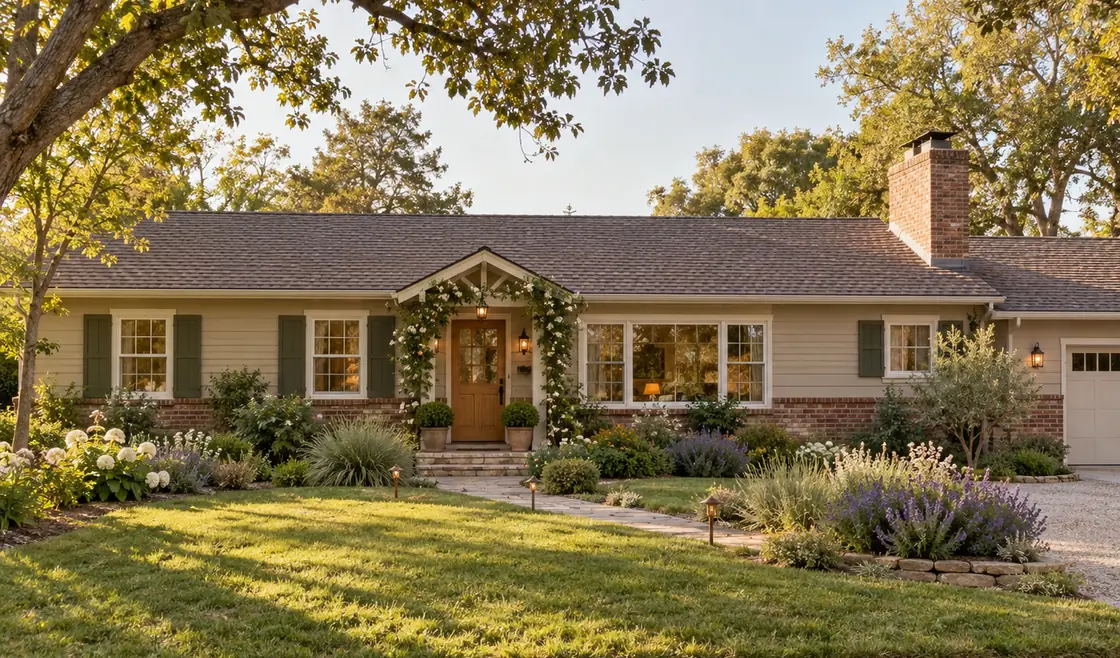
The cream siding and green shutters give this ranch a softer traditional character. Red brick remains beneath the windows, while a small trellis and climbing greenery mark the warm wood door. The shallow roof and one-story proportions remain visible; the cottage influence comes from selected details and planting rather than a wholesale change of form. The garage stays light and secondary.
Shutters are useful only where they fit the window arrangement. Check that their width and placement look plausible for the openings rather than attaching narrow panels to every window indiscriminately. A trellis can be a smaller intervention than a new porch, but its position should preserve access and allow maintenance around the door. A lower-budget version might refresh existing shutters, paint the entrance and improve nearby planting. Avoid overwhelming the low roofline with oversized decorative brackets or a tall, unrelated canopy.
23. Let a Low Planter Define a Modern Approach
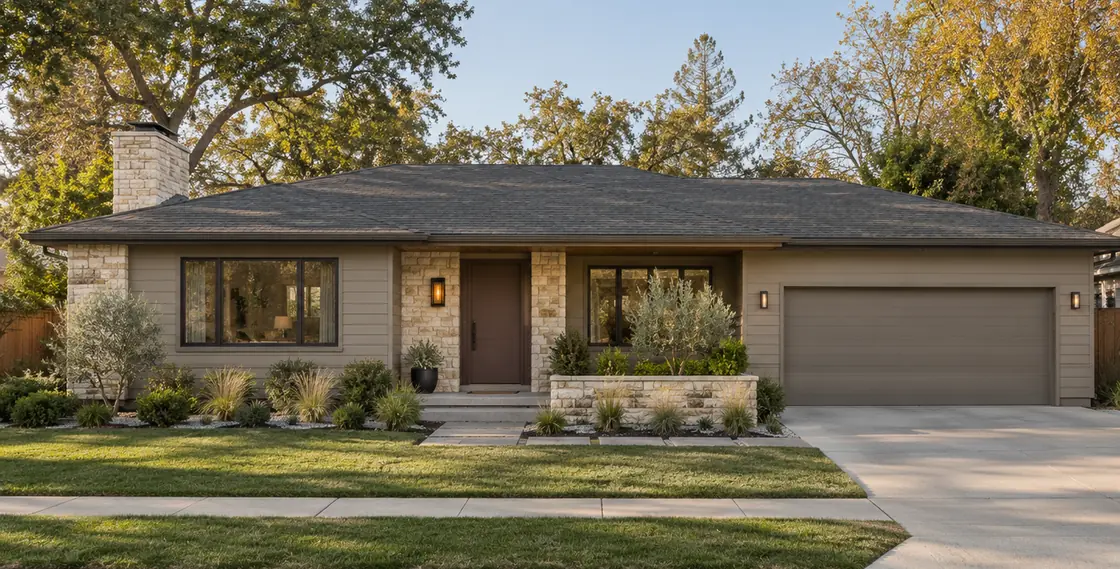
The low masonry planter beside this ranch's entrance creates a defined edge at ground level. It complements the pale stone around the wall and chimney, while gray-beige siding and a subdued garage keep the larger surfaces quiet. Broad windows and a recessed door preserve a straightforward modern appearance. The planting supplies softness without disguising the strong horizontal geometry.
Built planters involve more than their visible finish: drainage, soil space and separation from the building need thought. If that work is beyond the budget, borrow the clear edge using a planted bed or a freestanding container near the approach. Keep the entrance recess uncluttered and use a coordinated light to make the door visible. New stone surfaces are not essential to the lesson. The important move is to make the route feel intentional while keeping taller objects away from the window sightlines.
24. Balance a Front Gable With a Quiet Garage
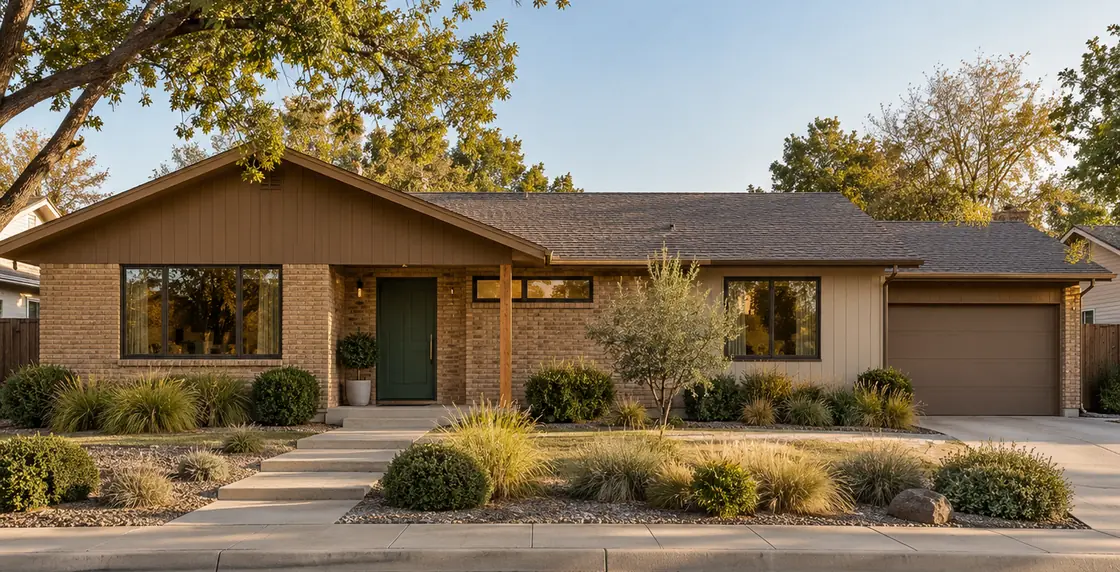
The brown gable over the left-hand window gives this ranch a stronger front-facing volume. Warm brick continues along the lower frontage, while the green door is tucked into the central entrance. The garage uses a quieter finish and simple detailing, allowing the gable and doorway to lead. Low gravel planting supports the horizontal composition even where the roof changes direction.
If your ranch already has a front-facing gable, use its boundaries to organize color and material choices. You do not need to add another gable above the entrance to create interest. A smaller project might repaint the existing gable, coordinate the garage and select a door color that works with the brick. Rebuilding roof shapes is a different level of investment. Preserve consistent trim and avoid emphasizing every roof edge equally; that can make a low house look busier rather than more distinctive.
25. Keep Warm Brick as the Main Exterior Material
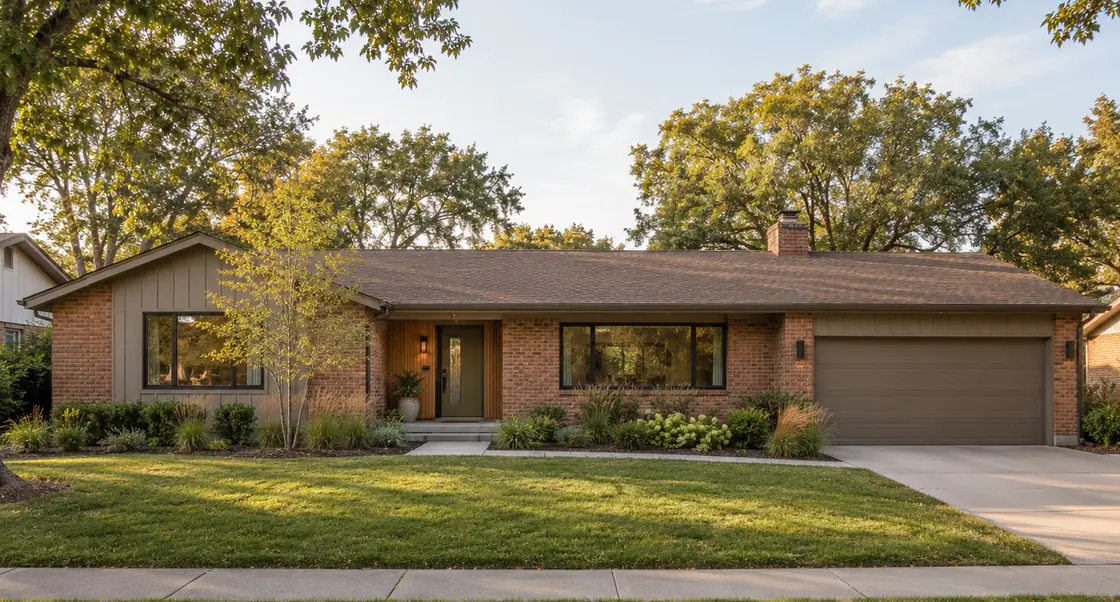
Warm brick forms most of the visible wall area on this ranch, so the other finishes support it. Gray-brown siding on the front garage gable and a coordinated garage door avoid another large color statement. Dark windows give the openings definition, while a green front door supplies a modest accent. The planting remains low, letting the brick's texture and the long façade do the visual work.
This is a useful approach for a ranch house exterior remodel when the original masonry is in good condition. Start with the door, garage and paintable siding instead of coating every brick. Select samples using the brick's mix of colors, including the mortar, rather than one isolated brick. Window replacement is not automatically necessary: coordinated surrounding trim may be enough where the frames are serviceable. Removing overgrown shrubs can also reveal masonry that already gives the house interest and depth.
26. Use One Timber Frame to Clarify a Shaded Doorway
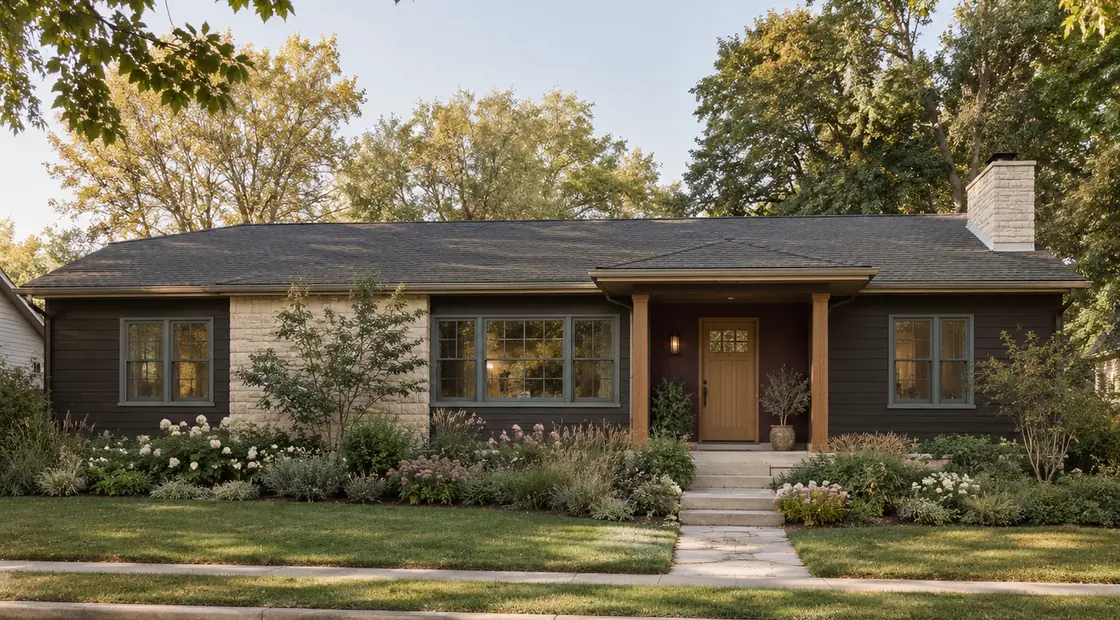
The timber frame on this dark ranch outlines a door that would otherwise sit deep in shadow. A red-brown door keeps the entrance within the warm accent family, and the pale chimney provides contrast farther along the wall. The windows and garage remain subdued. Informal planting softens the wall base but leaves a clear path to the front steps.
For a plain ranch with a hard-to-find entrance, focus on visibility before adding ornamental detail. A well-scaled light, a clearer path and a compatible door finish may be sufficient. A new frame or canopy involves construction and should be proportioned to the existing opening. Do not make it so broad that it obscures nearby windows. The useful budget lesson is to group the entry changes together; several small accents scattered across the wall are less effective than one coherent arrival point.
27. Introduce a Shallow Arch Within a Neutral Ranch
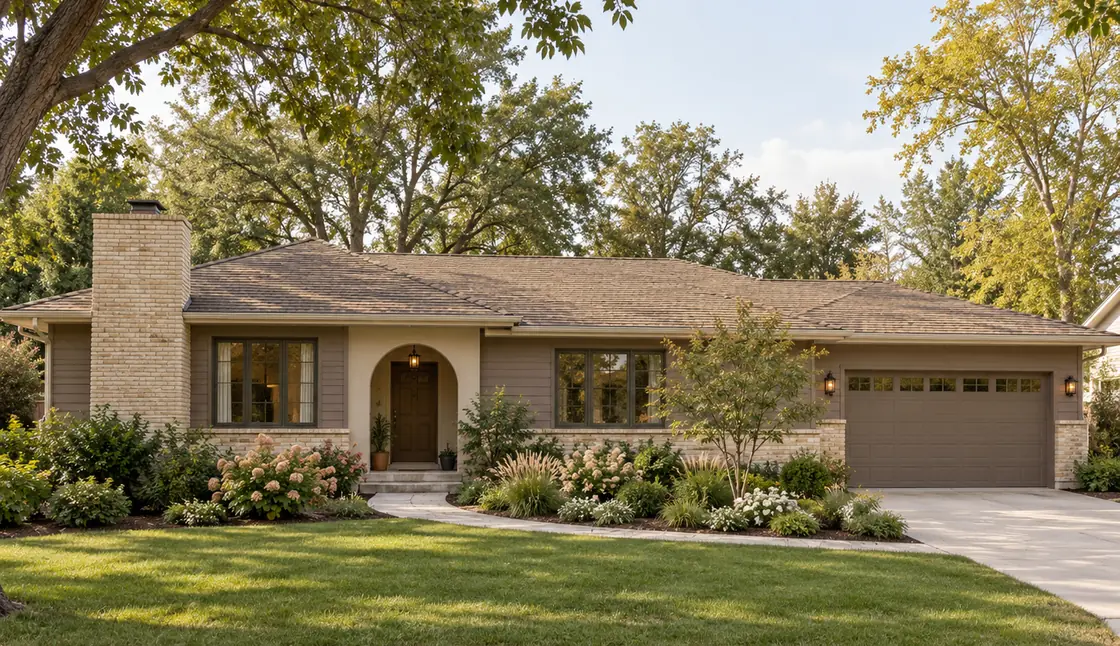
The shallow arched opening gives this ranch a softer arrival without changing the main roof's horizontal outline. Pale masonry at the chimney, quiet neutral siding and a subdued garage keep the composition restrained. The brown door sits within the arch rather than becoming a separate brightly colored feature. Layered shrubs and grasses support the gentle character of the entrance.
Creating an arch can involve structural or wall-opening work, so it is not automatically a budget update. A homeowner can take the softer idea in a smaller direction through a curved garden edge, warmer door color or less severe lighting fixtures. Keep those changes compatible with the home's existing openings and roof. If an arched entrance already exists, give it room to lead rather than adding competing shutters or decorative gables. One curved detail is enough to change the mood of an otherwise simple ranch.
How to Update a Ranch House Exterior on a Budget
Separate maintenance from appearance changes first. A leaking roof, damaged trim or failing siding needs attention before a new palette. For sound surfaces, prioritize the areas that influence the whole composition: siding and trim paint, a coordinated garage door, a front-door accent and appropriately scaled lighting. Reuse existing masonry where it contributes warmth or texture.
Work in phases. Clear an obscured approach, prune crowded planting and improve bed edges before buying new shrubs. House numbers and entrance lighting can make arrival clearer. Selective siding repair may offer a useful place for a new texture, but an arbitrary patch of cladding is rarely as effective as a change aligned with an existing corner or recess.
New windows, rebuilt porch roofs, expanded openings and extensive paving belong in a larger renovation scope. Labor, access, surface condition, material choices and location all affect costs; use local itemized quotes rather than assuming an inspiration image represents a fixed budget.
What Makes a Ranch House Exterior Look More Modern?
Modern ranch house exterior ideas are most convincing when they simplify the composition. A limited material palette, consistent window accents and a garage that relates to the wall give the long façade a clearer rhythm. Modern does not automatically mean black windows, white brick or a flat roof.
Give the entrance a reason to lead. A deeper-looking recess, warm door, concentrated wood accent or clearer approach can establish hierarchy without a tall new porch. Respect the horizontal roofline and use vertical accents sparingly. Low planting should support the windows and route to the door rather than hide the house.
Treat replacement windows as part of the renovation scope, not a cosmetic detail. Wider openings shown in a rendering require construction. If existing windows are staying, design around their real size and position before choosing the surrounding finishes.
Compare ranch exterior before-and-after design studies
If you are unsure how the siding, brick, roof, windows, trim, front door, garage and landscaping should work together, Explore the Exterior Design Package to visualize a coordinated approach before committing to expensive exterior changes.
Should You Paint the Brick on a Ranch House?
Not automatically. Warm red, tan and brown brick can work with green, blue-gray, taupe or charcoal siding. Several examples above use masonry as the constant and change the door, garage or siding around it. Try that approach first if the brick is sound and you like its texture.
Painting changes the masonry’s appearance and creates an ongoing finish-maintenance commitment. Coatings vary in permeability and suitability, and a painted surface can be difficult to return to its original appearance. Have moisture, damaged mortar and coating compatibility assessed before proceeding. The Brick Industry Association’s guidance explains these considerations and the differences between available masonry treatments.
If the brick is already coated, the choice is different: review the existing finish and its condition rather than treating it as bare masonry. Test a sample area and plan the preparation with a qualified professional. A photograph or visualization cannot establish whether a particular wall is suitable for paint.
Brick Industry Association: changing the appearance of brick masonry
Ranch House Exterior Colors That Work Well
Choose a relationship rather than a single fashionable shade. Sage or olive siding works with the warm brick and restrained timber in several examples. Blue-gray with cream trim creates a softer mood. Navy with tan masonry and a warm doorway feels more graphic. Deep brown can coordinate with brown-gray shingles without the hard contrast of pure black.
Small accents can carry more individual character: an ochre door on gray siding, red-brown window accents against deep green, or green shutters on a cream-and-brick ranch. A taupe garage can sit quietly beside pale masonry, while wood at the entrance introduces warmth in a controlled area.
Images are palette references, not reliable paint matches. Screen settings, lighting and shadows alter perceived color. Test large samples on the actual house beside the roof, brick and trim, then review them from the street and in the shaded entrance. Choose the broad wall color first, followed by the garage and smaller accents.
Ranch House Exterior Questions
How can I make a ranch house look more modern?
Simplify the palette, coordinate the garage and make the entrance easier to read. Use the existing low roof and window arrangement as the starting point. New siding or larger windows can help, but many houses improve through better color relationships, lighting and a clearer approach.
How can I update a ranch house exterior on a budget?
Begin with sound paintable surfaces, a door accent, coordinated lights and manageable landscape edits. Keep useful brick, windows and roof materials. Separate those smaller improvements from structural additions, replacement windows and extensive hardscaping, then obtain quotes for the work you actually need.
What colors look best on a ranch-style house?
The best palette depends on the fixed roof and masonry. Earthy greens, warm taupes, blue-grays, deep browns and charcoal can all work. Choose smaller accents for the door or suitable trim, and test them outside rather than selecting colors from a screen alone.
How do you add curb appeal to a plain ranch house?
Create one clear point of arrival. Give the door enough contrast, improve the route to it and keep planting from obscuring the steps and windows. A quieter garage and consistent trim often make the frontage feel more organized before you add any new architectural feature.
Should you paint the brick on a ranch house?
Only after considering the existing brick’s color, condition and coating suitability. Retained brick can be the strongest part of a new palette. Painting adds a maintenance commitment, so test siding, trim and door changes first and review any masonry treatment with a qualified professional.
How can you make the entrance of a ranch house stand out?
Use a coordinated door, properly scaled lighting and an unobstructed path. Concentrate wood or a contrasting finish around the recess if appropriate. A new canopy may provide depth or shelter, but its scale, support and weatherproofing need planning; it is not necessary on every ranch.
Can a ranch house have cottage-style character?
Yes. Softer planting, warm trim, a modest trellis or a small porch detail can introduce cottage character while keeping the long roofline. Use shutters only where their proportions suit the windows, and avoid adding so many decorative features that the original ranch form disappears.